

Introduction To Corporate Financial Planning And Analysis Powerpoint Presentation Slides






Try Before you Buy Download Free Sample Product
 Impress Your
 Audience
 100%
100% Editable
 Save Hours
 of Time


Over the last few years, CFOs are being asked to provide relevant business insights to executive-level managers for quick decision-making. Thats where our financial planning and analysis presentation comes into play and will assist the businesses in monitoring the organizations overall financial health and provide accurate advice to business leaders. Grab our professionally designed Introduction to Corporate Financial Planning and Analysis PowerPoint presentation, which covers sections such as introduction to financial planning and defining the capabilities of the financial planning and analysis team. Afterward, the deck caters to a section through which managers can select the best financial planning and analysis software tool for reporting and forecasting. The PPT also covers a section of the financial analysis course which will assist the employees in analyzing the balance sheet and assessing the financial position. Furthermore, the module includes a section on the development and execution of a contingency plan which can be used to overcome financial risks. Going forward, the company can monitor its financial health using various tools such as financial statements and accounting ratios. At last, it covers a few dashboards which will allow the finance and accounting teams to track the organizations revenue and profitability. Get access now.
People who downloaded this PowerPoint presentation also viewed the following :
Content of this Powerpoint Presentation
Slide 1: This slide shows title Introduction to Corporate Financial Planning and Analysis. State your company name and begin.
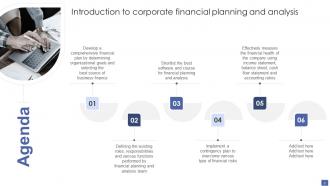
Slide 2: This slide states Agenda of the presentation.
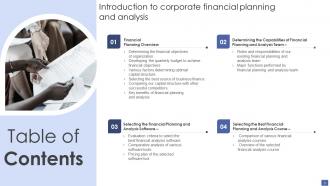
Slide 3: This slide shows Table of Content for the presentation.
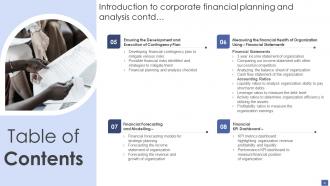
Slide 4: This is another slide continuing Table of Content for the presentation.
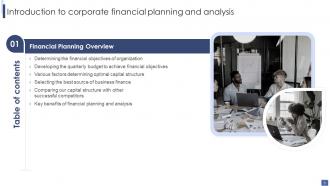
Slide 5: This slide highlights title for topics that are to be covered next in the template.
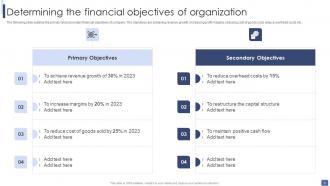
Slide 6: The following slide outlines the primary and secondary financial objectives of company.
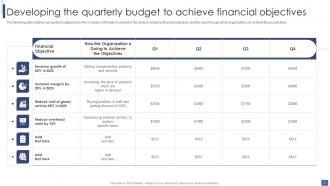
Slide 7: The following slide outlines a projected budget plan for the company.
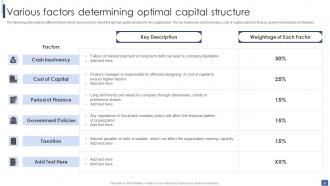
Slide 8: The following slide outlines different factors which can be used to select the optimal capital structure for the organization.
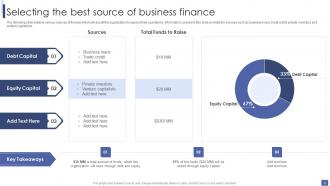
Slide 9: The following slide outlines various sources of finance which will assist the organization to expand their operations.
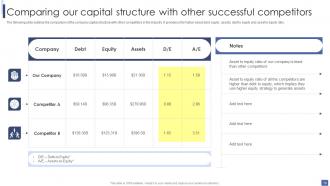
Slide 10: The following slide outlines the comparison of the company capital structure with other competitors in the industry.
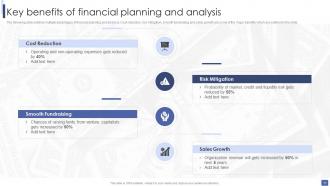
Slide 11: The following slide outlines multiple advantages of financial planning and analysis.
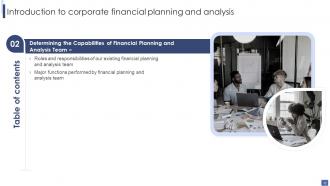
Slide 12: This slide highlights title for topics that are to be covered next in the template.
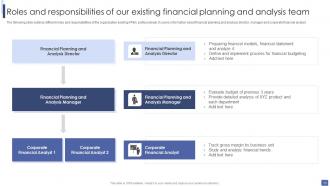
Slide 13: The following slide outlines different roles and responsibilities of the organization existing FP&A professionals.
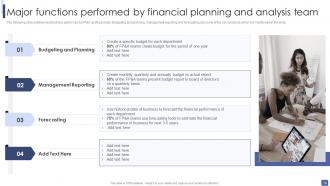
Slide 14: The following slide outlines key functions performed by FP&A professionals.
Slide 15: This slide highlights title for topics that are to be covered next in the template.
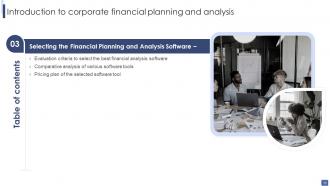
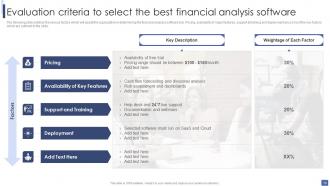
Slide 16: The following slide outlines the various factors which will assist the organization in determining the financial analysis software tool.
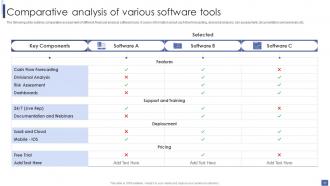
Slide 17: The following slide outlines comparative assessment of different financial analysis software tools.
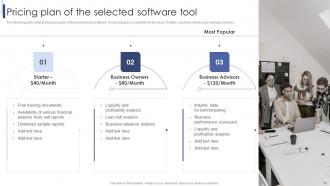
Slide 18: The following slide outlines the pricing plan of financial analysis software.
Slide 19: This slide exhibit table of content- Selecting the Best Financial Planning and Analysis Course.
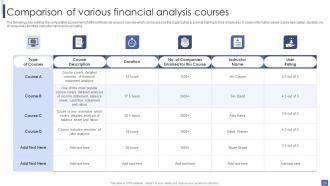
Slide 20: The following slide outlines the comparative assessment of different financial analysis courses.
Slide 21: The following slide outlines the glimpse of financial analysis course.
Slide 22: This slide highlights title for topics that are to be covered next in the template.
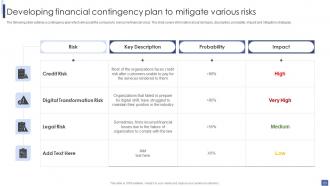
Slide 23: The following slide outlines a contingency plan which will assist the company to overcome financial crisis.
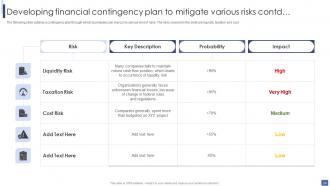
Slide 24: The following slide outlines a contingency plan through which businesses can overcome various kind of risks.
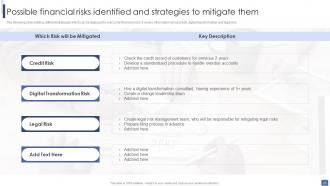
Slide 25: The following slide outlines different strategies which can be deployed to overcome financial risks.
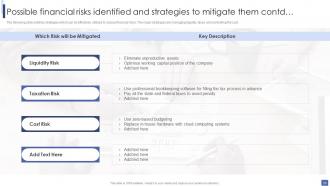
Slide 26: The following slide outlines strategies which can be effectively utilized to reduce financial risks.
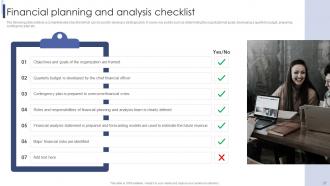
Slide 27: The following slide outlines a comprehensive checklist which can be used to develop a strategic plan.
Slide 28: This slide highlights title for topics that are to be covered next in the template.
Slide 29: The following slide outlines company’s core financial statement for the period of last 3 years.
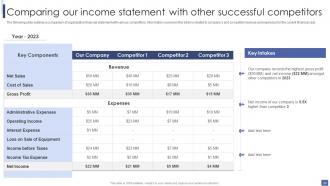
Slide 30: The following slide outlines a comparison of organization financial statement with various competitors.
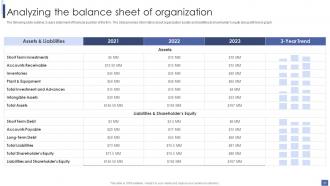
Slide 31: The following slide outlines 3 years statement of financial position of the firm.
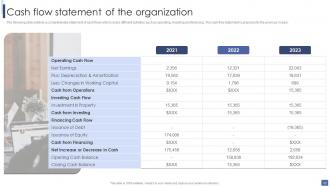
Slide 32: The following slide outlines a comprehensive statement of cash flows.
Slide 33: This slide highlights title for topics that are to be covered next in the template.
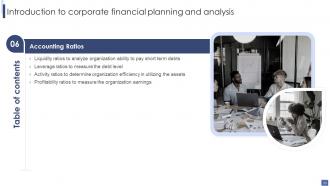
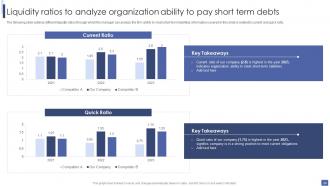
Slide 34: The following slide outlines different liquidity ratios through which the manager can analyze the firm ability to meet short-term liabilities.
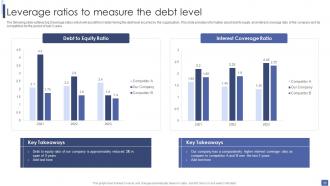
Slide 35: The following slide outlines top 2 leverage ratios which will assist the in determining the debt level incurred by the organization.
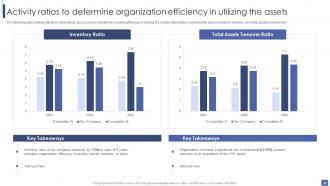
Slide 36: The following slide outlines efficiency ratios which can be used to indicate the company efficiency in utilizing the assets.
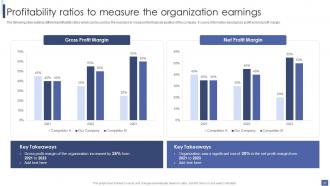
Slide 37: The following slide outlines different profitability ratios which can be used by the investors to measure the financial position of the company.
Slide 38: This slide highlights title for topics that are to be covered next in the template.
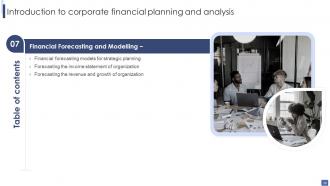
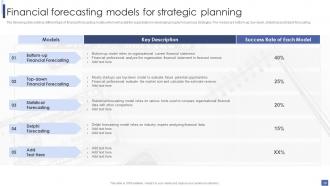
Slide 39: The following slide outlines different type of financial forecasting models.
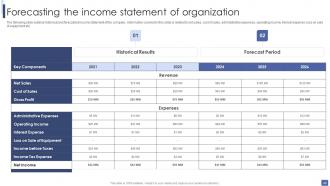
Slide 40: The following slide outlines historical and forecasted income statement of the company.
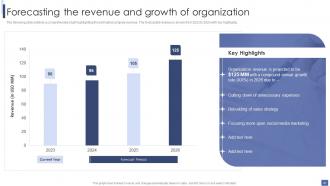
Slide 41: The following slide outlines a comprehensive chart highlighting the estimated company revenue.
Slide 42: This slide highlights title for topics that are to be covered next in the template.
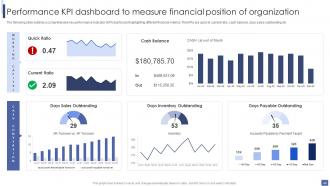
Slide 43: The following slide outlines key performance indicator (KPI) dashboard showcasing various financial metrics of the organization.
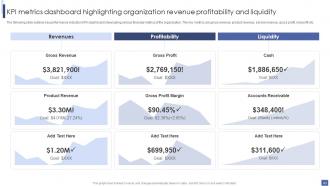
Slide 44: The following slide outlines a comprehensive key performance indicator (KPI) dashboard highlighting different financial metrics.
Slide 45: This slide contains all the icons used in this presentation.
Slide 46: This slide is titled as Additional Slides for moving forward.
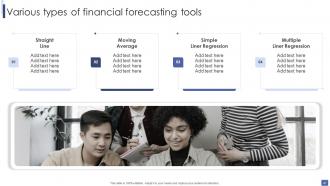
Slide 47: This slide presents Various types of financial forecasting tools.
Slide 48: This is Our Team slide with names and designation.
Slide 49: This is Our Mission slide with related imagery and text.
Slide 50: This is About Us slide to show company specifications etc.
Slide 51: This is Our Goal slide. State your firm's goals here.
Slide 52: This slide provides 30 60 90 Days Plan with text boxes.
Slide 53: This is a Timeline slide. Show data related to time intervals here.
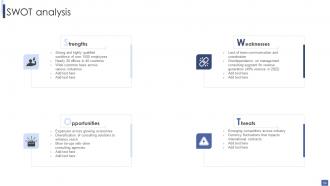
Slide 54: This slide shows SWOT describing- Strength, Weakness, Opportunity, and Threat.
Slide 55: This slide depicts Venn diagram with text boxes.
Slide 56: This is a Thank You slide with address, contact numbers and email address.
Introduction To Corporate Financial Planning And Analysis Powerpoint Presentation Slides with all 61 slides:
Use our Introduction To Corporate Financial Planning And Analysis Powerpoint Presentation Slides to effectively help you save your valuable time. They are readymade to fit into any presentation structure.













FAQs for Introduction To Corporate Financial Planning And Analysis
Cash flow forecasting is where I'd start - get that dialed in first. Then tackle budgeting and scenario planning. Most people skip the scenario stuff because it seems tedious, but honestly? That's where you'll stand out from everyone else. Capital allocation and risk management are crucial too, obviously. Markets shift crazy fast these days, so don't set it and forget it - you've got to keep updating your assumptions. I learned this the hard way at my last job when we stuck with outdated projections way too long. Build from solid cash flow projections, then expand outward.
Think of corporate financial planning as your GPS for turning big business ideas into actual dollars and cents. Start with what you want to achieve - maybe entering new markets or dropping a new product line. Then figure out backwards what cash, investments, and resources you'll need. Honestly, it's like planning an expensive trip but with endless Excel sheets (and way more boring meetings). The trick is connecting your money projections directly to real business wins you can track. Don't just chase random revenue numbers - that's how you end up nowhere fast.
Think of forecasting as your financial crystal ball - you're predicting future revenues, expenses, and cash flows to make smart decisions about budgets and investments. Without it, you're just guessing (and trust me, boards hate surprises). These projections help you spot potential cash problems early and identify growth opportunities. I'd say the most crucial part is updating them regularly as new info comes in. Build that into your quarterly reviews. Otherwise you'll be working with stale data, which defeats the whole purpose.
Honestly, automating your data collection will save you so much time. I'd check out cloud platforms like Adaptive Insights or Anaplan - they pull real-time data from everywhere so you're not stuck doing manual spreadsheets forever. The forecasting features are pretty solid too, they catch patterns I totally would've missed. Your team can all jump into the same dashboards at once which is nice. Oh, and start with whatever's driving you crazy first - like if budget consolidation is your nightmare, tackle that before moving to other stuff. The scenario modeling tools are actually kind of fun to play around with once you get going.
Honestly, the worst thing people do is get way too rosy with their revenue numbers while totally lowballing costs. It's like wishful thinking but with spreadsheets. Also - and this drives me crazy - departments that don't talk to each other during planning. You'll end up with marketing wanting a huge budget while sales promises the moon to different clients. Oh, cash flow timing is huge too! I've watched profitable companies nearly tank because their money was stuck in receivables. Always stress-test your assumptions and ask yourself "what if we're completely off?" Build in some buffer room.
So here's the thing - risk management and financial planning are basically joined at the hip now. You can't really do one without the other. Every time you're setting budgets or forecasting cash flow, you're already thinking about what could go wrong. Most companies do scenario planning (best/worst/likely cases) and stress test their models. Oh, and they always keep contingency funds around. Honestly, the biggest mistake I see is treating risk like an afterthought. You've gotta bake it into your regular planning meetings from day one.
So scenario analysis is basically stress-testing your finances with different "what if" situations. Economic crashes, supply chain problems, sudden growth spurts - that kind of stuff. Most companies don't bother, which honestly seems crazy to me. You're planning for multiple futures instead of just crossing your fingers and hoping for the best. The cool part is it shows you potential cash flow problems way before they actually happen. Forces you to build flexibility into your budgets too. I'd start simple - maybe 3 or 4 realistic scenarios for your next quarterly planning. Way better than flying blind.
You know how economic trends basically predict everything for your finances? Like, when inflation's going up, you've got to plan for higher costs and maybe nail down those supplier deals early. Interest rates mess with your borrowing costs too - affects when you should invest in big stuff. If recession warnings start popping up, that's your cue to stockpile cash and really test your forecasts. Labor market shifts hit your hiring budget hard. Honestly, I think most people wait too long to react. Stay ahead of the indicators instead of just responding to what already happened.
So you'll need to watch both the money side and operations stuff. Obviously track actual vs budget, plus cash flow variance and ROI on your big investments. Debt-to-equity ratios too. But honestly, the process metrics are underrated - like how long your budget cycles take and forecast accuracy. Those can make or break you. Oh, and don't skip stakeholder satisfaction with the planning itself - sounds touchy-feely but it matters. I'd start with maybe 3-4 metrics that actually match what your company cares about most. You can always add more later once you've got the basics down solid.
Dude, you've gotta get everyone on board early or your plan is basically dead in the water. Leadership, department heads, all the key players - they need to understand what you're doing and why. I've watched so many solid financial plans crash and burn because people didn't get the reasoning behind the numbers. Regular check-ins during planning season work way better than just dropping the final plan on everyone's desk. When people actually understand your assumptions and trade-offs, they'll give you better feedback and won't fight you during implementation. Trust me on this one.
Ugh, regulatory changes are such a pain - they can mess up your entire financial plan. Tax strategies get flipped upside down. You might need to restructure debt or change how you report earnings. Sometimes they'll make you set aside way more cash for capital requirements (which is annoying but whatever). The trick is building some wiggle room into your forecasts. Also, stay on top of what's coming through the pipeline legislation-wise. I'd definitely touch base with your legal and compliance people regularly. Trust me, you don't want to get caught off guard when new rules drop.
Honestly, just tackle the boring stuff first - operations and debt payments. Nobody wants to deal with that mess later. After that's sorted, look at growth projects that actually fit your 3-5 year plan. Here's the thing though - don't chase every cool opportunity that pops up. I've seen too many companies burn cash that way. Focus on fewer things and do them well. ROI matters, but so does keeping some reserves around for when things get weird (and they always do). Set up some basic criteria now so you're not scrambling to make decisions under pressure.
So short-term is basically your next 12 months - payroll, working capital, hitting quarterly numbers. You're just trying to keep things running smoothly. Long-term planning? That's your 3-5 year roadmap for big moves like expansion or major investments. The real difference isn't just timeframes though. Short-term is survival mode while long-term is where you actually want to end up. Your forecasts get way more detailed for short-term stuff, but long-term you're working with broader projections since honestly who knows what'll happen in 5 years. Just make sure they're connected - don't let quarterly pressure mess up your bigger vision.
Start with rolling forecasts instead of those rigid yearly budgets - update them every quarter so you're not stuck with outdated numbers. Scenario planning is a lifesaver, seriously. Build out multiple "what if" models for different situations so you won't panic when markets go sideways. Your cash flow projections should be super detailed short-term, then get broader as you look further out. Oh, and set up trigger points that force you to review everything when key metrics hit certain levels. Honestly, most companies skip this step and regret it later.
Look, sustainability isn't optional anymore in finance - investors are literally demanding ESG metrics now. Climate risks and regulatory changes around environmental stuff? You've gotta build those into your financial models. Companies ignoring this are getting hammered on valuations, which honestly makes sense. Track ESG performance right alongside your usual financial metrics. Oh, and those long-term sustainability costs everyone used to ignore? Yeah, factor those into your forecasting too. It's not just about being green - it's about staying profitable when the market shifts.
-
Thrilled to see several customizable templates catering various verticals and industries.
-
Kudos to SlideTeam for achieving the high success rate in delivering the top-notch slides.