


IoMT Applications In Medical Industry Powerpoint Presentation Slides IoT CD V
Explore the realm of IoMT Applications in Medical Industry through this comprehensive PowerPoint presentation that delves into the transformative impact of IoT in healthcare. Starting with an introduction to IoTs role, benefits and architecture levels, this Remote Patient Monitoring deck progresses to encompass real life examples such as virtual hospitals, wearable biosensors and smart inhalers. Additionally, our virtual hospitals PPT navigates through IoT applications like remote patient monitoring, telemedicine and smart hospitals, while also addressing ethical implications, security best practices and healthcare analytics. Uncover the budgeting aspects and real world case studies showcasing IoTs potential in saving lives and revolutionizing health care practices. With a focus on robotic surgery, wearable devices and their impact on healthcare sectors, this module underscores the game changing influence of IoT in enhancing patient care and management. Step into the future of health care with this comprehensive PowerPoint deck get access now.















































You must be logged in to download this presentation.


Do you want to remove this product from your favourites?
 Impress your
 audience
 100%
100% Editable
 Save Hours
 of Time
PowerPoint presentation slides
Deliver this complete deck to your team members and other collaborators. Encompassed with stylized slides presenting various concepts, this IoMT Applications In Medical Industry Powerpoint Presentation Slides IoT CD V is the best tool you can utilize. Personalize its content and graphics to make it unique and thought-provoking. All the eighty one slides are editable and modifiable, so feel free to adjust them to your business setting. The font, color, and other components also come in an editable format making this PPT design the best choice for your next presentation. So, download now.

People who downloaded this PowerPoint presentation also viewed the following :
Content of this Powerpoint Presentation
Slide 1: This slide introduces IoMT Applications in Medical Industry. State your company name and begin.
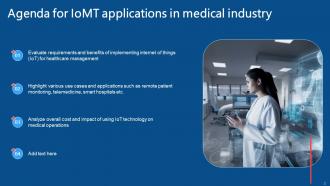
Slide 2: This slide states Agenda of the presentation.
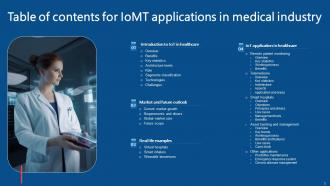
Slide 3: This slide shows Table of Content for the presentation.
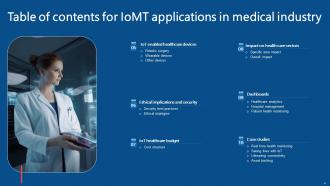
Slide 4: This is another slide continuing Table of Content for the presentation.
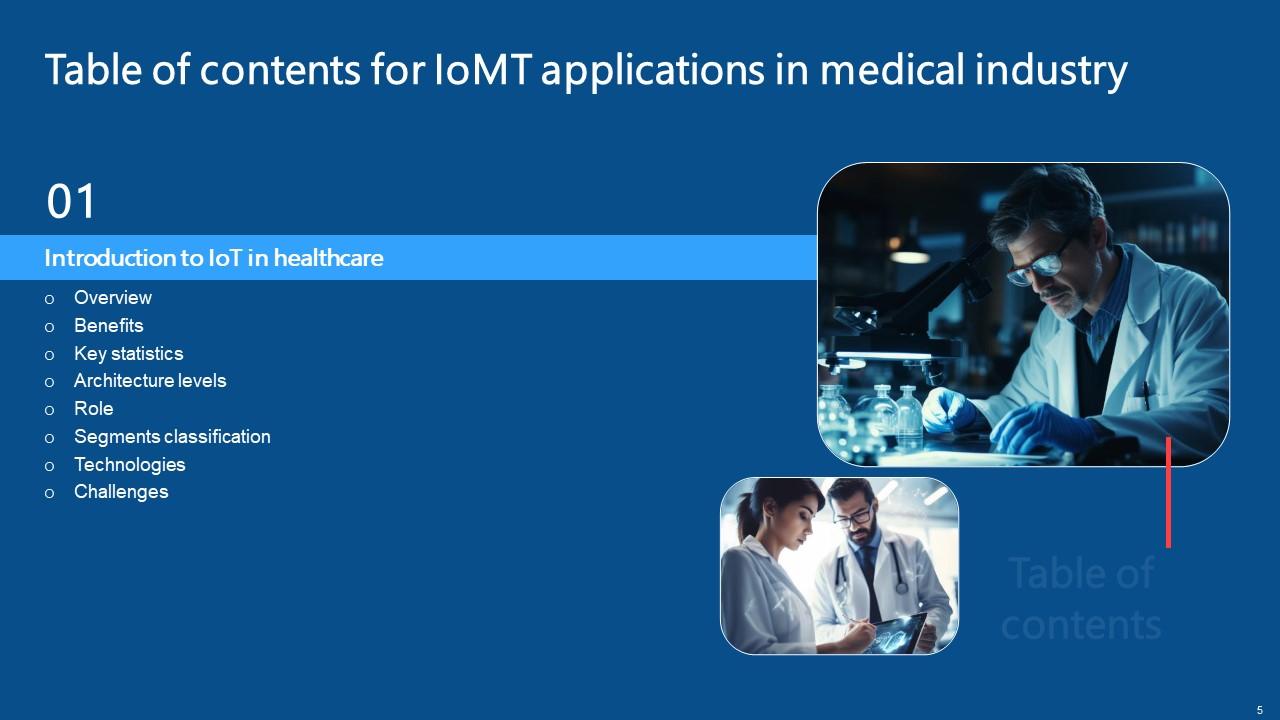
Slide 5: This slide highlights title for topics that are to be covered next in the template.
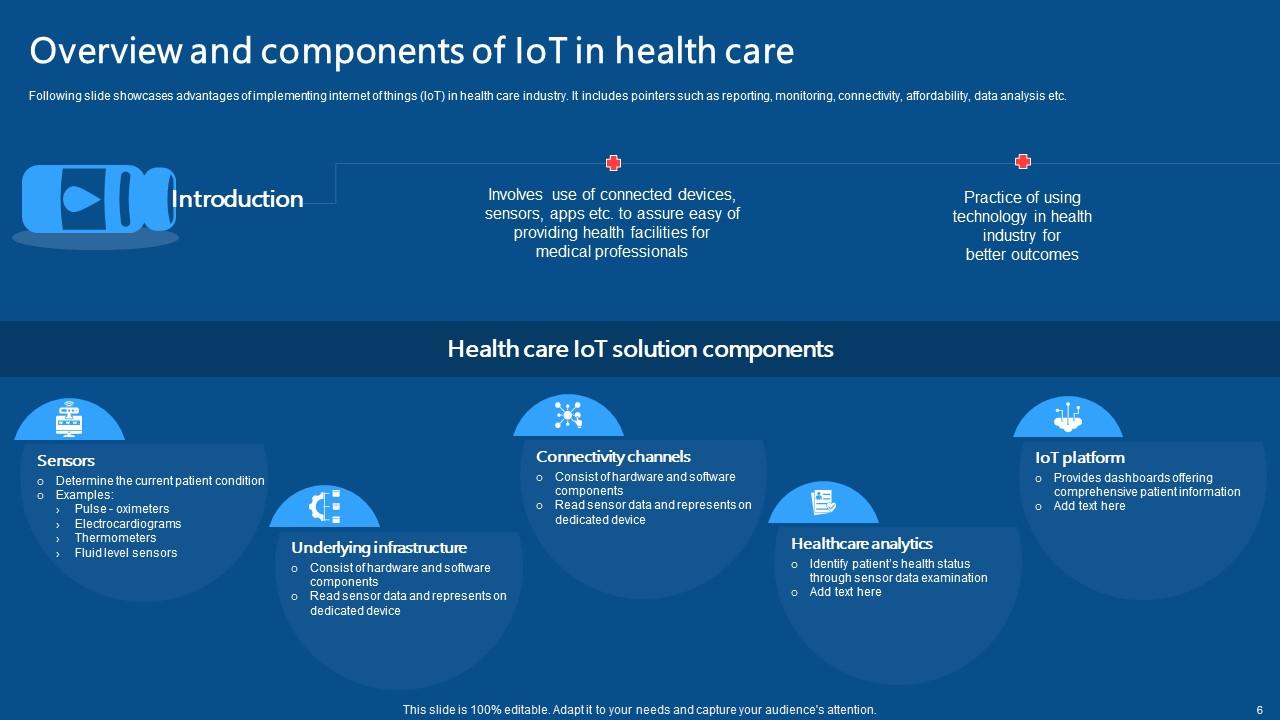
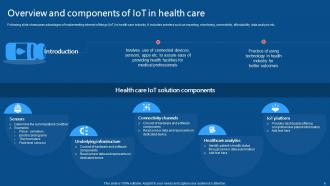
Slide 6: This slide displays Practice of using technology in health industry for better outcomes.
Slide 7: This slide represents Benefits of IoT deployment in healthcare industry.
Slide 8: This slide showcases Key statistics associated with medical technology.
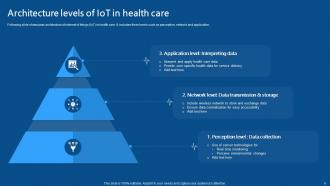
Slide 9: This slide shows Architecture levels of IoT in health care.
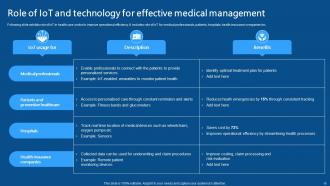
Slide 10: This slide presents Role of IoT and technology for effective medical management.
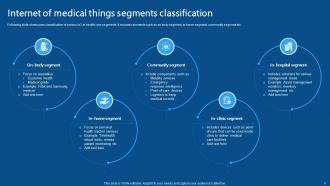
Slide 11: This slide displays Internet of medical things segments classification.
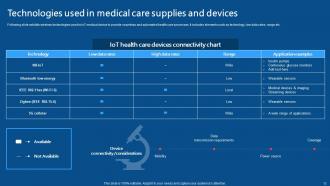
Slide 12: This slide represents Technologies used in medical care supplies and devices.
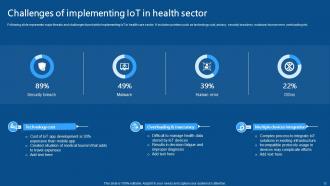
Slide 13: This slide showcases Challenges of implementing IoT in health sector.
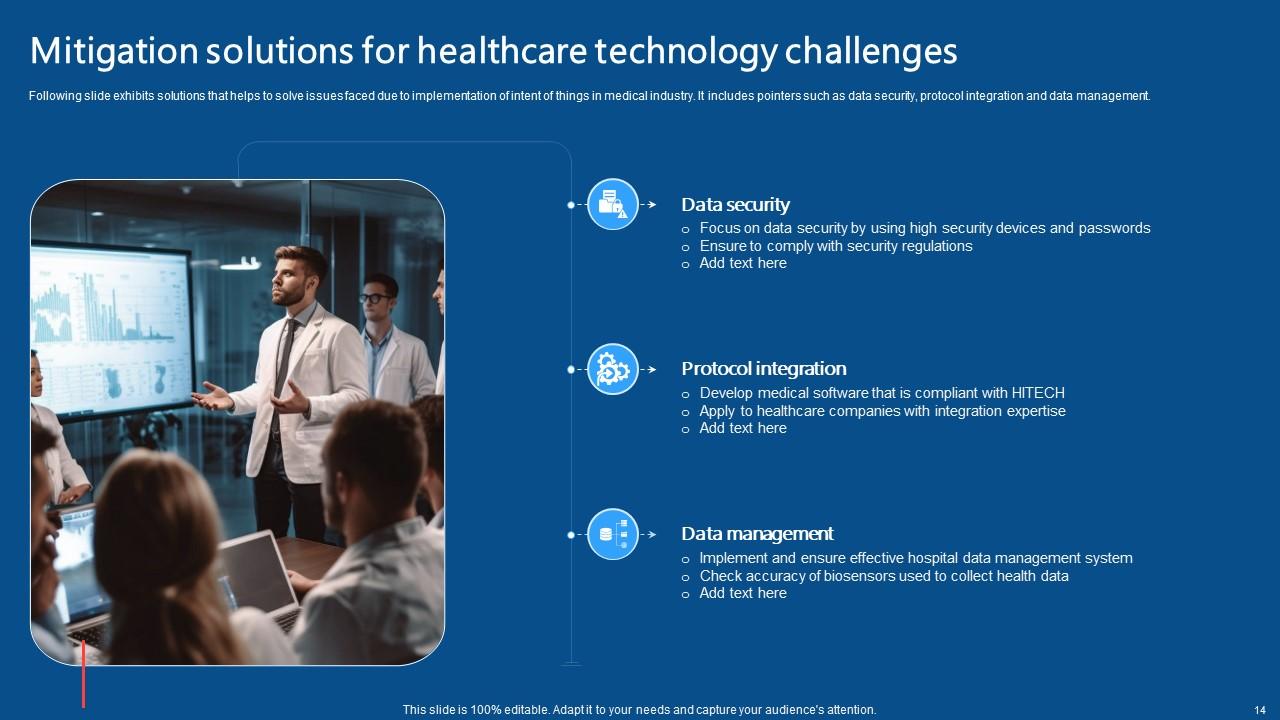
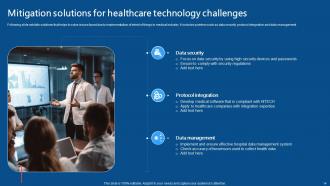
Slide 14: This slide shows Mitigation solutions for healthcare technology challenges.
Slide 15: This slide highlights title for topics that are to be covered next in the template.
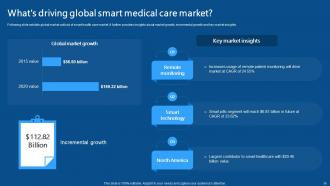
Slide 16: This slide presents What's driving global smart medical care market.
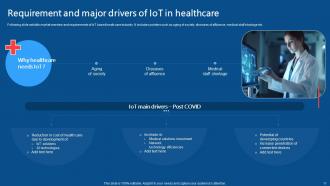
Slide 17: This slide displays Requirement and major drivers of IoT in healthcare.
Slide 18: This slide represents Global market size of IoT in health industry.
Slide 19: This slide showcases Future scope and potential of technology in healthcare.
Slide 20: This slide highlights title for topics that are to be covered next in the template.
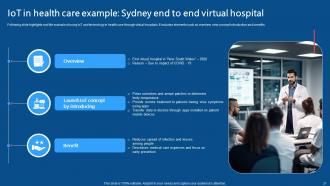
Slide 21: This slide shows IoT in health care example: Sydney end to end virtual hospital.
Slide 22: This slide presents IoT in health care example: Smart inhalers by UK QIoT.
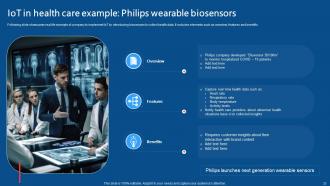
Slide 23: This slide displays IoT in health care example: Philips wearable biosensors.
Slide 24: This slide highlights title for topics that are to be covered next in the template.
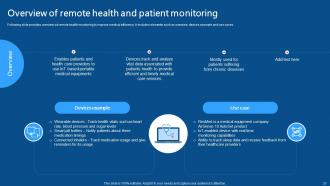
Slide 25: This slide represents Overview of remote health and patient monitoring.
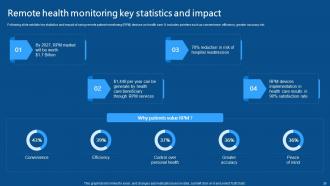
Slide 26: This slide showcases Remote health monitoring key statistics and impact.
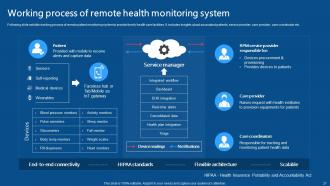
Slide 27: This slide shows Working process of remote health monitoring system.
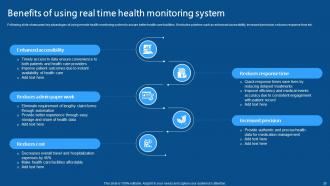
Slide 28: This slide presents Benefits of using real time health monitoring system.
Slide 29: This slide highlights title for topics that are to be covered next in the template.
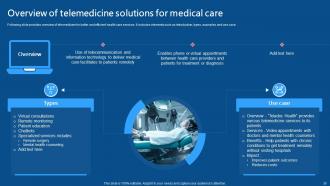
Slide 30: This slide displays Overview of telemedicine solutions for medical care.
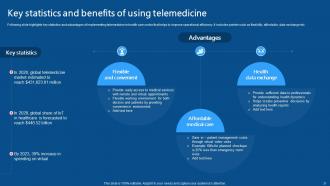
Slide 31: This slide represents Key statistics and benefits of using telemedicine.
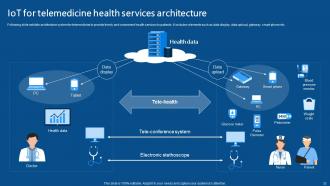
Slide 32: This slide showcases IoT for telemedicine health services architecture.
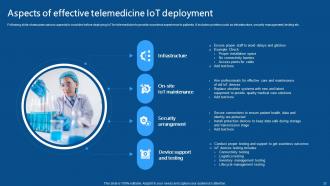
Slide 33: This slide shows Aspects of effective telemedicine IoT deployment.
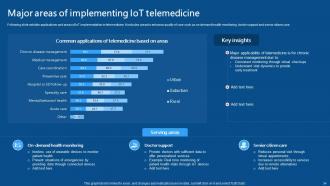
Slide 34: This slide presents Major areas of implementing IoT telemedicine.
Slide 35: This slide highlights title for topics that are to be covered next in the template.
Slide 36: This slide displays Overview of smart hospitals and healthcare facilities.
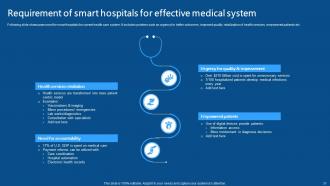
Slide 37: This slide represents Requirement of smart hospitals for effective medical system.
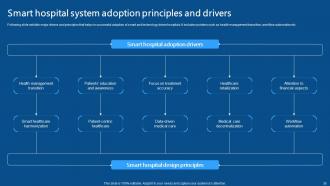
Slide 38: This slide showcases Smart hospital system adoption principles and drivers.
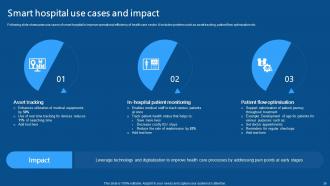
Slide 39: This slide shows Smart hospital use cases and impact.
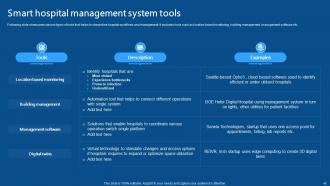
Slide 40: This slide presents Smart hospital management system tools.
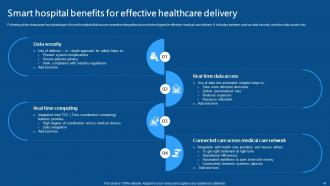
Slide 41: This slide displays Smart hospital benefits for effective healthcare delivery.
Slide 42: This slide highlights title for topics that are to be covered next in the template.
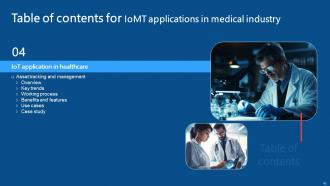
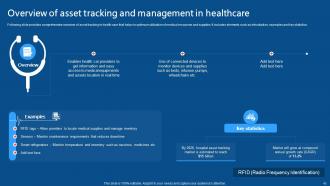
Slide 43: This slide represents Overview of asset tracking and management in healthcare.
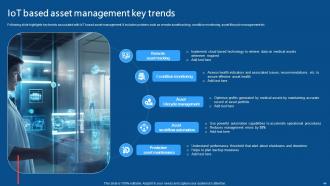
Slide 44: This slide showcases IoT based asset management key trends.
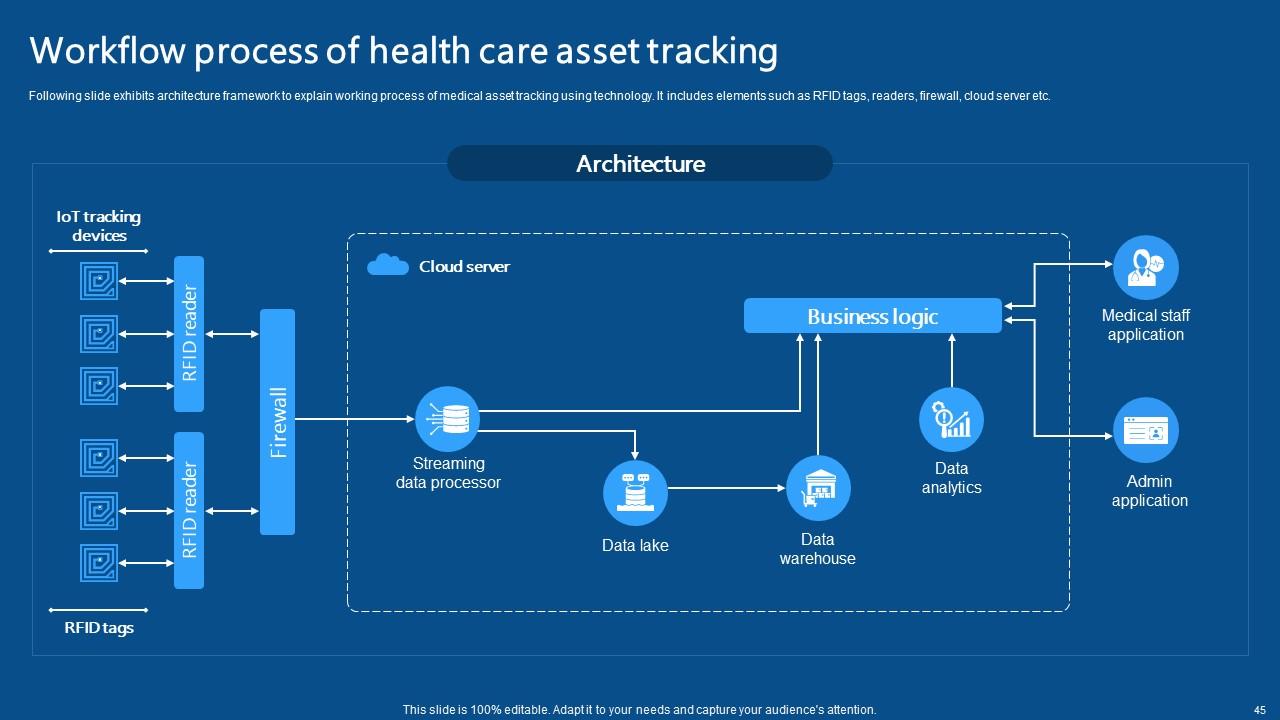
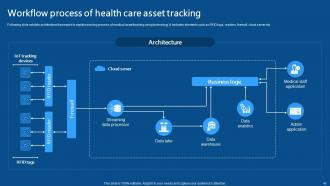
Slide 45: This slide shows Workflow process of health care asset tracking.
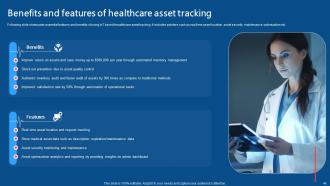
Slide 46: This slide presents Benefits and features of healthcare asset tracking.
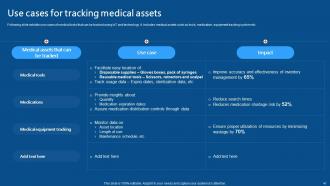
Slide 47: This slide displays Use cases for tracking medical assets.
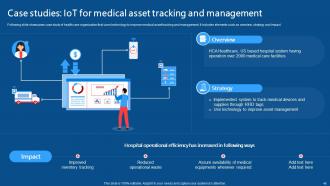
Slide 48: This slide represents Case studies: IoT for medical asset tracking and management.
Slide 49: This slide highlights title for topics that are to be covered next in the template.
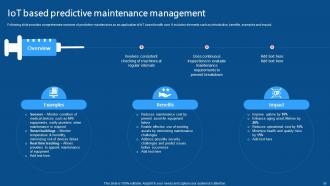
Slide 50: This slide showcases IoT based predictive maintenance management.
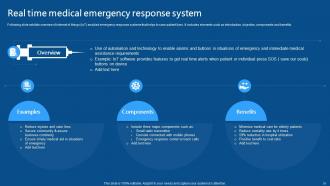
Slide 51: This slide shows Real time medical emergency response system.
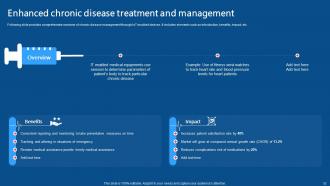
Slide 52: This slide presents Enhanced chronic disease treatment and management.
Slide 53: This slide highlights title for topics that are to be covered next in the template.
Slide 54: This slide displays Robotic surgery devices for smart medical assistance.
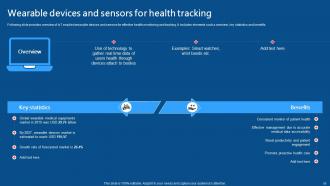
Slide 55: This slide represents Wearable devices and sensors for health tracking.
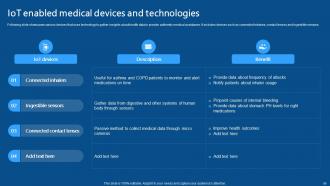
Slide 56: This slide showcases IoT enabled medical devices and technologies.
Slide 57: This slide highlights title for topics that are to be covered next in the template.
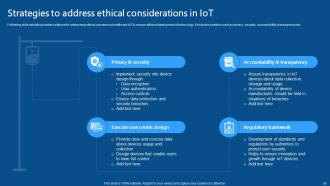
Slide 58: This slide shows Strategies to address ethical considerations in IoT.
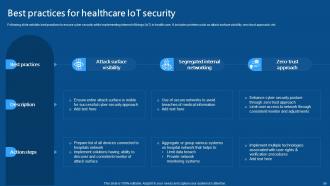
Slide 59: This slide presents Best practices for healthcare IoT security.
Slide 60: This slide highlights title for topics that are to be covered next in the template.
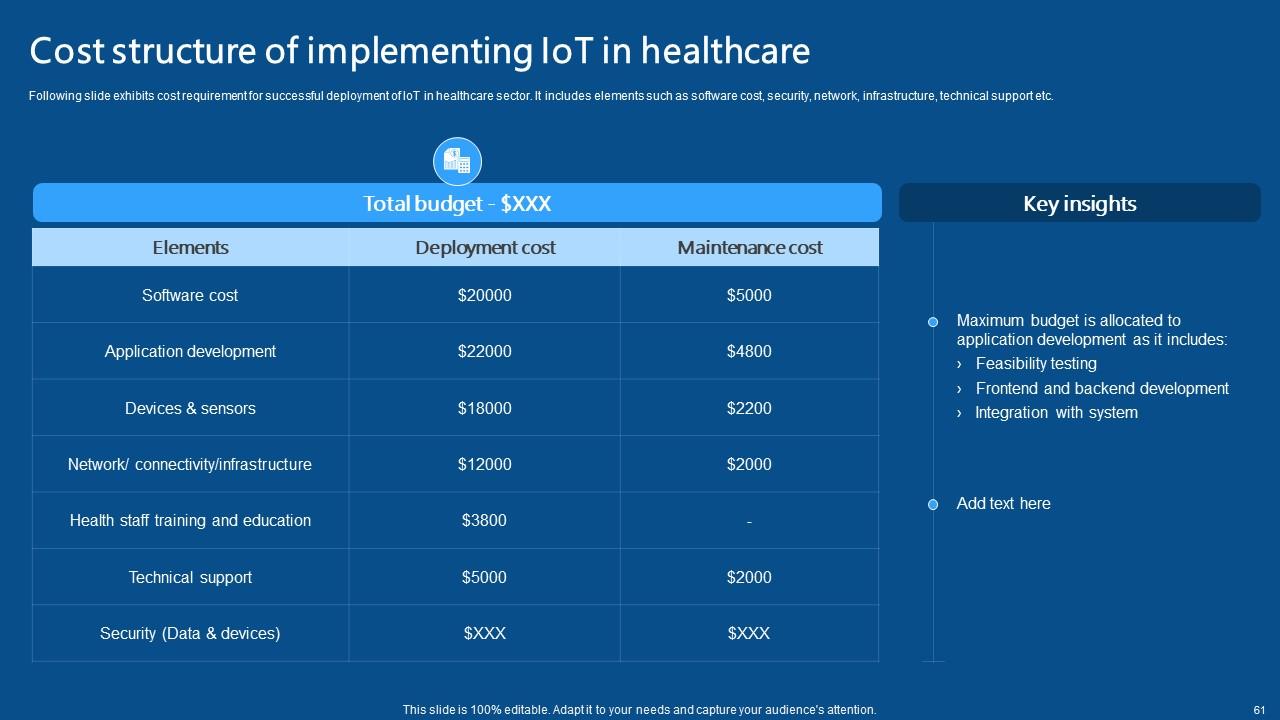
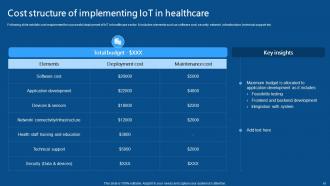
Slide 61: This slide displays Cost structure of implementing IoT in healthcare.
Slide 62: This slide highlights title for topics that are to be covered next in the template.
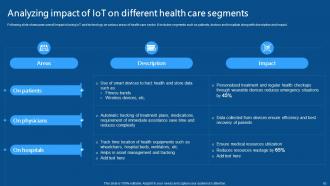
Slide 63: This slide represents Analyzing impact of IoT on different health care segments.
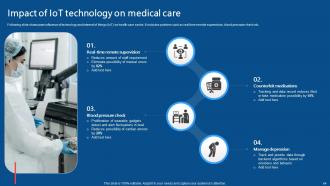
Slide 64: This slide showcases Impact of IoT technology on medical care.
Slide 65: This slide highlights title for topics that are to be covered next in the template.
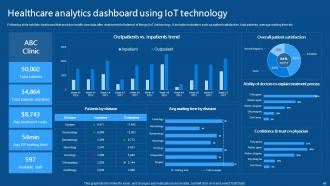
Slide 66: This slide shows Healthcare analytics dashboard using IoT technology.
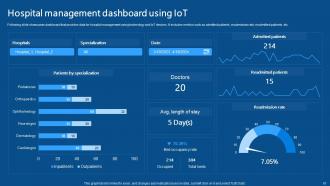
Slide 67: This slide presents Hospital management dashboard using IoT.
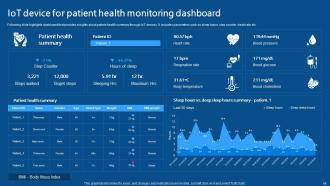
Slide 68: This slide displays IoT device for patient health monitoring dashboard.
Slide 69: This slide highlights title for topics that are to be covered next in the template.
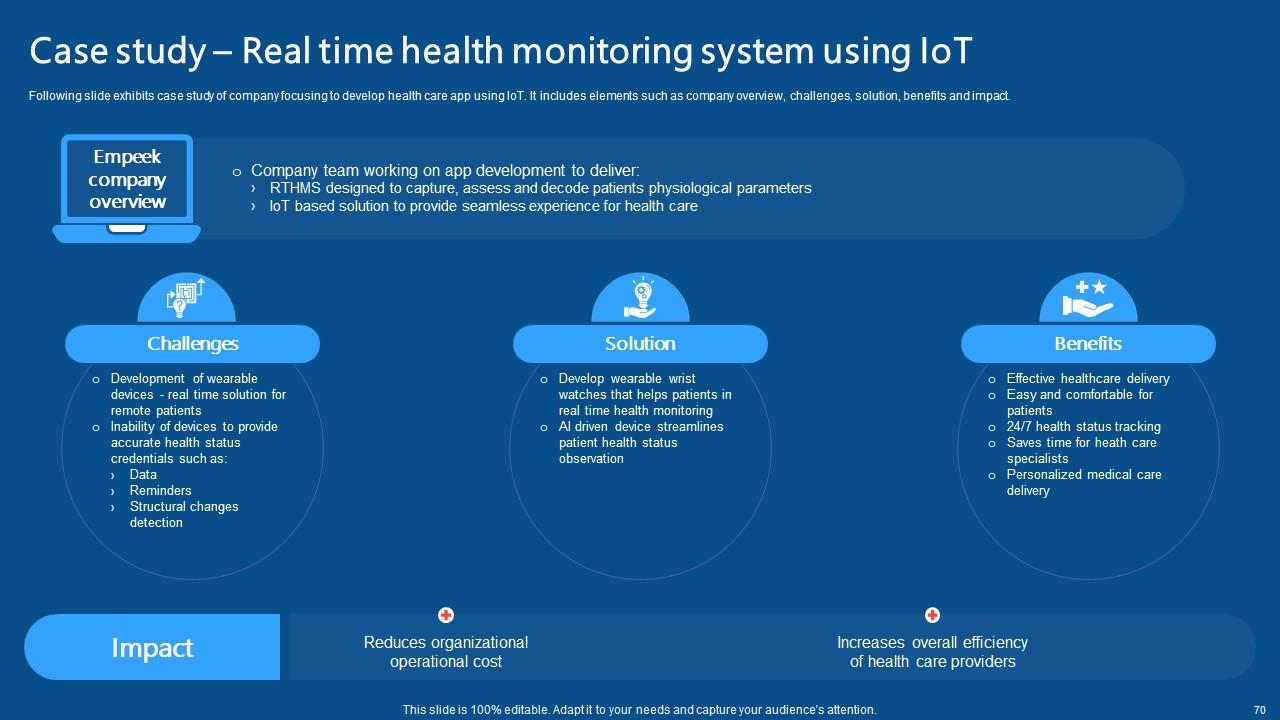
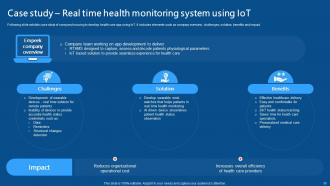
Slide 70: This slide represents Case study – Real time health monitoring system using IoT.
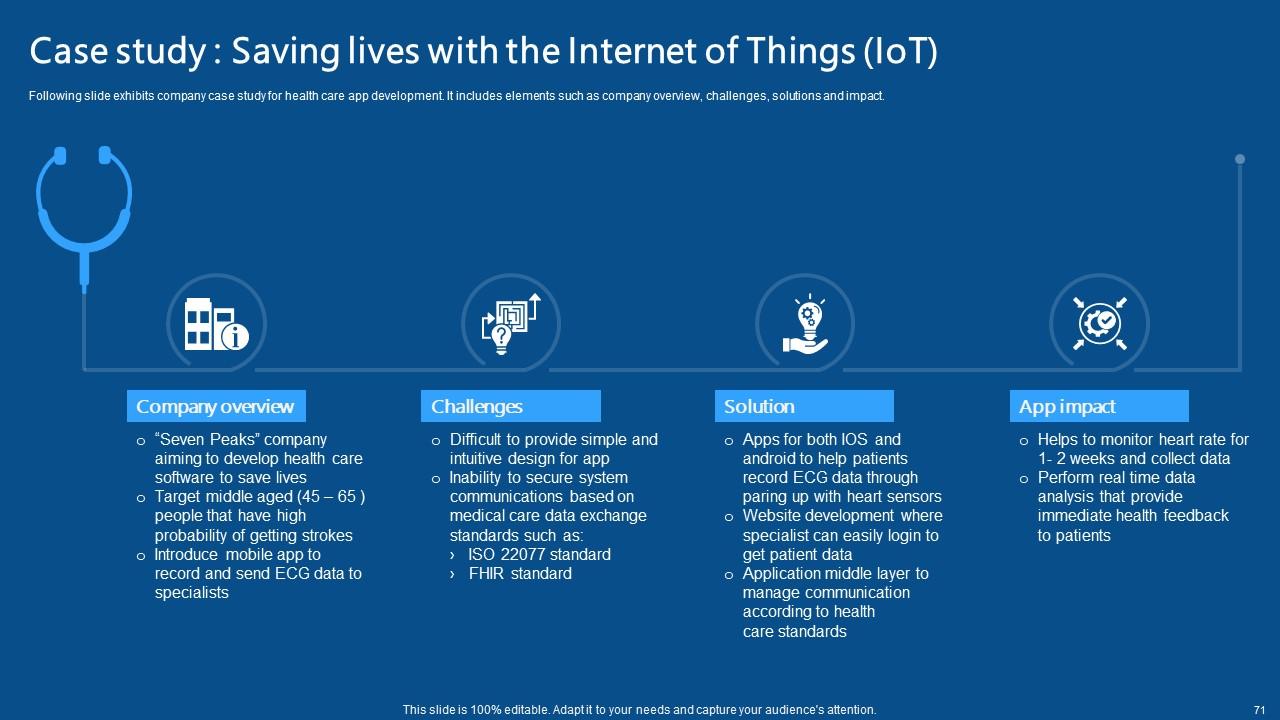
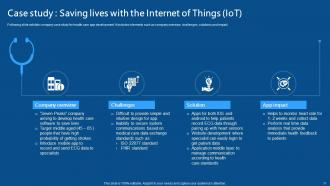
Slide 71: This slide showcases Case study: Saving lives with the Internet of Things (IoT).
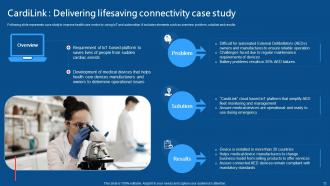
Slide 72: This slide shows CardiLink: Delivering lifesaving connectivity case study.
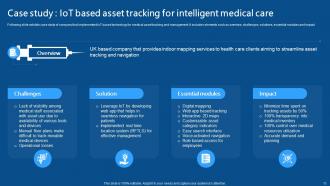
Slide 73: This slide presents Case study: IoT based asset tracking for intelligent medical care.
Slide 74: This slide contains all the icons used in this presentation.
Slide 75: This slide is titled as Additional Slides for moving forward.
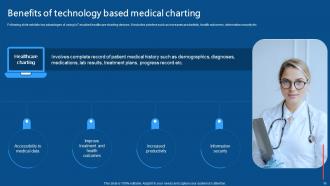
Slide 76: This slide displays Benefits of technology based medical charting.
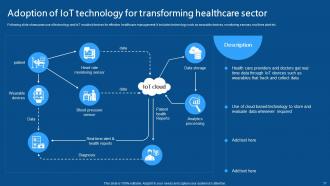
Slide 77: This slide represents Adoption of IoT technology for transforming healthcare sector.
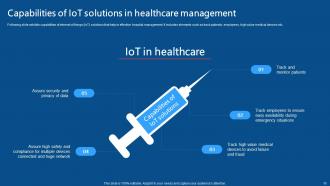
Slide 78: This slide showcases Capabilities of IoT solutions in healthcare management.
Slide 79: This is a Timeline slide. Show data related to time intervals here.
Slide 80: This slide depicts Venn diagram with text boxes.
Slide 81: This is a Thank You slide with address, contact numbers and email address.
IoMT Applications In Medical Industry Powerpoint Presentation Slides IoT CD V with all 90 slides:
Use our IoMT Applications In Medical Industry Powerpoint Presentation Slides IoT CD V to effectively help you save your valuable time. They are readymade to fit into any presentation structure.
-
I looked at their huge selection of themes and designs. They appeared to be ideal for my profession. I'm sure I'll grab a few of them.
-
Loved the templates on SlideTeam, I believe I have found the go to place for my presentation needs!
