


Iot market intelligence powerpoint presentation slides




Try Before you Buy Download Free Sample Product
 Impress Your
 Audience
 100%
100% Editable
 Save Hours
 of Time


Introducing our IoT Market Intelligence PowerPoint Presentation Slides to make your task easy and time-efficient. Employ these artificial intelligence PPT slides to understand evolving science, technology, and the new methodologies. Research and review the various options of marketing by taking aid of this thorough and content-specific e-marketing PPT presentation and do wonders for your business. These online marketing PPT layouts are an amazing tool for entrepreneurs, organizations, and any other professionals. That will help in drafting a summary of the business plan or strategy. Analyze the data, statistics, and finance in a time-efficient manner by understanding the operations of the internet in marketing through this informative PPT design. Study the trends related to industry and the forces that drive the industry with the help of these networking PPT templates. Utilize this cost-benefit surveying IoT analytics PPT slideshow to analyze the hardware, network, professional services, and platform of your company to exhibit the industry value trends. Download these completely adaptable internet marketing PPT graphics and convey your mission, vision, and objectives by giving it your orientation.
People who downloaded this PowerPoint presentation also viewed the following :
Content of this Powerpoint Presentation
Slide 1: This title slide introduces the IoT Market Intelligence. Add the name of your company here.
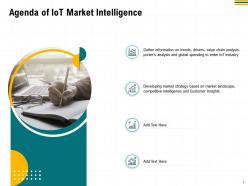
Slide 2: This is the Agenda slide of IoT Market Intelligence.
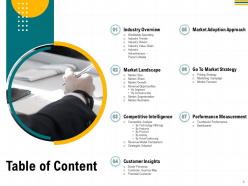
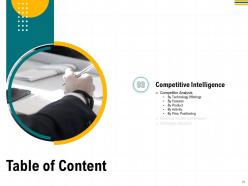
Slide 3: This slide contains the Table of Content. It includes - Industry Overview, Market Landscape, Competitive Intelligence, etc.
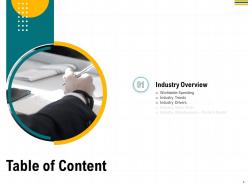
Slide 4: This is a table of content slide showing the Industry Overview.
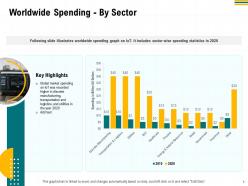
Slide 5: This slide presents the Worldwide Spending - By Sector.
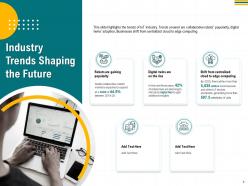
Slide 6: This slide presents the Industry Trends Shaping the Future.
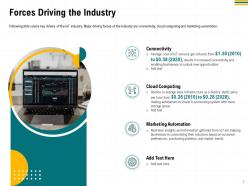
Slide 7: This slide presents the Forces Driving the Industry.
Slide 8: This is a table of content slide showing the Industry Overview.
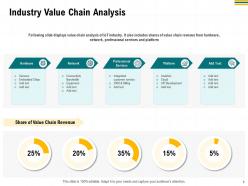
Slide 9: This slide presents the Industry Value Chain Analysis.
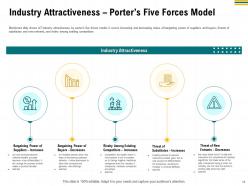
Slide 10: This slide presents the Industry Attractiveness – Porter’s Five Forces Model.
Slide 11: This is a table of content slide showing the Market Landscape.
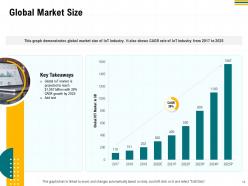
Slide 12: This slide presents the Global Market Size.
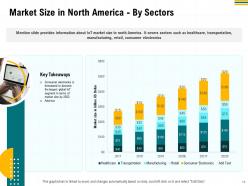
Slide 13: This slide presents the Market Size in North America - By Sectors.
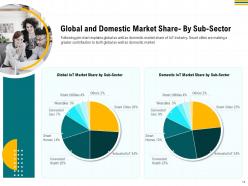
Slide 14: This slide presents the Global and Domestic Market Share- By Sub-Sector.
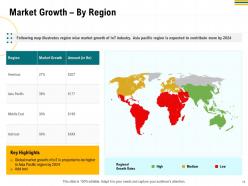
Slide 15: This slide presents the Market Growth – By Region.
Slide 16: This is a table of content slide showing the Market Landscape.
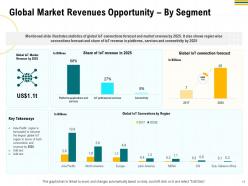
Slide 17: This slide presents the Global Market Revenues Opportunity – By Segment.
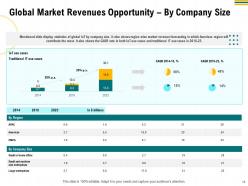
Slide 18: This slide presents the Global Market Revenues Opportunity – By Company Size.
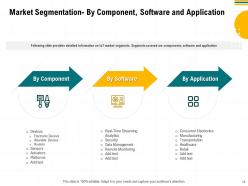
Slide 19: This slide presents the Market Segmentation- By Component, Software, and Application.
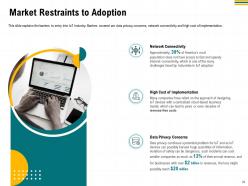
Slide 20: This slide presents the Market Restraints to Adoption.
Slide 21: This is a table of content slide showing the Competitive Intelligence.
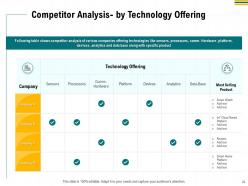
Slide 22: This slide presents the Competitor Analysis- by Technology Offering.
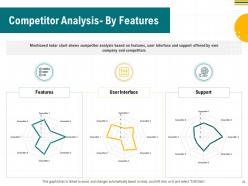
Slide 23: This slide presents the Competitor Analysis- By Features.
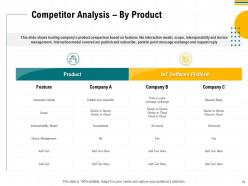
Slide 24: This slide presents the Competitor Analysis – By Product.
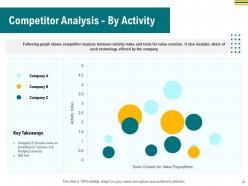
Slide 25: This slide presents the Competitor Analysis - By Activity.
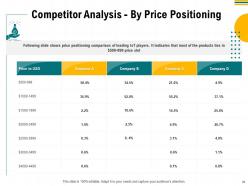
Slide 26: This slide presents the Competitor Analysis - By Price Positioning.
Slide 27: This is a table of content slide showing the Competitive Intelligence.
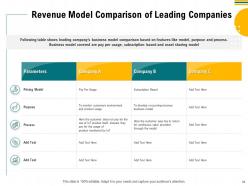
Slide 28: This slide presents the Revenue Model Comparison of Leading Companies.
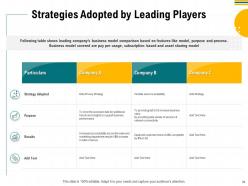
Slide 29: This slide presents the Strategies Adopted by Leading Players.
Slide 30: This is a table of content slide showing the Customer Insights.
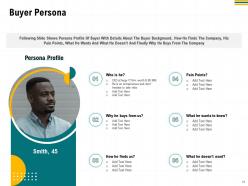
Slide 31: This slide presents the Buyer Persona.
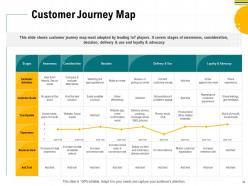
Slide 32: This slide presents the Customer Journey Map.
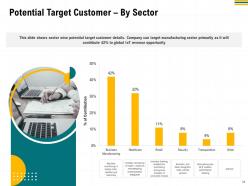
Slide 33: This slide presents the Potential Target Customer – By Sector.
Slide 34: This is a table of content slide showing the Market Adoption Approach.
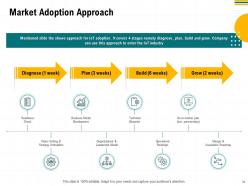
Slide 35: This slide presents the Market Adoption Approach.
Slide 36: This is a table of content slide showing the Go to Market Strategy.
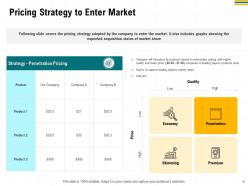
Slide 37: This slide presents the Pricing Strategy to Enter Market.
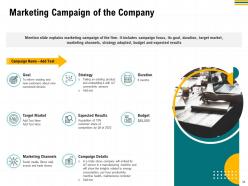
Slide 38: This slide presents the Marketing Campaign of the Company.
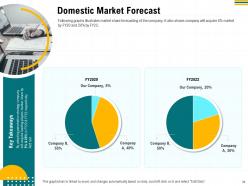
Slide 39: This slide presents the Domestic Market Forecast.
Slide 40: This is a table of content slide showing the Performance Measurement.
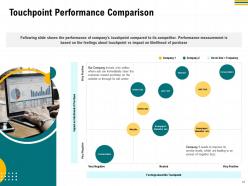
Slide 41: This slide presents the Touchpoint Performance Comparison.
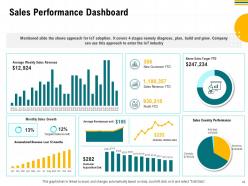
Slide 42: This slide presents the Sales Performance Dashboard.
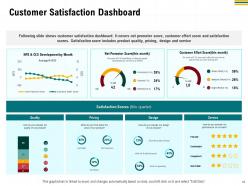
Slide 43: This slide presents the Customer Satisfaction Dashboard.
Slide 44: This is the IoT Market Intelligence Icons Slide.
Slide 45: This slide presents the Additional Slides.
Slide 46: This slide provides the Mission for the entire company. This includes the vision, the mission, and the goal.
Slide 47: This slide contains the information about the company aka the ‘About Us’ section. This includes the Value Clients, the Target Audience, and Preferred by Many.
Slide 48: This slide shows the members of the company team with their name, designation, and photo.
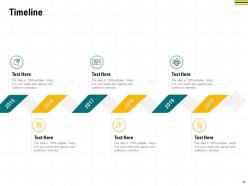
Slide 49: This slide is a Timeline template to showcase the progress of the steps of a project with time.
Slide 50: This slide presents the Our Goal.
Slide 51: This slide presents the Important Notes.
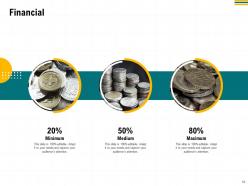
Slide 52: This slide presents the Financial data with the data’s numbers at minimum, medium, and maximum percentage.
Slide 53: This is a Thank You slide where details such as the address, contact number, email address are added.
Iot market intelligence powerpoint presentation slides with all 53 slides:
Use our IoT Market Intelligence Powerpoint Presentation Slides to effectively help you save your valuable time. They are readymade to fit into any presentation structure.



FAQs for Iot market intelligence
Key trends driving IoT market growth include edge computing advancements, 5G network expansion, AI integration, enhanced cybersecurity protocols, and sustainable smart solutions. These technologies streamline operations by enabling real-time data processing, reducing latency, and improving connectivity, with manufacturing, healthcare, and smart city sectors finding that strategic IoT adoption delivers significant operational efficiency and competitive advantage.
AI and machine learning integration transforms IoT applications by enabling predictive analytics, automated decision-making, real-time pattern recognition, and intelligent resource optimization. These technologies streamline operations across manufacturing, healthcare, and smart cities by minimizing downtime, enhancing operational efficiency, and delivering personalized experiences, ultimately providing organizations with competitive advantages in increasingly data-driven markets.
Data privacy and security concerns significantly influence IoT market adoption by creating both challenges and opportunities for organizations implementing connected device strategies. While robust security measures require additional investment and compliance frameworks, they ultimately enable greater customer trust, regulatory alignment, and sustainable scaling, with many enterprises finding that comprehensive privacy protocols deliver competitive advantages in increasingly regulated markets.
Manufacturing, healthcare, automotive, agriculture, and smart cities currently lead IoT implementation due to their operational complexity, safety requirements, and efficiency demands. These sectors leverage IoT for predictive maintenance, real-time monitoring, and automated processes, with many organizations finding that connected devices streamline operations, reduce costs, and deliver competitive advantages in increasingly data-driven markets.
5G revolutionizes IoT scalability by delivering ultra-low latency, massive device connectivity, and enhanced bandwidth capacity, enabling real-time processing across thousands of connected devices simultaneously. This connectivity breakthrough allows manufacturing plants, smart cities, and healthcare systems to deploy comprehensive IoT networks with seamless data transmission, ultimately delivering faster operational responses and competitive advantage in increasingly connected environments.
Critical challenges include data security vulnerabilities, integration complexity with legacy systems, scalability concerns, high implementation costs, and skills gaps in IoT expertise. While these obstacles can initially seem daunting, many organizations find that strategic planning, phased rollouts, and partnering with experienced vendors ultimately streamlines adoption and delivers competitive advantages.
SMEs can leverage IoT through cloud-based platforms, subscription services, plug-and-play devices, and strategic partnerships with technology providers, minimizing upfront investment while accessing enterprise-grade capabilities. These approaches enable resource-conscious businesses to implement inventory tracking, energy monitoring, and customer analytics solutions, ultimately delivering operational efficiency and competitive advantages without requiring dedicated IT infrastructure or extensive technical expertise.
Organizations should track device connectivity rates, data quality and accuracy, operational efficiency improvements, cost reduction percentages, and user adoption metrics to measure IoT success. These KPIs enable businesses to assess network performance, data reliability, and ROI across manufacturing, healthcare, and retail sectors, with many finding that comprehensive tracking ultimately delivers measurable competitive advantages and strategic insights.
IoT technologies revolutionize global supply chains by enabling real-time tracking, predictive maintenance, automated inventory management, and enhanced visibility across operations. Through smart sensors and connected devices, manufacturers and retailers streamline logistics, minimize disruptions, and optimize resource allocation, while reducing costs and delivery times, ultimately delivering improved customer experiences and competitive advantage.
IoT significantly enhances environmental sustainability by enabling smart energy management, predictive maintenance, automated resource optimization, and real-time emissions monitoring across facilities. Through connected sensors and analytics, manufacturing plants, smart buildings, and utility companies reduce energy consumption by 15-30%, minimize waste generation, and optimize resource allocation, ultimately delivering lower operational costs while supporting corporate sustainability goals.
Consumer attitudes significantly influence IoT market growth through adoption rates, privacy concerns, perceived value, and willingness to integrate connected technologies into daily routines. These preferences drive manufacturers to prioritize user-friendly interfaces, robust security features, and seamless connectivity, with many technology companies finding that addressing consumer trust and demonstrating clear benefits ultimately accelerates market expansion.
IoT data collection presents privacy vulnerabilities, security breaches, unauthorized access, consent challenges, and regulatory compliance issues that organizations must carefully navigate. While these considerations require strategic data governance frameworks, companies in healthcare, retail, and smart cities increasingly find that transparent practices, robust encryption, and ethical data policies ultimately deliver stronger customer trust and competitive advantage.
IoT standards and regulations are evolving through collaborative frameworks between industry bodies, government agencies, and technology providers, focusing on interoperability, security protocols, and data privacy requirements. Organizations like IEEE, ISO, and regional regulatory bodies are developing adaptive guidelines that balance innovation with consumer protection, enabling seamless integration across sectors while ensuring compliance in increasingly connected environments.
Future IoT innovations will include advanced edge computing, 5G-enabled ultra-low latency applications, AI-powered predictive analytics, enhanced cybersecurity frameworks, and sustainable energy-harvesting devices. These technologies will revolutionize sectors like smart manufacturing, autonomous vehicles, and healthcare monitoring, with organizations increasingly finding that integrated IoT ecosystems deliver unprecedented operational efficiency and competitive advantage.
Companies in the IoT market differentiate themselves through specialized vertical solutions, proprietary data analytics capabilities, seamless integration platforms, and comprehensive security frameworks. By focusing on specific industries like manufacturing, healthcare, or smart cities, these organizations deliver tailored experiences, enhanced operational efficiency, and measurable ROI, ultimately establishing competitive advantages in an increasingly crowded marketplace.
-
Visually stunning presentation, love the content.
-
Good research work and creative work done on every template.
-
Excellent work done on template design and graphics.
-
Good research work and creative work done on every template.
-
Amazing product with appealing content and design.