

Issue Management Organizational Flowchart Dependencies Development Environment




Try Before you Buy Download Free Sample Product
 Impress Your
 Audience
 100%
100% Editable
 Save Hours
 of Time


Our Issue Management Organizational Flowchart Dependencies Development Environment are topically designed to provide an attractive backdrop to any subject. Use them to look like a presentation pro.
People who downloaded this PowerPoint presentation also viewed the following :
Issue Management Organizational Flowchart Dependencies Development Environment with all 12 slides:
Use our Issue Management Organizational Flowchart Dependencies Development Environment to effectively help you save your valuable time. They are readymade to fit into any presentation structure.
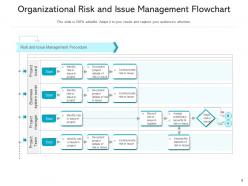
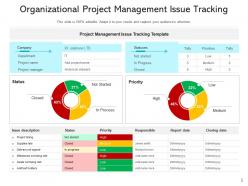
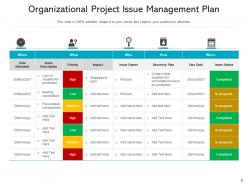
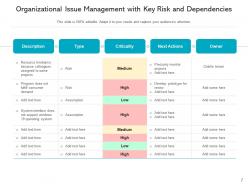

FAQs for Issue Management Organizational Flowchart
Key components of an effective issue management process include issue identification, assessment and prioritization, response strategy development, stakeholder communication, and monitoring with evaluation. These components work together by enabling organizations to detect problems early, allocate resources strategically, and maintain stakeholder trust, with many companies finding that structured processes significantly reduce crisis escalation while enhancing operational resilience.
Organizations proactively identify potential issues through risk assessments, stakeholder feedback systems, data analytics monitoring, early warning indicators, and regular environmental scanning. These approaches enable companies to detect emerging challenges across operations, compliance, and market conditions, with many financial services and healthcare institutions finding that systematic monitoring reduces crisis response costs while maintaining stakeholder confidence.
Communication serves as the foundation of successful issue management, enabling transparency, coordination, stakeholder alignment, and rapid response across all organizational levels. Through clear protocols and regular updates, organizations streamline decision-making, minimize confusion, and maintain trust with customers and partners, while ensuring all teams work cohesively toward resolution, ultimately delivering faster outcomes and stronger stakeholder relationships.
Technology enhances issue tracking through automated monitoring systems, AI-powered analytics, integrated communication platforms, real-time dashboards, and predictive modeling capabilities. These tools streamline resolution by enabling faster incident detection, automated escalation protocols, and comprehensive audit trails, with many organizations finding that strategic technology integration reduces response times while improving transparency and accountability across teams.
Common issue management challenges include delayed identification, poor communication across teams, inadequate resource allocation, lack of prioritization frameworks, and insufficient tracking systems. These obstacles can be overcome by implementing automated monitoring tools, establishing clear escalation protocols, and creating cross-functional response teams, with many organizations finding that proactive issue registers and regular stakeholder updates significantly reduce resolution times while enhancing operational efficiency.
Stakeholder engagement improves through regular communication updates, transparent progress reporting, clear role definitions, and collaborative decision-making processes. Organizations enhance involvement by establishing dedicated communication channels, scheduling structured feedback sessions, and implementing stakeholder mapping tools, with many companies finding that proactive engagement reduces resolution time and builds stronger long-term relationships.
Effective issue management metrics include resolution time, escalation rates, customer satisfaction scores, issue recurrence rates, and first-contact resolution percentages. These measurements enable organizations to track operational efficiency, identify process bottlenecks, and enhance service quality, with many companies finding that comprehensive metrics ultimately deliver improved customer experiences and reduced operational costs.
Teams can prioritize issues by implementing severity-based classification systems, establishing clear escalation protocols, and using impact-versus-urgency matrices to guide resource allocation. Through automated ticketing systems and regular stakeholder communication, organizations streamline resolution workflows, minimize downtime, and enhance customer satisfaction, with many IT departments and customer service teams finding that structured prioritization frameworks ultimately deliver faster response times and improved operational efficiency.
Effective root cause analysis strategies include the 5 Whys technique, fishbone diagrams, fault tree analysis, failure mode analysis, and data triangulation methods. These approaches streamline problem-solving by systematically identifying underlying factors, eliminating recurring issues, and preventing future disruptions, with many organizations finding that structured methodologies ultimately deliver faster resolution times and enhanced operational efficiency.
Organizational culture significantly shapes issue management through communication patterns, decision-making processes, risk tolerance levels, and accountability structures. Companies with open, collaborative cultures typically address issues more transparently and quickly, while hierarchical organizations may experience delayed responses, with many finding that cultural alignment between leadership values and issue resolution practices ultimately determines long-term organizational resilience.
Best practices for documenting and reporting issues include standardized templates, clear severity classifications, detailed impact assessments, comprehensive root cause analysis, and defined escalation procedures. These practices streamline resolution workflows by ensuring consistent information capture, enabling faster decision-making, and facilitating knowledge transfer across teams, with many organizations finding that systematic documentation ultimately reduces recurring issues and enhances operational efficiency.
Lessons learned from past issues can be integrated through systematic documentation, pattern analysis, and process refinement that transforms reactive responses into proactive prevention strategies. Organizations increasingly establish knowledge repositories, conduct post-incident reviews, and update response protocols, with many financial services and healthcare institutions finding that this approach reduces recurring issues while enhancing operational resilience.
Issue management varies significantly across industries, with healthcare focusing on patient safety protocols, financial services prioritizing regulatory compliance and risk mitigation, manufacturing emphasizing operational continuity, and retail concentrating on customer experience protection. While each sector faces unique challenges, successful adaptation involves implementing scalable communication frameworks, establishing cross-functional response teams, and leveraging industry-specific expertise, with many organizations finding that combining sector knowledge with proven methodologies delivers faster resolution times and enhanced stakeholder confidence.
When an issue escalates to potential crisis status, teams should immediately activate their crisis management protocol, establish a dedicated response team with clear roles, implement accelerated communication channels, and begin stakeholder notification procedures. This structured approach enables organizations to contain damage, maintain transparency with customers and partners, and preserve brand reputation, with many companies finding that swift, coordinated responses often transform potential crises into demonstrations of operational resilience.
Essential training includes crisis communication protocols, stakeholder mapping techniques, risk assessment frameworks, decision-making under pressure, and media relations management. Organizations increasingly invest in simulation exercises, cross-functional workshops, and real-time scenario planning, with many finding that combining technical knowledge with emotional intelligence training delivers stronger leadership capabilities and faster issue resolution during critical business situations.
-
Use of different colors is good. It's simple and attractive.
-
It saves your time and decrease your efforts in half.
-
Easy to edit slides with easy to understand instructions.
-
Great quality product.
-
Editable templates with innovative design and color combination.