


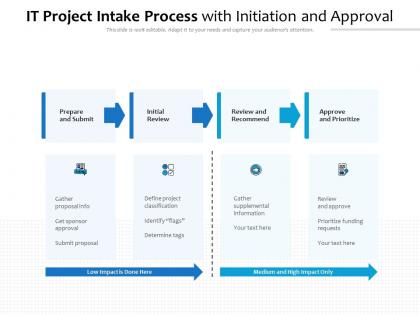
It project intake process with initiation and approval




Try Before you Buy Download Free Sample Product
 Impress Your
Audience
 100%
Editable
 Save Hours
of Time


Our It Project Intake Process With Initiation And Approval are topically designed to provide an attractive backdrop to any subject. Use them to look like a presentation pro.
People who downloaded this PowerPoint presentation also viewed the following :
It project intake process with initiation and approval with all 2 slides:
Use our It Project Intake Process With Initiation And Approval to effectively help you save your valuable time. They are readymade to fit into any presentation structure.


FAQs for It project intake process with
Honestly, I'd focus on four things when looking at IT proposals. Does it actually match what your company's trying to do? Half the time these "critical" projects don't even support the main goals. Then figure out if you've got the budget, people, and time to pull it off. What could go wrong - security issues, downtime, technical headaches? That stuff matters more than people think. Finally, crunch the numbers on ROI versus what you're putting in. I always make a basic scoring sheet for these four areas so I can compare apples to apples and actually explain my decisions later.
Here's what works: force every project request to tie directly to business goals or KPIs in your intake form. No wiggle room there. I've watched way too many "this tech is shiny" projects burn through budgets for zero impact. Build a scoring system that puts strategic value first. Get business people involved in reviews, not just the IT team - they'll spot BS faster. Oh, and check quarterly whether your ongoing projects still make sense as priorities shift. Honestly, most companies skip this step and wonder why half their initiatives go nowhere. Strategic justification can't be optional.
Dude, you HAVE to get stakeholders involved from day one or you're screwed. Find your business owners, actual users, IT people, whoever controls the budget - get them all talking early about what they need and what success looks like. I've watched so many projects die because someone built this amazing thing that literally nobody wanted to use. It's painful. Figure out who actually makes decisions vs who just wants updates. That distinction will save your sanity later when things get messy (and they will).
Check out Jira, ServiceNow, or Monday.com for centralizing intake requests. Most teams totally botch the intake forms though - you need consistent fields that actually help with prioritization decisions. These platforms let you set up automated workflows and approval processes. For evaluation, try stage-gate processes or weighted scoring matrices to stay objective. Kanban boards work great for visual pipeline stuff too. My old team went overboard with complexity at first. Start simple - pick one tool, get your intake form right, then build from there.
So basically these frameworks stop you from just picking projects based on who screams loudest in meetings. You score stuff against real criteria - business value, how much it'll cost, risk level, whether it actually fits your strategy. Way better than the "this feels right" method we've all seen fail spectacularly. ROI calculations, weighted scoring, that kind of thing. Plus when Karen from accounting inevitably loses her mind because her project got bumped, you've got actual data to back up your decision. Honestly, just start simple and tweak as you learn what works.
ROI and NPV are your best friends here - gotta know if it's actually worth the money. Technical complexity matters too, plus whether your team can handle it. I always check if projects align with company goals and what the risk looks like. Honestly, I've watched too many "cool ideas" crash because nobody thought about timelines or resources. Cost-benefit ratios are clutch. Also factor in stakeholder impact and any compliance stuff if you're in a regulated industry. My move? Build a scoring system that weights everything based on what your company actually cares about. Way better than going with gut feelings.
Okay so first thing - figure out what resources you actually have before saying yes to anything. I'd create some kind of simple scoring system for requests based on impact vs how much work they'll be. Most places totally bomb at this part, honestly. Your intake form should grab resource needs right away, then make stakeholders rank stuff when you're swamped. Monthly planning meetings are clutch for moving people around when priorities shift. The biggest thing though? Just be upfront about trade-offs from the start. Nobody likes surprises later when timelines blow up.
Honestly, structured intake forms will save your sanity - make business units spell out what they actually want, when they need it, and how they'll measure success. Set up regular check-ins so nobody goes radio silent for weeks. Get liaisons who can translate between business-speak and tech-speak (trust me, this matters more than you'd think). Shared project boards work great so stakeholders can see progress without constantly pinging you. Oh, and don't let IT just collect requirements then vanish - communication needs to flow both ways from the start.
Look, risk assessments are basically checkpoints that decide if your project gets approved and how fast it moves. You gotta identify technical, security, and business risks upfront - yeah it's annoying but trust me, it prevents disasters later. The committee uses this stuff to figure out resources and timelines. Projects with higher risk need more approvals and planning before anything happens. Oh and don't sugarcoat potential problems thinking it'll help you. Being honest about what could go wrong actually makes your proposal stronger since they appreciate the transparency.
Honestly, most projects blow up because nobody bothered getting requirements straight from the start. Teams just say "sure, we can do that" without checking if they actually have time or people. The absolute worst thing (and I've seen this everywhere) is when business folks skip IT entirely and go bug developers directly. Timelines end up being total fantasy, and half the time you're missing some crucial tech dependency that kills everything later. Oh, and don't get me started on projects with zero success metrics - how do you even know when you're done? Force people to fill out a real intake form before they ask for anything. Makes them think it through first.
Dude, start with automated routing - that alone will save you hours. AI can sort through requests by keywords and impact, plus it handles all the boring stuff like status updates and flagging incomplete forms. No more email ping-pong with people. Historical data helps predict timelines too, which is pretty solid for planning ahead. Honestly, the administrative stuff used to drive me crazy at my old job. You'll actually get to focus on strategy instead of constantly shuffling paperwork around. Just don't try to automate everything at once - work up to the fancy predictive features.
Okay so basically you want everything written down so people can't complain later about playing favorites. Fair evaluation means using the same standards for everyone - otherwise you'll deal with endless drama about why Project X got approved but theirs didn't. Trust me, six months from now when someone asks "wait, why did we reject that again?" you'll be so glad you wrote down your reasoning instead of trying to remember. Also saves you from explaining the whole process every time someone new joins the team. Keep your criteria somewhere visible and jot down quick notes on why you made each decision.
Just build quick surveys into your workflow - like right after approvals or rejections. Don't overthink it though, simple "what worked/what didn't" questions are totally fine. Quarterly stakeholder check-ins help too. Track stuff like how long approvals take and if people are happy with submissions. Honestly, most teams I know get way too hung up on creating the perfect survey when basic ones work great. The real trick? Actually doing something with the feedback you get. Maybe your form's confusing or too long. Monthly improvement sessions where you can adjust things based on what people tell you make a huge difference.
Dude, you absolutely need different teams involved from the start - that's what makes or breaks projects honestly. IT, finance, ops, whoever's relevant should be in those intake meetings because they'll spot problems you'd never think of. Security issues, compliance headaches, resource clashes, all that fun stuff. Getting everyone on board early saves you from those nasty surprises later when someone's like "oh wait, we can't actually do this." It's way easier to figure out what you really need versus what people think they want when you have all the perspectives upfront. Just make it part of your standard process and stick to it.
Okay so when your company strategy changes, first thing - update your project intake criteria right away. Don't let old scoring systems hang around or you'll keep greenlighting stuff that made sense before but doesn't now. Honestly, I've watched teams burn through so much budget this way and it's just brutal. Also go back through your current projects and figure out what still fits. Better to be upfront about realigning than scrambling later. Oh and set quarterly check-ins so your intake process doesn't drift out of sync again.
-
Appreciate the research and its presentable format.
-
Great quality product.
-
Great product with highly impressive and engaging designs.
-
Easy to edit slides with easy to understand instructions.