


Job Description Of Supermarket Key Management Grocery Store Business Plan BP SS





Try Before you Buy Download Free Sample Product
 Impress Your
Audience
 100%
Editable
 Save Hours
of Time


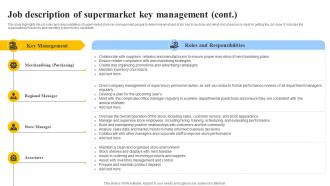
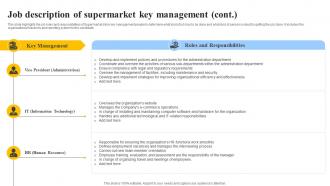
This slide highlights the job roles and responsibilities of supermarket key management people to determine what kind of job has to be done and what kind of person is ideal for getting the job done. It includes the organizational hierarchy and reporting system to the candidate.
People who downloaded this PowerPoint presentation also viewed the following :
Job Description Of Supermarket Key Management Grocery Store Business Plan BP SS with all 11 slides:
Use our Job Description Of Supermarket Key Management Grocery Store Business Plan BP SS to effectively help you save your valuable time. They are readymade to fit into any presentation structure.









FAQs for Job Description Of Supermarket Key Management Grocery Store Business
Supermarket key management challenges include tracking numerous keys across multiple departments, preventing unauthorized access to sensitive areas, managing employee turnover and key handovers, ensuring compliance with security protocols, and minimizing operational disruptions from lost keys. These issues create security vulnerabilities, inventory shrinkage risks, and administrative burdens, with many retail chains finding that manual key tracking systems ultimately compromise both security effectiveness and operational efficiency.
Key management software streamlines supermarket operations by automating key tracking, providing real-time access logs, and eliminating manual check-out procedures across multiple store locations. Through digital integration, supermarket chains enhance security protocols, reduce administrative overhead, and enable centralized monitoring of staff access, while minimizing key loss incidents and ultimately delivering improved operational efficiency and cost savings.
Poor key management in supermarkets creates significant security vulnerabilities including unauthorized access to cash registers, storage areas, and administrative offices, data breaches from unsecured systems, inventory theft, and compromised customer information. These risks ultimately lead to substantial financial losses, regulatory compliance issues, and damaged customer trust, with many retail chains finding that inadequate key controls can expose multiple store locations simultaneously.
Supervisory roles establish hierarchical key distribution systems in supermarkets, with managers controlling master keys, department heads accessing section-specific areas, and shift supervisors managing time-sensitive zones. This structured approach streamlines operational efficiency by ensuring appropriate personnel access critical areas like cash offices, storage rooms, and security systems, while maintaining accountability through clear authorization chains, ultimately delivering enhanced security protocols and reduced unauthorized access incidents.
Supermarkets can enhance key management accountability through digital tracking systems, mandatory sign-out logs, regular key audits, role-based access controls, and clear protocols for key transfers between shifts. These practices streamline operations by reducing unauthorized access, minimizing security breaches, and ensuring proper documentation, with many retail chains finding that automated key management systems ultimately deliver improved operational efficiency and enhanced loss prevention.
Supermarkets should conduct comprehensive key management audits quarterly, with monthly spot checks on high-risk areas like safes, cash offices, and restricted storage zones. This frequent monitoring enables early detection of unauthorized access, ensures compliance with security protocols, and minimizes inventory shrinkage, with many retail chains finding that regular audits significantly reduce internal theft while streamlining operational oversight.
Employee training and awareness are fundamental to supermarket key management, ensuring staff understand access protocols, security procedures, key handling responsibilities, and incident reporting requirements. Through comprehensive training programs, supermarkets achieve reduced security breaches, improved accountability, and enhanced operational efficiency, with many retail chains finding that well-trained employees ultimately deliver stronger loss prevention and streamlined daily operations.
Supermarkets can balance convenience and security through role-based access controls, time-restricted permissions, biometric authentication, digital key management systems, and automated audit trails. These technologies streamline operations by enabling quick staff access during peak hours, maintaining security through real-time monitoring, and ultimately delivering operational efficiency while protecting valuable assets, with many retail chains finding significantly reduced security incidents.
Ineffective key management creates significant legal vulnerabilities including liability for theft losses, regulatory non-compliance with food safety standards, potential negligence claims from security breaches, and violation of insurance policy requirements. These failures expose supermarket operators to lawsuits, financial penalties, and regulatory sanctions, while potentially invalidating coverage claims, ultimately jeopardizing operational licenses and competitive positioning.
Key tracking significantly enhances inventory management by providing real-time visibility into access patterns, automated audit trails, and precise control over high-value storage areas like pharmacies, electronics sections, and cash management zones. This technology streamlines loss prevention by eliminating unauthorized access, reducing internal theft incidents, and enabling faster investigation responses, with many retail chains finding that integrated key management systems ultimately deliver improved inventory accuracy and reduced shrinkage rates.
Innovative supermarket key management solutions include smart lock systems, biometric access controls, mobile-based digital keys, cloud-managed key tracking platforms, and IoT-enabled security networks. These technologies streamline operations by eliminating physical key distribution, providing real-time access monitoring, and enabling remote management capabilities, with many retail chains finding that automated key systems reduce security costs while enhancing operational efficiency.
Mobile technology integration streamlines supermarket key management through digital key distribution, real-time access monitoring, and automated audit trails. These solutions enable managers to remotely grant or revoke access, track employee movements across secure areas, and generate instant compliance reports, ultimately reducing administrative overhead while enhancing security transparency and operational efficiency.
Supermarkets should evaluate key management systems using metrics like access audit compliance, key retrieval time, unauthorized access incidents, system uptime, and cost per access point. These measurements help grocery chains streamline security operations, reduce shrinkage, and ensure regulatory compliance, with many retailers finding that comprehensive tracking ultimately delivers enhanced asset protection and operational efficiency.
Supermarkets ensure regulatory compliance through comprehensive key management systems that include detailed audit trails, role-based access controls, regular key rotation schedules, and automated monitoring protocols. These systems streamline compliance reporting while enhancing security across multiple locations, with many retail chains finding that centralized key management platforms significantly reduce regulatory violations and enable faster audits, ultimately delivering operational efficiency and reduced compliance costs.
Successful supermarket key management case studies include Walmart's centralized digital key tracking system, Target's role-based access protocols, and Kroger's automated key dispensing solutions. These implementations streamline operations by reducing key loss incidents, enhancing security compliance, and minimizing management overhead, with many retail chains finding that strategic key management delivers improved operational efficiency and reduced security vulnerabilities.
-
I never had to worry about creating a business presentation from scratch. SlideTeam offered me professional, ready-made, and editable presentations that would have taken ages to design.
-
Good research work and creative work done on every template.