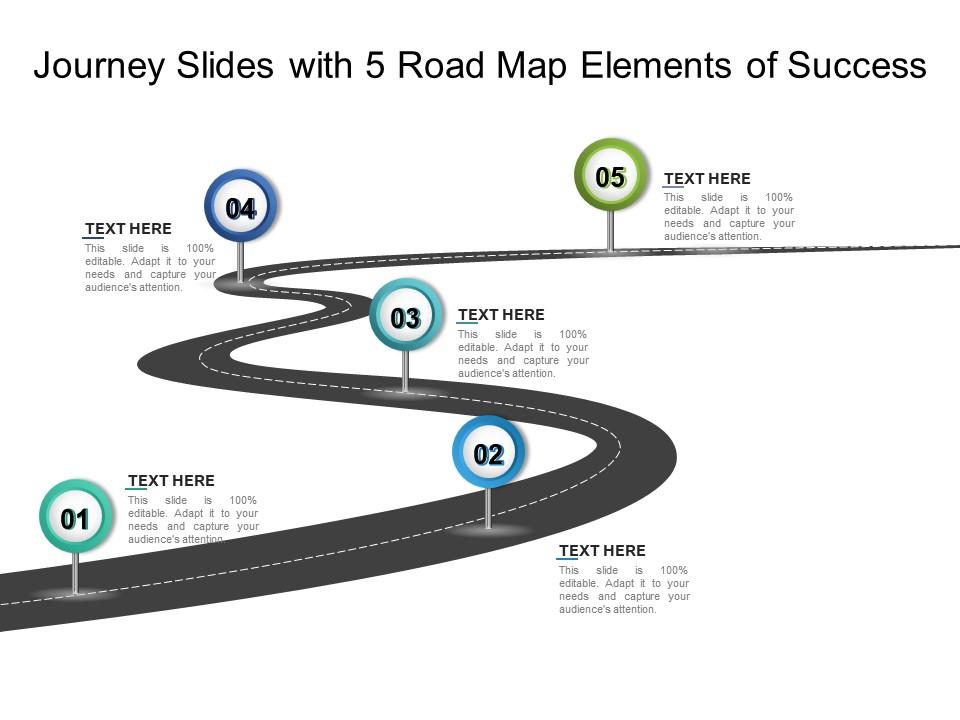
Journey slides with 5 road map elements of success
Try Before you Buy Download Free Sample Product
Audience
Editable
of Time
Our Journey Slides With 5 Road Map Elements Of Success are explicit and effective. They combine clarity and concise expression.
People who downloaded this PowerPoint presentation also viewed the following :
Journey slides with 5 road map elements of success with all 2 slides:
Give your audience a fulfilling experience. They will find our Journey Slides With 5 Road Map Elements Of Success elevating.
FAQs for Journey slides with 5 road map
Ok so here's what actually works: write down 3 specific goals for the next 90 days, then break each into weekly chunks. Sounds basic but most people mess this up by skipping the weekly part - then they wonder why they're stuck after a month. You'll want to spot potential roadblocks early and have backup plans ready. Schedule monthly check-ins to see how you're doing and tweak things if needed. Oh, and build in small wins along the way because honestly? Those little victories are what keep you going when motivation starts to fade. The whole thing falls apart without regular progress tracking.
Here's what works for me - use the SMART thing where goals are specific, measurable, achievable, relevant, and time-bound. So instead of "get better at marketing," go with "boost website traffic 25% in 6 months through SEO." You need actual numbers to track, not fluffy stuff that sounds good but means zilch. I made this mistake for years saying I wanted to "be more successful" - what does that even mean?? Break big goals into smaller monthly chunks you can actually measure. Pick one major thing this quarter and nail down exactly what winning looks like with real metrics.
Honestly? Time management makes or breaks your roadmap. I learned this the hard way when I kept missing deadlines and bouncing between random tasks like a pinball. You've got to give each milestone realistic time chunks and - this part's key - build in extra time for when stuff inevitably goes sideways. Treat those time blocks like actual appointments you can't blow off. Also prioritize the activities that actually push you toward your big goals, not just busy work that feels productive. Try time-boxing your roadmap stuff this week. I bet you'll notice how much more focused you get. It's honestly a game-changer once you stick with it.
Honestly, the worst thing you can do is be super vague about what you want or go completely overboard with unrealistic goals. I learned this the hard way lol. Don't treat your roadmap like it's written in permanent ink either - life throws curveballs and you need to roll with them. Build in buffer time because stuff WILL go wrong. Monthly check-ins are clutch for staying realistic about your progress. Oh, and make your goals specific enough that you'll actually know if you hit them or not. Flexibility is everything.
Honestly, visualization just hits different than regular planning. Your brain starts picking up on opportunities you'd normally miss because you're engaging those pattern-recognition parts, not just the logical stuff. Mental imagery, simple sketches, visual maps - whatever works. I used to think you needed some fancy software but nah, even basic drawings do the trick. The whole point is being able to actually "see" yourself moving through each step. Makes it feel more real somehow? Try sketching out just one piece of your roadmap this week and see what happens.
Honestly depends what vibe you're going for! Miro and Lucidchart are solid for visual stuff - mapping out milestones and all that. Asana, Notion, or Monday.com work great if you want proper project tracking. I'm weirdly obsessed with Notion right now because the custom dashboards are *chef's kiss*. Though sometimes I still just throw everything in a Google Sheets template because I'm lazy like that. Pick whatever you'll actually stick with instead of abandoning after a week. You can always switch later once you figure out what actually works for your brain.
Look, adaptability is everything here. Your roadmap will hit walls you never saw coming - market shifts, random obstacles, whatever. I'd set up monthly check-ins to see what's actually working. Build some cushion time into deadlines too, because stuff always takes longer than you think. Have backup plans for the big stuff. The key thing? Don't get married to your original plan. I've seen people stick to roadmaps that clearly weren't working anymore just because they spent so much time creating them. When you need to change direction, just do it fast.
Focus on three things: hitting specific numbers, staying on timeline, and actually making progress that matters. Like instead of "improve performance," track "increase sales by 15%" - way more concrete. Monthly check-ins work great for this. I honestly think most people get obsessed with busy work that looks productive but doesn't move anything forward. Ask yourself: "Am I actually closer to my goal than last month?" That's the real test. Timeline's important too - falling behind early usually means trouble later. Quality matters more than just checking boxes though.
Honestly, it's pretty straightforward - just swap out the milestones for your specific field. Software engineers need coding languages and tech certs, marketing people focus on campaign results and brand strategy stuff. Same basic framework though. Timelines change too since some industries move way faster than others (looking at you, tech world). Here's what actually works: find 3-5 people killing it in your industry and just reverse-engineer how they got there. Sounds kinda stalker-ish but it's the best way to map out realistic steps. Then plug those into whatever roadmap structure you're using.
Honestly, break it down into weekly wins instead of waiting forever for the big payoff. You'll feel way better hitting small targets regularly. Get someone who'll actually call you out when you're being lazy - like seriously, this changed everything for me. I know it sounds dumb, but picture your goal every day. Some kind of visible progress tracker helps too, whether it's an app or just a chart on your wall. Oh and when you inevitably lose steam, don't rely on motivation - just stick to whatever routine you've built. Maybe start with a check-in this Friday?
Think of your short-term milestones as actual stepping stones, not just random stuff to cross off your list. I did this wrong for ages - setting weekly goals that had zero connection to my bigger plans. Honestly, it's such a waste of time. Each milestone should build a skill, create momentum, or move you toward your long-term vision. Do quarterly check-ins to see if your short-term wins still make sense with the big picture. If they don't? Pivot fast instead of staying busy with meaningless tasks.
Honestly, having the right people around you changes everything. You'll actually stick to your goals instead of abandoning them after two weeks. When things get messy (and they will), you need people who'll call you out when you're slacking and cheer when you hit milestones. Your friends often catch stuff you're totally blind to. They also know people who know people - networking happens naturally that way. Just be picky about your inner circle though. You want people genuinely rooting for you, not fake supporters who secretly hope you fail.
Look, I get that setbacks suck, but they're basically free data if you use them right. When something goes wrong, dig into the specifics - what assumptions were off? What skills are you missing? Write that stuff down and actually change your plan based on it. Don't just keep doing the same thing hoping it'll work next time (we've all been there though). Your roadmap needs to be flexible, not set in stone. The people who really make it happen? They treat every failure like research for their next shot. Sounds cheesy but it works.
Build check-ins right into your roadmap - quarterly reviews work best for me. Get your stakeholders, customers, and team together at major milestones to see what's actually working. Honestly, you'd be shocked how much stuff you miss when you're just grinding through tasks. Set up ongoing feedback too, like surveys or team retrospectives. Here's the thing though - don't just collect feedback for the sake of it. Tie everything back to real roadmap changes. Pick your top 3 feedback sources and book that first review session this month. Trust me on this one.
Make it visual first - that's honestly half the battle. Throw it on Miro or even just a shared Google Doc where everyone can jump in and edit. People get so much more invested when they're not just getting handed some roadmap from above, you know? Regular check-ins are crucial too. We do them weekly and actually adjust stuff based on what's bombing or crushing it. The whole point is getting everyone to feel like they own a piece of it. Also works way better than the old "here's your orders" approach, which... yeah, nobody loves that.
No Reviews