

Laser Ablation Vs Craniotomy PPT Template ACP





Try Before you Buy Download Free Sample Product
 Impress Your
Audience
 100%
Editable
 Save Hours
of Time


Explore the cutting-edge comparison of Laser Ablation and Craniotomy in this professional PowerPoint presentation. Delve into their methodologies, advantages, and clinical applications, providing insights for healthcare professionals. Enhance your understanding of these innovative surgical techniques and their impact on patient outcomes in neurosurgery.
People who downloaded this PowerPoint presentation also viewed the following :
Laser Ablation Vs Craniotomy PPT Template ACP with all 44 slides:
Use our Laser Ablation Vs Craniotomy PPT Template ACP to effectively help you save your valuable time. They are readymade to fit into any presentation structure.












FAQs for Laser Ablation Vs Craniotomy
Hey! So basically, craniotomy means they're opening up your skull with a bone flap - pretty major surgery. Laser ablation is way less invasive, just a tiny hole and they use MRI to guide a laser that heats up the target tissue. With craniotomy, surgeons can actually see and touch everything directly, which is honestly sometimes necessary for tricky cases. But laser ablation? You might go home the same day instead of staying in the hospital for days. The downside is it's not suitable for every situation - depends on where the problem is and how complex it gets. Your doctor will know which route makes sense for your specific case.
Recovery's night and day different with laser ablation - your patients are literally walking around the next day instead of being stuck in bed for weeks. Think about it: craniotomy means cracking the whole skull open, massive incision, tons of swelling. That's brutal recovery. With laser you just drill one tiny hole and zap exactly what needs fixing. Way less trauma to everything around it. Honestly, the difference is crazy obvious when you see it. Most people bounce back in 24-48 hours max. If the tumor's in a spot where you can reach it with laser, that's totally the way to go.
Laser ablation's your go-to for those tricky deep spots - hypothalamic hamartomas, small hippocampal foci, tumors sitting in critical brain areas where you really don't want to go digging around. Recovery is so much faster than a full craniotomy, which is clutch for older patients or anyone who's not a great surgical candidate. Works best when the lesion's under 3cm and shows up clearly on imaging. I mean, you're trading some precision but gaining way less invasiveness. Sometimes targeted destruction does the job just fine without needing to remove every last bit of tissue.
Honestly, the precision is what sold me on it. You're hitting lesions within millimeters instead of doing the whole open skull thing - way less damage to healthy tissue. Patients bounce back so much faster too. Less pain, shorter stays, back to normal life quicker. I mean, when you can avoid major cognitive issues just by being more precise, that's a no-brainer. The recovery difference is night and day compared to traditional surgery. Definitely something to pitch for the right candidates - though obviously not everyone's a fit for it.
So laser ablation definitely has risks - you might get thermal damage to nearby tissue or not fully treat the lesion. Sometimes there's neurological issues too. But honestly? Way better than craniotomy complications. That's the scary stuff - infections, bleeding, seizures, even stroke risk. Plus craniotomy is just brutal surgery overall. Recovery's night and day though. Laser patients usually bounce back in a couple days versus weeks for the open surgery route. Really comes down to where the lesion is and how big, plus your patient's general health. But yeah, laser's becoming the go-to when it'll work.
Yeah so the imaging is basically what makes the whole thing work. You get live MRI showing exactly where your probe is positioned, plus it tracks tissue temperature while you're ablating. The thermal imaging lets you control the ablation zone super precisely - destroying the target while keeping healthy brain tissue safe. Honestly it's pretty incredible compared to old-school surgery. Without that real-time feedback you'd be flying blind, which... no thanks. Just make sure whatever facility you're looking at has solid MRI capabilities first.
So basically different wavelengths hit different depths in tissue. The shorter ones like 532nm get soaked up by blood vessels right away - perfect for surface vascular stuff but they don't go deep. Meanwhile 1064nm punches way deeper, which is clutch for those buried subcortical lesions you'd otherwise need to crack the skull wide open for. Water absorption changes things too, affects how the heat spreads around. Honestly the trick is just matching your wavelength to how deep you need to go and what you're actually targeting. That way you nail the bad tissue without cooking everything else around it.
So laser ablation costs way more upfront because of all that fancy MRI equipment they need. But here's the thing - your recovery is like days instead of weeks, so you're not bleeding money on hospital bills. Traditional craniotomy seems cheaper at first, but then you're looking at ICU time, longer surgery, rehab... it adds up fast. Insurance is totally hit or miss with both options honestly - definitely worth calling them first. The biggest win with laser though? You'll actually be back to work pretty quickly, which honestly makes a huge difference for most families' finances.
Dude, the real-time MRI thermal monitoring is a total game changer - you literally watch temperature maps update as it's happening. Fiber-optic delivery systems give you crazy precise targeting now. The newer diode lasers don't fluctuate like the old CO2 ones did, so tissue destruction is way more predictable. Oh, and cooled-tip catheters fixed that annoying charring problem at the probe site. For deep lesions especially, check out the MR-guided platforms. They've made hitting subcortical targets so much more reliable than before - honestly kind of impressive how far it's come.
Yeah so laser ablation is way harder at first - you're juggling MRI guidance plus learning the ablation tech at the same time. Craniotomy's more straightforward since you can actually see everything, but honestly both take years to get good at. Your first 20-30 laser cases will be pretty stressful while you figure out the stereotactic planning and thermal monitoring stuff. Once you get the hang of it though, laser becomes way more predictable than open surgery. Start with simple lesions first and really nail down the software before you try anything crazy.
Honestly, it's night and day between these two procedures. Laser ablation patients go home same day or maybe overnight - super quick recovery. They're back to normal stuff within days, barely need pain meds. Craniotomy though? That's a whole different beast. Those patients stick around the hospital for days, need way more monitoring, serious pain management, wound care... the works. Plus they can't do much for weeks after. It's basically outpatient vs major surgery vibes. For discharge planning, laser folks just need basic "don't overdo it" instructions while craniotomy patients need full rehab coordination.
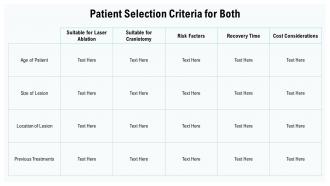
Age is huge here - older folks with multiple health issues do way better with laser since it's so much gentler. Can't handle general anesthesia well? Laser's your friend. Bleeding problems? Same deal. Healthy younger patients though? They bounce back from craniotomy like it's nothing, honestly. Location's another thing - those deep, tricky spots where you really need precision work are perfect for laser. Oh, and bigger lesions sometimes just need the open approach regardless. Really comes down to matching what you do to what the patient can actually take, not just going by the pretty pictures on the MRI.
Look, the bleeding difference is huge. With laser ablation you're basically burning as you cut, so blood vessels get sealed automatically from the heat. Pretty neat actually. Open craniotomy? You're slicing through brain tissue and dealing with bleeding the whole time. Plus they only need a tiny hole instead of opening your skull up. The thermal effect handles most capillaries on its own - you'll see maybe 50ml of blood loss versus hundreds with regular surgery. Honestly, for deep stuff that's hard to reach, this bleeding advantage alone makes laser worth considering.
Honestly, it really comes down to what kind of tumor you're dealing with and where it's sitting. Craniotomy usually gets you better complete removal rates - that's just the reality of having direct access. But laser ablation? Total game changer for those deep, sketchy locations where going in surgically would be nuts. The trade-off is you might not get everything out, so recurrence can be higher. For mets and smaller primaries though, laser results are actually pretty decent. I'd look at the specific pathology and how risky surgery would be for this particular patient. That'll tell you which route gives better long-term control.
Look, it really depends on what your patient can handle and what you're comfortable with. Some patients are absolutely terrified of open surgery or they've got other health issues, so they'll take laser ablation even if recurrence rates might be higher. Honestly, your own skill set matters too - I know surgeons who stick with traditional microsurgery just because that's what they're rock solid at. Age and lesion stuff obviously plays in, but half the time it comes down to sitting down and being real with them about the pros and cons. Let them decide what fits their life better.
-
Professionally designed slides with color coordinated themes and icons. Perfect for enhancing the style of the presentations.
-
The best part about SlideTeam is their meticulously prepared presentations (complete-decks and single-slides both), infused with high-quality graphics and easy to edit. All-in-all worthy products.