

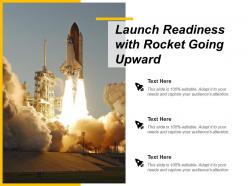
Launch readiness with rocket going upward





Try Before you Buy Download Free Sample Product
 Impress Your
Audience
 100%
Editable
 Save Hours
of Time


Encourage intelligent debate with our Launch Readiness With Rocket Going Upward. Get folks to indulge in beneficial discussions.
People who downloaded this PowerPoint presentation also viewed the following :
Launch readiness with rocket going upward with all 5 slides:
Our Launch Readiness With Rocket Going Upward contain instructive images. The basic concepts become easy to assimilate.


FAQs for Launch readiness with
Key milestones for launch readiness include market validation completion, product testing and quality assurance, operational infrastructure setup, marketing campaign preparation, and stakeholder alignment confirmation. These milestones work together to minimize risk and maximize success, with many organizations finding that systematic milestone tracking enables smoother launches, reduces post-launch issues, and ultimately delivers stronger market entry and competitive positioning.
Stakeholder feedback can be incorporated through structured review sessions, targeted surveys, cross-functional workshops, and iterative checklist refinements based on departmental input. By systematically collecting insights from sales, marketing, operations, and customer service teams, organizations can identify potential gaps, validate assumptions, and enhance launch preparedness, ultimately delivering more comprehensive strategies and reducing post-launch complications.
Market research serves as the foundation for launch readiness by validating target audience preferences, competitive positioning, pricing strategies, and market demand forecasting. Through comprehensive consumer insights and competitor analysis, businesses can identify potential gaps, refine product features, and optimize go-to-market strategies, with many organizations finding that thorough research significantly reduces launch risks while enhancing market penetration success.
Companies ensure launch readiness by establishing clear communication protocols, defining roles and responsibilities, conducting comprehensive training sessions, implementing regular check-ins, and creating detailed contingency plans. Through cross-functional collaboration and milestone tracking, teams can identify potential gaps early, streamline coordination across departments, and ultimately deliver cohesive launches that meet market expectations and drive competitive advantage.
Pre-launch metrics include conversion rates, system performance benchmarks, user engagement baselines, customer acquisition costs, and inventory levels. Post-launch tracking focuses on real-time performance monitoring, customer satisfaction scores, revenue impact, and operational efficiency indicators, with many organizations finding that immediate feedback loops enable rapid adjustments and ultimately deliver sustained competitive advantage.
Presentation templates enhance launch strategy communication by standardizing messaging, ensuring visual consistency, streamlining complex timelines, and facilitating stakeholder alignment across departments. These templates enable marketing teams, product managers, and executives to deliver cohesive presentations that clearly articulate go-to-market plans, milestone tracking, and resource allocation, ultimately accelerating decision-making and launch execution.
**INPUT**: How do different industries define and evaluate launch readiness? **OUTPUT**: Launch readiness varies significantly across industries, with technology companies focusing on user testing and system stability, pharmaceutical firms emphasizing regulatory compliance and safety protocols, and manufacturing sectors prioritizing supply chain optimization and quality assurance. While healthcare organizations evaluate clinical trials and market access, financial services institutions assess risk management frameworks and regulatory approvals, ultimately delivering streamlined market entry strategies. [Word count: 60]
Launch contingency plans should include rollback procedures, alternative communication strategies, resource reallocation protocols, stakeholder notification systems, and crisis management frameworks. These safeguards enable organizations to quickly pivot messaging, restore previous systems, manage customer expectations, and maintain market confidence, with many companies finding that comprehensive contingency planning ultimately minimizes disruption and preserves competitive advantage.
Social media builds launch excitement through teaser campaigns, behind-the-scenes content, countdown posts, interactive polls, and influencer partnerships that create anticipation while gathering valuable audience feedback. These strategies enable companies to assess market readiness, refine messaging, and build community engagement, with many organizations finding that strategic social campaigns significantly boost launch visibility and customer participation.
Sales teams need comprehensive product knowledge training, competitive positioning materials, customer objection handling scripts, pricing and packaging guidelines, and hands-on demo practice sessions. These resources enable representatives to confidently articulate value propositions, address prospect concerns, and navigate complex sales conversations, with many organizations finding that well-prepared teams achieve significantly higher conversion rates and faster market penetration.
Launch readiness directly influences customer satisfaction by ensuring seamless product experiences, reliable performance, and meeting promised expectations from day one. Well-prepared launches minimize technical issues, support gaps, and feature shortfalls that typically frustrate early adopters, while strengthening brand credibility and market confidence, ultimately delivering positive word-of-mouth and competitive differentiation in crowded markets.
Common pitfalls during launch readiness include inadequate market research, insufficient testing protocols, poor cross-functional coordination, unrealistic timelines, and inadequate resource allocation. These challenges often stem from rushed preparation phases, with many organizations finding that investing in comprehensive readiness assessments, stakeholder alignment, and contingency planning ultimately delivers smoother launches and stronger market positioning.
Technology streamlines launch readiness through project management platforms, automated testing frameworks, collaboration tools, real-time analytics dashboards, and integrated communication systems. These solutions enhance coordination by centralizing workflows, accelerating quality assurance processes, and enabling cross-functional teams to identify potential issues early, ultimately delivering faster time-to-market and reduced launch risks.
Best practices for creating engaging launch presentations include selecting visually consistent templates, incorporating compelling storytelling elements, using data visualization effectively, maintaining clear messaging hierarchy, and ensuring mobile-responsive design. These approaches streamline presentation development by reducing design time, enhancing audience retention, and delivering professional credibility, with many organizations finding that template-based launches achieve stronger stakeholder buy-in and faster market penetration.
Competitor analysis enhances launch readiness by identifying market gaps, pricing benchmarks, positioning opportunities, and potential threats before product introduction. Through comprehensive competitive intelligence, companies can refine their messaging, adjust pricing strategies, and anticipate market responses, while avoiding competitors' mistakes, ultimately delivering more strategic launches with higher success rates.
-
Great quality product.