

Launching A New Food Product Entering An Untapped Market Powerpoint Presentation Slides






Try Before you Buy Download Free Sample Product
 Impress Your
 Audience
 100%
100% Editable
 Save Hours
 of Time


A product launch is a systematic and planned effort to introduce a new product to maximize revenue and profit. In the food and beverage industry, bringing a new product to the market can be extremely challenging. With our professionally designed Launching a New Food Product Entering an Untapped Market presentation, any food and beverage company can successfully launch a new product in the untapped market. The PPT begins with a food industry section which can be used to highlight the latest trends and global revenue generation by different food categories. Secondly, the deck caters to a competitive analysis section through which businesses can find their industrys major competitors. Key demographics of the target audience, product launch goals, various risks involved in the launch, and product launch stages are some of the major sections which are covered in this deck. Afterward, companies can successfully promote the product to the target audience and bring their attention to the new product by using online and offline marketing sections. At last, there are a few slides on the survey form and KPI dashboard, which will assist the managers in effectively measuring the success of the new product launch. Get access to this 100 percent editable template now.
People who downloaded this PowerPoint presentation also viewed the following :
Content of this Powerpoint Presentation
Slide 1: This slide introduces Launching a New Food Product - Entering an Untapped Market. State your company name and begin.
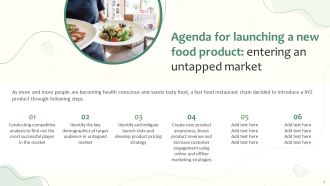
Slide 2: This slide states Agenda of the presentation.
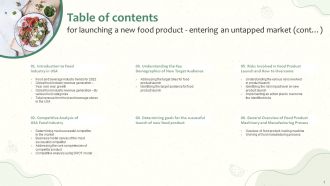
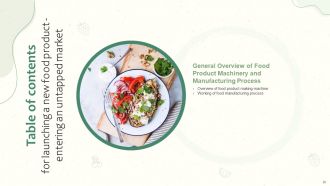
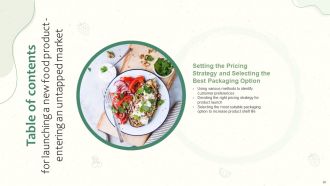
Slide 3: This slide shows Table of Content for the presentation.
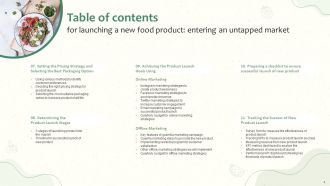
Slide 4: This is another slide continuing Table of Content for the presentation.
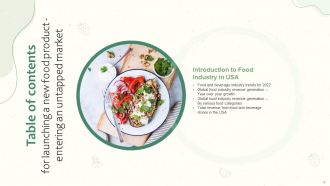
Slide 5: This slide highlights title for topics that are to be covered next in the template.
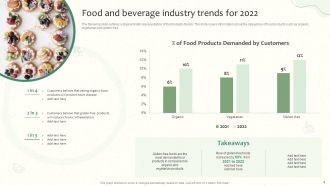
Slide 6: This slide shows Food and beverage industry trends for 2022.
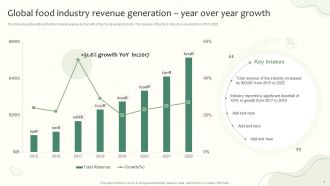
Slide 7: This slide presents Global food industry revenue generation – year over year growth.
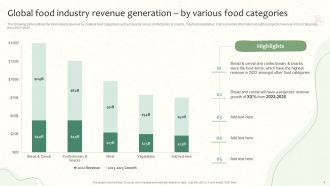
Slide 8: This slide displays Global food industry revenue generation – by various food categories.
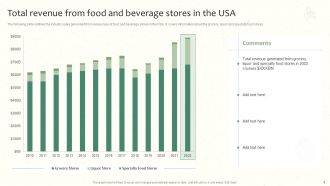
Slide 9: This slide represents Total revenue from food and beverage stores in the USA.
Slide 10: This slide highlights title for topics that are to be covered next in the template.
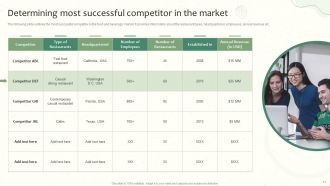
Slide 11: This slide showcases Determining most successful competitor in the market.
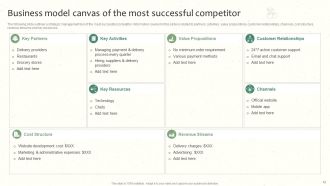
Slide 12: This slide shows Business model canvas of the most successful competitor.
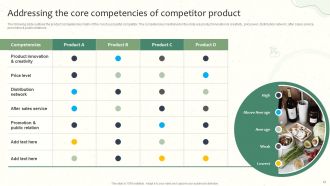
Slide 13: This slide presents Addressing the core competencies of competitor product.
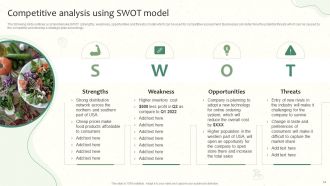
Slide 14: This slide displays Competitive analysis using SWOT model.
Slide 15: This slide highlights title for topics that are to be covered next in the template.
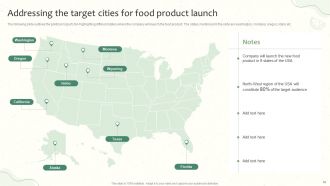
Slide 16: This slide represents Addressing the target cities for food product launch.
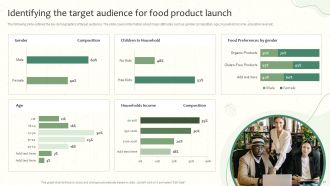
Slide 17: This slide showcases Identifying the target audience for food product launch.
Slide 18: This slide highlights title for topics that are to be covered next in the template.
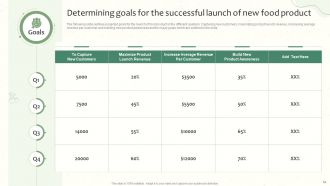
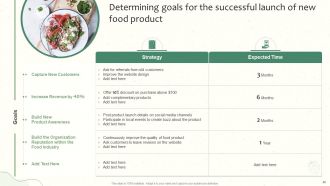
Slide 19: This slide shows Determining goals for the successful launch of new food product.
Slide 20: This slide highlights title for topics that are to be covered next in the template.
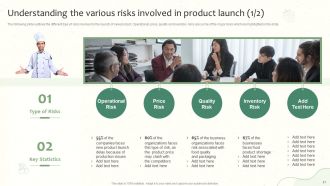
Slide 21: This slide presents Understanding the various risks involved in product launch.
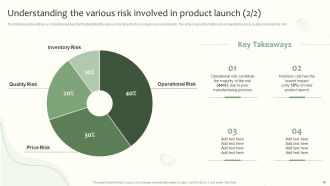
Slide 22: This slide displays Understanding the various risk involved in product launch.
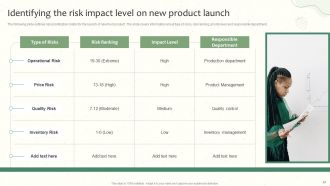
Slide 23: This slide represents Identifying the risk impact level on new product launch.
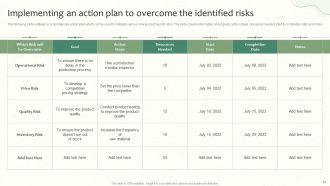
Slide 24: This slide showcases Implementing an action plan to overcome the identified risks.
Slide 25: This slide highlights title for topics that are to be covered next in the template.
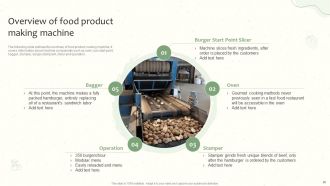
Slide 26: This slide shows Overview of food product making machine.
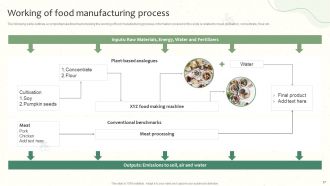
Slide 27: This slide presents Working of food manufacturing process.
Slide 28: This slide highlights title for topics that are to be covered next in the template.
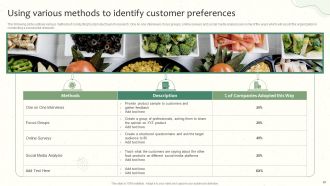
Slide 29: This slide displays Using various methods to identify customer preferences.
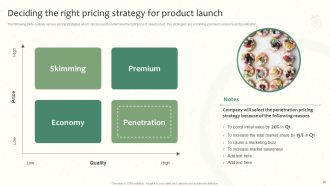
Slide 30: This slide represents Deciding the right pricing strategy for product launch.
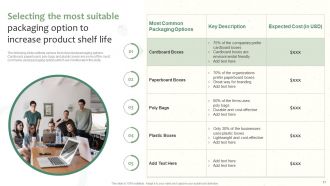
Slide 31: This slide showcases Selecting the most suitable packaging option to increase product shelf life.
Slide 32: This slide highlights title for topics that are to be covered next in the template.
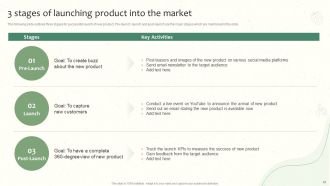
Slide 33: This slide shows 3 stages of launching product into the market.
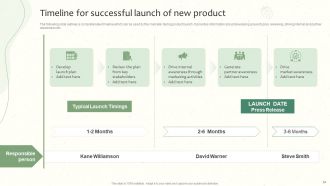
Slide 34: This slide presents Timeline for successful launch of new product.
Slide 35: This slide highlights title for topics that are to be covered next in the template.
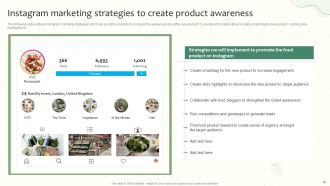
Slide 36: This slide displays Instagram marketing strategies to create product awareness.
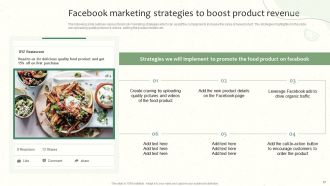
Slide 37: This slide represents Facebook marketing strategies to boost product revenue.
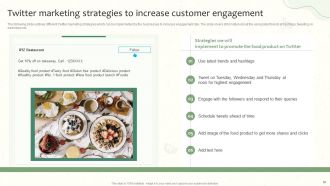
Slide 38: This slide showcases Twitter marketing strategies to increase customer engagement.
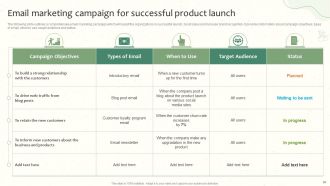
Slide 39: This slide shows Email marketing campaign for successful product launch.
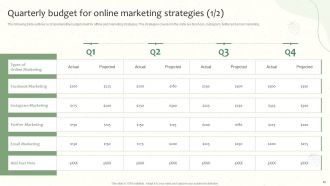
Slide 40: This slide presents Quarterly budget for online marketing strategies .
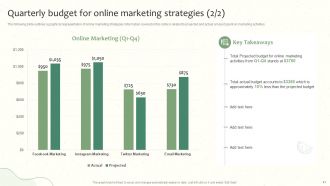
Slide 41: This slide displays Quarterly budget for online marketing strategies.
Slide 42: This slide highlights title for topics that are to be covered next in the template.
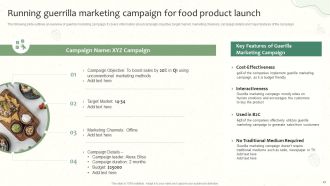
Slide 43: This slide represents Running guerrilla marketing campaign for food product launch.
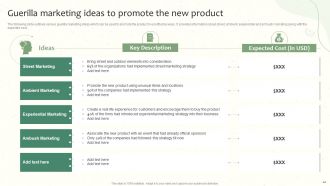
Slide 44: This slide showcases Bring street and outdoor elements into consideration.
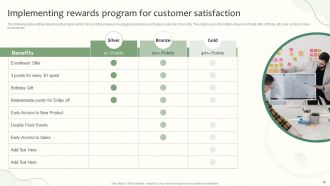
Slide 45: This slide shows Implementing rewards program for customer satisfaction.
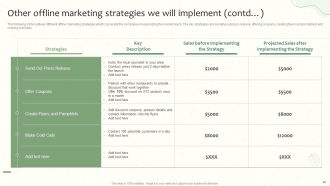
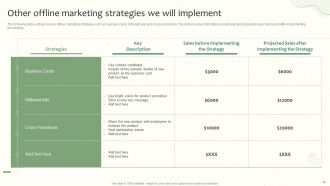
Slide 46: This slide presents Other offline marketing strategies we will implement.
Slide 47: This is another slide continuing Other offline marketing strategies we will implement
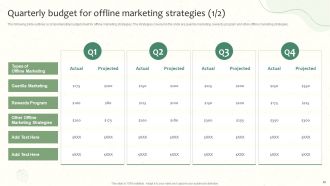
Slide 48: This slide displays Quarterly budget for offline marketing strategies.
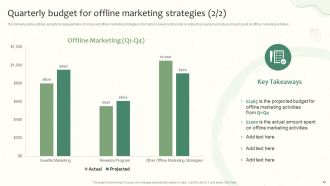
Slide 49: This is another slide continuing Quarterly budget for offline marketing strategies.
Slide 50: This slide highlights title for topics that are to be covered next in the template.
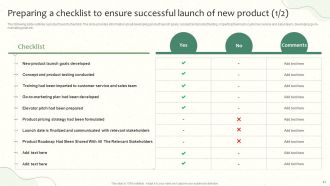
Slide 51: This slide represents Preparing a checklist to ensure successful launch of new product.
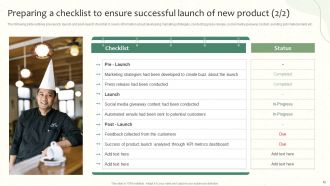
Slide 52: This slide showcases Preparing a checklist to ensure successful launch of new product.
Slide 53: This slide highlights title for topics that are to be covered next in the template.
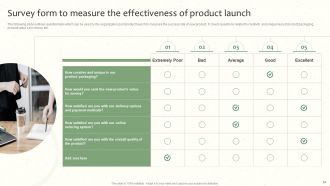
Slide 54: This slide shows Survey form to measure the effectiveness of product launch.
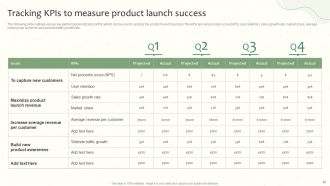
Slide 55: This slide presents Tracking KPIs to measure product launch success.
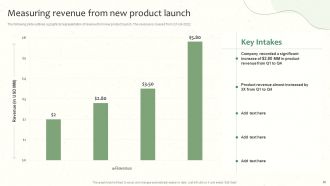
Slide 56: This slide displays Measuring revenue from new product launch.
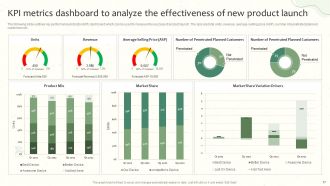
Slide 57: This slide represents KPI metrics dashboard to analyze the effectiveness of new product launch.
Slide 58: This slide contains all the icons used in this presentation.
Slide 59: This slide is titled as Additional Slides for moving forward.
Slide 60: This slide shows Determining goals for the successful launch of new food product.
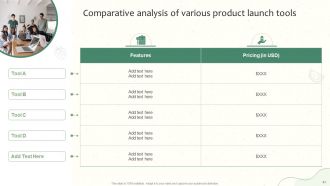
Slide 61: This slide presents Comparative analysis of various product launch tools.
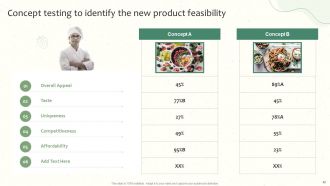
Slide 62: This slide displays Concept testing to identify the new product feasibility.
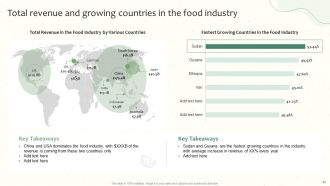
Slide 63: This slide represents Total revenue and growing countries in the food industry.
Slide 64: This is About Us slide to show company specifications etc.
Slide 65: This is Our Team slide with names and designation.
Slide 66: This slide provides 30 60 90 Days Plan with text boxes.
Slide 67: This slide presents Roadmap with additional textboxes.
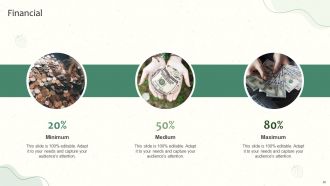
Slide 68: This is a Financial slide. Show your finance related stuff here.
Slide 69: This is a Thank You slide with address, contact numbers and email address.
Launching A New Food Product Entering An Untapped Market Powerpoint Presentation Slides with all 74 slides:
Use our Launching A New Food Product Entering An Untapped Market Powerpoint Presentation Slides to effectively help you save your valuable time. They are readymade to fit into any presentation structure.











FAQs for Launching A New Food Product Entering An Untapped Market
Key elements of a successful product launch strategy include market research, target audience identification, competitive analysis, messaging development, channel selection, timing optimization, and performance metrics establishment. These components work together by aligning product positioning with customer needs, coordinating cross-functional teams, and maximizing market penetration, with many organizations finding that strategic launches significantly enhance brand visibility and accelerate revenue growth.
Market research and competitive analysis influence product launch planning by identifying target audience preferences, optimal pricing strategies, and market positioning opportunities. Through comprehensive competitor evaluation and consumer insights, companies can refine their messaging, select effective distribution channels, and time their launches strategically, ultimately delivering differentiated products that resonate with customers while minimizing competitive threats.
The target audience fundamentally shapes product launch strategy by determining messaging approach, channel selection, pricing models, timing decisions, and feature prioritization. Understanding audience demographics, preferences, and behaviors enables companies to craft targeted campaigns, choose optimal distribution channels, and position products effectively, ultimately delivering higher engagement rates, faster market adoption, and stronger competitive advantage in increasingly crowded marketplaces.
Timing is absolutely critical for product launch success, determining market receptivity, competitive positioning, resource availability, and customer readiness to adopt new solutions. Strategic timing considerations include seasonal demand patterns, competitor activity, economic conditions, and internal readiness factors, with many organizations finding that well-timed launches achieve significantly higher adoption rates and market penetration than poorly timed ones.
Effective promotional tactics include teaser campaigns, influencer partnerships, email marketing sequences, social media countdowns, and exclusive previews for pre-launch, then customer testimonials, referral programs, retargeting campaigns, and strategic partnerships for post-launch. These approaches work together by building anticipation, generating early adoption, and sustaining momentum, with many companies finding that combining digital and traditional channels ultimately delivers broader market penetration and stronger brand recognition.
Product launch success is measured through key performance indicators including sales metrics, market penetration rates, customer acquisition costs, brand awareness levels, and customer satisfaction scores. These metrics enable organizations to evaluate revenue targets, assess competitive positioning, and optimize future launches, with many companies finding that tracking both quantitative performance and qualitative customer feedback ultimately delivers comprehensive insights for strategic decision-making.
Companies should avoid inadequate market research, poor timing, insufficient budget allocation, weak messaging clarity, and neglecting post-launch support during product launches. These pitfalls often result in missed target audiences, competitive disadvantages, and underwhelming market reception, with many organizations finding that thorough preparation and strategic resource allocation ultimately deliver stronger market penetration and sustainable growth.
Social media enhances product launches by building pre-launch anticipation through teaser campaigns, facilitating real-time engagement with target audiences, and amplifying reach through influencer partnerships and user-generated content. These platforms enable brands to gather immediate feedback, create viral momentum, and drive direct conversions, with companies like Apple and Tesla leveraging strategic social campaigns to generate millions in early sales while building lasting brand communities.
Key product launch metrics include conversion rates, customer acquisition costs, user engagement levels, revenue tracking, and market penetration rates. These indicators enable organizations to optimize marketing spend, identify successful channels, and adjust pricing strategies in real-time, with many companies finding that continuous monitoring ultimately delivers faster market adoption and competitive advantage.
Branding significantly shapes consumer perception by establishing credibility, conveying value propositions, and creating emotional connections before customers experience the product firsthand. Through consistent visual identity, messaging, and positioning, companies can influence expectations and purchase intent, with many successful launches finding that strong branding reduces customer acquisition costs while accelerating market acceptance and competitive differentiation.
Customer feedback during product launches should include usability assessments, feature effectiveness evaluations, pricing perceptions, market positioning insights, and technical performance reports. These feedback mechanisms enable organizations to identify enhancement opportunities, optimize user experiences, and refine go-to-market strategies, with many companies finding that structured feedback collection ultimately accelerates product-market fit and competitive advantage.
Partnerships and collaborations enhance product launch visibility by expanding reach through established networks, leveraging complementary audiences, and sharing marketing resources across multiple channels. Strategic alliances with industry leaders, influencers, and complementary brands amplify messaging, reduce promotional costs, and build credibility, with many organizations finding that collaborative launches generate significantly higher engagement and market penetration than solo efforts.
Phased launches offer controlled risk management, targeted feedback collection, resource optimization, and iterative improvements, while full-scale launches provide maximum market impact, brand visibility, and revenue acceleration. Many technology companies and consumer brands find that phased approaches enable strategic refinement and cost-effective scaling, ultimately delivering stronger market positioning and competitive advantage.
Storytelling creates excitement around product launches by crafting compelling narratives about customer transformation, revealing the problem-solving journey, and building emotional connections with target audiences. Through authentic customer success stories, behind-the-scenes development narratives, and vision-driven messaging, companies generate anticipation and engagement, with many brands finding that narrative-driven campaigns deliver significantly higher awareness and conversion rates.
Customer support serves as the critical bridge between product promises and customer satisfaction during launches, handling inquiries, resolving technical issues, gathering user feedback, and ensuring smooth onboarding experiences. This strategic function enables companies to identify product gaps quickly, enhance user adoption rates, and build lasting customer relationships, with many organizations finding that proactive support significantly reduces churn and accelerates market acceptance.
-
I loved the hassle-free signup process. A few minutes and, I had this giant collection of beautiful designs.
-
Thank you for showering me with discounts every time I was reluctant to make the purchase.