

Lead Conversion Powerpoint Ppt Template Bundles





Try Before you Buy Download Free Sample Product
 Impress Your
Audience
 100%
Editable
 Save Hours
of Time


Introducing our comprehensive PowerPoint presentation on Lead Conversion the ultimate guide to optimizing your customer acquisition strategy, boosting sales conversion, and mastering prospect conversion. This power packed PPT equips you with valuable insights, proven techniques, and best practices to convert potential leads into paying customers effortlessly. Unravel the secrets of successful lead nurturing and gain a competitive edge through conversion rate optimization CRO strategies. Discover the art of closing the sale and effectively managing the sales pipeline to drive revenue generation. With this expertly crafted presentation, youll empower your team with the tools to excel in customer conversion, maximizing growth and profitability for your business. Dont miss this opportunity to revolutionize your lead conversion game.
People who downloaded this PowerPoint presentation also viewed the following :
Lead Conversion Powerpoint Ppt Template Bundles with all 23 slides:
Use our Lead Conversion Powerpoint Ppt Template Bundles to effectively help you save your valuable time. They are readymade to fit into any presentation structure.












FAQs for Lead Conversion Powerpoint
B2B lead conversion strategies include personalized nurturing campaigns, multi-touch follow-up sequences, targeted content marketing, strategic timing optimization, and comprehensive lead scoring systems. These approaches streamline sales processes by qualifying prospects effectively, delivering relevant messaging at optimal touchpoints, and enabling sales teams to focus resources on high-potential opportunities, ultimately delivering faster conversions and improved ROI.
Personalization in presentations significantly influences lead conversion by addressing specific pain points, incorporating relevant industry examples, and tailoring solutions to prospect needs. When sales teams customize content with prospect-specific data, case studies from similar companies, and targeted value propositions, they create stronger emotional connections, demonstrate deeper understanding, and ultimately achieve higher conversion rates through more compelling, relevant messaging.
Follow-up communication serves as the critical bridge between initial interest and final purchase decisions, enabling businesses to nurture relationships, address concerns, provide additional value, and maintain consistent engagement throughout the conversion journey. Through strategic email sequences, personalized outreach, and timely responses, organizations can significantly increase conversion rates, build trust with prospects, and ultimately transform qualified leads into loyal customers, with many finding that systematic follow-up approaches deliver measurably higher sales outcomes.
Data analytics enhances lead conversion understanding by tracking behavioral patterns, identifying high-converting touchpoints, analyzing funnel drop-off points, and segmenting leads by engagement levels. Through predictive modeling and attribution analysis, sales teams can optimize outreach timing, personalize messaging strategies, and allocate resources more effectively, ultimately delivering higher conversion rates and improved ROI.
Key elements include compelling opening hooks, clear value propositions, targeted audience messaging, strong visual design, and decisive calls-to-action. These components work together by capturing attention early, addressing specific pain points, and guiding prospects through logical decision-making processes, with many organizations finding that strategic storytelling combined with data-driven insights ultimately delivers higher engagement rates and measurable conversion improvements.
Storytelling in presentations significantly enhances audience engagement by creating emotional connections, making complex information memorable, and building trust through relatable narratives. Through compelling case studies and customer success stories, businesses can demonstrate value propositions more effectively, with many sales teams finding that story-driven presentations increase conversion rates by transforming prospects into invested stakeholders.
Lead qualification techniques include lead scoring based on demographics and behavior, BANT criteria assessment (Budget, Authority, Need, Timeline), progressive profiling through forms, sales conversation frameworks, and automated nurturing sequences. These methods streamline the sales process by identifying purchase-ready prospects, reducing time spent on unqualified leads, and enabling sales teams to prioritize high-value opportunities, ultimately delivering higher conversion rates and improved resource allocation across organizations.
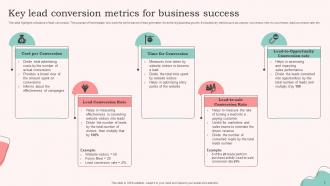
Businesses should track conversion rate, lead-to-customer ratio, cost per acquisition, sales cycle length, and lead quality scores to evaluate conversion effectiveness. These metrics enable organizations to identify bottlenecks, optimize resource allocation, and enhance targeting strategies, with many companies finding that monitoring multiple touchpoints ultimately delivers improved ROI and competitive advantage.
Visual design in presentation templates enhances lead conversion by creating professional credibility, simplifying complex information through clear hierarchies, and maintaining consistent branding that builds trust. Through strategic color psychology, compelling infographics, and streamlined layouts, sales teams can capture prospect attention more effectively, communicate value propositions clearly, and guide audiences toward decisive action, ultimately delivering higher conversion rates.
Common lead conversion pitfalls include delayed follow-up responses, lack of lead qualification processes, generic messaging approaches, insufficient nurturing sequences, and poor sales-marketing alignment. These issues often result from inadequate CRM systems and undefined conversion workflows, with many organizations finding that addressing these gaps through automated responses, personalized content, and streamlined handoff processes significantly improves conversion rates and revenue outcomes.
Social proof and testimonials can be integrated through dedicated customer success slides, embedded video testimonials, case study sections, statistical achievement highlights, and client logo displays throughout presentations. These elements enhance credibility by showcasing real results from similar organizations, with many sales teams finding that strategically placed testimonials, especially from recognizable brands or relatable use cases, significantly increase audience trust and ultimately drive higher conversion rates.
Automation tools accelerate lead conversion through instant lead scoring, automated email sequences, real-time notifications, and personalized follow-up workflows that eliminate manual delays. These technologies enable sales teams to respond within minutes rather than hours, nurture prospects consistently, and prioritize high-value opportunities, with many organizations finding conversion rates increase significantly while reducing sales cycle length.
Training is crucial for improving lead conversion rates, as it equips sales teams with advanced prospecting techniques, consultative selling skills, objection handling strategies, and relationship-building capabilities. Well-trained sales professionals can identify qualified prospects more effectively, deliver compelling value propositions, and navigate complex buying processes, with many organizations finding that comprehensive training programs increase conversion rates by 20-30%.
Innovations impacting lead conversion include interactive presentations, AI-powered personalization, virtual reality demos, real-time analytics dashboards, and automated follow-up systems. These technologies streamline sales processes by delivering customized experiences, tracking engagement metrics, and enabling immediate responses, with many organizations finding that personalized, data-driven presentations significantly enhance conversion rates and accelerate sales cycles.
Lead feedback can be systematically gathered through post-interaction surveys, CRM tracking systems, automated email follow-ups, social media monitoring, and direct sales team debriefings. These methods enable organizations to identify conversion bottlenecks, refine messaging strategies, and optimize touchpoint experiences, with many businesses finding that structured feedback loops significantly enhance lead qualification processes and ultimately deliver higher conversion rates.
-
I want to thank SlideTeam for the work that they do, especially their customer service.
-
You know what? I'm so glad I opted for this PPT design. It has been a total game-changer for me and my presentations. Thank you!