

Lean Kaizen Manufacturing Dashboard To Check Production System Efficiency




Try Before you Buy Download Free Sample Product
 Impress Your
 Audience
 100%
100% Editable
 Save Hours
 of Time


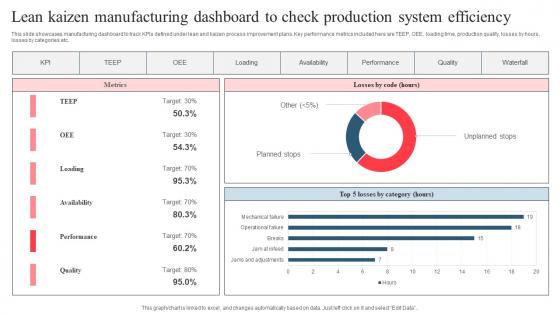
This slide showcases manufacturing dashboard to track KPIs defined under lean and kaizen process improvement plans. Key performance metrics included here are TEEP, OEE, loading time, production quality, losses by hours, losses by categories etc.
People who downloaded this PowerPoint presentation also viewed the following :
Lean Kaizen Manufacturing Dashboard To Check Production System Efficiency with all 7 slides:
Use our Lean Kaizen Manufacturing Dashboard To Check Production System Efficiency to effectively help you save your valuable time. They are readymade to fit into any presentation structure.






FAQs for Lean Kaizen Manufacturing Dashboard To Check
Okay so Lean has these five principles that basically hunt down waste everywhere. First you figure out what customers actually value - not what you think they want. Map out your whole process to spot the garbage hiding in there. Remove bottlenecks so work flows smoothly, then flip to pull systems where you only make stuff when someone needs it. The last one's about chasing perfection forever, which honestly sounds exhausting but works. I'd start small though - just pick one process and map it out. You'll be shocked at how much waste you find lurking around.
Honestly, just pick one annoying thing that's driving you crazy - maybe too much inventory sitting around or customers waiting forever. Don't try to fix everything at once, you'll burn out. The 5S thing is actually pretty solid for smaller companies. It's basically just getting organized, but there's a method to it. Your team needs to be in on this from the start because they're the ones dealing with the mess every day. Value stream mapping sounds fancy but it just shows you where you're bleeding time and money. Skip the expensive software for now - I've seen people work magic with just sticky notes. Pick one wasteful process this week and start there.
Oh man, value stream mapping is such a game changer! Picture it like being a detective - you're tracking your product from raw materials all the way to the customer. Every single step gets mapped out, including all those annoying waiting periods and handoffs that normally fly under the radar. Honestly, most people are blown away by how much waste they actually have hiding in plain sight. You'll spot where inventory backs up, unnecessary steps that add zero value, people standing around. The real power comes when you sketch out your ideal future state and compare it. Start small with just one product line though - trust me on that one.
Dude, lean stuff really works for getting people more engaged. Your team gets actual control over how things run - they spot problems and pitch fixes instead of just taking orders. Kaizen events are great for this. Visual management cuts out so much daily BS too - no more hunting around for tools or whatever. People actually feel heard, which is huge honestly. I'd start with 5S in just one area and let them run with it. You'll be surprised how fast morale improves when they're not dealing with waste and confusion all day.
So JIT cuts waste by only ordering what you actually need - no more, no time. Your storage costs drop and cash flow improves since you're not dumping money into inventory that just sits there. Quality problems pop up right away too, which sounds bad but is actually great. The scary part? There's zero buffer stock to save you when things go sideways. I'd definitely start with your most reliable products first - build some confidence before going all in. It forces you to spot bottlenecks fast though, which honestly makes your whole operation tighter.
Honestly, people hate change - that's your biggest hurdle right there. Even when current processes suck, employees get attached to what they know. You'll need leadership backing you up hard, plus the frontline folks on board. Data gathering is brutal at first since you're tracking literally everything to spot waste. Don't underestimate how long training takes either. Your productivity will probably tank temporarily while everyone figures out the new way of doing things. Oh, and companies always rush this stuff. Start with just one department as a test run - way smarter than blowing up your entire operation at once.
Yeah, totally works in both! Healthcare teams map out patient journeys to cut wait times - like, why does someone sit in a waiting room for 2 hours? Software folks do the same thing with code deployment. They'll spot useless meetings or approval steps that slow everything down. The trick is figuring out what actually matters to your end user first. Are patients getting better care? Is the app actually working better? Then you just ruthlessly cut the stuff that doesn't help with that. I'd start by literally drawing out your current process - you'll probably find some obvious time-wasters pretty quick.
Honestly, cycle time and lead time are your bread and butter here - how long stuff takes from start to finish vs. order to delivery. Defect rates matter too, obviously. I'd definitely track inventory turnover and OEE if you've got equipment. Employee suggestions implemented is actually my favorite metric because those frontline guys know what's really broken better than anyone in management does. Cost per unit and on-time delivery round it out. Pick like 3-5 that actually matter for your setup though - don't go crazy with spreadsheets or you'll hate your life.
So lean manufacturing totally changes how you work with suppliers - way more partnership vibes, less just buying stuff. You'll need vendors who can do smaller, frequent deliveries with solid quality since there's no backup inventory to save you. Fewer suppliers overall but you're basically married to them. Share forecasts, work on improvements together, maybe track their performance somehow. It's kinda nerve-wracking because if they mess up, you're screwed. But honestly? Start by looking at who you're currently working with - which ones actually matter versus the ones you just use out of habit.
Honestly, 5S is a total game-changer for messy workspaces. Sort, Set in Order, Shine, Standardize, Sustain - sounds boring but it actually works. You'll stop wasting time hunting for tools and create systems where problems stick out like a sore thumb. Everything gets a proper home, which makes your whole team way more efficient. I'd say pick one corner of your office and try all five steps. The difference shows up fast - like within a few days fast. My coworker tried this with her desk disaster zone and now she's obsessed with organizing everything.
Make Lean part of how people actually work every day, not some side project that'll eventually end. Leadership checking out is the fastest way to kill momentum - trust me, everyone notices when the boss stops caring. Do regular gemba walks and keep those visual boards updated. Here's the key though: let your team actually implement their ideas without waiting months for approval. Nobody's gonna keep suggesting improvements if they hit bureaucratic walls every time. Oh, and monthly showcases where teams show off wins? Game changer. People love peer recognition way more than top-down praise.
Start with the basics - 5S training gets people excited because they can actually see results fast. Your team needs problem-solving skills too, like A3 thinking and root cause analysis. Kaizen training is where the real magic happens with those small improvements that add up. Don't forget leadership training though - so many companies mess this up. Managers have to actually support this stuff or it dies. Get some books, online courses, maybe even a lean sensei if you can swing it. Oh and value stream mapping is pretty essential for spotting waste.
Dude, tech has been a game-changer for Lean stuff. IoT sensors let you watch production in real-time now - no more waiting around for someone to tell you there's a problem. Automation takes care of all those boring, repetitive tasks that used to mess things up constantly. The data you get helps you make quicker decisions about cutting waste. Honestly, I'm still kind of shocked how much smoother everything runs once you get it dialed in. I'd start small though - pick one process and add some sensors so you can actually see what's happening out there.
Honestly, lean manufacturing is pretty solid for going green. The whole point is cutting waste - materials, energy, overproduction, all of it. Just-in-time production means you're not hoarding inventory that just sits there eating up resources. Your environmental impact drops naturally when you use less stuff and throw away less scrap. The continuous improvement thing is clutch too - teams keep finding better ways to do things. Oh, and mapping your value streams first is probably your best bet for quick wins. You'll spot the biggest resource drains right away. It's kind of a no-brainer once you see where everything's going.
Start by thinking about what customers actually want - that's your north star. Get manufacturing folks involved early instead of throwing designs over the wall later (saves SO much headache). Quick prototypes beat endless planning sessions every time. I learned that one the painful way on my last project lol. Simplify your assemblies, cut down part counts, use standard components when you can. Design for manufacturing from day one basically. Oh and don't try to transform everything at once - pick one pilot project first to test it out.
-
“As you have innovative ideas and they are all customizable, this saves a huge chunk of your time to prepare well-read presentations.”
-
I downloaded some of the presentations for work. They were simple to modify and saved me a lot of time and effort.