

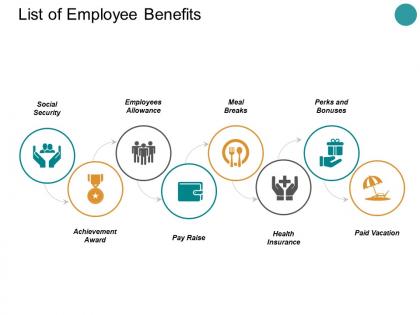
List of employee benefits paid vacation ppt powerpoint presentation show




Try Before you Buy Download Free Sample Product
 Impress Your
 Audience
 100%
100% Editable
 Save Hours
 of Time


Our List Of Employee Benefits Paid Vacation Ppt Powerpoint Presentation Show create a blast of energy. They help bring on the heat.
People who downloaded this PowerPoint presentation also viewed the following :
List of employee benefits paid vacation ppt powerpoint presentation show with all 5 slides:
Never have your heart in your mouth with our List Of Employee Benefits Paid Vacation Ppt Powerpoint Presentation Show. Be in complete control of every action.
FAQs for List of employee benefits paid vacation ppt
Start with the basics - health insurance, 401k, PTO, and life/disability coverage. Those are must-haves. After that, think dental, vision, flexible schedules, maybe some training budgets. Mental health stuff is huge now too, honestly can't ignore it anymore. Your budget obviously matters, but here's the thing - just ask your people what they actually want instead of guessing. I've seen companies blow money on perks nobody uses while skipping benefits people really care about. Survey them first, then build your package around what they tell you.
Honestly, benefits are make-or-break for keeping people around. Good health insurance, decent PTO, 401k matching - that stuff matters way more than most managers realize. I've seen people bail over crappy benefits even when the pay was solid. Flexible schedules are huge right now too. Survey your team though, because what they actually want might surprise you. Some care more about extra vacation days, others need better healthcare coverage. Oh and don't underestimate weird perks - my friend's company pays toward student loans and people love it. Shows you get that work isn't their whole life, you know?
Mental health stuff is exploding right now - therapy coverage, wellness apps, all that. Companies are catching on that it actually helps keep people around. Flexible work is basically expected at this point, no going back there. What's interesting is how much student loan help is taking off, especially with younger folks. Childcare assistance and financial planning tools often beat out gym memberships too, which honestly surprised me when I first heard that. Best thing you can do? Just ask your team what they want instead of guessing. You'll probably get some unexpected answers.
Honestly, just ask your employees what they actually want instead of guessing. Most companies assume everyone wants the same stuff but that's not reality. Set up something like a cafeteria-style system where people can choose their own mix - some might want student loan help, others need eldercare support or extra PTO. Don't go overboard though. I've seen places offer like 20 different benefits and it just gets messy and expensive. Pick maybe 3-4 solid options and let people customize from there. Way more effective than trying to please everyone with one massive package.
Honestly, flexible benefits are such a smart move. People feel way more appreciated when they can pick what actually matters to them - extra vacation days, gym memberships, whatever fits their situation. One-size-fits-all packages usually miss the mark anyway. You'll probably end up saving money too since employees only grab what they'll use. It's also a solid way to attract talent without bumping up everyone's salary (which gets expensive fast). I'd start with a quick survey to see what your team actually wants. The answers might surprise you - I've seen people request the weirdest stuff sometimes.
So most wellness programs either get tacked onto your regular health insurance or come as separate perks. You're looking at stuff like gym memberships, mental health apps, those health screenings - some companies even do on-site fitness classes which is actually pretty cool. Results are legit though - healthcare costs drop, people call out sick less, and employees seem way more engaged. Oh, and some programs let you get HSA money or discounts on premiums. Honestly the biggest thing is picking stuff your team will actually use instead of whatever sounds impressive to HR.
Dude, mental health benefits aren't optional anymore - employees straight up expect them. Most decent companies now have EAPs, therapy coverage, those mental health apps, sometimes even counselors on-site. The shift over the past five years has been crazy to watch. Here's the thing though: when people can actually afford mental healthcare, your productivity and retention go way up. I mean, it just makes business sense. If your benefits package is weak on mental health stuff, you're definitely losing good people to competitors who get it.
Honestly, start with employee satisfaction surveys and see what people actually use vs. what you're paying for. I've seen companies blow money on fancy perks nobody wants while missing basic stuff employees care about. Track your retention rates too - are people leaving because benefits suck? Exit interviews are where you'll get the brutal truth about what would've made someone stay. Also check utilization rates for each benefit and run those numbers against industry benchmarks. Quick recruiting tip: ask candidates if your package influenced their decision. An annual benefits survey helps, but the departing employees? They'll give you the real deal.
Honestly, the biggest myth is thinking benefits are just some expensive add-on instead of actually helping you keep good people. So many bosses assume everyone only cares about their salary - which is completely backwards. Your employees care almost as much about decent health insurance and flexible PTO as they do their paycheck. Small companies always think they can't afford good benefits, but there's creative stuff you can do. Flexible work schedules don't cost anything. Neither do professional development budgets (well, much anyway). Just ask your current team what they actually want before you guess wrong.
So statutory benefits are the ones the government forces you to have - Social Security, workers' comp, unemployment insurance. Zero wiggle room there. Voluntary benefits? That's your choice. Health insurance, dental, life insurance, random stuff like gym memberships that sound cool in theory. Honestly, most people sign up for gym perks then never step foot in one. The whole point is statutory keeps you out of legal trouble, voluntary helps you compete for good employees. Get the required stuff sorted first, then figure out what perks your team actually cares about.
Oh man, companies are doing some wild stuff now! Mental health stipends, pet insurance, fertility coverage - way more creative than just basic health plans. The unlimited PTO thing sounds good but honestly can be kinda weird in practice. Four-day work weeks though? Sign me up. Some places do sabbaticals or help pay student loans, plus all those work-from-home setup allowances. Meeting-free Fridays are becoming a thing too, which... thank god. Really it's all about flexibility now since people want actual work-life balance. If you're trying to pitch new benefits, definitely ask your team what they'd actually use first.
Honestly, automating your benefits stuff is a game changer. Employees can handle everything online - health insurance signups, checking 401k balances, whatever - so they stop bugging HR every five minutes. You'll get way better data on what people actually use and how much it's costing you. Mobile apps are clutch for remote workers too. The automated reminders for open enrollment are pretty sweet since nobody ever remembers those dates anyway. I'd check out platforms like Workday or BambooHR first - they play nice with most payroll systems. Worth the investment, trust me.
ERISA compliance is huge for retirement and health stuff - don't skip that. COBRA gets tricky when people leave too. The ACA has its own mess of rules on top of everything else, which is honestly annoying but whatever. Watch out for discrimination in how you're offering benefits. Health insurance enrollment periods are super strict - miss those deadlines and you're screwed. Oh, and tax implications! Some perks hit payroll differently than others. I'd totally loop in legal before making big changes. Trust me, it's way easier than fixing problems later.
Remote work has completely flipped the benefits game. Tech stipends and home office allowances are the new must-haves. Mental health support too - honestly, it's about time companies caught on to that one. Free lunch and office perks? Totally pointless when your team's working from different continents. Companies are trying virtual wellness stuff and coworking memberships instead. Flexible PTO is huge now. But here's the thing - you've gotta actually ask your remote people what they want first. I bet it'll be different from whatever HR handbook you're following.
Honestly, spread your benefits communication throughout the year instead of cramming it all into open enrollment season. Mix up how you deliver it - emails, quick meetings, your company intranet, whatever clicks with your people. Visual stuff like infographics actually gets read, unlike those boring PDF summaries everyone ignores. Answer "what's in it for me" right away and connect benefits to real situations your employees face. Don't blast everything at once though - create a simple calendar to space things out. Oh, and definitely ask your team how they want to receive this info first.
No Reviews