

M and a due diligence powerpoint presentation slides




Try Before you Buy Download Free Sample Product
 Impress Your
 Audience
 100%
100% Editable
 Save Hours
 of Time


Due diligence refers to an investigating process used by a buying company to understand better the pertinent information about the sellers financials, contracts, and customers. Here is an efficiently designed M and A Due Diligence template that will be helpful to the company to introduce its existing product in the new market by merging with or acquiring a company. At first, the company can use a performance glimpse of the firm section to highlight its valuable information such as key financials, financial ratios, etc. The M and A lifecycle overview section will help the company illustrate the activities related to its pre-deal, pre-announcement, and post-announcement stages. After choosing the target company, the companys due diligence analysis section will help the company show the companys overview, team structure, etc. The due diligence process section covers financial, IT, intellectual property, legal, commercial, human resource, EHS, and tax diligence information of the target company. The service delivery operating model framework will illustrate the companys functioning post-merger and integration. The company can implement its integration plan with the post-merger integration plan section. Finally, the company can show the possible challenges during the M and A process and the proper measures to overcome them. Download it now.
People who downloaded this PowerPoint presentation also viewed the following :
Content of this Powerpoint Presentation
Slide 1: This slide introduces M&A Due Diligence. State Your Company Name and begin.
Slide 2: This slide shows Agenda of M&A Due Diligence.
Slide 3: This slide presents Table of Content for the presentation.
Slide 4: This slide shows title for topics that are to be covered next in the template.
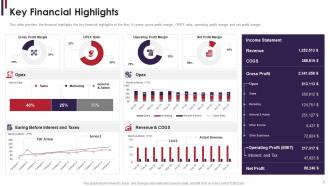
Slide 5: This slide provides the financial highlights covering gross profit margin, OPEX ratio, etc.
Slide 6: This slide displays financial ratios of the firm covering price to earnings ratio, debt to equity ratio, etc.
Slide 7: This slide presents domestic and global market share of the firm.
Slide 8: This slide showcases company presence at the global level.
Slide 9: This slide demonstrates monthly milestones achieved by the company in 2022 financial year.
Slide 10: This slide presents Table of Content for the presentation.
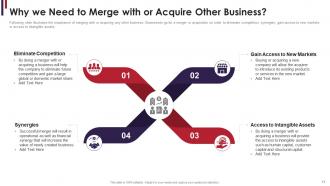
Slide 11: This slide presents importance of merging with or acquiring any other business.
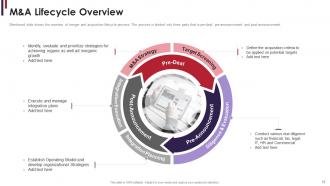
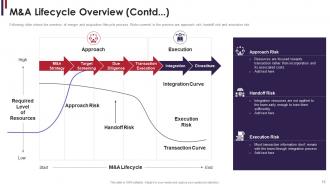
Slide 12: This slide represents overview of merger and acquisition lifecycle process.
Slide 13: This slide displays overview of merger and acquisition lifecycle process.
Slide 14: This slide presents Table of Content for the presentation.
Slide 15: This slide represents various types of mergers and acquisitions by growth.
Slide 16: This slide showcases various types of mergers and acquisitions by degree of change.
Slide 17: This slide presents Table of Content for the presentation.
Slide 18: This slide shows different points for setting M&A criteria.
Slide 19: This slide displays table covering screened potential targets.
Slide 20: This slide shows title for topics that are to be covered next in the template.
Slide 21: This slide covers the background of target company including company’s vision, mission and its history.
Slide 22: Following slide illustrates business goals of the target firm.
Slide 23: Mentions slide shows various products and services offered by the target company.
Slide 24: This slide shows information about major key clients catered by the target company.
Slide 25: This slide shows title for topics that are to be covered next in the template.
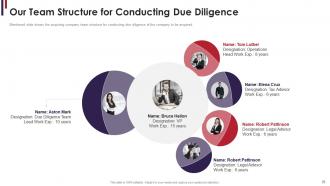
Slide 26: Mentioned slide shows the acquiring company team structure for conducting due diligence of the company.
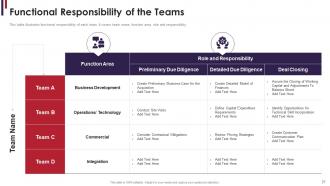
Slide 27: This table illustrates functional responsibility of each team.
Slide 28: This slide shows title for topics that are to be covered next in the template.
Slide 29: Following slide shows due diligence objectives, general activities and outputs in three stages.
Slide 30: This slide shows title for topics that are to be covered next in the template.
Slide 31: This slide illustrates year over year income statement of the target company.
Slide 32: Following slide covers balance of the target company in financial year 2022.
Slide 33: Following slide covers year over year cash flow statement of the target company.
Slide 34: Following table illustrates various financial ratios of the target company.
Slide 35: This slide shows title for topics that are to be covered next in the template.
Slide 36: Following slide illustrates the five-year financial projection of the target company.
Slide 37: This slide shows the net working capital of the target company.
Slide 38: This slide shows year over year net debt of the target company.
Slide 39: Following slide covers finance due diligence checklist covering due diligence criteria, status and findings.
Slide 40: This slide shows title for topics that are to be covered next in the template.
Slide 41: Following slide illustrates IT landscape evaluation of target company.
Slide 42: This slide shows the information technology due diligence approach.
Slide 43: Mentioned slide covers information technology due diligence checklist.
Slide 44: This slide shows title for topics that are to be covered next in the template.
Slide 45: This slide covers the summary of registered intellectual property of target company.
Slide 46: Following slide provides legal due diligence checklist.
Slide 47: This slide covers commercial due diligence checklist including due diligence checklist, its description, status and findings.
Slide 48: This slide shows title for topics that are to be covered next in the template.
Slide 49: Following table covers human resource due diligence checklist.
Slide 50: This slide illustrates EHS due diligence checklist including checklist type, information to be provided and status.
Slide 51: This slide presents tax related information to be provided and its status.
Slide 52: This slide shows title for topics that are to be covered next in the template.
Slide 53: Following slide shows details about determining the purchase price of the firm to be acquired.
Slide 54: This slide shows details about operating model framework of the firm.
Slide 55: This slide shows title for topics that are to be covered next in the template.
Slide 56: This slide provides post merger integration plan of the acquiring firm.
Slide 57: This is another slide continuing post merger integration plan of the acquiring firm.
Slide 58: This slide explains various possible challenges that can occur during M&A.
Slide 59: This slide displays Icons for M&A Due Diligence.
Slide 60: This slide is titled as Additional Slides for moving forward.
Slide 61: This is Our Team slide with names and designation.
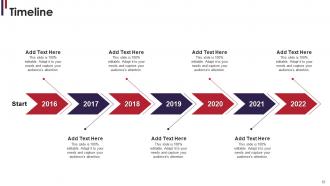
Slide 62: This is a Timeline slide. Show data related to time intervals here.
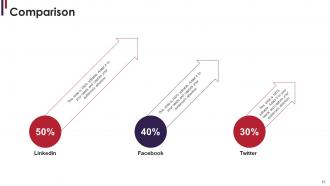
Slide 63: This is a Comparison slide to state comparison between commodities, entities etc.
Slide 64: This slide contains Puzzle with related icons and text.
Slide 65: This slide shows Post It Notes. Post your important notes here.
Slide 66: This slide depicts Venn diagram with text boxes.
Slide 67: This slide presents Roadmap with additional textboxes.
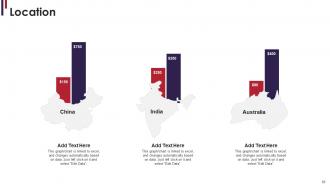
Slide 68: This is a Location slide with maps to show data related with different locations.
Slide 69: This is a Thank You slide with address, contact numbers and email address.
M and a due diligence powerpoint presentation slides with all 74 slides:
Use our M And A Due Diligence Powerpoint Presentation Slides to effectively help you save your valuable time. They are readymade to fit into any presentation structure.
-
M A Due Diligence
-

Agenda of M A Due Diligence
-
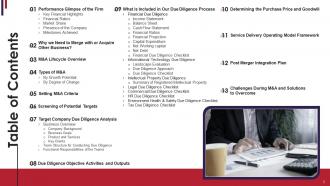
Table of Contents for M A Due Diligence Process
-

Performance Glimpse of the Firm
-
Key Financial Highlights
-
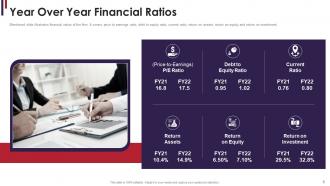
Year Over Year Financial Ratios
-
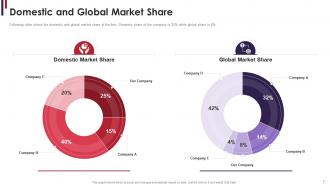
Domestic and Global Market Share
-
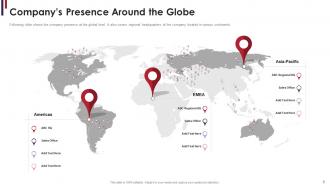
Company s Presence Around the Globe
-
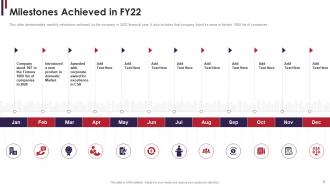
Milestones Achieved in FY22
-
Table of Contents
-
Why we Need to Merge with or Acquire Other Business
-
M A Lifecycle Overview
-
M A Lifecycle Overview Contd
-

Table of Contents
-
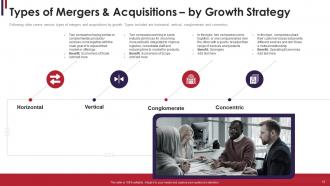
Types of Mergers Acquisitions by Growth Strategy
-
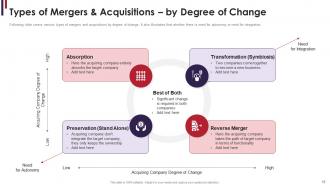
Types of Mergers Acquisitions by Degree of Change
-

Table of Contents
-
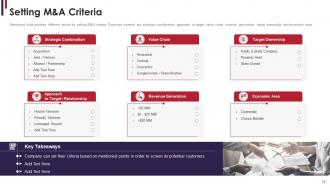
Setting M A Criteria
-
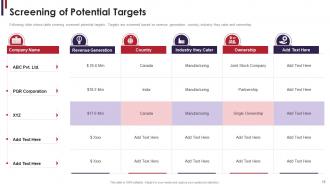
Screening of Potential Targets
-
Target Company Due Diligence Analysis
-
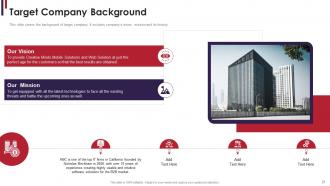
Target Company Background
-
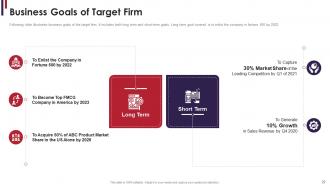
Business Goals of Target Firm
-
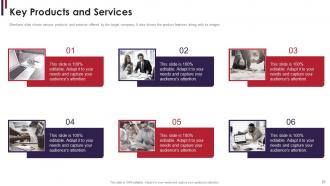
Key Products and Services
-
Major Key Clients Catered by the Company
-
Target Company Due Diligence Analysis
-
Our Team Structure for Conducting Due Diligence
-
Functional Responsibility of the Teams
-

Due Diligence Objective Activities and Outputs
-
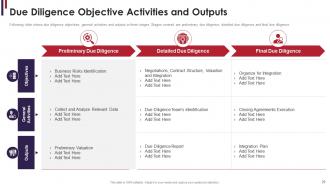
Due Diligence Objective Activities and Outputs
-
Table of Contents
-
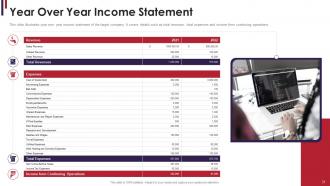
Year Over Year Income Statement
-
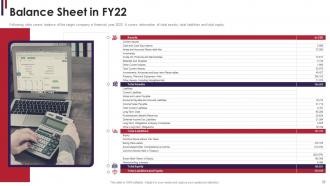
Balance Sheet in FY22
-
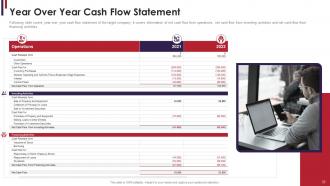
Year Over Year Cash Flow Statement
-
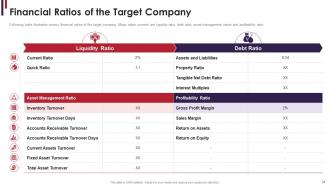
Financial Ratios of the Target Company
-

Table of Contents
-
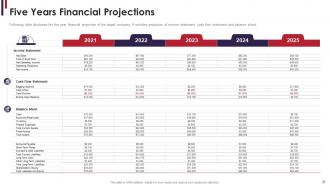
Five Years Financial Projections
-
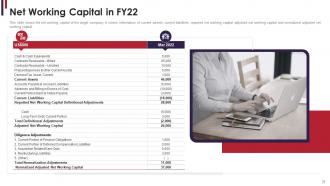
Net Working Capital in FY22
-
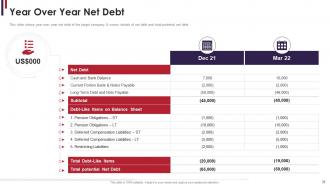
Year Over Year Net Debt
-
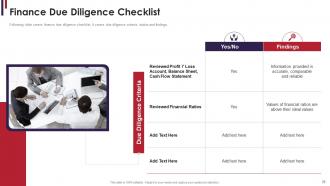
Finance Due Diligence Checklist
-
Table of Contents
-
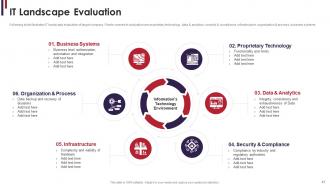
IT Landscape Evaluation
-
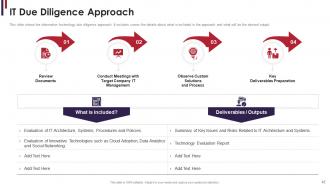
IT Due Diligence Approach
-
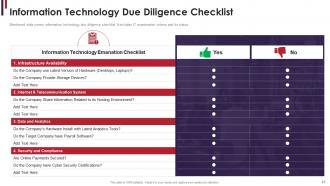
Information Technology Due Diligence Checklist
-
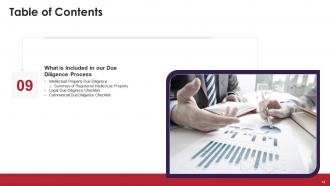
Table of Contents
-
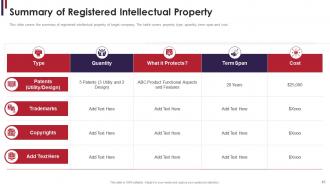
Summary of Registered Intellectual Property
-
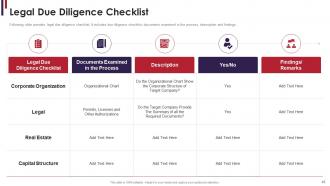
Legal Due Diligence Checklist
-
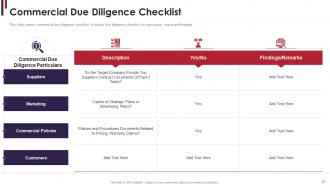
Commercial Due Diligence Checklist
-

Table of Contents
-
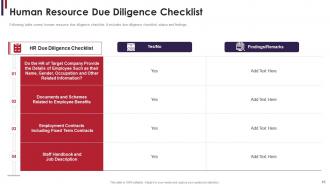
Human Resource Due Diligence Checklist
-
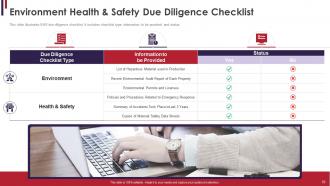
Environment Health Safety Due Diligence Checklist
-
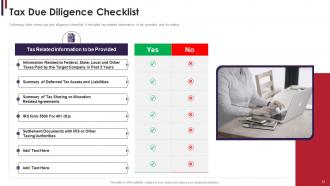
Tax Due Diligence Checklist
-
Table of Contents
-
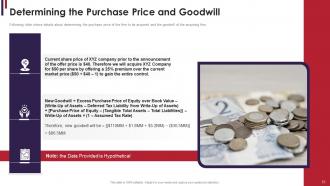
Determining the Purchase Price and Goodwill
-
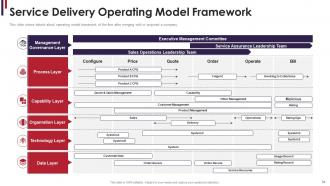
Service Delivery Operating Model Framework
-
Table of Contents
-
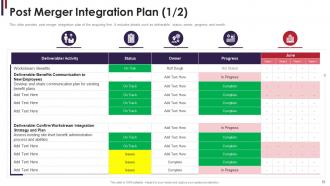
Post Merger Integration Plan 1 2
-
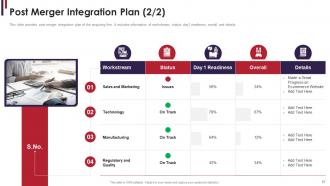
Post Merger Integration Plan 2 2
-
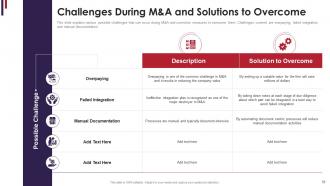
Challenges During M A and Solutions to Overcome
-
Icons Slide for M A Due Diligence
-

Additional Slides
-
Our Team
-
Timeline
-
Comparison
-
Puzzle
-
Post it Notes
-
M and a Due Diligence
-
Roadmap
-
Location
-

Thank for Watching
-

-

-

-

-

FAQs for M and a due diligence
You'll want to hit four main areas: financial, legal, operational, and strategic due diligence. Obviously the money stuff is critical - audit their books thoroughly. But operational DD is where people mess up most. Dig into their management team, IT systems, any compliance nightmares lurking around. Don't forget cultural fit either - I've seen deals tank because nobody thought about how the teams would actually work together. Legal side means reviewing all their contracts and obligations. Oh, and make a detailed checklist upfront with clear owners for each piece. Sounds boring but it'll save your ass later.
Honestly, tech can be a game changer for due diligence. AI tools will rip through thousands of docs in hours rather than weeks - way faster than any human team. Plus they catch stuff we'd probably miss anyway. Virtual data rooms are clutch too since your whole team can work together without flying everyone to the same city (which gets expensive fast). Analytics software helps you spot weird patterns in financials and flag risks early. Just don't go crazy with too many different platforms or you'll spend more time switching between apps than actually getting work done.
Dude, cultural fit is where deals actually die - not the spreadsheets. Most people obsess over financials but ignore whether teams will mesh. Check leadership styles, how decisions get made, communication vibes. Is one company super formal while the other's all casual? That stuff matters way more than you'd think. I'd dig into employee surveys, turnover numbers, and honestly just chat with people at different levels. Oh, and don't treat culture integration like an afterthought - build it into your timeline from the start or you'll regret it later.
Dude, first thing - check for any lawsuits they haven't told you about. IP ownership problems are nasty too. Employment stuff bites people all the time (contractors getting misclassified, wage issues). Contract-wise, watch for change of control clauses that'll screw you over, or customers who can just bail. Environmental liabilities? Total deal-killers if you miss them. Here's the thing though - it's always the boring stuff that gets you. Your legal team needs real time to dig, not some rushed BS timeline. That's where the ugly surprises live.
Dude, you absolutely cannot skimp on financial due diligence. Missing stuff like fake revenue numbers or hidden debt will screw you over big time. I watched one deal where they rushed through the financials and ended up with massive write-downs because - surprise! - the cash flow was garbage. Take your time digging into the numbers, even when everyone's breathing down your neck to close fast. It'll help you price things right and negotiate better terms. Trust me, spending extra weeks on DD beats years of regret. The math either works or it doesn't.
Look at revenue per employee and asset turnover first - those show if they're actually productive. Inventory turnover is huge too, plus how fast they fulfill orders. I'd also check defect rates and customer complaints because quality issues are expensive to fix later. The unsexy stuff matters more than you think: equipment downtime, maintenance costs, supply chain hiccups. Capacity utilization tells you if they're wasting resources. These operational metrics reveal way more than just looking at profit margins. Trust me, you don't want to buy someone else's inefficiency problems.
Okay so first thing - map out where these companies actually complement each other. Revenue side: can you cross-sell stuff, hit new markets, combine customer bases? Cost side is usually easier to spot - overlapping departments, bulk purchasing power, that kind of thing. But honestly, don't trust management's rosy projections at all. They always oversell the benefits. You need to dig into real numbers, talk to people in different departments, see what similar deals actually delivered. The timeline thing is huge too - build your model from the ground up with stuff you can actually measure later.
Dude, this is huge - you're basically buying their future money machine, so you better make sure it's real. Check if customers are actually active and paying what they claim. I've seen horror stories where half the "customers" were dead accounts or some massive client was already planning to bail. Look at churn rates, contract details, payment history - the whole picture. Don't just trust their numbers either. Run your own analysis or you might end up paying a fortune for fake revenue. It's way more common than you'd think.
First thing - get ironclad NDAs signed by everyone, including advisors. Set up a virtual data room where you can track who's looking at what. I'm probably overly paranoid about this stuff, but leaks kill deals so fast it's not even funny. Code names for the target company in every email or call. Keep your team super tight - only people who absolutely need the sensitive info should get it. Physical meetings are risky so minimize those. Oh, and track literally everything obsessively. Someone drops out? Cut their access immediately, no exceptions.
So you've got a few ways to handle this. Most obvious is just negotiating the price down to account for whatever issues you found. Escrow works well too - hold back some money until they fix stuff or prove things are okay. Rep and warranty insurance is honestly pretty clutch these days. Sellers love it because they can walk away clean, but you're still covered if something blows up later. For operational stuff, maybe structure it as an earn-out or make them swap out management after closing. The main thing is don't just eat these risks - use what you found to get better deal terms.
Honestly, cross-border M&A due diligence is just regular DD but way more complicated. You're juggling multiple regulatory systems, different accounting standards, plus various legal frameworks simultaneously. Currency risks become a real headache too - something you never worry about domestically. Time zones make everything slower when you're coordinating with international advisors (learned that the hard way). Cultural factors matter way more when assessing management teams. My biggest tip? Get local experts involved from day one and budget extra time upfront. Trust me, scrambling to understand German labor laws or Chinese approval processes halfway through a deal will make you want to pull your hair out.
Honestly, IP stuff is where I'd start - patents, trademarks, who actually owns their code. Check for any messy open source dependencies too. You'll definitely want someone technical to review their architecture because scalability issues are expensive surprises. Customer data is obviously critical now with GDPR and all that compliance nightmare. Key personnel contracts matter more in tech than other industries since losing the wrong developer can tank everything. Cloud costs can get wild if they're locked into expensive vendors. I always use a basic tech DD template but honestly every deal needs tweaking based on their specific setup.
Your DD findings are basically your integration playbook. Whatever issues you found - wonky IT systems, culture problems, compliance headaches - those become your first priorities when the deal closes. It's like having cheat codes for a video game, honestly. Use those discoveries to build your 100-day plan and figure out where to put your resources. The timeline? That comes from DD too. Here's the thing though - you can't let your DD team just dump everything in a report and walk away. Make sure whoever's running integration actually gets the real story, not just some polished summary that misses the messy details.
Here's the thing about management interviews - they're where you actually learn what's going on beyond the spreadsheets. Financial statements won't tell you if the CEO is delusional about their growth targets or if there's some messy operational stuff brewing behind the scenes. I've seen executives completely dodge simple questions, which honestly tells you everything about the culture. You'll get a real sense of whether leadership knows what they're doing. Strategic direction becomes way clearer. Also, don't wing it - come prepared with specific questions that'll make them squirm a little. Generic softball questions are useless.
Honestly, pad your timeline way more than you think you need to - I learned this the hard way. Map out your must-haves versus nice-to-haves first so you're not chasing shiny objects later. Get people who can actually focus on this instead of spreading your best resources thin across everything. I'm big on daily check-ins because problems snowball fast when nobody's watching. Tackle your biggest risks first rather than trying to parallel path everything. And yeah, overcommunicate with stakeholders about where things stand - silence makes people nervous and they'll start making assumptions.
-
Great quality product.
-
Nice and innovative design.
-
Design layout is very impressive.
-
Content of slide is easy to understand and edit.
-
Visually stunning presentation, love the content.
-
Innovative and Colorful designs.
-
Unique research projects to present in meeting.