

Rental property leasing ppt powerpoint presentation model topics cpb




Try Before you Buy Download Free Sample Product
 Impress Your
Audience
 100%
Editable
 Save Hours
of Time


Develop greater and better ability with our Rental Property Leasing Ppt Powerpoint Presentation Model Topics Cpb. Be able to face future demands.
People who downloaded this PowerPoint presentation also viewed the following :
Content of this Powerpoint Presentation
Description:
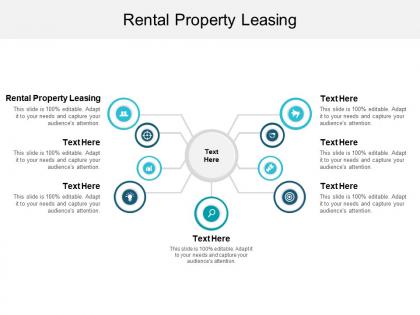
The image displays a PowerPoint slide titled "Rental Property Leasing," which is designed to structure an informative presentation on the topic. The slide is divided into seven sections, each featuring a circular icon accompanied by a placeholder text labeled "Text Here," suggesting that specific content is to be added pertinent to rental property leasing. These sections probably represent key points or steps in the rental property leasing process, and the icons imply thematic relevance to each point. For instance, the icons may signify stages such as property listing, lease agreements, maintenance, tenant screening, payment processing, legal considerations, and marketing strategies. The connectors between the circles suggest a flow or relationship between the points.
Use Cases:
This slide can be utilized across multiple industries where leasing or rental services are a core function or where an understanding of such is necessary. Here are seven such industries, along with their potential uses, and the typical presenter and audience:
1. Real Estate:
Use: Explaining the process of leasing properties to new agents
Presenter: Training Coordinator
Audience: New Real Estate Agents
2. Property Management:
Use: Detailing property management services to potential clients
Presenter: Property Manager
Audience: Property Owners
3. Hospitality:
Use: Describing rental operations for vacation properties
Presenter: Operations Manager
Audience: Hospitality Staff
4. Legal Services:
Use: Outlining legal considerations in rental agreements
Presenter: Legal Expert
Audience: Landlords and Property Managers
5. Financial Services:
Use: Discussing financial aspects of property leasing
Presenter: Financial Advisor
Audience: Investors
6. Corporate Housing:
Use: Corporate leasing policies for relocating employees
Presenter: HR Specialist
Audience: HR Managers
7. Marketing and Advertising:
Use: Strategies for marketing rental properties
Presenter: Marketing Director
Audience: Marketing Team
Rental property leasing ppt powerpoint presentation model topics cpb with all 5 slides:
Be able to face future demands with our Rental Property Leasing Ppt Powerpoint Presentation Model Topics Cpb. Develop greater and better ability.


FAQs for Rental property leasing ppt powerpoint presentation
First thing - look up what other similar places are going for nearby. Like within a few blocks, same bedroom count, that stuff. Your place has nice features? Cool, charge a bit more for parking or updated kitchen. Just don't go crazy with it. Do the math on your mortgage, taxes, insurance, maintenance - all that boring stuff. Add whatever profit you want on top. Honestly, timing matters too. Peak moving season means you can probably ask for more. But yeah, stay competitive or you'll be showing the place forever while bleeding money.
Definitely run a full background check - credit, criminal history, employment verification, the works. Previous landlord references are crucial, but here's the thing: current landlords might just want problem tenants gone, so dig deeper if possible. I look for steady income that's 3x rent minimum. Red flags? Frequent moves or evictions are obvious ones. During showings, honestly your gut instinct matters more than people think - if something feels weird, it probably is. Oh and set your criteria beforehand so you're consistent and won't get yourself in legal trouble later.
Definitely get the basics down first - rent amount, due dates, lease length, security deposit. Pet policies and maintenance responsibilities are huge too, trust me on that one. Late fees might seem petty but you'll thank yourself later when someone's constantly behind. Don't skip the boring stuff like occupancy limits and utility responsibilities either. Property use restrictions and entry notification policies matter more than you'd think. Honestly, just pay a lawyer once to look over your template. Way cheaper than dealing with messy situations down the road because something wasn't clear enough.
Honestly, just respond quickly when they reach out - even if it's just "got your message, looking into it." Can't tell you how many times I've watched tiny problems explode because someone ignored texts for two weeks. Document stuff but don't sound like a lawyer about it. Short sentences work. When you have to enforce rules, explain why they exist instead of just being like "because I said so." That actually makes a huge difference. Oh, and circle back after you fix something to check they're good with how it went down.
Ugh, rental laws are such a headache - they're totally different everywhere. You'll need to look up your specific area, but most places want written leases and cap security deposits at 1-2 months rent. Notice periods for ending leases vary too. Fair housing laws are federal though, so no discriminating based on race, religion, etc. Some areas have rent control or specific repair requirements. I learned this the hard way with my first property! Seriously, just call your local housing authority or find a real estate lawyer who knows your city's rules before you write up any lease.
Dude, going digital will save you SO much time. Online applications kill all that paperwork nonsense, and virtual tours mean people can check out places without you being there. E-signatures are clutch - no more printing stuff out or awkward meetups just to get papers signed. Property management software handles the boring screening stuff automatically. Oh, and rent collection becomes hands-off too, which is nice. I'd honestly start with just online apps and digital signatures first. Those two changes alone will fix like 80% of your headaches. You'll go from weeks of back-and-forth to getting leases done in days.
Dude, screening saved my ass so many times. Check their credit, income, background - the whole thing. I had this one guy who was super charming but turned out he'd been evicted twice! Now I always require income that's at least 3x rent, no exceptions. Background checks catch criminal stuff and prior evictions you'd never know about otherwise. Just make sure you're consistent with everyone or you'll run into discrimination problems. Trust me, spending $50 upfront beats dealing with nightmare tenants later.
Good photos are everything - seriously, don't even think about posting blurry phone shots. Check what similar places rent for nearby so you're not overpricing yourself. Write a solid description that's easy to skim but covers the good stuff like updated kitchen, parking spots, being near the train. I'd put all your requirements upfront too - credit score minimums, pet rules, whatever. Saves you from dealing with people who won't qualify anyway. Oh, and reply fast when people message you. The decent renters have options these days. Post it evenings or weekends when people are actually scrolling for apartments.
Clean everything first - like actually scrub it down and get rid of clutter. Fix the obvious stuff too, burnt bulbs and leaky faucets because people definitely notice that. If it's empty, throw in some basic furniture so they can picture themselves there. Natural light is huge so open those blinds! Oh and this sounds super cheesy but bake cookies beforehand - I swear it actually works. My friend did this and got three applications the same day. Have your lease ready and know what makes your place special so you're not fumbling around when they ask questions.
Honestly? I've done both and short-term leases are a pain in the ass. Yeah, you can bump rent more often, but the constant turnover will drain you - always showing the place, cleaning between tenants, dealing with gaps where nobody's paying you. Long-term is so much easier. Steady money coming in, tenants actually take care of things since they're not just passing through. Downside is you're stuck with whatever rent you set even if prices shoot up around you. Unless you're somewhere crazy hot where places rent in like 2 days, I'd go long-term every time.
Dude, you've gotta spell out who handles what repairs and how fast you'll respond. Make tenants report emergencies (leaks, no heat) right away but let smaller stuff slide for a bit. Pick your communication method - email, app, whatever - and stick to it. Emergency fixes? 24 hours max. Regular maintenance can wait 5-7 days, which honestly seems fair to me. The big thing is defining "normal wear and tear" versus actual damage they caused. Trust me, being vague here will bite you later when someone puts a hole in the wall and acts shocked they have to pay for it.
Honestly, market trends control pretty much everything about leasing. High demand? Jack up rents and be picky with tenants. Soft market means you're offering free months or paying moving costs - whatever it takes. I've watched landlords completely switch who they're targeting based on local changes. You need to check vacancy rates, median rents, and employment stats monthly (I know, sounds boring but it matters). If you're not tweaking your strategy based on what's actually happening around you, you're either missing out on money or dealing with empty units way too long.
Treat every applicant exactly the same - same requirements, same screening, same questions at showings. Don't ask about family stuff, religion, or anything personal that's not about paying rent or property care. So many landlords still screw this up somehow. Document everything about why you approved or rejected people, sticking to income, credit, and rental history only. My cousin learned this the hard way when someone complained about his process. You'll want solid records showing your decisions were purely financial, not based on protected characteristics if anyone ever questions you later.
Get professional photos - seriously, blurry phone pics will kill your chances. List on Zillow, Apartments.com, and Craigslist with detailed descriptions. Research other rentals nearby to price competitively but don't undervalue your place. Screen everyone hard: credit checks, job verification, references. The good tenants move fast, so reply to inquiries ASAP or they'll be gone. Oh, and maybe cover application fees for qualified people? It's a small cost but helps you stand out from all the other landlords they're probably talking to.
Look, tenant retention is everything - way cheaper than finding new people constantly. Keep the place maintained and jump on repairs fast. A simple paint job can honestly make a huge difference, trust me on that one. Screen tenants hard upfront because dealing with problem renters later is a nightmare. Don't get greedy with pricing either. Stay competitive for your area instead of maxing out every dollar. Build actual relationships with your tenants so they'll want to stick around. Oh, and start the renewal conversation like 2-3 months early before their lease ends.
No Reviews