Managing Employee Turnover Employee Survey Results Ppt Microsoft
Try Before you Buy Download Free Sample Product
Audience
Editable
of Time
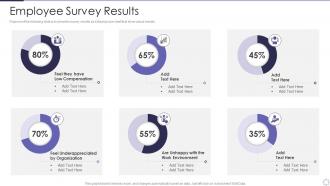
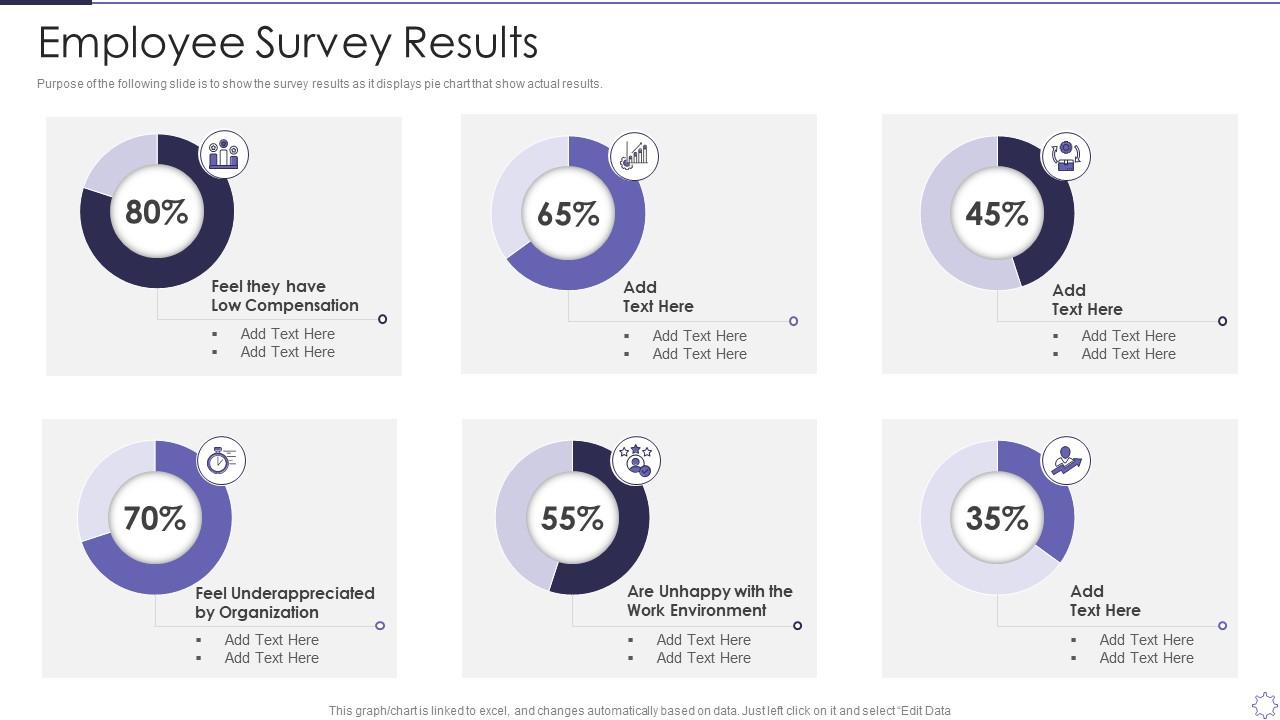
Purpose of the following slide is to show the survey results as it displays pie chart that show actual results.
People who downloaded this PowerPoint presentation also viewed the following :
Managing Employee Turnover Employee Survey Results Ppt Microsoft with all 7 slides:
Use our Managing Employee Turnover Employee Survey Results Ppt Microsoft to effectively help you save your valuable time. They are readymade to fit into any presentation structure.
FAQs for Managing Employee Turnover Employee Survey
Common causes of employee turnover include inadequate compensation, limited career advancement opportunities, poor management relationships, insufficient work-life balance, and lack of recognition or engagement. These factors often interconnect, with employees in sectors like retail, hospitality, and healthcare frequently citing multiple issues simultaneously, ultimately driving organizations to reassess their retention strategies for competitive advantage.
Businesses can effectively measure employee satisfaction through regular pulse surveys, exit interviews, one-on-one feedback sessions, anonymous suggestion systems, and performance review discussions. These measurement tools enable organizations to identify retention risks early, address workplace concerns proactively, and implement targeted improvements, with many companies finding that consistent feedback collection reduces turnover rates significantly while enhancing overall employee engagement.
Company culture significantly influences employee retention by shaping workplace satisfaction, engagement levels, career development opportunities, recognition systems, and overall job fulfillment. A positive culture fosters loyalty, reduces turnover costs, and enhances productivity, with many organizations finding that strong cultural alignment between employees and company values ultimately delivers competitive advantage and sustained workforce stability.
Exit interviews provide valuable insights for turnover management by identifying systemic issues, uncovering management concerns, evaluating compensation gaps, and assessing workplace culture factors that drive departures. Through structured conversations with departing employees, organizations streamline retention strategies, enhance management training programs, and address operational inefficiencies, ultimately reducing future turnover costs and improving employee satisfaction.
HR can implement comprehensive onboarding strategies including structured orientation programs, mentorship assignments, interactive training modules, clear goal-setting frameworks, and regular feedback sessions. These approaches enhance employee engagement by streamlining integration processes, fostering meaningful connections, and providing transparent career pathways, with many organizations finding that strategic onboarding significantly reduces early turnover while accelerating productivity.
Effective communication between management and employees significantly reduces turnover by fostering trust, clarity, and engagement through regular feedback, transparent goal-setting, and open dialogue channels. Organizations with strong communication practices experience improved employee satisfaction, better conflict resolution, and enhanced retention rates, with many companies finding that consistent manager-employee interactions ultimately deliver stronger team cohesion and reduced recruitment costs.
High employee turnover creates substantial long-term costs including recruitment expenses, training investments, lost productivity, decreased institutional knowledge, and reduced customer satisfaction. These cumulative costs often reach 50-200% of departed employees' annual salaries, with organizations in retail, hospitality, and healthcare finding that chronic turnover ultimately undermines competitive advantage and operational efficiency.
Flexible work arrangements significantly improve employee retention by enhancing work-life balance, reducing commute stress, and increasing job satisfaction across various industries. Companies offering remote work, flexible hours, and hybrid models often experience 25-40% lower turnover rates, with employees reporting greater loyalty and productivity, ultimately delivering reduced recruitment costs and stronger organizational stability.
Career development and training play crucial roles in reducing turnover by enhancing employee engagement, providing clear advancement pathways, building valuable skills, and demonstrating organizational investment in workforce growth. These strategic initiatives enable companies to retain top talent, reduce recruitment costs, and maintain institutional knowledge, with many organizations finding that comprehensive development programs deliver significantly higher retention rates and improved employee satisfaction.
Technology enhances employee engagement through AI-powered analytics, automated feedback systems, personalized learning platforms, digital recognition tools, and predictive retention models. These solutions streamline communication, identify disengagement patterns early, and deliver customized development opportunities, with many organizations finding that strategic technology integration reduces turnover by 25-40% while improving workplace satisfaction.
Turnover rates vary significantly across industries, with hospitality and retail experiencing 70-100% annually, while healthcare averages 20-25% and technology sees 15-20%. These differences reveal that industries emphasizing career development, competitive compensation, and strong workplace culture retain talent more effectively, with many organizations finding that investing in employee engagement and clear advancement pathways delivers sustainable competitive advantage.
Organizations can identify at-risk employees through predictive analytics examining performance metrics, engagement scores, absenteeism patterns, compensation benchmarks, and career progression data. These technologies streamline retention efforts by flagging declining productivity, reduced collaboration, and increased sick leave usage, with many companies finding that early intervention through targeted support and development opportunities significantly reduces turnover costs.
Leadership style significantly impacts employee turnover through communication patterns, recognition practices, decision-making approaches, and team development strategies. Transformational leaders who provide clear direction, regular feedback, and growth opportunities typically see lower turnover rates, while micromanaging or inconsistent leadership styles drive higher attrition, ultimately affecting organizational productivity and talent retention costs.
Recognizing and rewarding employees significantly reduces turnover by enhancing job satisfaction, increasing engagement levels, and strengthening emotional connections to the organization. Strategic recognition programs, performance-based incentives, and career advancement opportunities create a positive workplace culture where employees feel valued, ultimately delivering improved retention rates, reduced recruitment costs, and enhanced organizational stability across industries.
Companies should monitor turnover rate by department, exit interview feedback, time-to-fill vacant positions, cost-per-hire, employee engagement scores, and retention rates by tenure length. These metrics enable organizations to identify patterns across different teams, streamline recruitment processes, and enhance workplace satisfaction, with many finding that proactive monitoring ultimately delivers improved retention and reduced hiring costs.
-
I’ve been your client for a few years now. Couldn’t be more than happy after using your templates. Thank you!
-
Easy to use and customize templates. Helped me give a last minute presentation.