

Market entry strategy in gym health and fitness clubs industry powerpoint presentation slides




Try Before you Buy Download Free Sample Product
 Impress Your
 Audience
 100%
100% Editable
 Save Hours
 of Time


Our Market Entry Strategy In Gym Health And Fitness Clubs Industry Powerpoint Presentation Slides are topically designed to provide an attractive backdrop to any subject. Use them to look like a presentation pro.
People who downloaded this PowerPoint presentation also viewed the following :
Market entry strategy in gym health and fitness clubs industry powerpoint presentation slides with all 84 slides:
Use our Market Entry Strategy In Gym Health And Fitness Clubs Industry Powerpoint Presentation Slides to effectively help you save your valuable time. They are readymade to fit into any presentation structure.











FAQs for Market entry strategy in gym health and fitness clubs industry
Key factors include demographics and target market alignment, foot traffic and visibility, competition density, accessibility and parking availability, and lease terms with expansion potential. These location elements determine membership acquisition costs, operational sustainability, and long-term profitability, with many fitness entrepreneurs finding that strategic placement in underserved areas with strong demographic matches ultimately delivers faster growth and competitive advantage.
Market research informs fitness club pricing by analyzing competitor rates, understanding target demographics' spending capacity, evaluating local market conditions, and identifying perceived value drivers for different membership tiers. Through comprehensive market analysis, fitness entrepreneurs can optimize pricing structures that balance affordability with profitability, ultimately delivering competitive positioning and sustainable revenue growth in an increasingly crowded wellness marketplace.
The target demographic fundamentally determines a gym's service portfolio, equipment selection, class schedules, pricing models, and facility design to align with specific customer preferences and needs. For example, gyms targeting young professionals emphasize high-intensity interval training and flexible hours, while those serving seniors focus on low-impact activities and wellness programs, ultimately delivering tailored experiences that enhance member retention and competitive positioning.
Partnerships with local businesses enhance fitness club market entry by providing cross-promotional opportunities, shared customer acquisition costs, and built-in community credibility through established relationships. These strategic alliances enable clubs to leverage complementary services like nutritionists, sports retailers, and wellness centers, ultimately delivering faster brand recognition and reduced marketing expenses while building trust.
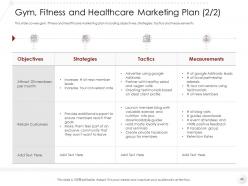
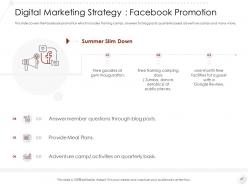
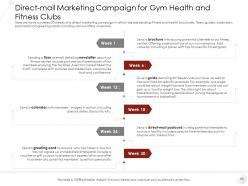
**INPUT**: What marketing channels are most effective for promoting a new gym to potential members? **OUTPUT**: Effective marketing channels for new gyms include social media advertising, local community partnerships, referral programs, digital content marketing, and targeted direct mail campaigns. These approaches streamline member acquisition by showcasing facility amenities, building neighborhood credibility, and leveraging satisfied members' networks, with many fitness clubs finding that combining online engagement with grassroots community involvement ultimately delivers higher conversion rates and sustainable membership growth.
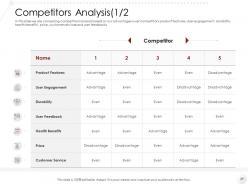
Analyzing competitors helps fitness clubs identify market gaps, pricing strategies, service offerings, and customer pain points, enabling differentiation through unique programming, specialized equipment, or targeted demographics. Through competitive analysis, gym operators can position themselves strategically by offering what rivals lack, such as 24/7 access, boutique classes, or family-friendly amenities, ultimately delivering enhanced member experiences and sustainable competitive advantage.
New gyms should prioritize versatile programs like group fitness classes, functional training, beginner-friendly strength training, and flexible membership tiers that cater to diverse fitness levels. These foundational offerings streamline member acquisition by addressing varied demographics, from fitness novices to experienced athletes, while enabling scalable operations that can expand with growing membership demand and evolving market preferences.
Technology integration significantly enhances a gym's market entry strategy by attracting tech-savvy members, providing data-driven personalization, and creating competitive differentiation through seamless digital experiences. Fitness apps and wearables enable gyms to offer virtual training, track member progress, and build community engagement, ultimately delivering higher retention rates and operational efficiency that appeals to modern consumers seeking connected wellness solutions.
Franchising in the gym market offers established brand recognition, proven business models, operational support, and reduced startup risks, while presenting challenges including ongoing royalty fees, limited creative control, and territorial restrictions. Many fitness entrepreneurs find that franchise systems like Anytime Fitness or Planet Fitness deliver faster market penetration and streamlined operations, ultimately enabling competitive advantage through brand trust and operational efficiency.
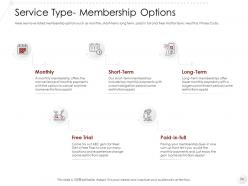
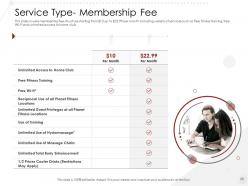
Gyms should adopt flexible membership models combining monthly subscriptions, pay-per-use options, corporate packages, family plans, and premium tiers to cater to diverse customer preferences and maximize revenue streams. Through strategic pricing and service differentiation, fitness centers can attract budget-conscious users, frequent visitors, and premium clients simultaneously, ultimately enhancing member retention and competitive positioning.
Creating a compelling fitness club brand identity involves developing authentic messaging that reflects member aspirations, consistent visual elements across all touchpoints, community-focused programming, and personalized member experiences. Successful clubs like Equinox and Planet Fitness demonstrate how targeted positioning attracts specific demographics, with many fitness brands finding that emphasizing inclusivity, wellness journeys, and supportive community ultimately delivers stronger member loyalty and competitive differentiation.
Customer feedback leverages improvement through systematic collection via surveys, reviews, focus groups, and digital platforms, enabling gyms to identify service gaps, enhance member experiences, and refine offerings. Through data analysis and implementation tracking, fitness clubs streamline operations, introduce targeted programs, and optimize facilities, ultimately delivering enhanced member satisfaction and competitive differentiation that attracts new customers seeking responsive, member-focused environments.
Legal and regulatory considerations include obtaining business licenses, health department permits, zoning compliance, liability insurance, equipment safety certifications, and adherence to ADA accessibility standards. These requirements streamline operations by ensuring regulatory compliance, minimizing legal risks, and building customer trust, with many fitness entrepreneurs finding that proactive legal planning ultimately delivers smoother launches and sustainable competitive advantage.
Community engagement is critically important in early fitness club launch phases, as it builds brand awareness, establishes trust, and creates a loyal member base before opening. Through local partnerships, fitness demonstrations, wellness workshops, and social media outreach, clubs can generate pre-launch buzz and secure founding memberships, ultimately reducing marketing costs and accelerating revenue growth in an increasingly competitive fitness landscape.
Fitness trends significantly influence new gym services by driving equipment selection, class programming, membership tiers, technology integration, and facility design to meet evolving consumer preferences. Gyms incorporating popular trends like HIIT training, functional fitness, wellness coaching, and digital fitness tracking often achieve faster member acquisition and retention, with many fitness entrepreneurs finding that trend-responsive offerings create competitive differentiation in saturated markets.
-
Innovative and attractive designs.
-
Attractive design and informative presentation.
-
It saves your time and decrease your efforts in half.
-
Design layout is very impressive.
-
Top Quality presentations that are easily editable.
-
Very unique, user-friendly presentation interface.
-
Awesome presentation, really professional and easy to edit.
-
Wonderful templates design to use in business meetings.
-
Use of icon with content is very relateable, informative and appealing.