

Marketing Goals Powerpoint PPT Template Bundles





Try Before you Buy Download Free Sample Product
 Impress Your
Audience
 100%
Editable
 Save Hours
of Time


Our Marketing Goals Powerpoint PPT Template Bundles are topically designed to provide an attractive backdrop to any subject. Use them to look like a presentation pro.
People who downloaded this PowerPoint presentation also viewed the following :
Marketing Goals Powerpoint PPT Template Bundles with all 18 slides:
Use our Marketing Goals Powerpoint PPT Template Bundles to effectively help you save your valuable time. They are readymade to fit into any presentation structure.








FAQs for Marketing Goals Powerpoint
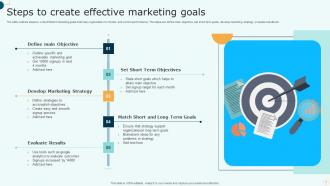
Effective marketing goals include specific metrics, measurable outcomes, achievable targets, relevant business alignment, and time-bound deadlines. These components work together by establishing clear benchmarks, enabling performance tracking, and ensuring strategic focus, with many organizations finding that well-structured goals drive measurable revenue growth and enhanced customer engagement.
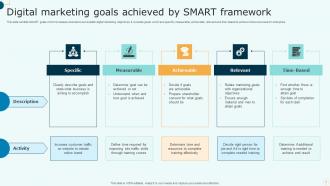
SMART criteria help establish marketing goals that are Specific, Measurable, Achievable, Relevant, and Time-bound, transforming vague objectives into actionable targets with clear metrics and deadlines. By applying this framework, marketing teams can track progress through concrete KPIs like conversion rates and revenue growth, while ensuring alignment with broader business objectives, ultimately delivering enhanced accountability and strategic focus across campaigns.
Target audience identification serves as the foundation for establishing effective marketing goals by defining who you're reaching, what they need, and how they behave across different channels. This strategic process enables businesses to create focused campaigns, allocate resources efficiently, and set measurable objectives that resonate with specific customer segments, ultimately delivering higher conversion rates and stronger ROI.
B2B marketing goals typically focus on lead generation, relationship building, and longer sales cycles, while B2C goals emphasize brand awareness, customer acquisition, and immediate conversions. B2B companies prioritize educational content and trust-building across multiple stakeholders, whereas B2C businesses streamline emotional engagement and purchase decisions, with both ultimately delivering targeted customer experiences and competitive market positioning.
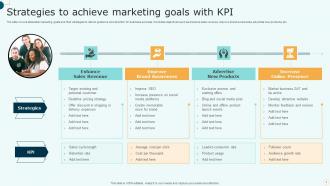
Key metrics include conversion rates, customer acquisition cost, return on investment, brand awareness levels, and customer lifetime value. These measurements enable organizations to track campaign effectiveness, optimize resource allocation, and demonstrate tangible business impact, with many companies finding that combining multiple metrics provides comprehensive insights into marketing performance and strategic growth opportunities.
Marketing goals should be reviewed quarterly for strategic alignment and adjusted monthly for tactical optimization, with continuous monitoring of key performance indicators throughout campaigns. This balanced approach enables organizations to respond to market shifts, seasonal trends, and competitive pressures while maintaining long-term strategic focus, ultimately delivering improved ROI and sustained growth momentum.
Common pitfalls include setting vague objectives, unrealistic timelines, goals misaligned with business strategy, lack of measurable metrics, and insufficient budget allocation. These mistakes often result from inadequate market research, poor stakeholder communication, and failure to consider competitive landscapes, with many organizations finding that overly ambitious targets without proper resource planning ultimately undermine campaign effectiveness and team morale.
Aligning marketing goals with business objectives creates strategic cohesion by ensuring every campaign, channel investment, and messaging decision directly supports revenue growth, customer acquisition, and market expansion targets. This alignment enables organizations to maximize ROI, streamline resource allocation, and measure marketing impact against concrete business outcomes, ultimately delivering measurable competitive advantage and sustainable growth.
Best practices for prioritizing multiple marketing goals include aligning objectives with business strategy, categorizing goals by timeframe and impact, conducting competitive analysis, and establishing clear measurement frameworks. Through strategic assessment and resource allocation, organizations streamline their marketing efforts while maximizing ROI, with many companies finding that focused prioritization delivers enhanced campaign effectiveness and sustainable growth.
Seasonal trends significantly influence marketing goal formulation by dictating budget allocation, campaign timing, inventory planning, and promotional strategies throughout the year. Retail businesses, hospitality sectors, and consumer goods companies adjust their quarterly targets, revenue projections, and customer acquisition goals based on predictable seasonal patterns, ultimately enabling more strategic resource allocation and competitive positioning.
Competitive analysis plays a crucial role in setting marketing goals by identifying market gaps, benchmarking performance standards, analyzing competitor strategies, and revealing differentiation opportunities. Through comprehensive competitor research, organizations can establish realistic yet ambitious targets, position themselves strategically within their market landscape, and develop unique value propositions that deliver sustainable competitive advantage.
Marketing goals drive innovation by identifying customer needs, market gaps, and competitive opportunities that require creative solutions, new product development, and enhanced service delivery. Companies pursuing ambitious marketing objectives often discover breakthrough technologies, streamline operational processes, and develop strategic partnerships, with many organizations finding that innovation-focused marketing goals ultimately deliver sustainable competitive advantages and accelerated growth.
Effective strategies include regular cross-functional meetings, shared digital dashboards, standardized goal documentation, team-specific translations of objectives, and milestone tracking systems. These approaches streamline alignment by ensuring consistent messaging, creating transparency across departments, and enabling real-time progress monitoring, with many organizations finding that structured communication ultimately delivers improved collaboration and faster goal achievement.
Customer feedback directly shapes marketing goals by revealing customer preferences, identifying service gaps, highlighting competitive advantages, and uncovering emerging market opportunities that guide strategic direction. Through surveys, reviews, and social media interactions, businesses can refine targeting strategies, adjust messaging approaches, and prioritize product development initiatives, ultimately delivering more relevant campaigns and enhanced customer experiences.
Digital transformation revolutionizes modern marketing goals by enabling data-driven personalization, real-time customer engagement, and omnichannel experiences across all touchpoints. Through advanced analytics and automation platforms, organizations streamline campaign optimization, enhance customer targeting precision, and deliver measurable ROI, with many companies finding that integrated digital strategies ultimately accelerate growth and competitive differentiation.
-
Editable templates with innovative design and color combination.
-
SlideTeam is my one-stop solution for all the presentation needs. Their templates have beautiful designs that are worth every penny!