

Measure your sustainability with key performance indicators powerpoint presentation slides




Try Before you Buy Download Free Sample Product
 Impress Your
 Audience
 100%
100% Editable
 Save Hours
 of Time


KPIs are the core performance metrics business executives use to illustrate and measure overall business progress towards achieving strategic goals and performance objectives. Check out our professionally designed Measure your Sustainability with Key Performance Indicators template that will be helpful to the manager of a company to measure its organizational performance. After providing a business overview, the company will compare its performance with its competitors using the competitive landscape analysis section. Parameters covered for comparison are foundation year, the number of employees, investor funding, operating profit, and net profit margin. After analyzing business performance, the company will set its short-term and long-term goals by using the business goals section. At last, the company will measure its performance using three sections metrics to assess financial profitability, employee performance measurement, and customer satisfaction. Metrics to assess financial profitability section includes dashboards of financial performance indicator, profit margin, cash flow, and effective rate. The Employee performance measurement section provides employee engagement and company culture dashboards, revenue and engagement cost, employee billable hours, and real-time utilization. Get access to this 100 percent editable template now.
People who downloaded this PowerPoint presentation also viewed the following :
Content of this Powerpoint Presentation
Slide 1: This slide displays title i.e. 'Measure Your Sustainability with Key Performance Indicators' and your Company Name.
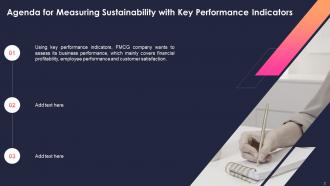
Slide 2: This slide presents agenda.
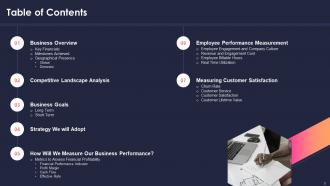
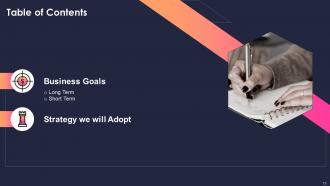
Slide 3: This slide exhibits table of contents.
Slide 4: This slide depicts title for two topics that are to be covered next in the template.
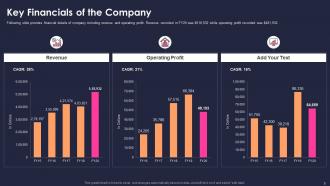
Slide 5: This slide provides financial details of company including revenue and operating profit.
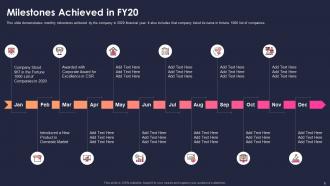
Slide 6: This slide demonstrates monthly milestones achieved by the company in 2020 financial year.
Slide 7: This slide depicts title for two topics that are to be covered next in the template.
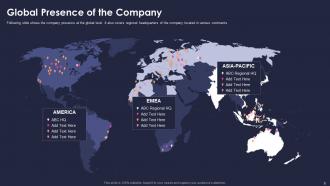
Slide 8: This slide shows the company presence at the global level.
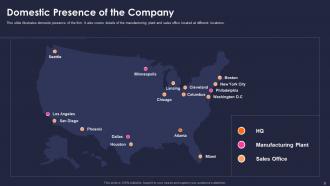
Slide 9: This slide illustrates domestic presence of the firm.
Slide 10: This slide depicts title for two topics that are to be covered next in the template.
Slide 11: This slide shows detailed competitive landscape analysis based on different criteria such as founded year, number of employees, etc.
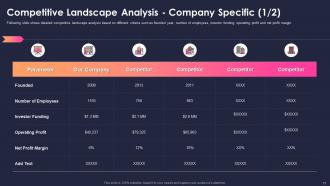
Slide 12: This slide shows company specific competitive landscape analysis.
Slide 13: This slide depicts title for three topics that are to be covered next in the template.
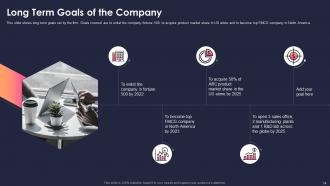
Slide 14: This slide shows long term goals set by the firm.
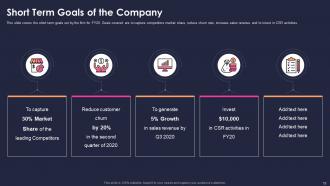
Slide 15: This slide covers the short term goals set by the firm for FY20.
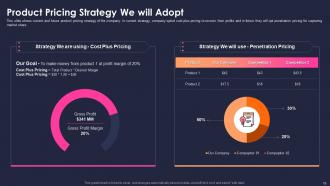
Slide 16: This slide shows current and future product pricing strategy of the company.
Slide 17: This slide depicts title for four topics that are to be covered next in the template.
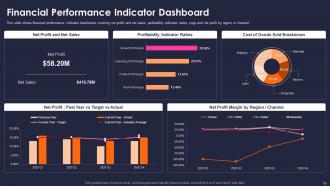
Slide 18: This slide shows financial performance indicator dashboard covering net profit and net sales, profitability indicator ratios, etc.
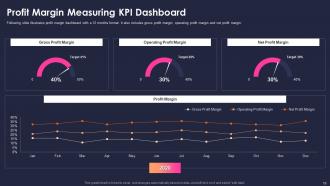
Slide 19: This slide illustrates profit margin dashboard with a 12 months format.
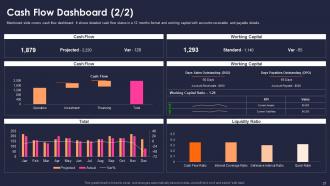
Slide 20: This slide covers cash flow dashboard covering details like beginning cash on hand, cash going in, cash going out, etc.
Slide 21: This slide covers cash flow dashboard.
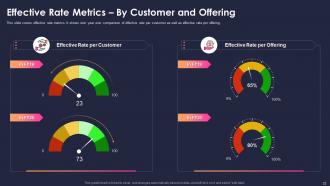
Slide 22: This slide covers effective rate metrics.
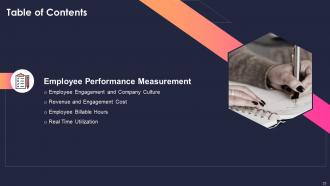
Slide 23: This slide depicts title for four topics that are to be covered next in the template.
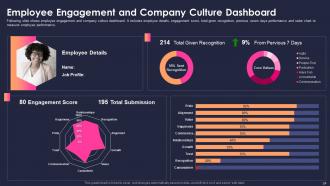
Slide 24: This slide shows employee engagement and company culture dashboard.
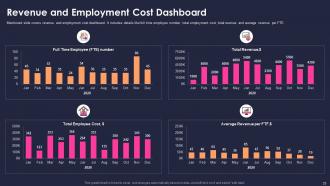
Slide 25: This slide covers revenue and employment cost dashboard.
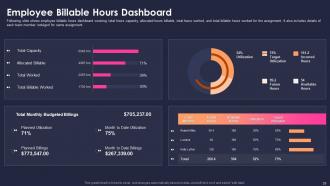
Slide 26: This slide shows employee billable hours dashboard covering total hours capacity, allocated hours billable, total hours worked, etc.
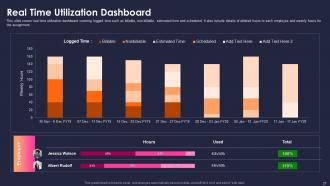
Slide 27: This slide covers real time utilization dashboard covering logged time such as billable, non-billable, estimated time and scheduled.
Slide 28: This slide depicts title for four topics that are to be covered next in the template.
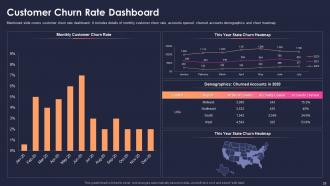
Slide 29: This slide covers customer churn rate dashboard.
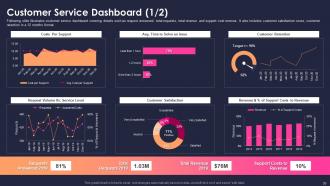
Slide 30: This slide illustrates customer service dashboard covering details such as request answered, total requests, total revenue and support cost revenue.
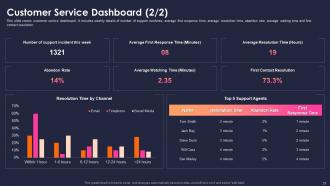
Slide 31: This slide covers customer service dashboard.
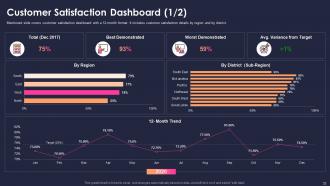
Slide 32: This slide covers customer satisfaction dashboard with a 12-month format.
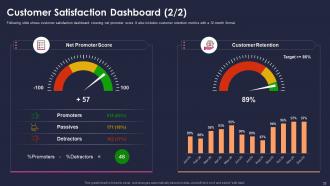
Slide 33: This slide shows customer satisfaction dashboard covering net promoter score.
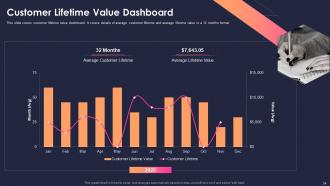
Slide 34: This slide covers customer lifetime value dashboard.
Slide 35: This is the icons slide.
Slide 36: This slide presents title for additional slides.
Slide 37: This slide shows about your company, target audience and its client's values.
Slide 38: This slide presents your company's vision, mission and goals.
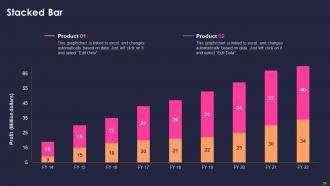
Slide 39: This slide exhibits yearly profits stacked bar charts for different products. The charts are linked to Excel.
Slide 40: This slide shows details of team members like name, designation, etc.
Slide 41: This slide depicts posts for past experiences of clients.
Slide 42: This slide displays puzzle.
Slide 43: This slide exhibits yearly timeline.
Slide 44: This slide depicts 30-60-90 days plan for projects.
Slide 45: This is thank you slide & contains contact details of company like office address, phone no., etc.
Measure your sustainability with key performance indicators powerpoint presentation slides with all 50 slides:
Use our Measure Your Sustainability With Key Performance Indicators Powerpoint Presentation Slides to effectively help you save your valuable time. They are readymade to fit into any presentation structure.

















FAQs for Measure your sustainability with key performance indicators
You'll need three main things: solid baseline data showing where you're at now, specific targets with actual deadlines, and a way to track progress regularly. Honestly, getting good baseline data is the trickiest part - most companies have been measuring completely pointless stuff for years. Pick 5-8 KPIs that actually tie to your business strategy and cover the ESG areas that matter for your industry. Mix leading indicators (what you're doing) with lagging ones (what happened). Oh, and match your tracking frequency to how often you actually make decisions about this stuff. Start small - you can always add more metrics once you've got the basics down.
Honestly, just tie your sustainability metrics directly to what your business actually cares about. Cost cutting? Pick energy efficiency stuff that hits your bottom line. I made the mistake once of choosing flashy ESG metrics that looked good but didn't connect to anything real - total waste of time. Your executives need to see how green performance affects profit, period. Go for the double-win metrics like waste reduction (saves money too) or employee satisfaction scores that include sustainability questions. Oh, and do regular check-ins across departments so sustainability doesn't end up in some corner collecting dust.
Oh man, you definitely need to get your stakeholders involved from the start - don't make my mistake of creating KPIs nobody actually cared about! Investors want different things than employees or community groups, so ask them upfront what sustainability stuff matters most to them. It's honestly way easier than trying to guess. Map out who your key people are first, then just ask what outcomes they value. Otherwise you'll end up measuring random environmental metrics that sound good on paper but don't move the needle for anyone who actually matters to your business.
So first thing - grab those industry frameworks like GRI or SASB since everyone's already using them. Then honestly just stalk your top competitors' sustainability reports (sounds weird but super helpful). Industry associations publish benchmarking studies that are actually pretty decent for this stuff. You can also dig into ESG databases from companies like Sustainalytics if you've got access. Just make sure you're comparing similar company sizes with the same metrics - otherwise it's totally useless. I'd start with maybe 5-7 KPIs where your data's actually solid and you can find good comparisons.
Okay so the big ones are total CO2 emissions (in metric tons), emissions intensity - that's CO2 per dollar of revenue or whatever you produce. Also percentage cuts from your baseline year. Scope 1, 2, and 3 emissions matter tons, but honestly Scope 3 is such a nightmare because it's your whole supply chain. Good luck getting accurate data there! Track energy use per unit and how much renewable energy you're using too. Oh, and definitely start with stuff you can actually measure well - don't try to boil the ocean right away. Build up your tracking once you've got the basics down.
Manufacturing companies track the heavy-duty stuff - energy per unit, waste rates, water usage. Makes sense since they're dealing with actual physical production. Service companies? They get more creative. Business travel emissions, going paperless, getting employees excited about green programs. Honestly, services have it tougher measuring this stuff since there's no obvious "input goes in, product comes out" formula. Oh, and definitely compare yourself to similar companies in your industry - cross-sector benchmarking gets weird fast. You'll get way better insights that way.
Oh man, the data silo thing is brutal - facilities tracks one way, procurement does something totally different, and don't even get me started on getting info from suppliers. Half the teams aren't even used to measuring this stuff yet. Manual collection means tons of errors, plus those Scope 3 emissions? Basically educated guesses that make everyone uncomfortable. Missing baselines everywhere too. Honestly, I'd just map out where your data actually sits right now and figure out which gaps hurt the most. You can't tackle it all at once anyway.
Honestly, tech makes tracking sustainability metrics so much easier. Instead of manually logging everything (ugh), IoT sensors automatically grab data on energy, water, waste - all that stuff. Real-time dashboards show you what's happening right now, which is pretty cool. AI catches weird patterns you'd totally miss. Cloud systems pull data from everywhere seamlessly. My advice? Figure out what part of data collection sucks the most for you right now. Then find tech that automates exactly that. Don't try to fix everything at once - you'll just overwhelm yourself.
Look, you need both timeframes but for totally different reasons. Short-term stuff like quarterly energy targets keeps everyone engaged and lets you pivot fast when something's not working. Meanwhile, those big long-term goals - carbon neutrality by 2030 or whatever - that's what gets leadership to actually fund things. I swear, companies that only track year-over-year miss so much. The real win is when your quick victories actually build toward those massive goals. Oh, and start by checking if your current metrics even align with your bigger vision.
So regulatory requirements are basically your starting point for sustainability KPIs. They show you what you absolutely have to track - stuff like EU taxonomy rules, SEC climate reports, whatever applies to your industry. Map your KPIs to those first. Then add whatever makes sense for your actual business goals. I always think of it like building something - regulations are your foundation, but you don't want to just tick boxes. You want KPIs that actually create change, not just satisfy lawyers. Start by figuring out which regulations hit your company, then build your metrics around those. Oh, and geography matters too since rules vary by location.
So beyond just carbon tracking, companies are doing some pretty cool stuff now. Like circular economy metrics - basically measuring how much waste gets turned back into useful materials. Water usage per product is big too. Some places track biodiversity scores to see how they're affecting local wildlife, which sounds nerdy but is actually super smart. Employee wellbeing tied to green initiatives is another one I've been seeing more of. Supply chain transparency scores are everywhere now too - probably because customers keep asking about it. I'd honestly just pick 2 or 3 that match your biggest environmental headaches and start there.
Look, transparency is everything here. Show exactly how you're calculating stuff and what data you're using - people can smell BS from miles away. Frameworks like GRI or SASB make your numbers actually comparable to competitors. Being consistent year over year matters way more than having perfect metrics right off the bat. Don't cherry-pick your best stats either, that always backfires. Third-party verification is solid but costs a fortune. Honestly? Just be brutally honest about your methodology. Even messy transparency beats polished fluff every single time.
Dude, you really need your team bought in if you want to hit those sustainability numbers. When people actually give a damn, they'll catch waste you never noticed and come up with clever fixes on their own. No micromanaging required. Engaged employees become those annoying (but helpful) coworkers who get others excited about green stuff too. The numbers don't lie - companies with engaged teams perform 20-30% better on environmental metrics. So yeah, train people properly, explain why it matters beyond just "corporate says so," and show them how their efforts actually move the needle.
Honestly, it's easier than people think - just find where your green stuff actually saves money. Energy efficiency cuts your electric bill. Less waste means lower disposal costs. That diversity program? It probably boosts retention, which saves you from constantly hiring (and training costs are brutal). Pick maybe 2-3 sustainability things that obviously hit your wallet first. Track carbon reduction next to utility bills, or see how sustainable sourcing affects sales. Sometimes you won't see patterns for a few months, but once you do, you've got your business case locked down.
Honestly, your KPIs should match what your customers actually care about. Carbon footprint matters to them? Track emissions religiously. They're all about ethical sourcing? Focus on supply chain transparency metrics. I mean, it sounds obvious but so many companies miss this - they build these fancy dashboards that nobody cares about. Survey your customers regularly to figure out their hot buttons. Social media sentiment is gold for this too. Then just build your whole measurement system around whatever keeps them up at night. Otherwise you're measuring stuff that won't impact your bottom line.
-
Great product with highly impressive and engaging designs.
-
Excellent products for quick understanding.