

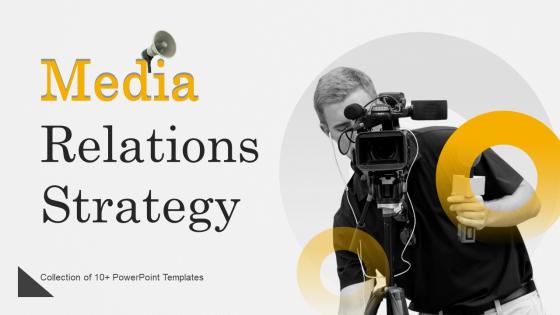
Media Relations Strategy Powerpoint Ppt Template Bundles




Try Before you Buy Download Free Sample Product
 Impress Your
 Audience
 100%
100% Editable
 Save Hours
 of Time


Our Media Relations Strategy Powerpoint Ppt Template Bundles are topically designed to provide an attractive backdrop to any subject. Use them to look like a presentation pro.
People who downloaded this PowerPoint presentation also viewed the following :
Media Relations Strategy Powerpoint Ppt Template Bundles with all 17 slides:
Use our Media Relations Strategy Powerpoint Ppt Template Bundles to effectively help you save your valuable time. They are readymade to fit into any presentation structure.







FAQs for Media Relations Strategy Powerpoint
Effective media relations strategies include clear messaging frameworks, targeted media lists, compelling story angles, proactive outreach campaigns, and crisis communication protocols. These components work together by building consistent brand visibility, establishing thought leadership, and managing public perception, with many organizations finding that strategic media engagement delivers enhanced credibility, broader market reach, and competitive positioning advantages.
Businesses can identify target media outlets by analyzing their audience demographics, circulation reach, editorial focus, and industry relevance, while prioritizing journalists who regularly cover their sector, have engaged audiences, and demonstrate genuine interest in their topics. Through media monitoring tools, competitor analysis, and relationship mapping, companies streamline their outreach efforts, enhance story placement success, and build lasting partnerships with key influencers, ultimately delivering greater brand visibility and credibility.
Storytelling transforms media relations by creating compelling narratives that resonate with journalists and audiences, making complex information more engaging, memorable, and shareable. Through strategic narrative frameworks, organizations craft authentic stories that humanize their brand, differentiate from competitors, and drive meaningful coverage, with many companies finding that well-told stories generate significantly more media pickup and audience engagement.
Organizations measure media relations success through comprehensive metrics including media coverage volume, share of voice, sentiment analysis, reach and impressions, and message penetration rates. These measurement approaches enable strategic evaluation by tracking brand visibility, audience engagement, and reputation shifts, with many companies finding that combining quantitative data with qualitative insights ultimately delivers clearer ROI understanding and enhanced communication strategies.
Building long-term journalist relationships requires consistent value delivery, personalized outreach, exclusive access to company leaders, timely story pitches aligned with their beats, and reliable source credibility. Media professionals increasingly value PR practitioners who understand their deadlines, provide accurate information, offer unique angles, and maintain regular communication, ultimately creating mutually beneficial partnerships that enhance brand visibility and journalist productivity.
Press releases can be optimized through compelling headlines, strategic keyword integration, multimedia elements, targeted distribution timing, and journalist relationship building. By crafting newsworthy angles that resonate with specific media outlets, incorporating visual assets like infographics or videos, and timing releases for maximum editorial calendar alignment, organizations ultimately enhance their media coverage reach and audience engagement significantly.
**INPUT**: What are the best practices for handling media inquiries during a crisis? **OUTPUT**: Best practices include responding promptly with accurate information, designating trained spokespeople, maintaining transparent communication, monitoring media coverage continuously, and preparing pre-approved messaging frameworks. These strategies enable organizations to control narrative flow, minimize reputation damage, and preserve stakeholder trust, with many companies finding that proactive media engagement ultimately delivers faster crisis resolution and stronger post-crisis market positioning. [Word count: 60 words]
Social media integrates into media relations strategy by building journalist relationships through direct engagement, sharing newsworthy content for increased visibility, and monitoring conversations for real-time reputation management. These platforms enable organizations to distribute press releases instantly, respond to media inquiries promptly, and amplify traditional coverage reach, with many companies finding that strategic social engagement significantly enhances their overall media relationship effectiveness.
Media monitoring tools include Brandwatch, Hootsuite Insights, Mention, Google Alerts, and Sprout Social, which track brand mentions, sentiment analysis, and competitor coverage across digital platforms. These technologies streamline reputation management by delivering real-time alerts, comprehensive analytics dashboards, and automated reporting, with many organizations finding that integrated monitoring ultimately enhances response times and strategic communication decisions.
Organizations tailor messages by adapting content length, visual elements, timing, and delivery style to each format's unique requirements and audience expectations. Print media benefits from detailed background information and quotes, digital platforms require SEO-optimized headlines and shareable content, while broadcast needs concise soundbites and compelling visuals, ultimately maximizing reach and engagement across diverse audiences.
Media relations ethics include transparency, accuracy, honesty, respect for privacy, and avoiding conflicts of interest. Organizations must balance promotional goals with truthful communication, ensuring press materials are factual while respecting journalists' time and editorial independence, ultimately building credible relationships that enhance long-term reputation and trust.
Communication training for spokespeople enhances media interactions by developing confident messaging, teaching crisis management techniques, and improving non-verbal communication skills. Through media simulation exercises and interview coaching, trained spokespeople deliver consistent brand messages, handle challenging questions effectively, and build stronger journalist relationships, ultimately enhancing organizational credibility and public perception in competitive markets.
Common pitfalls include targeting irrelevant media outlets, sending generic pitches without personalization, ignoring journalist deadlines and preferences, lacking newsworthy angles, and failing to build genuine relationships. These mistakes undermine credibility and reduce coverage opportunities, with many organizations finding that strategic targeting, personalized outreach, and consistent relationship-building ultimately deliver stronger media partnerships and enhanced brand visibility.
Visuals enhance press releases and media pitches by increasing engagement rates, simplifying complex information, and improving media pickup likelihood through eye-catching infographics, charts, and branded graphics. These visual elements streamline journalist workflows by delivering key messages quickly, with many media outlets finding that visual-rich content generates significantly higher audience engagement and social media sharing rates.
Follow-up plays a crucial role in maintaining media relations by demonstrating professionalism, building trust, and keeping your organization top-of-mind for future stories. Through consistent, value-driven communication, organizations strengthen relationships with journalists, editors, and influencers, while providing additional resources, clarifying information, and offering exclusive insights, ultimately delivering sustained media coverage and enhanced brand visibility.
-
Attractive design and informative presentation.
-
Innovative and creative templates with high-quality designs. Helped me with my presentation as the slides were easy to edit.