

Meeting Tracker Powerpoint PPT Template Bundles





Try Before you Buy Download Free Sample Product
 Impress Your
Audience
 100%
Editable
 Save Hours
of Time


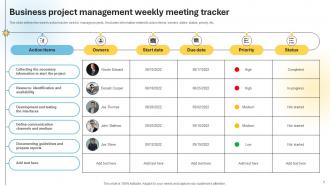
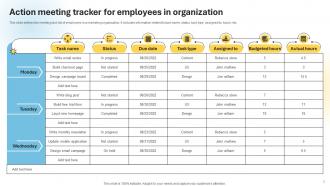
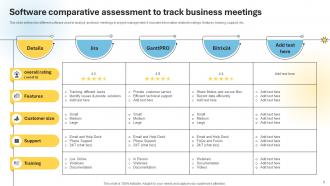
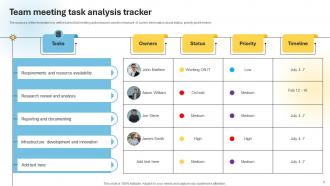
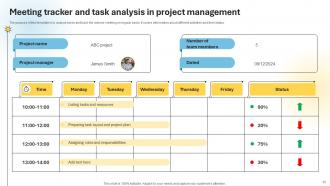
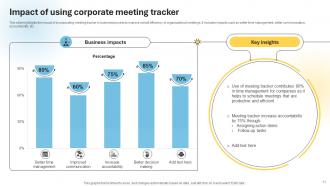
Introducing our Meeting Tracker PowerPoint PPT template the ultimate solution for seamless meeting management. Elevate your business gatherings with this user-friendly tool, equipped with an agenda tracker to keep discussions on point. Effectively manage action items, ensuring accountability and timely follow-ups. This Business Meeting Tracker PPT is designed to streamline your meeting processes, enhancing productivity and collaboration. With customizable sections for agenda meetings, effortlessly organize and track progress. Empower your team to focus on strategic objectives rather than administrative hassles. Revolutionize your meetings with this comprehensive template, optimizing efficiency and fostering a culture of proactive decision-making. Download now and experience the difference in your meeting dynamics.
People who downloaded this PowerPoint presentation also viewed the following :
Meeting Tracker Powerpoint PPT Template Bundles with all 22 slides:
Use our Meeting Tracker Powerpoint PPT Template Bundles to effectively help you save your valuable time. They are readymade to fit into any presentation structure.

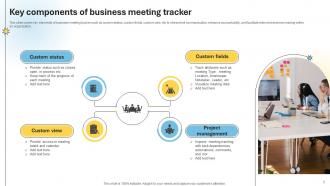
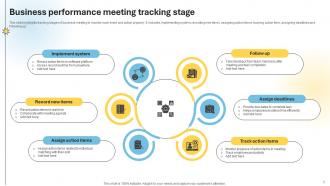
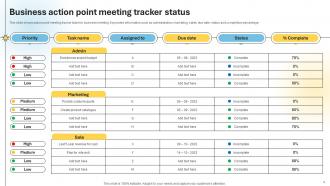
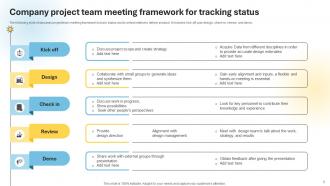








FAQs for Meeting Tracker Powerpoint
Effective meeting tracker templates include participant lists, agenda items with time allocations, action item assignments, decision logs, and follow-up deadlines. These features streamline meeting management by ensuring accountability, tracking progress across multiple sessions, and maintaining clear communication channels, with many organizations finding that structured templates reduce meeting inefficiencies and enhance project coordination.
A meeting tracker enhances team productivity by streamlining scheduling, automating follow-ups, centralizing action items, and providing analytics on meeting effectiveness and time allocation. Through digital tracking systems, organizations minimize scheduling conflicts, ensure accountability for deliverables, and identify collaboration patterns, with many teams finding that structured meeting management reduces overall meeting time while improving project outcomes.
Best practices for designing a user-friendly meeting tracker include intuitive navigation, customizable templates, automated scheduling integration, real-time collaboration features, and comprehensive reporting dashboards. These elements streamline meeting management by reducing administrative overhead, enhancing participant engagement, and providing actionable insights, with many organizations finding that well-designed trackers ultimately deliver improved productivity and accountability across teams.
Meeting tracker data can be analyzed through participation metrics, decision timeline analysis, action item completion rates, topic frequency tracking, and resource allocation patterns. These insights enable organizations to streamline meeting efficiency, identify bottlenecks in decision processes, and optimize team productivity, with many companies finding that data-driven meeting management ultimately delivers faster project outcomes and improved strategic alignment.
Meeting trackers integrate with project management tools like Asana, Trello, Monday.com, and Jira through APIs, native connectors, and third-party platforms like Zapier. This integration enables automatic task creation from meeting action items, seamless project timeline updates, and centralized progress tracking, with many organizations finding that synchronized workflows reduce administrative overhead while enhancing team accountability and project visibility.
A meeting tracker enhances accountability by documenting assigned tasks, deadlines, and responsible parties, ensuring nothing falls through the cracks after discussions end. This systematic approach enables teams to monitor progress on action items, follow up on commitments, and maintain momentum between meetings, ultimately delivering improved project outcomes and stronger team performance.
Attendees should be notified through automated email alerts, calendar integrations, mobile push notifications, and SMS reminders at strategic intervals before meetings. These notification systems streamline communication by sending initial invites, follow-up reminders, and last-minute alerts, while enabling organizations to reduce no-shows, improve attendance rates, and enhance overall meeting efficiency across departments.
Digital meeting trackers offer real-time collaboration, automated scheduling, cloud storage, and integration capabilities, while traditional trackers rely on paper-based notes, manual scheduling, and physical storage systems. Through digital platforms, organizations streamline meeting workflows, enhance cross-team coordination, and maintain centralized documentation, with many companies finding that automated tracking reduces administrative overhead while improving meeting accountability and follow-through rates.
A meeting tracker aids remote team communication by centralizing discussion records, tracking action items, and maintaining accountability across distributed teams. Through digital documentation and follow-up systems, remote teams can bridge time zone gaps, ensure consistent information sharing, and maintain project momentum, with many organizations finding that structured tracking significantly reduces miscommunication and enhances collaborative efficiency.
Meeting trackers should monitor attendance rates, punctuality metrics, agenda adherence, decision completion rates, action item follow-through, participant engagement levels, and meeting duration versus planned time. These metrics enable organizations to streamline their collaborative processes by identifying bottlenecks, enhancing productivity outcomes, and optimizing resource allocation, with many companies finding that systematic tracking ultimately delivers measurable improvements in operational efficiency.
Cultural differences significantly impact meeting tracker design through varying communication styles, hierarchy preferences, decision-making processes, and time orientations across global teams. Organizations find that successful trackers accommodate diverse cultural norms by offering flexible reporting structures, multiple feedback mechanisms, and adaptable workflow options, ultimately enabling inclusive collaboration while maintaining productivity standards across international operations.
Common pitfalls include overcomplicating the tracking system, failing to train team members adequately, inconsistent data entry practices, focusing solely on metrics without actionable insights, and neglecting regular system updates. These challenges can undermine adoption and effectiveness, with many organizations finding that starting simple, ensuring consistent training, and emphasizing practical outcomes rather than complex analytics delivers better long-term results.
Customizable fields in a meeting tracker improve user experience by allowing teams to capture information relevant to their specific workflows, industries, and organizational needs rather than forcing them into rigid templates. Organizations can tailor fields for project codes, priority levels, department tags, or compliance requirements, ultimately streamlining documentation processes while ensuring all critical meeting data aligns with their operational standards and reporting needs.
Popular meeting tracking templates vary by industry needs, with project management templates dominating tech and consulting, compliance-focused formats in healthcare and finance, and sales pipeline trackers in retail sectors. These specialized templates streamline documentation requirements, enhance regulatory adherence, and improve follow-up processes, with many organizations finding that industry-specific formats ultimately deliver better accountability and faster decision-making across teams.
A meeting tracker facilitates agile methodologies by monitoring sprint reviews, daily standups, retrospectives, and backlog refinement sessions, ensuring consistent team communication and iterative progress tracking. Through automated action item assignments and real-time documentation, agile teams streamline workflow transparency, enhance collaboration velocity, and maintain sprint accountability, ultimately delivering faster project iterations and improved stakeholder alignment.
-
I downloaded some of the presentations for work. They were simple to modify and saved me a lot of time and effort.
-
The templates are the best in class. Very clear and innovative graphics! I am excited to explore and download more presentations.