


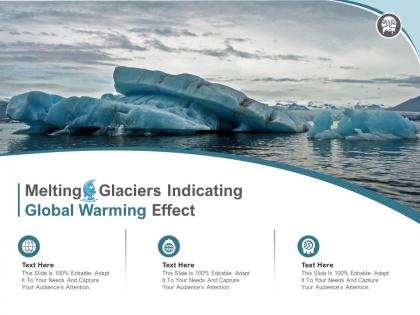
Melting glaciers indicating global warming effect




Try Before you Buy Download Free Sample Product
 Impress Your
 Audience
 100%
100% Editable
 Save Hours
 of Time


Our Melting Glaciers Indicating Global Warming Effect can be dramatic. They have the ability to beef up your act.
People who downloaded this PowerPoint presentation also viewed the following :
Melting glaciers indicating global warming effect with all 2 slides:
Beef up your act with our Melting Glaciers Indicating Global Warming Effect. They help make it dramatic.
FAQs for Melting glaciers indicating
So it's mainly because we're pumping way too much CO2 into the air from burning fossil fuels - plus methane and other crap that's basically turning up Earth's thermostat. Glaciers can't handle the heat. Ocean temps are rising too, which melts them from underneath where they hit the water. Also, some places aren't getting as much snow anymore, so there's less ice forming to replace what's melting. I saw this documentary last week that showed how crazy fast they're shrinking. NASA has these insane satellite pics if you want to see the damage yourself.
So basically when glaciers melt, all that water goes straight into the ocean and sea levels go up. Pretty simple concept but the numbers are kinda wild - we're talking 8-10 inches just from glacial melt if things keep going this way. Mountain glaciers are actually worse than the big ice sheets for this stuff, at least right now. Coastal areas are already dealing with it too. If you're doing any long-term planning near the coast, honestly I'd plan for like 1-2 feet of rise in the next few decades. Better safe than sorry with infrastructure and all that.
So glaciers are like giant water tanks that slowly drip out freshwater all year - super crucial during dry months. Over a billion people rely on glacier-fed rivers (Ganges, Indus, Mekong) for drinking water and farming. Here's the mess we're heading into: melting glaciers first cause flooding from all that extra water. Then later? Major droughts when there's no ice left to feed the rivers. Honestly, it's a pretty terrifying timeline. If you're planning any water projects, you'll want to check glacier forecasts because this stuff's happening faster than we thought.
So there's a few ways to track glacier melting. Satellites are probably your best bet for the overall picture - they can spot surface changes across huge areas. Ground GPS sensors give you super precise elevation data at specific points. Aerial surveys work too. Mass balance measurements are key though - basically tracking how much ice builds up vs. melts each year. I'd honestly combine all these methods if you can swing it. Short-term data can be misleading since glaciers have seasonal quirks, so you'll want several years of consistent measurements. The satellite tech these days is honestly insane - way better than I expected.
Okay so glaciers melting is basically chaos for ecosystems. Cold-loving plants and animals get pushed out first - they can't handle the warmer, drier conditions. It's honestly pretty brutal for alpine species that evolved for those specific conditions. But here's the weird part - downstream areas actually get MORE water from all that melting, creating new wetlands. Coastal areas get flooded from rising seas too. The whole thing cascades, you know? One ecosystem changes, then it messes with the next one. If you're looking at anything glacier-adjacent, expect major shifts soon.
So basically when glaciers melt, they're removing this huge weight that's been sitting on the earth's crust forever. The land actually bounces back up afterward - kinda like when you get off a really soft couch and it slowly pops back into shape. Wild that solid rock does this too, but it's called isostatic adjustment or something. Takes decades though, not like instant. You can literally measure it happening right now in Alaska and Scandinavia with GPS - some spots rise a few centimeters yearly. Pretty crazy we can track the earth moving like that.
Glacier data goes back about 150 years - mostly from old photos, field measurements, and satellite stuff now. The World Glacier Monitoring Service has tracked this since the 1940s (those guys are seriously dedicated). Most glaciers started retreating big time around the 1980s, then it got way worse after 2000. Check their online database first if you need regional numbers. It's free and covers most major systems pretty well. Honestly, the retreat rates are kind of scary when you look at the graphs side by side.
Dude, it's wild how fast this is hitting. Entire countries that rely on glacier water are basically screwed - crops failing, hydropower plants running dry, whole communities packing up and leaving. The Himalayas and Andes are seeing it worst right now. Cities can't get enough water, farmers can't irrigate anything. Even tourism dies when there's no glacier left to look at, which honestly seems like the least of their problems. If you're working with any of those regions, water shortages need to be on your radar yesterday.
So basically when glaciers melt, all that freshwater messes with ocean currents - you know, the salty water that drives stuff like the Gulf Stream? That current is literally why Europe isn't freezing cold. But the freshwater makes seawater less dense, which can slow down or even stop these currents. Pretty wild, right? Then you get crazy weather everywhere - worse storms, rain in weird places, temperatures going haywire. The Atlantic system's already slowing down, so yeah, definitely something to watch if you're tracking this stuff for work.
So basically mountain glaciers are melting way faster - like 2-3x the rate compared to polar ice. They're just more exposed to warming temps and get hit directly, you know? Meanwhile those massive Antarctic ice sheets change super slowly because they're so huge (still shrinking though). Mountain ones react fast to seasonal stuff too, so you get crazy year-to-year differences. Honestly, they're like the first warning sign for climate changes - they'll show what's happening decades before the big polar sheets do. Pretty wild how different they are.
So there's actually some pretty cool tech for tracking glaciers these days. Satellites can monitor ice thickness and how fast glaciers are moving, while GPS sensors track the melt patterns in real time. The AI stuff analyzing all this data is honestly getting a bit freaky - like, these models can predict changes years out. Drones with thermal cameras are super useful too for spotting surface temperature changes. Oh, and ground-penetrating radar gives you the full picture of what's happening below. You'll want to look at multiple data sources though, not just one. NASA's got some solid glacier tracking tools if you're curious about diving into the actual datasets.
So basically you need early warning systems for when glacial lakes decide to burst - that's the scary stuff right there. Build flood barriers and move critical infrastructure to safer ground. Water storage becomes a massive headache since glaciers won't be your natural reservoir anymore. Some crazy places are actually wrapping glaciers in reflective blankets (only works for tiny ones though). Before things get desperate, start transitioning away from water-heavy industries and diversify your economy. Oh, and assess your specific risks first - no point installing flood defenses if avalanches are your real problem.
Glacier melt is absolutely wrecking indigenous communities. Their water sources are getting unpredictable, hunting grounds are shifting, and places with deep spiritual meaning are literally disappearing. The speed of it all is just insane. These communities depend on glacier-fed rivers for drinking water and growing food - when that gets messed up, people can't eat or live the way they have for generations. Honestly, if you really want to get what's happening with climate change, listen to indigenous folks first. They're seeing this stuff happen in real time way before the rest of us catch on.
Honestly, glacier loss is going to mess up biodiversity in ways we're probably not even thinking about yet. Polar bears get all the attention, but the real chaos happens downstream. When glaciers disappear, you lose entire freshwater systems that fish and plants have depended on for ages. River flows change completely, which screws with migration patterns. Then there's the coastal stuff - rising seas will flip those ecosystems upside down too. Cold-adapted species are basically out of luck unless they can move uphill fast enough. If you're doing conservation work, wildlife corridors are clutch right now.
So basically when glaciers melt, all this ancient organic stuff that's been frozen forever starts rotting and releases methane and CO2. It's honestly pretty gross when you think about it. The white ice that used to reflect heat away is gone, so now dark ground just soaks up more warmth instead. Creates this awful cycle - more heat melts more ice, which creates more heat. Oh and btw, scientists are watching Greenland and Antarctica like hawks because they'll show us just how screwed we are. It's like nature's own feedback loop from hell.
No Reviews