

Methods Geothermal Power Plant Geothermal Energy IT




Try Before you Buy Download Free Sample Product
 Impress Your
 Audience
 100%
100% Editable
 Save Hours
 of Time


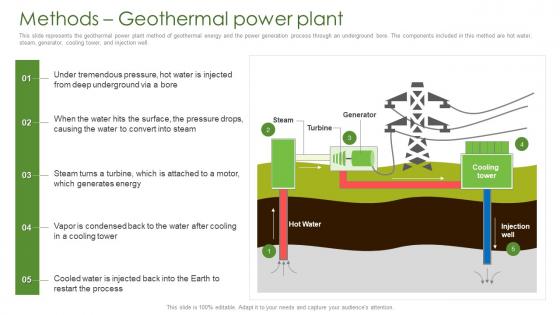
This slide represents the geothermal power plant method of geothermal energy and the power generation process through an underground bore. The components included in this method are hot water, steam, generator, cooling tower, and injection well.
People who downloaded this PowerPoint presentation also viewed the following :
Methods Geothermal Power Plant Geothermal Energy IT with all 6 slides:
Use our Methods Geothermal Power Plant Geothermal Energy IT to effectively help you save your valuable time. They are readymade to fit into any presentation structure.





FAQs for Methods Geothermal Power Plant
Primary methods include dry steam plants, flash steam systems, binary cycle power plants, enhanced geothermal systems, and direct-use applications. These technologies harness underground heat by drilling deep wells, converting steam or hot water to electricity, and utilizing lower-temperature resources through heat exchangers, ultimately delivering clean baseload power with minimal environmental impact.
Geothermal energy delivers consistent baseload power with 90-95% capacity factors, significantly outperforming solar and wind energy's intermittent 25-35% rates, while maintaining minimal land use and virtually zero emissions. Unlike other renewables requiring backup systems, geothermal plants operate continuously for decades, enabling utilities and industrial facilities to achieve reliable clean energy with lower lifecycle costs and enhanced grid stability.
Environmental impacts include induced seismicity, groundwater depletion, surface subsidence, hydrogen sulfide emissions, and thermal pollution of water sources. While geothermal energy significantly reduces carbon emissions compared to fossil fuels, these considerations require careful site assessment and monitoring, with many energy companies finding that advanced extraction technologies and proper environmental management deliver sustainable power generation while minimizing ecological disruption.
Geothermal energy development thrives in regions along tectonic plate boundaries, including Iceland, Philippines, Indonesia, New Zealand, and western United States, where volcanic activity and high geothermal gradients create accessible heat sources. These geologically active areas enable power generation through naturally occurring steam and hot water, with many countries finding that geothermal resources deliver consistent renewable energy while reducing dependence on fossil fuels.
Geothermal heat pumps leverage stable underground temperatures by circulating fluid through buried loops, transferring earth's consistent thermal energy to heat homes in winter and cool them in summer. This technology delivers significant energy savings, reduced utility costs, and enhanced comfort levels, with many homeowners finding that these systems provide reliable climate control while minimizing environmental impact and operational expenses.
Economic benefits of geothermal energy projects for local communities include job creation, increased tax revenues, lower energy costs, property value appreciation, and reduced energy import dependence. These projects stimulate economic development by employing local workers during construction and operation phases, generating sustained revenue streams for municipalities, and attracting additional businesses seeking reliable, cost-effective energy sources, ultimately delivering long-term economic stability.
Developers face high upfront exploration costs, geological uncertainties, complex permitting processes, technical drilling challenges, and limited financing options for unproven resources. These obstacles are particularly significant in remote locations, with many energy companies finding that strategic partnerships, government incentives, and advanced geological surveys help mitigate risks while accelerating project development timelines.
Geothermal energy contributes to reducing greenhouse gas emissions by generating electricity and heat with minimal carbon footprint, eliminating fossil fuel combustion, and providing consistent baseload power unlike intermittent renewables. Through direct heating applications and power generation, manufacturing facilities, residential developments, and utility companies achieve significant emission reductions while maintaining reliable energy supply, ultimately delivering both environmental benefits and operational cost savings.
Geothermal energy serves as a critical baseload renewable resource in the global energy transition, providing consistent, weather-independent power generation that complements intermittent solar and wind sources. By delivering reliable clean electricity and direct heating applications, geothermal systems enable countries like Iceland, Philippines, and Kenya to significantly reduce carbon emissions while maintaining energy security, ultimately supporting both decarbonization goals and sustainable economic development.
Geothermal energy presents competitive upfront costs compared to solar and wind, with significantly lower operational expenses than fossil fuels due to minimal fuel requirements and maintenance needs. While initial installation costs can be substantial, many utilities and industrial facilities find that geothermal's consistent baseload generation, price stability, and 30-year operational lifespans ultimately deliver superior long-term returns and energy security.
Emerging geothermal advancements include enhanced geothermal systems, closed-loop technologies, advanced drilling techniques, binary cycle power plants, and AI-powered reservoir monitoring. These innovations streamline resource extraction by accessing deeper heat sources, reducing surface footprint, and optimizing operational efficiency, with energy companies increasingly finding that enhanced systems deliver cost-effective power generation and expanded geographical viability.
Geothermal energy enables countries with limited fossil fuels to achieve energy independence by providing consistent baseload power, reducing import dependencies, and delivering long-term price stability. Nations like Iceland, Kenya, and the Philippines leverage geothermal resources to diversify their energy portfolios, ultimately enhancing energy security while minimizing exposure to volatile fossil fuel markets.
Geothermal energy production presents risks including induced seismicity from fluid injection, ground subsidence, hydrogen sulfide emissions, water resource depletion, and thermal pollution of groundwater systems. While these challenges require careful monitoring and mitigation strategies, many energy companies find that advanced drilling technologies, environmental assessments, and regulatory compliance frameworks ultimately deliver sustainable power generation with manageable risk profiles.
Policymakers can encourage geothermal development through tax incentives, streamlined permitting processes, research funding, renewable energy mandates, and public-private partnerships. These strategic approaches enable faster project approvals, reduced financial barriers, and enhanced grid integration, with many states finding that comprehensive policy frameworks ultimately deliver job creation, energy independence, and sustainable economic growth.
Common geothermal misconceptions include beliefs that it only works in volcanic regions, causes earthquakes, is prohibitively expensive, has limited applications, and depletes underground heat sources. These myths overlook modern geothermal technologies that enable installations across diverse geographic areas, with many organizations finding that enhanced systems deliver reliable renewable energy, reduce operational costs, and provide sustainable heating solutions while maintaining environmental safety standards.
-
Helpful product design for delivering presentation.
-
I was able to find the right choice of PPT template for my thesis with SlideTeam. Thank you for existing.