

Microsoft corporation company profile overview financials and statistics from 2014-2018




Try Before you Buy Download Free Sample Product
 Impress Your
 Audience
 100%
100% Editable
 Save Hours
 of Time


This report is an extensively researched profile on company Microsoft Corporation Company Profile Overview Financials And Statistics From 2014 to 2018 in industry Consumer Goods and FMCG and Retail and Trade and E-Commerce and has been prepared by SlideTeam industry experts after extensively researching through hundreds of data sources.
People who downloaded this PowerPoint presentation also viewed the following :
Microsoft corporation company profile overview financials and statistics from 2014-2018 with all 81 slides:
Awaken the conscience of your listeners. Heighten their sensitivity with our Microsoft Corporation Company Profile Overview Financials And Statistics From 2014-2018.
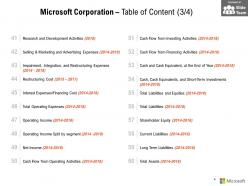

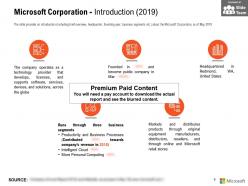
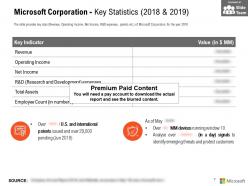
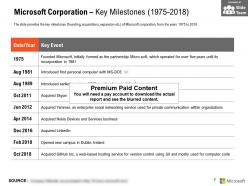
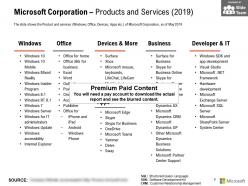
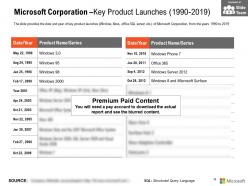
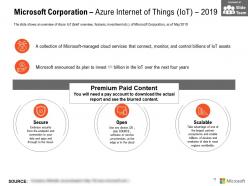
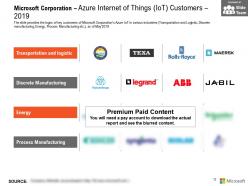
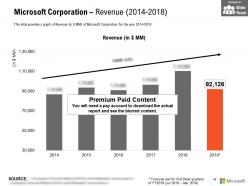
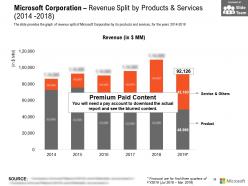
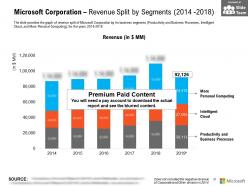
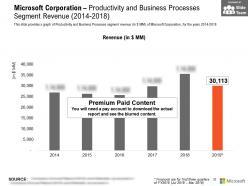
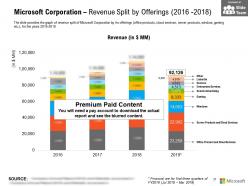
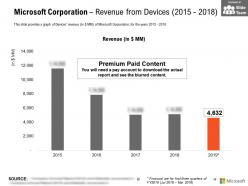
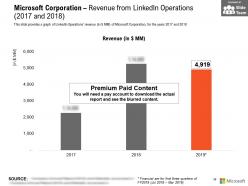
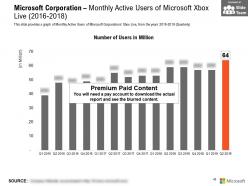
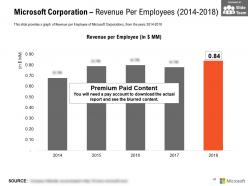
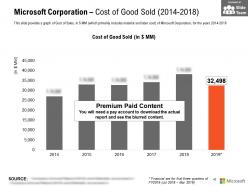
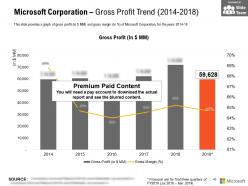
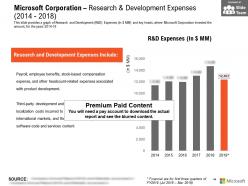


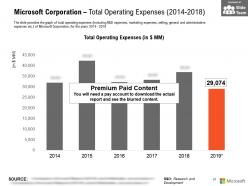
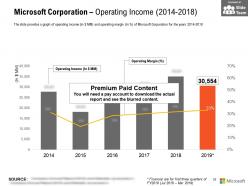
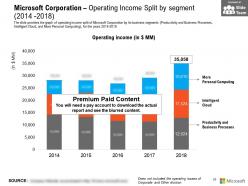
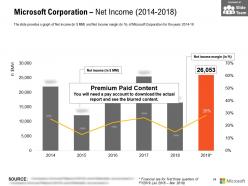
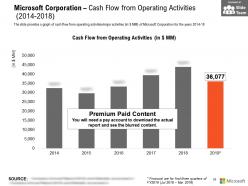
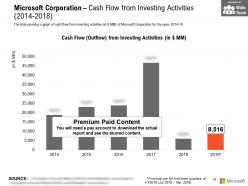
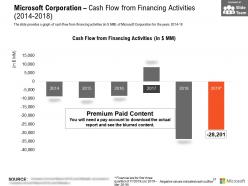
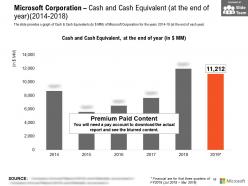
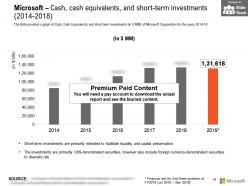
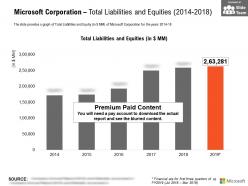
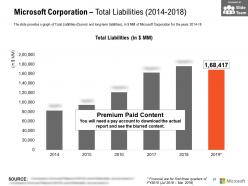
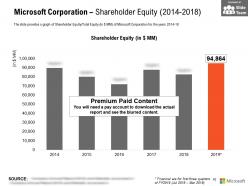
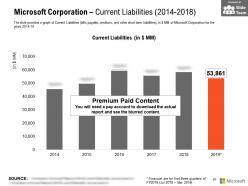
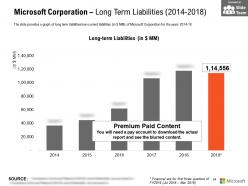
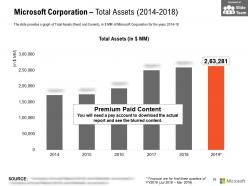
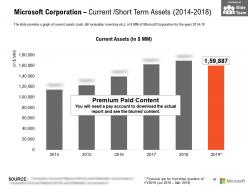
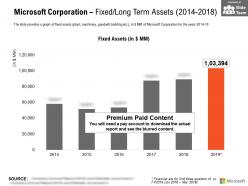
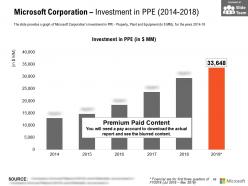
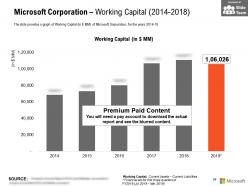
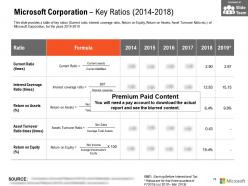
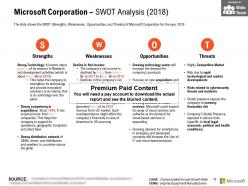
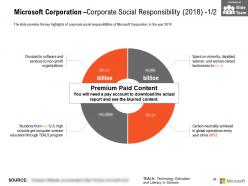
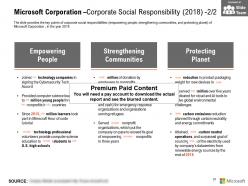
FAQs for Microsoft corporation company profile overview financials and
Microsoft's key innovations include the Windows operating system, Microsoft Office suite, cloud computing through Azure, artificial intelligence integration, and enterprise collaboration tools like Teams. These technologies have revolutionized business operations by standardizing desktop computing, streamlining productivity workflows, and enabling scalable cloud infrastructure, with organizations across industries finding that Microsoft's integrated ecosystem delivers enhanced operational efficiency and competitive advantage.
Azure competes strongly with AWS and Google Cloud through enterprise integration, hybrid capabilities, comprehensive AI services, and competitive pricing models. While AWS leads in market share and Google Cloud excels in data analytics, Azure's seamless Office 365 integration and Windows compatibility deliver significant advantages for organizations already invested in Microsoft ecosystems, ultimately enabling faster deployment and reduced operational complexity.
Microsoft plays a pivotal role in AI development through Azure AI services, OpenAI partnership, Copilot integration, machine learning platforms, and cognitive services. These technologies streamline business operations by automating processes, enhancing productivity, and delivering intelligent insights, with organizations across healthcare, finance, and manufacturing finding competitive advantages through faster decision-making and improved customer experiences.
Microsoft Office has evolved from standalone desktop applications to cloud-based, collaborative platforms through regular feature updates, cross-device synchronization, and AI-powered tools like Editor and Designer. These enhancements streamline workflows by enabling real-time collaboration, automated formatting, and seamless integration across devices, with many organizations finding that modern Office delivers significantly improved productivity and operational efficiency.
Microsoft has implemented zero-trust architecture, advanced threat protection through Defender suite, AI-powered security analytics, multi-factor authentication, and cloud-based security intelligence across its platforms. These comprehensive measures streamline threat detection, automate incident response, and enhance data protection, with many enterprises finding that integrated Microsoft security solutions deliver faster threat mitigation and stronger compliance outcomes.
Microsoft has contributed through carbon negativity commitments, AI for Good programs, digital skills training, accessibility technologies, and sustainable cloud infrastructure. These initiatives streamline environmental impact while enhancing global access to technology, with many organizations finding that Microsoft's partnerships in education, healthcare, and environmental monitoring ultimately deliver both social value and competitive advantages in an increasingly sustainability-focused business landscape.
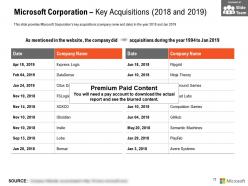
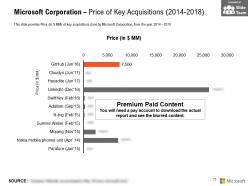
Microsoft's acquisition strategy accelerates business growth by expanding product portfolios, integrating emerging technologies like AI and cloud computing, and accessing new customer segments across enterprise and consumer markets. Strategic acquisitions like LinkedIn, GitHub, and Activision Blizzard enhance Microsoft's competitive positioning while delivering synergies that strengthen market leadership, ultimately enabling faster innovation cycles and comprehensive ecosystem development.
Windows 11 introduces a redesigned Start menu, enhanced multitasking with Snap Layouts, integrated Microsoft Teams, improved gaming performance through DirectX 12 Ultimate, and strengthened security with TPM 2.0 requirements. These features streamline productivity workflows, enhance collaboration capabilities, and deliver faster system performance, with many organizations finding that the enhanced security architecture and intuitive interface ultimately reduce IT management overhead while improving user experiences.
Microsoft fosters creativity and collaboration by providing integrated platforms that streamline communication, enable real-time document sharing, and facilitate seamless project coordination across teams. Through Teams' unified workspace and OneNote's collaborative notebooks, organizations enhance brainstorming sessions, accelerate decision-making processes, and maintain project transparency, with many companies finding that these tools significantly improve cross-departmental innovation and operational efficiency.
Microsoft's R&D investments have significantly advanced cloud computing, artificial intelligence, mixed reality, and quantum computing through breakthrough innovations like Azure AI services, HoloLens technology, and quantum development tools. These efforts enable organizations across healthcare, manufacturing, and financial services to streamline operations, enhance customer experiences, and accelerate digital transformation, ultimately delivering competitive advantages in an increasingly technology-driven marketplace.
Microsoft addresses remote work challenges through comprehensive cloud solutions, collaboration platforms, security enhancements, and productivity tools designed for distributed teams. Through Teams integration, Azure infrastructure, and AI-powered features, organizations streamline communication, maintain data security, and enhance employee productivity, with many enterprises finding that these technologies ultimately deliver operational efficiency and competitive advantage in an increasingly flexible work environment.
Microsoft's open-source initiative represents a strategic shift toward collaborative development, transparency, and community engagement, fundamentally changing how the company approaches innovation and market positioning. This transformation enables enhanced developer adoption, accelerated innovation cycles, and stronger ecosystem partnerships, with many organizations finding that Microsoft's contributions to projects like Linux, Kubernetes, and GitHub ultimately deliver greater interoperability and competitive advantage.
Microsoft supports developers through comprehensive platforms like GitHub for version control and collaborative coding, Visual Studio for integrated development environments, Azure DevOps for project management, and extensive API ecosystems. These tools streamline development workflows by enabling seamless collaboration, automated testing, and cloud integration, with many software companies finding that this integrated approach accelerates product delivery and enhances team productivity.
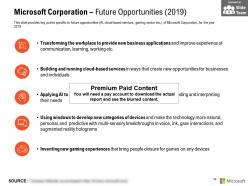
Microsoft's future directions include expanded AI integration across all products, growth in cloud computing and Azure services, advancement in mixed reality technologies, continued focus on sustainability initiatives, and strategic acquisitions in emerging sectors. These developments enable organizations to streamline operations, enhance productivity, and accelerate digital transformation, with many enterprises finding that Microsoft's evolving ecosystem delivers competitive advantages and operational efficiency.
Microsoft ensures accessibility through comprehensive design standards, assistive technology integration, AI-powered tools like Immersive Reader and Live Captions, and extensive user testing with disability communities. These initiatives streamline inclusive experiences across Windows, Office, and Azure platforms, with many organizations finding that Microsoft's accessibility features enhance productivity for all users, ultimately delivering broader market reach and competitive advantage in increasingly diverse workplaces.
No Reviews