

Minimum Viable Product Powerpoint Ppt Template Bundles




Try Before you Buy Download Free Sample Product
 Impress Your
 Audience
 100%
100% Editable
 Save Hours
 of Time


Our Minimum Viable Product Powerpoint Ppt Template Bundles are topically designed to provide an attractive backdrop to any subject. Use them to look like a presentation pro.
People who downloaded this PowerPoint presentation also viewed the following :
Minimum Viable Product Powerpoint Ppt Template Bundles with all 17 slides:
Use our Minimum Viable Product Powerpoint Ppt Template Bundles to effectively help you save your valuable time. They are readymade to fit into any presentation structure.
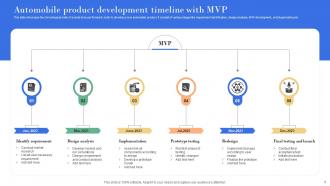
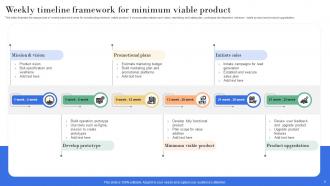
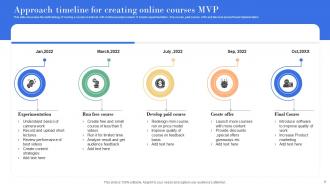
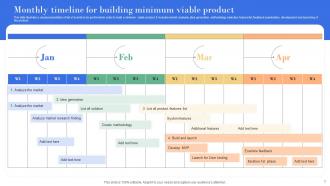






FAQs for Minimum Viable Product Powerpoint
Key components of an MVP template include core feature definition, user persona identification, success metrics, development timeline, resource allocation, and feedback collection mechanisms. These elements streamline product development by prioritizing essential functionality, minimizing initial investment, and accelerating market validation, with many startups and established companies finding that structured MVP frameworks ultimately deliver faster product-market fit and reduced development costs.
A well-structured MVP template streamlines product development by defining core features, establishing clear success metrics, prioritizing essential functionalities, and creating systematic validation frameworks. This approach enables teams to focus resources efficiently, reduce time-to-market significantly, and minimize development costs, with many startups and enterprises finding that structured templates accelerate decision-making while maintaining strategic alignment throughout the development cycle.
Common pitfalls include over-engineering features, ignoring user feedback, skipping market validation, focusing on perfection over learning, and treating the template as rigid rather than adaptable. These mistakes often lead organizations to miss critical insights, delay launches unnecessarily, and build products that don't address real customer needs, ultimately undermining the MVP's core purpose of rapid validation and iterative improvement.
User feedback can be effectively integrated into MVP templates through structured feedback collection mechanisms, iterative testing cycles, feature prioritization matrices, and clear update pathways. By incorporating feedback loops directly into development sprints, businesses can rapidly validate assumptions, refine core functionalities, and enhance user experiences, ultimately delivering products that better meet market demands and achieve stronger customer satisfaction.
MVP templates should include user engagement metrics, conversion rates, customer acquisition costs, retention rates, and feature usage analytics. These measurements enable startups to validate product-market fit, optimize resource allocation, and make data-driven decisions, with many organizations finding that tracking these core metrics streamlines product development and ultimately delivers faster market validation.
The "build-measure-learn" cycle aligns perfectly with MVP templates by providing structured frameworks for rapid prototyping, systematic feedback collection, and iterative refinement based on user data. These templates streamline each cycle phase through predefined testing methodologies, measurement criteria, and pivot guidelines, with many startups and product teams finding that structured MVP approaches accelerate validation timelines while minimizing resource waste and market risks.
Customer segmentation enables MVP templates to identify and prioritize specific user groups, define targeted features, and allocate development resources strategically based on market demand. Through detailed audience analysis, startups can streamline product development, validate assumptions with relevant users, and enhance market fit, ultimately delivering focused solutions that resonate with core customer segments.
An MVP template facilitates communication by providing standardized frameworks for documenting features, user stories, success metrics, and development timelines that all stakeholders can reference. Through shared templates, product teams, developers, and designers align on priorities, track progress consistently, and maintain clear visibility into project scope, while stakeholders stay informed on deliverables, ultimately streamlining collaboration and reducing miscommunication across development cycles.
Tools that enhance MVP template effectiveness include prototyping software like Figma or Sketch, analytics platforms such as Google Analytics, user feedback tools like Hotjar, project management systems, and A/B testing frameworks. These resources streamline development by enabling rapid iteration, comprehensive user insights, and data-driven decision making, with many startups finding that this strategic combination accelerates validation timelines while minimizing development costs.
B2B MVP templates emphasize longer sales cycles, multiple stakeholders, integration capabilities, and detailed ROI metrics, while B2C templates focus on user experience, rapid iteration, and individual consumer behavior. B2B products require extensive compliance features, enterprise security, and scalability demonstrations for organizational buyers, whereas B2C MVPs prioritize intuitive interfaces, viral potential, and immediate user satisfaction, ultimately delivering different validation approaches for distinct market needs.
Successful MVPs include Dropbox's simple video demonstration, Airbnb's basic website for room rentals, Twitter's SMS-based messaging service, Zappos's shoe photos without inventory, and Buffer's landing page testing social media scheduling demand. These companies validated core assumptions through minimal features, gathered user feedback early, and iteratively enhanced their offerings, with many finding that focused simplicity accelerated market validation and reduced development costs significantly.
An MVP template helps identify market risks by systematically evaluating customer demand, competitive positioning, technical feasibility, and resource requirements through structured validation frameworks. By testing core assumptions with real users early, companies can pivot strategies, refine value propositions, and minimize costly development mistakes, ultimately delivering market-fit solutions while reducing financial exposure and accelerating time-to-market.
Defining a value proposition in an MVP template establishes the core benefit your product delivers to customers, differentiating it from competitors while guiding development priorities and resource allocation. This strategic foundation enables startups to communicate their unique selling points clearly, validate market demand effectively, and align team efforts toward delivering maximum customer value, ultimately increasing the likelihood of successful product-market fit and sustainable growth.
Visual elements in MVP templates enhance stakeholder buy-in by making complex concepts accessible, creating emotional connections through compelling design, and enabling rapid comprehension of value propositions and user journeys. Through wireframes, user flow diagrams, and prototype mockups, stakeholders can visualize the end product more clearly, reducing uncertainty and building confidence, while interactive elements allow hands-on exploration that transforms abstract ideas into tangible business opportunities.
Digital platforms offer collaborative editing, real-time feedback collection, version control, automated testing integration, and seamless stakeholder sharing for MVP templates. These technologies streamline product development by enabling distributed teams to iterate faster, gather user insights more efficiently, and maintain documentation consistency, with many startups finding that digital workflows reduce development cycles by 30-40% while improving team alignment.
-
The designs are super attractive. Me and my team love using SlideTeam’s presentations.
-
Understandable and informative presentation.