


Mobile Data Management Strategy Powerpoint Presentation Slides




Try Before you Buy Download Free Sample Product
 Impress Your
 Audience
 100%
100% Editable
 Save Hours
 of Time


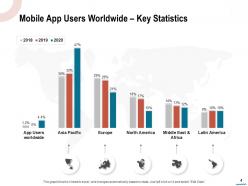
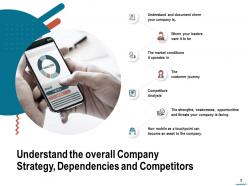
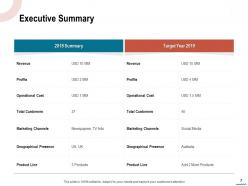
Ensure that employees have a seamless and secure experience across the devices by incorporating our readily available Mobile Data Management Strategy PowerPoint Presentation Slides. Our content-ready mobile device management PowerPoint complete deck contains templates that describe problem statement, project description, project goals and objectives, assumptions, project scope, etc. Key statistics of worldwide mobile app users can be easily depicted. Understand the overall company strategy, dependencies, and competitors by taking assistance from our mobile data strategy PowerPoint infographics. The slides also explain the executive summary by revenue and profits details of the target years. Highlight the mission, vision, and values of your organization by easily editing the slides. Establish a value proposition by describing how value will be delivered, acquired, and experienced by the customer. The mobile data management PPT slideshow will help you to consider what your competitors are offering through mobile channels. The competitive landscape section will help you analyze and identify your direct or indirect competitors. Discuss mobile channel interactions that allow the customers to quickly interact with your company in a convenient and seamless way. The organization can showcase their enterprise mobile app strategy. Also, discuss in detail, mobile strategy roadmap, resources need for execution, the budget required, enterprise mobility stack, etc. by downloading our mobile data management strategy PPT slide deck.
People who downloaded this PowerPoint presentation also viewed the following :
Content of this Powerpoint Presentation
Slide 1: This slide introduces Mobile Data Management Strategy. State Your Company Name and begin.
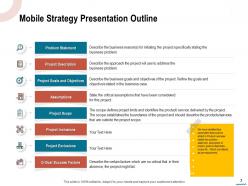
Slide 2: This slide shows Mobile Strategy Presentation Outline
Slide 3: This slide also shows Mobile Strategy Presentation Outline
Slide 4: This template depicts Mobile App Users Worldwide – Key Statistics
Slide 5: This slide shows information about Understanding the overall Company Strategy, Dependencies and Competitors
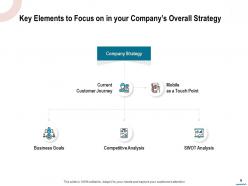
Slide 6: This slide depicts Key Elements to Focus on in your Company’s Overall Strategy
Slide 7: This slide presents Executive Summary.
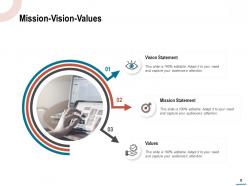
Slide 8: This slide shows Mission-Vision-Values.
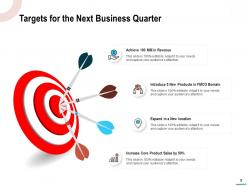
Slide 9: This slide shows Targets for the Next Business Quarter.
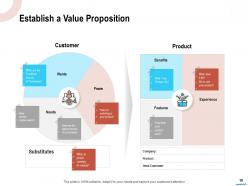
Slide 10: This slide provides information about Establishing a Value Proposition
Slide 11: This slide explains What your competitors are offering through their mobile channel
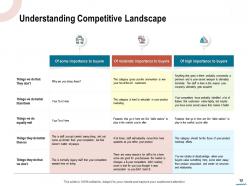
Slide 12: This slide describes about Understanding Competitive Landscape
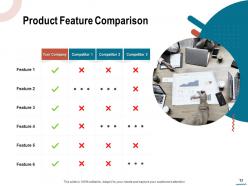
Slide 13: This slide displays Product Feature Comparison
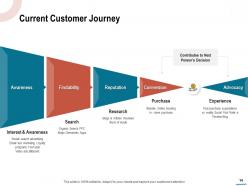
Slide 14: This slide highlights Current Customer Journey.
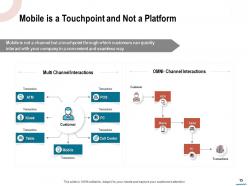
Slide 15: This slide shows Mobile is a Touchpoint and Not a Platform.
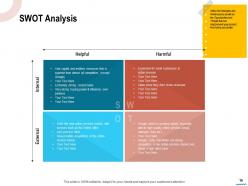
Slide 16: This slide helps to Define the Strengths and Weaknesses as well as the Opportunities and Threats that can help/prevent your product from being successful.
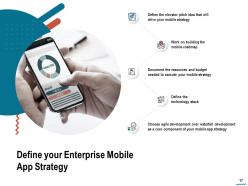
Slide 17: This slide helps to Define your Enterprise Mobile App Strategy
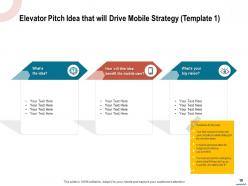
Slide 18: This slide showcases Elevator Pitch Idea that will Drive Mobile Strategy (Template 1).
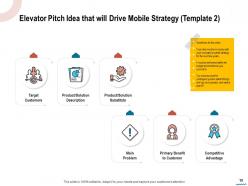
Slide 19: This slide presents Elevator Pitch Idea that will Drive Mobile Strategy (Template 2).
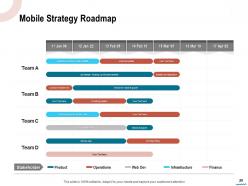
Slide 20: This slide shows Mobile Strategy Roadmap
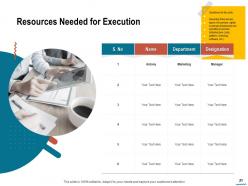
Slide 21: This slide displays Resources Needed for Execution
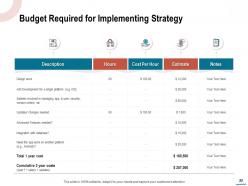
Slide 22: This slide showcases Budget Required for Implementing Strategy
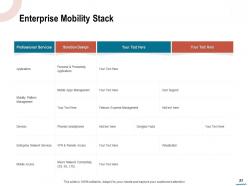
Slide 23: This slide shows Enterprise Mobility Stack
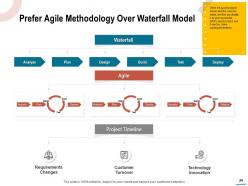
Slide 24: This slide showcases Prefer Agile Methodology Over Waterfall Model
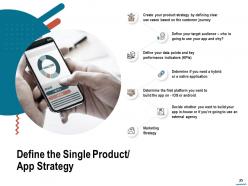
Slide 25: This slide helps to Define the Single Product/App Strategy
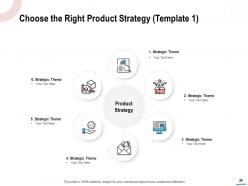
Slide 26: This slide showcases Choose the Right Product Strategy
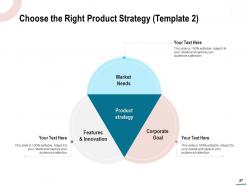
Slide 27: This slide helps to Choose the Right Product Strategy
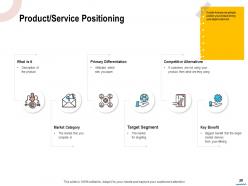
Slide 28: This slide showcases Product/Service Positioning. With the help of this slide, you can explain your audience about your target customers
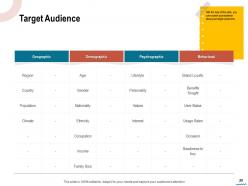
Slide 29: This slide helps to explains your audience about your target customers
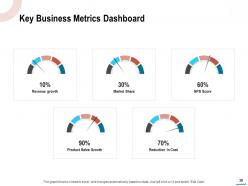
Slide 30: This slide showcases Key Business Metrics Dashboard
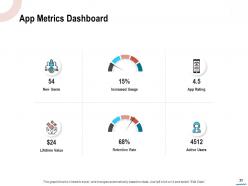
Slide 31: This slide showcases App Metrics Dashboard
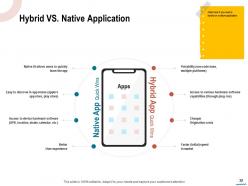
Slide 32: This slide depcits Hybrid VS. Native Application
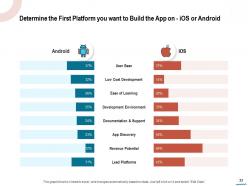
Slide 33: This slide helps to Determine the First Platform you want to Build the App on - iOS or Android
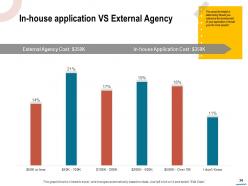
Slide 34: This slide shows comparison with In-house application VS External Agency
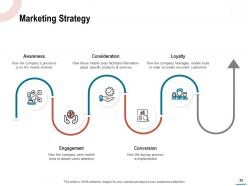
Slide 35: This slide depicts Marketing Strategy
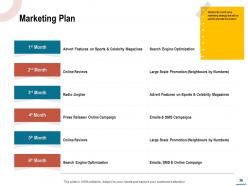
Slide 36: This slide describes Marketing Plan. Mention the month wise marketing strategy that will be used to promote the product.
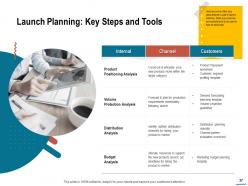
Slide 37: This slide shows Launch Planning: Key Steps and Tools
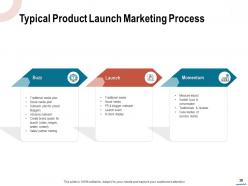
Slide 38: This template describes Typical Product Launch Marketing Process
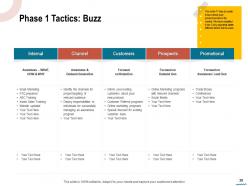
Slide 39: This slide shows first step to create a buzz about your product/service in the market. We have classified it into 5 key segments where different tactics will be used.
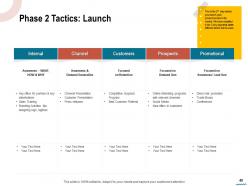
Slide 40: This slide depicts 2nd step where you launch your product/service in the market. We have classified it into 5 key segments where different tactics will be used.
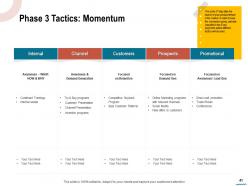
Slide 41: This slide shows 3rd step after the launch of your product/service in the market. In order to keep the momentum going, we have classified it into 5 key segments where different tactics will be used.
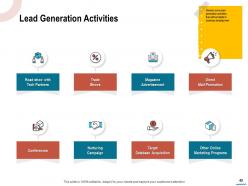
Slide 42: This slide displays Lead Generation Activities
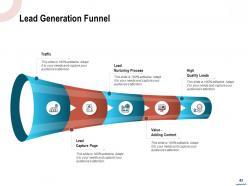
Slide 43: This slide shows Lead Generation Funnel
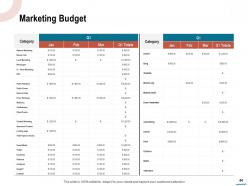
Slide 44: This slide highlights Marketing Budget
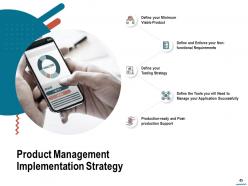
Slide 45: This slide depicts Product Management Implementation Strategy
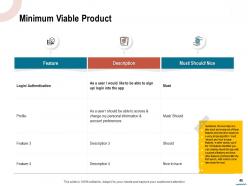
Slide 46: This slide describes Minimum Viable Product
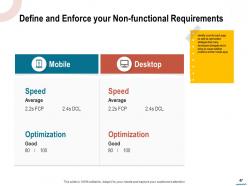
Slide 47: This slide helps to Define and Enforce your Non-functional Requirements.
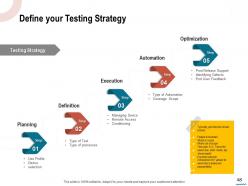
Slide 48: This slide helps to Define your Testing Strategy
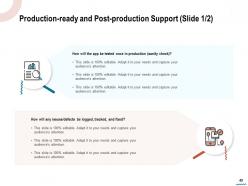
Slide 49: This slide depicts Production-ready and Post-production Support.
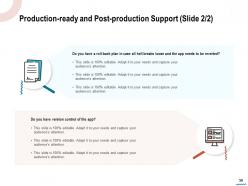
Slide 50: This slide displays Production-ready and Post-production Support.
Slide 51: This is Mobile Data Management Strategy Icons Slide.
Slide 52: This slide reminds about Coffee break.
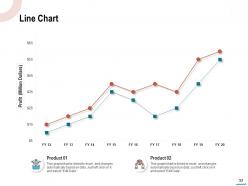
Slide 53: This slide shows Line Chart for product comparison.
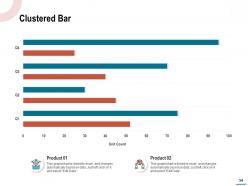
Slide 54: This slide displays Clustered Bar for product Comparison.
Slide 55: This slide is titled as Additional Slides for moving forward.
Slide 56: This is Our team slide with Names and Designations.
Slide 57: This slide displays Vision, Mission and Goal.
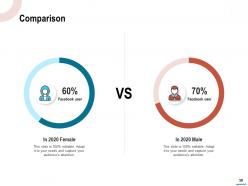
Slide 58: This slide shows Comparison between Male and Female users.
Slide 59: This slide depicts Location
Slide 60: This is Quotes slide.
Slide 61: This is Puzzle slide.
Slide 62: This slide shows Roadmap process.
Slide 63: This is Thank you slide with Contact details.
Mobile Data Management Strategy Powerpoint Presentation Slides with all 63 slides:
Use our Mobile Data Management Strategy Powerpoint Presentation Slides to effectively help you save your valuable time. They are readymade to fit into any presentation structure.





FAQs for Mobile Data Management Strategy
Key components include data classification frameworks, encryption protocols, access controls, backup systems, and compliance monitoring tools. These elements work together by securing sensitive information, streamlining data workflows, and ensuring regulatory adherence, with many organizations finding that strategic mobile data management ultimately delivers enhanced operational efficiency and reduced security risks across distributed workforces.
Businesses can ensure mobile data security through encryption, multi-factor authentication, mobile device management (MDM) platforms, regular security audits, and employee training protocols. These comprehensive approaches enable organizations to protect sensitive information while maintaining operational flexibility, with many financial services and healthcare institutions finding that strategic security frameworks ultimately deliver enhanced customer trust and regulatory compliance.
Device management serves as the foundational control layer in mobile data management strategies, enabling organizations to enforce security policies, configure data access permissions, monitor device compliance, and remotely manage applications across all mobile endpoints. Through centralized device management platforms, companies streamline data governance, ensure regulatory compliance, and maintain operational security, while enabling seamless employee productivity and protecting sensitive information from unauthorized access or breaches.
Companies balance user experience and data security through seamless authentication methods, granular access controls, and intelligent threat detection systems. By implementing adaptive security measures, encrypted data transmission, and user-friendly interfaces, organizations in banking, healthcare, and retail enhance protection while maintaining intuitive mobile experiences, ultimately delivering both robust security and operational efficiency.
Organizations should track data accessibility speed, security incident rates, compliance audit scores, mobile application performance metrics, and user adoption rates across devices. These measurements enable businesses to assess operational efficiency, risk mitigation, and strategic value delivery, with many enterprises finding that comprehensive tracking ultimately enhances decision-making capabilities and competitive advantage.
Compliance with GDPR and HIPAA significantly transforms mobile data management by requiring encrypted storage, strict access controls, audit trails, and data minimization practices. These regulations drive organizations, especially in healthcare and financial services, to implement comprehensive mobile device management solutions that ensure data protection while maintaining operational efficiency, ultimately delivering enhanced customer trust and competitive advantage in regulated markets.
Common mobile data management implementation challenges include data security vulnerabilities, device compatibility issues, network connectivity limitations, user adoption resistance, and regulatory compliance complexities. Organizations often struggle with balancing accessibility and security, while managing diverse device ecosystems and ensuring seamless synchronization, with many enterprises finding that comprehensive training and phased rollouts significantly minimize disruption and enhance user acceptance.
Cloud solutions enable businesses to centralize mobile data storage, automate backups, and implement real-time synchronization across devices and platforms. Through cloud-based mobile device management, organizations streamline data access, enhance security protocols, and reduce IT overhead costs, with many enterprises finding that centralized cloud architectures ultimately deliver scalable data governance and improved operational efficiency.
Employees need training on data security protocols, mobile device policies, cloud storage best practices, compliance requirements, and incident response procedures. Organizations should provide regular workshops, online certification programs, and hands-on sessions covering encryption tools and backup strategies, with many companies finding that comprehensive mobile data literacy ultimately reduces security breaches while enhancing operational efficiency.
AI and machine learning revolutionize mobile data management by enabling predictive analytics, automated data classification, and real-time processing capabilities that optimize storage and retrieval across devices. These technologies streamline operations through intelligent data compression, enhanced security protocols, and automated backup scheduling, with many enterprises finding that AI-driven insights ultimately deliver faster decision-making and improved operational efficiency.
Best practices include conducting comprehensive infrastructure audits, implementing standardized APIs for seamless connectivity, establishing robust security protocols, creating unified data governance frameworks, and deploying middleware solutions for system compatibility. These strategic approaches streamline operations by ensuring consistent data flow, minimizing integration complexity, and maintaining security standards, with many organizations finding that phased implementation ultimately delivers enhanced operational efficiency and scalable mobile capabilities.
Organizations can effectively manage BYOD data through mobile device management (MDM) solutions, containerization technologies, data encryption protocols, and clear access controls that separate personal and business information. These strategies enable companies to maintain security compliance while supporting employee flexibility, with many financial services and healthcare organizations finding that comprehensive BYOD frameworks reduce IT costs while enhancing productivity and user satisfaction.
Mobile data management significantly enhances customer experience by enabling personalized services, faster response times, real-time interactions, and seamless omnichannel engagement across all touchpoints. Through strategic data integration, businesses streamline customer journeys, reduce service friction, and deliver targeted content, with retailers and financial institutions finding that optimized mobile data strategies increase customer satisfaction and drive higher engagement rates.
Businesses protect against mobile data breaches through encryption protocols, multi-factor authentication, endpoint security solutions, regular security audits, and employee training programs. These comprehensive measures work by securing data transmission, controlling access points, and monitoring device vulnerabilities, with many financial institutions and healthcare organizations finding that layered security approaches significantly reduce breach risks while maintaining operational efficiency.
Emerging trends in mobile data management include edge computing integration, AI-powered data optimization, zero-trust security frameworks, real-time analytics capabilities, and cloud-native architectures. These technologies streamline data processing, enhance security protocols, and accelerate decision-making across organizations, with many financial services and retail companies finding that strategic implementation ultimately delivers improved customer experiences and significant operational efficiency gains.
-
Innovative and attractive designs.
-
Very well designed and informative templates.
-
Enough space for editing and adding your own content.