

Mobile Security Powerpoint Ppt Template Bundles





Try Before you Buy Download Free Sample Product
 Impress Your
Audience
 100%
Editable
 Save Hours
of Time


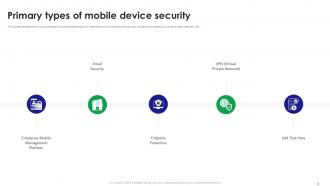
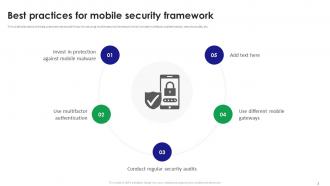
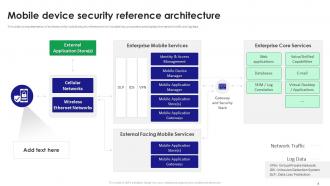
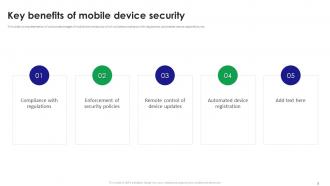
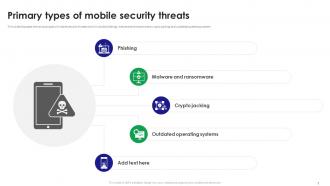
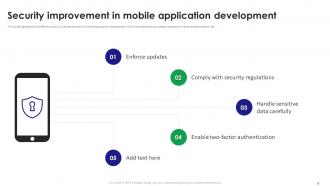
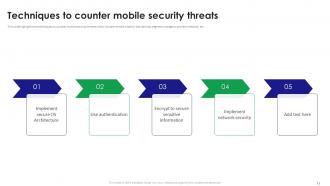
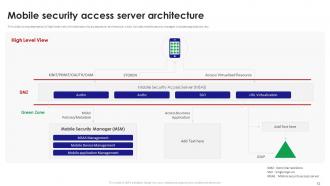
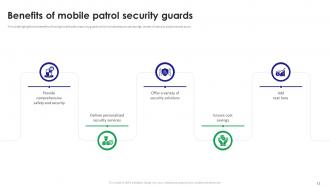
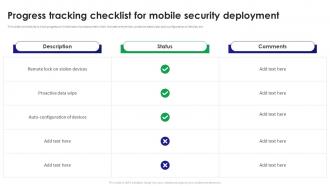
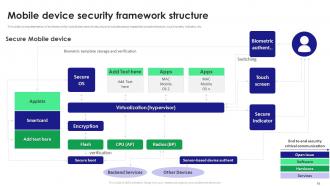
The mobile security mini deck contains the primary types of mobile device security which include enterprise mobile management platform, email security, endpoint security and virtual private network. It also highlight the best practices and key benefits of mobile security. It not only list the types of threats in mobile security but also state the techniques to counter mobile security attacks. The mobile security mini deck represents the access server architecture and mobile device security framework structure. It also contain key emerging trends and advantages of mobile patrol security guards. The security improvement in mobile application development and progress tracking checklist for mobile security makes it a complete robust guide to combat mobile security threats.
People who downloaded this PowerPoint presentation also viewed the following :
Mobile Security Powerpoint Ppt Template Bundles with all 35 slides:
Use our Mobile Security Powerpoint Ppt Template Bundles to effectively help you save your valuable time. They are readymade to fit into any presentation structure.


















FAQs for Mobile Security Powerpoint
**INPUT**: What are the most common mobile security threats faced by users today? **OUTPUT**: Common mobile security threats include malware infections, phishing attacks, unsecured Wi-Fi vulnerabilities, app-based data breaches, and device theft or loss. These threats increasingly target financial services, healthcare organizations, and retail businesses, with many enterprises finding that comprehensive mobile security strategies streamline risk management while enhancing user productivity and operational efficiency. [Word count: 54 words]
Mobile users can protect their data by verifying sender authenticity, avoiding suspicious links, using multi-factor authentication, keeping apps updated, and installing reputable security software. These protective measures work by creating multiple defense layers, with many organizations finding that employee training combined with automated threat detection significantly reduces successful phishing attempts, ultimately delivering enhanced security and reduced breach risks.
App permissions serve as critical gatekeepers that control which device features, data, and functions mobile applications can access, including contacts, location, camera, and storage. By carefully reviewing and managing these permissions, users can significantly reduce security risks, prevent unauthorized data collection, and minimize potential privacy breaches, with many organizations finding that permission auditing enhances overall mobile security posture.
Users can identify secure apps by checking developer reputation, reading user reviews, verifying app permissions align with functionality, downloading from official app stores, and reviewing privacy policies. Apps from established developers with strong ratings, minimal unnecessary permissions, and transparent data handling practices typically indicate better security, while avoiding third-party app stores significantly reduces malware risks.
Mobile device security best practices include implementing mobile device management (MDM) solutions, enforcing strong authentication protocols, regular security updates, encrypted data storage, and comprehensive access controls. These strategies streamline corporate security by minimizing data breach risks, automating compliance monitoring, and enabling remote device management, with many organizations finding that integrated MDM platforms ultimately deliver enhanced operational efficiency and stronger regulatory compliance across distributed workforces.
Encryption enhances mobile security by converting sensitive data into unreadable code that requires specific keys for access, protecting information during transmission and storage. Through advanced encryption protocols, organizations in banking, healthcare, and financial services can safeguard customer data, comply with regulatory requirements, and maintain user trust, ultimately delivering enhanced security and competitive advantage in an increasingly mobile-first business environment.
When using public Wi-Fi on mobile devices, users should avoid accessing sensitive accounts, enable VPN protection, turn off automatic Wi-Fi connections, and verify network authenticity with venue staff. These precautions streamline security by encrypting data transmissions, preventing unauthorized access, and minimizing exposure to malicious hotspots, with many organizations finding that employee mobile security training ultimately delivers reduced data breach risks.
Mobile operating systems can enhance security through advanced biometric authentication, real-time threat detection, zero-trust architecture integration, automated vulnerability patching, and AI-powered behavioral analysis. These improvements streamline security management while delivering stronger protection against evolving threats, with enterprises in banking and healthcare finding that proactive security features significantly reduce breach risks and enhance user confidence.
Mobile malware presents significant risks to personal and financial data through unauthorized access, identity theft, banking fraud, and privacy breaches. These malicious programs infiltrate banking apps, payment systems, and personal communications, with financial institutions and individuals increasingly adopting multi-layered security approaches, biometric authentication, and real-time monitoring to minimize exposure and protect sensitive information.
Users can recover from mobile security breaches by immediately changing all passwords, enabling two-factor authentication, monitoring financial accounts, and running comprehensive security scans. This strategic combination helps minimize damage through swift containment, identity protection, and system restoration, with many organizations finding that proactive recovery protocols ultimately deliver enhanced security postures and reduced long-term vulnerabilities.
Regular software updates are crucial for mobile security because they patch vulnerabilities, fix security flaws, and strengthen device defenses against evolving cyber threats. These updates enable organizations to maintain robust protection across their mobile infrastructure, with many financial institutions and healthcare providers finding that consistent update protocols significantly reduce breach risks, enhance compliance, and ultimately deliver stronger data protection and operational continuity.
Biometric authentication methods significantly enhance mobile security by providing unique identification through fingerprints, facial recognition, voice patterns, and iris scans, making unauthorized access nearly impossible. These technologies streamline user verification while eliminating password vulnerabilities, with many financial institutions and healthcare organizations finding that biometric systems reduce fraud attempts by over 80% while delivering faster, more secure mobile experiences.
Organizations can implement comprehensive mobile security training through regular workshops, phishing simulation exercises, security policy documentation, mobile device management guidelines, and incident response protocols. These educational approaches enhance employee awareness by demonstrating real-world threats, establishing clear usage policies, and providing hands-on experience with security tools, ultimately reducing human error vulnerabilities and strengthening overall organizational cybersecurity posture.
Mobile device management solutions enhance corporate security by enforcing encryption policies, remotely wiping compromised devices, controlling app installations, and monitoring network access across all organizational mobile assets. Through centralized dashboards, IT teams can deploy security patches, restrict data sharing, and ensure compliance standards, with many enterprises finding that comprehensive MDM strategies reduce security incidents while streamlining device administration and maintaining productivity.
Mobile security and privacy considerations include data protection compliance, user consent requirements, cross-border data transfer regulations, employee privacy rights, and breach notification obligations. These frameworks present both challenges and opportunities for organizations, with many companies finding that proactive privacy strategies enhance customer trust, streamline regulatory compliance, and deliver competitive advantage in increasingly regulated markets.
-
Wow, never been this impressed with any online service provider. Really appreciate the customer support all along from the navigation to purchasing the right products.
-
SlideTeam is my one-stop solution for all the presentation needs. Their templates have beautiful designs that are worth every penny!