


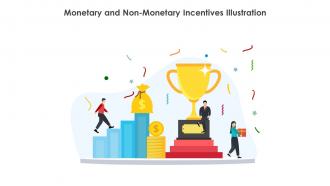
Monetary And Non Monetary Incentives Illustration





Try Before you Buy Download Free Sample Product
 Impress Your
Audience
 100%
Editable
 Save Hours
of Time


This Monetary and non monetary incentives illustration is a 100 percent editable Illustration. The downloaded file will have this Illustration in EPS, PNG and Powerpoint pptx format and is perfect for your next project. It has a simple yet stylish design.
People who downloaded this PowerPoint presentation also viewed the following :
Monetary And Non Monetary Incentives Illustration with all 6 slides:
Use our Monetary And Non Monetary Incentives Illustration to effectively help you save your valuable time. They are readymade to fit into any presentation structure.





FAQs for Monetary And Non
Effective workplace incentive design leverages psychological principles including intrinsic motivation through autonomy and mastery, behavioral reinforcement through immediate rewards, social recognition for peer validation, and goal-setting theory with clear, achievable targets. These principles work together by tapping into employees' natural drive for achievement, belonging, and progress, with many organizations finding that combining monetary rewards with meaningful recognition and growth opportunities delivers higher engagement and sustained performance improvements.
Intrinsic incentives drive motivation through personal satisfaction, autonomy, and meaningful work, while extrinsic incentives use external rewards like bonuses, recognition, and promotions. Organizations increasingly find that combining both approaches delivers optimal results, with intrinsic motivators enhancing long-term engagement and creativity, while extrinsic rewards provide immediate performance boosts and goal alignment, ultimately creating sustainable motivation frameworks.
Company culture significantly influences incentive program effectiveness by determining employee values, motivations, and responses to different reward structures. In collaborative cultures, team-based incentives often resonate more strongly, while competitive environments may favor individual recognition programs, with organizations like Google and Microsoft finding that aligning incentives with cultural values enhances engagement and drives sustainable performance improvements.
Incentives can be tailored through flexible reward systems, personalized recognition programs, career development opportunities, work-life balance options, and performance-based compensation structures. By conducting employee surveys, offering choice-driven benefits, and implementing tiered recognition approaches, organizations create more engaging workplace cultures that boost retention and productivity, with many companies finding that diverse incentive portfolios significantly enhance overall employee satisfaction.
Heavy reliance on monetary incentives can create short-term thinking, undermine intrinsic motivation, and foster unhealthy competition among team members, while potentially increasing costs and creating expectation inflation. These challenges can lead to decreased collaboration, reduced creativity, and employee dissatisfaction when financial rewards become the primary motivator, ultimately diminishing long-term organizational performance and culture.
Data analytics optimizes incentive schemes by analyzing employee performance patterns, identifying motivation drivers, tracking goal achievement rates, and measuring ROI on rewards. Through predictive modeling and behavioral analysis, organizations can design targeted incentives that align with individual preferences and business objectives, ultimately enhancing productivity, retention, and strategic outcomes across departments.
Seasonal and project-based incentives target immediate performance goals through bonuses, commissions, and short-term rewards tied to specific outcomes or timeframes. Long-term reward systems emphasize career development through stock options, retirement contributions, and advancement opportunities, with many organizations finding that combining both approaches enhances employee retention while driving quarterly results and strategic growth.
**INPUT**: What are the ethical implications of using incentives to influence employee behavior? **OUTPUT**: Ethical implications include fairness in distribution, transparency in criteria, avoiding manipulation, respecting employee autonomy, and ensuring alignment with organizational values. While well-designed incentive programs enhance motivation and performance across industries like healthcare and manufacturing, companies must balance influence with genuine employee development, ultimately creating systems that reward merit while maintaining trust and ethical workplace standards.
Incentives significantly enhance teamwork and collaboration by aligning individual goals with collective objectives, fostering shared accountability, and encouraging knowledge sharing across departments. Well-designed group incentives in sectors like consulting and manufacturing create synergistic environments where employees collaborate more effectively, ultimately delivering improved project outcomes, faster problem-solving, and stronger organizational performance.
Companies have successfully implemented flexible work arrangements, professional development opportunities, recognition programs, wellness initiatives, and creative office perks like on-site services or sabbaticals. These innovative approaches enhance employee satisfaction, reduce turnover, and boost productivity, with many organizations finding that personalized incentive packages deliver stronger engagement than traditional monetary rewards alone.
Incentive program effectiveness can be measured through key performance indicators like employee engagement scores, productivity metrics, retention rates, goal achievement percentages, and cost-per-outcome analysis. Organizations typically track these measurements quarterly or annually, with many companies finding that combining quantitative data with employee feedback surveys delivers the most comprehensive evaluation, ultimately enabling program refinements that enhance competitive advantage.
Organizations face challenges including varying cultural values around individual versus collective rewards, different perceptions of fairness and hierarchy, communication barriers, and conflicting motivational drivers across regions. These cultural differences require companies to customize their incentive structures, with many multinational corporations finding that localized approaches deliver better employee engagement and performance outcomes than standardized global programs.
Sales incentives typically focus on commission structures, quota achievements, and revenue targets that directly tie compensation to measurable outcomes like deals closed or territory growth. Creative and technical roles often emphasize project completion bonuses, skill development stipends, innovation rewards, and peer recognition programs, with many organizations finding that these professionals value autonomy, learning opportunities, and collaborative achievement over purely financial metrics.
Gamification transforms incentive programs by increasing participation rates, enhancing motivation through achievement systems, and creating measurable engagement metrics that drive sustained performance. Through leaderboards, badge systems, and progress tracking, organizations in retail, healthcare, and financial services streamline recognition processes while delivering competitive advantages, with many companies finding that gamified approaches ultimately boost employee retention and customer loyalty significantly.
Regulatory environments and labor laws significantly influence incentive design by mandating minimum wage compliance, overtime calculations, tax implications, and anti-discrimination requirements across different jurisdictions. These frameworks shape compensation structures in financial services, healthcare, and manufacturing sectors, with many organizations finding that strategic alignment between regulatory compliance and performance rewards ultimately delivers both legal protection and enhanced employee engagement.
-
Superb! The innovative and inspiring template designs provide an edge to the presentation.
-
The visual appeal of the templates is just unparalleled! I was so worried about the design of my presentation but SlideTeam made it all so easy.