

Multi level project implementation powerpoint presentation slides




Try Before you Buy Download Free Sample Product
 Impress Your
 Audience
 100%
100% Editable
 Save Hours
 of Time


Get this easy-to-use Multi-Level Project Implementation PowerPoint Presentation Slides. Take the assistance of construction scheduling PPT templates and provide an overview of the construction company by focusing on services, and achievement. This presentation explains the company overview, details of company work, services offered, construction project timeline, essential documents, challenges, and solutions, and construction cost analysis. Details about construction engineering license, health, and safety policy, environment management policy are also covered. By taking the assistance of a readily available construction planning PPT slideshow, you can showcase the crucial challenges construction companies face and solutions to overcome them. Services such as construction and infrastructure services and post-construction services can be presented using this project planning for construction PPT layouts. Thus, attain excellence in quality and complete value-added projects on time by downloading our professionally designed project implementation PPT slide deck.
People who downloaded this PowerPoint presentation also viewed the following :
Content of this Powerpoint Presentation
Slide 1: This slide introduces the Multi-Level Project Implementation. Add the name of your company here.
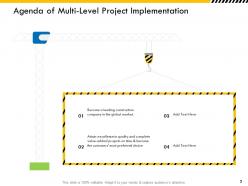
Slide 2: This is the Agenda slide of Multi-Level Project Implementation.
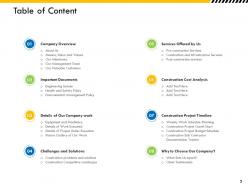
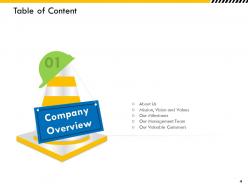
Slide 3: This slide contains the Table of Content. It includes - Company Overview, Important Documents, Details of Our Company work, etc.
Slide 4: This is a table of content slide showing the Company Overview.
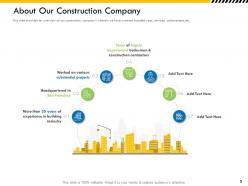
Slide 5: This slide presents About Our Construction Company.
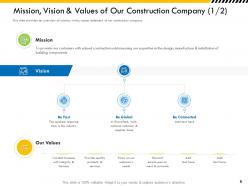
Slide 6: This slide presents the Mission, Vision & Values of Our Construction Company (1/2).
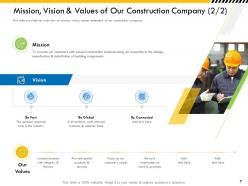
Slide 7: This slide presents the Mission, Vision & Values of Our Construction Company (2/2).
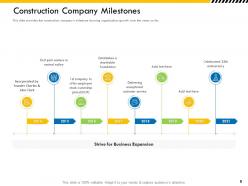
Slide 8: This slide presents the Construction Company Milestones.
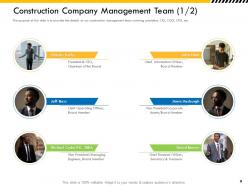
Slide 9: This slide presents the Construction Company Management Team (1/2).
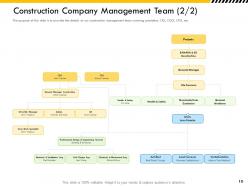
Slide 10: This slide presents the Construction Company Management Team (2/2).
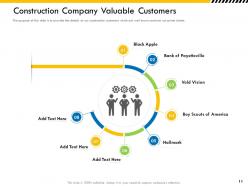
Slide 11: This slide presents the Construction Company Valuable Customers.
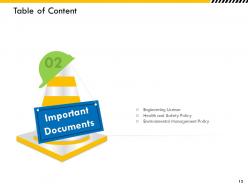
Slide 12: This is a table of content slide showing the Important Documents.
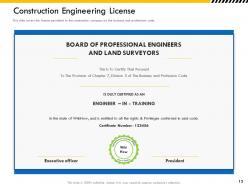
Slide 13: This slide presents the Construction Engineering License.
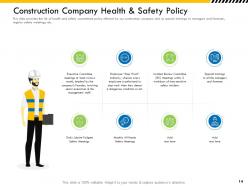
Slide 14: This slide presents the Construction Company Health & Safety Policy.
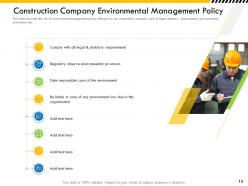
Slide 15: This slide presents the Construction Company Environmental Management Policy.
Slide 16: This is a table of content slide showing the Details of Our Company Work.
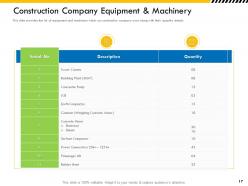
Slide 17: This slide presents the Construction Company Equipment & Machinery.
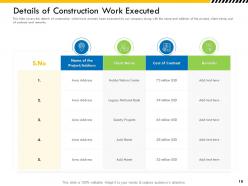
Slide 18: This slide presents the Details of Construction Work Executed.
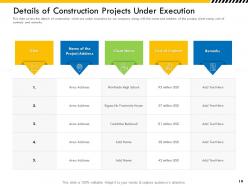
Slide 19: This slide presents the Details of Construction Projects Under Execution.
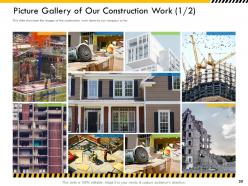
Slide 20: This slide presents the Picture Gallery of Our Construction Work (1/2).
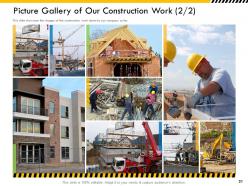
Slide 21: This slide presents the Picture Gallery of Our Construction Work (2/2).
Slide 22: This is a table of content slide showing the Challenges & Solutions.
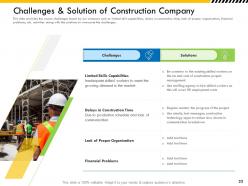
Slide 23: This slide presents the Challenges & Solution of Construction Company.
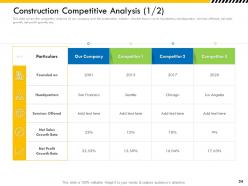
Slide 24: This slide presents the Construction Competitive Analysis (1/2).
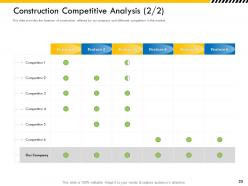
Slide 25: This slide presents the Construction Competitive Analysis (2/2).
Slide 26: This is a table of content slide showing the Services Offered by Us.
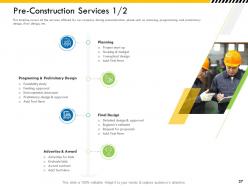
Slide 27: This slide presents the Pre-Construction Services (1/2).
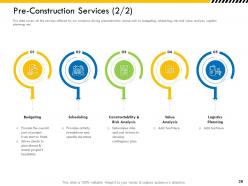
Slide 28: This slide presents the Pre-Construction Services (2/2).
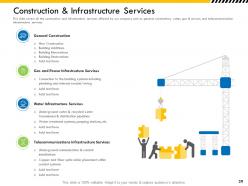
Slide 29: This slide presents the Construction & Infrastructure Services.
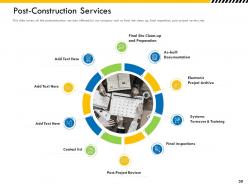
Slide 30: This slide presents the Post-Construction Services.
Slide 31: This is a table of content slide showing the Construction Cost Analysis.
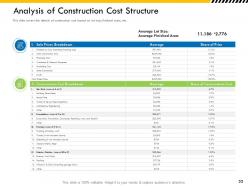
Slide 32: This slide presents the Analysis of Construction Cost Structure.
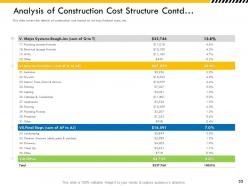
Slide 33: This slide presents the Analysis of Construction Cost Structure. (Contd…)
Slide 34: This is a table of content slide showing the Construction Project Timeline.
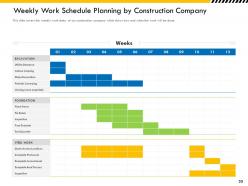
Slide 35: This slide presents the Weekly Work Schedule Planning by Construction Company.
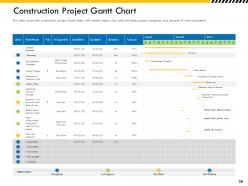
Slide 36: This slide presents the Construction Project Gantt Chart.
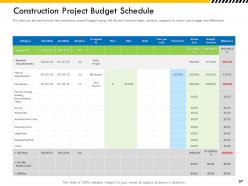
Slide 37: This slide presents the Construction Project Budget Schedule
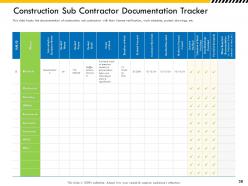
Slide 38: This slide presents the Construction Sub Contractor Documentation Tracker.
Slide 39: This is a table of content slide showing Why to Choose Our Company?
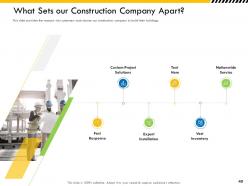
Slide 40: This slide presents What Sets our Construction Company Apart?
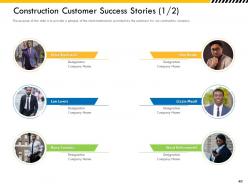
Slide 41: This slide presents the Construction Customer Success Stories (1/2).
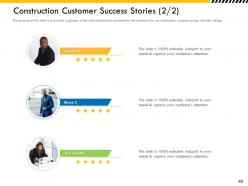
Slide 42: This slide presents the Construction Customer Success Stories (2/2).
Slide 43: This is the Icons Slide for Multi-Level Project Implementation.
Slide 44: This slide introduces the Additional Slides.
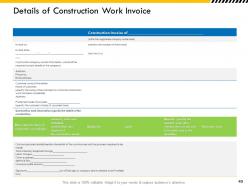
Slide 45: This slide presents the Details of Construction Work Invoice.
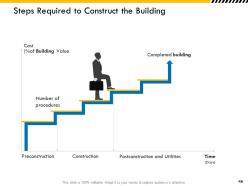
Slide 46: This slide presents the Steps Required to Construct the Building.
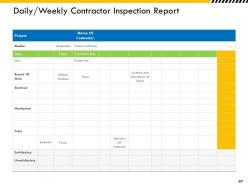
Slide 47: This slide presents the Daily/Weekly Contractor Inspection Report.
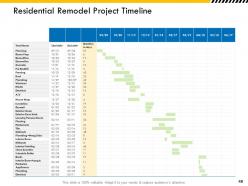
Slide 48: This slide presents the Residential Remodel Project Timeline.
Slide 49: This slide provides the Mission for the entire company. This includes the vision, the mission, and the goal.
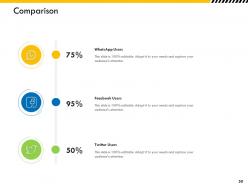
Slide 50: This slide presents the Comparison between the percentages of WhatsApp, Facebook, and Twitter users.
Slide 51: This slide presents Our Goal.
Slide 52: This slide contains the information about the company aka the ‘About Us’ section. This includes Creative, Talented, and Professional.
Slide 53: This slide is a Roadmap template to showcase the stages of a project, for example.
Slide 54: This slide is a Timeline template to showcase the progress of the steps of a project with time.
Slide 55: This is a Thank You slide where details such as the address, contact number, email address are added.
Multi level project implementation powerpoint presentation slides with all 55 slides:
Use our Multi Level Project Implementation Powerpoint Presentation Slides to effectively help you save your valuable time. They are readymade to fit into any presentation structure.
FAQs for Multi level project implementation
Multi-level project implementation involves strategic planning, stakeholder alignment, resource allocation, phased execution, and continuous monitoring across organizational tiers. These phases streamline complex initiatives by establishing clear governance structures, coordinating cross-functional teams, and maintaining communication channels, with many organizations finding that this systematic approach ultimately delivers faster project completion and enhanced operational efficiency.
Effective communication strategies enhance multi-level project implementation by establishing clear channels between stakeholders, standardizing reporting protocols, and ensuring consistent messaging across organizational tiers. Through regular cross-functional meetings and digital collaboration platforms, organizations streamline decision-making, minimize miscommunication, and accelerate project delivery, with many finding that structured communication reduces implementation delays by significant margins.
Effective multi-level project management tools include integrated platforms like Microsoft Project, Asana, and Jira, combined with methodologies such as Agile, Waterfall, and hybrid approaches that align with organizational complexity. These strategic combinations streamline coordination across departments, enhance resource allocation, and improve timeline visibility, with many enterprises finding that integrated dashboards ultimately deliver greater operational efficiency and project success rates.
**INPUT**: How does stakeholder engagement differ in multi-level project implementation compared to traditional projects? **OUTPUT**: Multi-level project stakeholder engagement requires coordinated communication across organizational hierarchies, diverse functional teams, and multiple decision-making layers, unlike traditional projects with linear stakeholder structures. This approach demands strategic alignment between executives, middle management, and operational teams simultaneously, with many organizations finding that enhanced cross-level collaboration ultimately delivers faster consensus-building and more comprehensive project buy-in. [Word count: 56 words]
Risk management serves as the foundation for successful multi-level project implementation by identifying potential obstacles, establishing mitigation strategies, and ensuring coordination across organizational tiers. Through proactive risk assessment frameworks, organizations streamline decision-making processes, minimize project delays, and maintain stakeholder alignment, with many enterprises finding that comprehensive risk management ultimately delivers improved resource allocation and enhanced project outcomes across all implementation levels.
Organizations measure multi-level project success through key performance indicators, milestone tracking, stakeholder feedback systems, resource utilization metrics, and cross-functional impact assessments. These measurement frameworks enable companies to evaluate operational efficiency, strategic alignment, and delivery outcomes across departments, with many enterprises finding that comprehensive tracking ultimately delivers better project visibility and enhanced competitive advantage.
Common challenges include scope creep, resource allocation conflicts, communication breakdowns across hierarchies, timeline misalignment between levels, and inconsistent quality standards. These implementation hurdles often emerge in large organizations managing enterprise-wide initiatives, with many companies finding that establishing clear governance frameworks, standardized reporting protocols, and dedicated coordination teams ultimately streamlines execution and delivers more predictable outcomes.
Project teams effectively coordinate multi-level activities through centralized communication platforms, standardized reporting protocols, cross-functional liaison roles, and regular alignment meetings. These coordination mechanisms streamline information flow, minimize silos, and ensure consistent project execution across organizational hierarchies, with many enterprises finding that structured coordination frameworks ultimately deliver faster project completion and enhanced resource optimization.
**INPUT**: What strategies can be employed to ensure alignment of objectives at different project levels? **OUTPUT**: Alignment strategies include cascading goal frameworks, regular cross-level communication protocols, standardized performance metrics, integrated planning sessions, and shared accountability structures. These approaches streamline coordination by establishing clear linkages between strategic, tactical, and operational objectives, while enabling project managers to maintain visibility across levels, ultimately delivering consistent outcomes and enhanced organizational efficiency.
Cultural diversity impacts multi-level project implementation by creating communication barriers, varying work styles, and different decision-making approaches across organizational levels. However, it also enhances creativity, problem-solving perspectives, and market insights, with many global organizations finding that diverse project teams ultimately deliver more innovative solutions and better stakeholder engagement when cultural differences are strategically managed.
A clear governance structure in multi-level projects establishes decision-making authority, accountability frameworks, and communication protocols across organizational layers, ensuring alignment between strategic objectives and operational execution. This structure enables faster conflict resolution, streamlines resource allocation, and maintains project momentum, with many organizations finding that well-defined governance reduces implementation delays and enhances cross-functional collaboration significantly.
Technology facilitates better collaboration in multi-level project environments by providing unified communication platforms, real-time project tracking systems, and integrated document management solutions. Through cloud-based collaboration tools, organizations streamline coordination between different project tiers, enhance transparency across all levels, and enable seamless information sharing, ultimately delivering faster project completion and improved stakeholder alignment.
Best practices for monitoring multi-level project progress include establishing standardized KPIs across all levels, implementing real-time dashboard systems, conducting regular cross-functional status meetings, creating escalation protocols for issues, and maintaining centralized documentation repositories. These approaches streamline communication by providing consistent visibility, enabling proactive risk management, and ensuring stakeholder alignment, with many organizations finding that integrated reporting tools ultimately deliver faster decision-making and improved project outcomes.
Feedback loops in multi-level projects can be established through regular cross-tier reviews, stakeholder surveys, performance dashboards, milestone assessments, and structured communication channels between project levels. These mechanisms enable organizations to identify bottlenecks, adjust resource allocation, and enhance coordination across departments, with many finding that systematic feedback collection ultimately delivers improved project timelines and stakeholder satisfaction.
Training and development support multi-level project execution by enhancing cross-functional collaboration skills, standardizing methodologies across organizational tiers, and building change management capabilities. Through targeted programs, organizations streamline communication between project levels, reduce implementation bottlenecks, and accelerate decision-making processes, with many companies finding that structured training ultimately delivers faster project outcomes and improved resource coordination.
-
The Designed Graphic are very professional and classic.
-
Excellent products for quick understanding.
-
Visually stunning presentation, love the content.
-
Best way of representation of the topic.
-
Use of different colors is good. It's simple and attractive.
-
Really like the color and design of the presentation.