


Multiplayer gaming system investor presentation ppt template




Try Before you Buy Download Free Sample Product
 Impress Your
 Audience
 100%
100% Editable
 Save Hours
 of Time


The multiplayer gaming system is one of the fastest-growing industries increasing consumers daily. Here is an efficiently designed pitch deck on Multiplayer Gaming System. It caters to futuristic slide elements with modern icons, shapes, and graphics inspired by new technology and virtual reality. The gaming system deck caters to slides inspired by multiplayer games to attract a gaming audience. It carries details about its mission statement, rise in viewers, and purpose defining its brand and culture. It presents facts about various problems limiting user experience and solutions provided by digital platforms. Profitable business models and subscription-based services offered by gaming platforms are shown in the pitch deck. We have catered data to different phases of the product development process of video platforms, sales, and distribution channels for revenue generation. Key members involved in the leadership team are presented. It caters to slides about various metrics determining platform performance, SWOT analysis of the game sector, and the competitive landscape of major players. Book a free demo with our expert team and get guidance on customizing these slides based on your business requirements.
People who downloaded this PowerPoint presentation also viewed the following :
Content of this Powerpoint Presentation
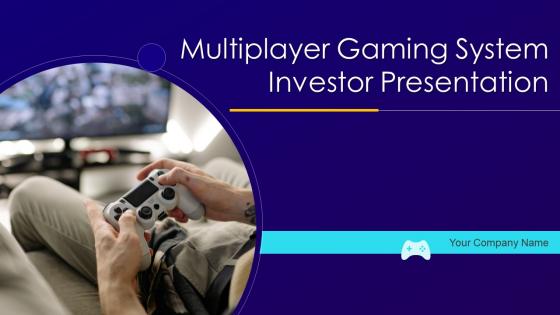
Slide 1: This slide introduces Multiplayer Gaming System Investor Presentation. State Your Company Name and begin.
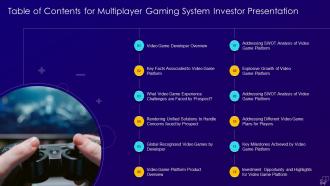
Slide 2: This slide presents Table of Content for the presentation.
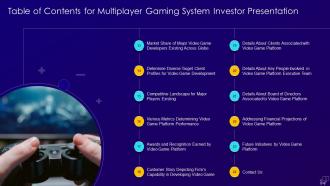
Slide 3: This is another slide continuing Table of Content for the presentation.
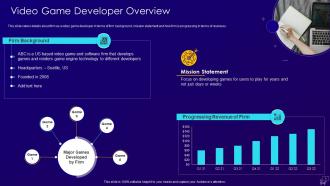
Slide 4: This slide caters details about firm as a video game developer in terms of firm background, mission, etc.
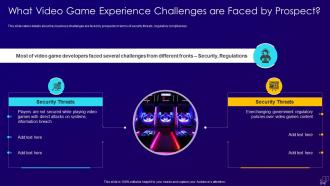
Slide 5: This slide caters details about key business challenges faced by prospects.
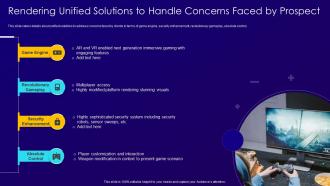
Slide 6: This slide caters details about unified solutions to address concerns faced by clients.
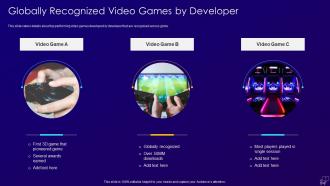
Slide 7: This slide caters details about top performing video games developed by developer that are recognized across globe.
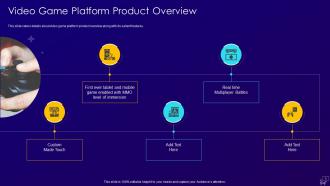
Slide 8: This slide caters details about video game platform product overview along with its salient features.
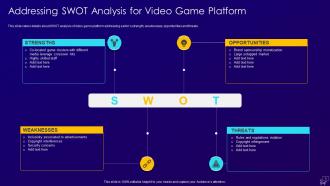
Slide 9: This slide caters details about SWOT analysis of video game platform.
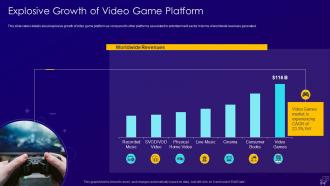
Slide 10: This slide caters details about explosive growth of video game platform as compared to other platforms.
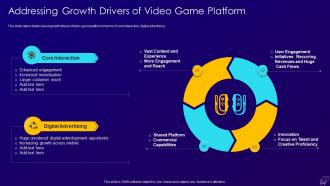
Slide 11: This slide caters details about growth drivers of video game platform in terms of core interaction, digital advertising.
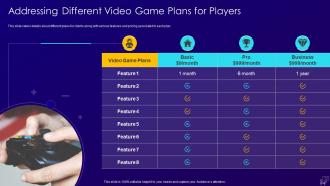
Slide 12: This slide caters details about different plans for clients along with various features and pricing associated to each plan.
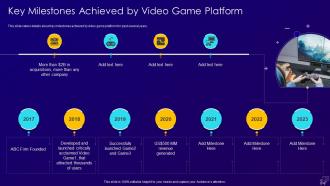
Slide 13: This slide caters details about key milestones achieved by video game platform for past several years.
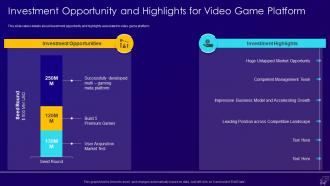
Slide 14: This slide caters details about investment opportunity and highlights associated to video game platform.
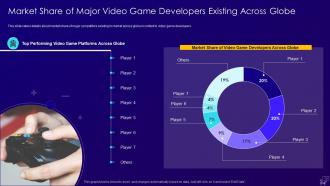
Slide 15: This slide caters details about market share of major competitors existing in market across globe.
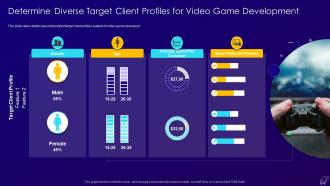
Slide 16: This slide caters details about diversified target client profiles suitable for video game developed.
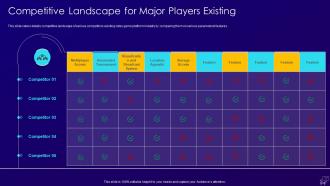
Slide 17: This slide caters details competitive landscape of various competitors existing video game platform industry.
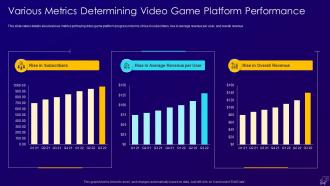
Slide 18: This slide caters details about various metrics portraying video game platform progress.
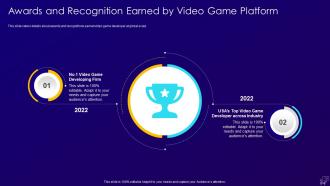
Slide 19: This slide caters details about awards and recognitions earned video game developer at global scale.
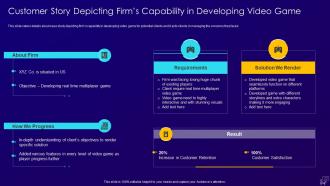
Slide 20: This slide caters details about case study depicting firm’s capability in developing video game.
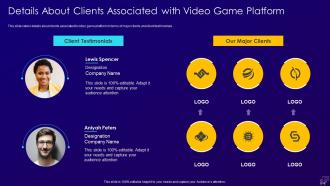
Slide 21: This slide caters details about clients associated to video game platform.
Slide 22: This slide caters details about key people associated to video game platform executive team.
Slide 23: This slide caters details about board of directors associated to video game platform.
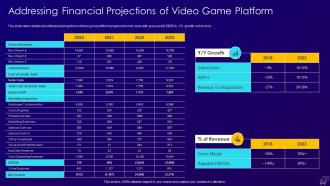
Slide 24: This slide caters details about financial projections of video game platform progress for next years.
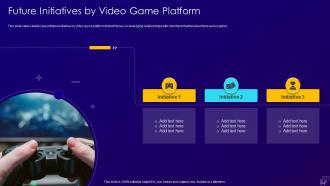
Slide 25: This slide caters details about future initiatives by video game platform that will focus on leveraging relationships.
Slide 26: This slide depicts contact details of company.
Slide 27: This slide displays Icons for Multiplayer Gaming System Investor Presentation.
Slide 28: This slide is titled as Additional Slides for moving forward.
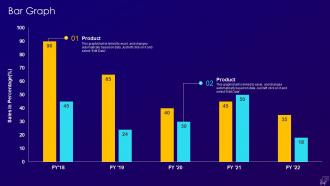
Slide 29: This slide presents Bar chart with two products comparison.
Slide 30: This is Our Mission slide with related imagery and text.
Slide 31: This slide provides 30 60 90 Days Plan with text boxes.
Slide 32: This slide shows Post It Notes. Post your important notes here.
Slide 33: This slide contains Puzzle with related icons and text.
Slide 34: This slide shows Lego with related icons and text.
Slide 35: This is Our Goal slide. State your firm's goals here.
Slide 36: This is a Thank You slide with address, contact numbers and email address.
Multiplayer gaming system investor presentation ppt template with all 41 slides:
Use our Multiplayer Gaming System Investor Presentation Ppt Template to effectively help you save your valuable time. They are readymade to fit into any presentation structure.









FAQs for Multiplayer gaming system investor
Key technological components include dedicated game servers, real-time networking protocols, player matchmaking systems, anti-cheat mechanisms, and cloud-based infrastructure management. These technologies streamline gameplay by reducing latency, ensuring fair competition, and maintaining consistent player experiences across platforms, with many gaming companies finding that robust server architecture and seamless data synchronization ultimately deliver competitive advantage and enhanced user engagement.
Server architecture significantly impacts multiplayer gaming performance through latency reduction, bandwidth optimization, load distribution, and data synchronization capabilities. Dedicated servers enable seamless real-time interactions, faster response times, and consistent gameplay experiences across global player bases, while cloud-based architectures provide scalable infrastructure that adapts to player demand, ultimately delivering competitive gaming environments and enhanced user engagement.
Latency and bandwidth significantly impact multiplayer gaming through delayed responses, inconsistent gameplay, connection drops, and reduced visual quality during peak usage periods. High latency creates frustrating lag between player actions and game responses, while insufficient bandwidth causes stuttering, pixelated graphics, and disconnections, ultimately degrading competitive performance and player satisfaction across online gaming platforms.
Developers implement anti-cheat software, server-side validation, encrypted communications, behavioral analysis algorithms, and regular security updates to maintain fair play. These technologies work by detecting unauthorized modifications, monitoring player patterns, and validating game actions remotely, with many gaming companies finding that combining multiple detection methods significantly reduces cheating while preserving competitive integrity.
Player matchmaking systems work by analyzing player skill levels, connection quality, gameplay preferences, and queue times to create balanced matches using sophisticated algorithms. Common algorithms include Elo rating systems, TrueSkill probabilistic matching, and machine learning models that continuously adapt based on player performance, with many gaming companies finding that hybrid approaches combining multiple algorithms deliver faster queue times and more competitive gameplay experiences.
Cross-platform compatibility enables players across different devices and consoles to interact seamlessly, significantly expanding user bases, reducing fragmentation, and enhancing community engagement. This strategic approach streamlines development costs while maximizing market reach, with many gaming companies finding that unified player ecosystems ultimately deliver higher retention rates, increased revenue potential, and sustained competitive advantage.
Game developers create engaging social environments by implementing robust communication systems, guild formations, collaborative quests, competitive tournaments, and community-driven content creation tools. These features foster meaningful player connections through shared achievements, real-time interactions, and cooperative gameplay, with many successful titles finding that social bonds ultimately drive player retention and create vibrant, self-sustaining gaming communities.
Scaling multiplayer games presents challenges including server infrastructure management, latency optimization across global regions, database performance under concurrent loads, matchmaking efficiency, and maintaining gameplay balance. These technical hurdles require strategic investment in cloud architecture, content delivery networks, and real-time data processing, with many gaming companies finding that proactive scaling solutions ultimately deliver smoother player experiences and sustained competitive advantage.
In-game economies in multiplayer settings function through virtual currencies, player-to-player trading, auction houses, resource scarcity mechanics, and dynamic pricing systems that mirror real-world market principles. These economies significantly enhance player engagement and retention by creating meaningful progression pathways, fostering social interaction through trade relationships, and generating sustainable revenue streams for developers, ultimately delivering deeper gameplay experiences that keep communities actively invested.
Popular monetization strategies in multiplayer games include in-game purchases, battle passes, cosmetic items, premium subscriptions, and advertising partnerships. These approaches enhance player engagement by offering customizable experiences, exclusive content, and progression rewards, with many gaming companies finding that combining multiple revenue streams while maintaining fair play ultimately delivers sustained profitability and competitive advantage.
VR transforms multiplayer gaming by creating immersive shared environments, enabling natural gesture-based interactions, and fostering deeper social connections through spatial presence. These technologies enhance collaboration in team-based adventures, strategic planning in competitive esports, and social bonding in virtual worlds, with many gaming communities finding that VR delivers more engaging experiences and stronger player retention.
Multiplayer game development tools include Unity Netcode, Unreal Engine's replication system, Photon networking, Mirror framework, and cloud services like AWS GameLift. These platforms streamline development by handling server architecture, real-time synchronization, and player matchmaking, with many game studios finding that integrated solutions significantly reduce development time while delivering seamless multiplayer experiences.
User-generated content and modding communities significantly extend multiplayer games' lifespan by creating fresh experiences, custom maps, new gameplay modes, and enhanced features that keep players engaged long after initial release. These communities essentially transform games into evolving platforms, with titles like Minecraft, Counter-Strike, and Garry's Mod demonstrating how player creativity can sustain audiences for decades, ultimately delivering continuous content renewal and enhanced player retention.
Ethical considerations in multiplayer gaming systems include preventing harassment and toxicity, protecting player privacy and data, ensuring fair monetization practices, addressing addiction concerns, and creating inclusive environments for diverse communities. These challenges require strategic combinations of robust moderation tools, transparent reporting systems, and community guidelines, with many gaming companies finding that proactive ethical design ultimately enhances player retention and competitive advantage.
Different multiplayer genres adapt their mechanics through specialized engagement strategies, with FPS games emphasizing rapid reflexes and short match cycles, MMORPGs focusing on progression systems and social guilds, and battle royales combining elimination tension with map shrinkage mechanics. These genre-specific adaptations enhance player retention by delivering tailored experiences, competitive frameworks, and social interactions, ultimately enabling game developers to maximize engagement across diverse player preferences and gaming sessions.
-
Very unique, user-friendly presentation interface.