

Objectives And KPI Powerpoint Ppt Template Bundles




Try Before you Buy Download Free Sample Product
 Impress Your
 Audience
 100%
100% Editable
 Save Hours
 of Time


Our Objectives And KPI Powerpoint Ppt Template Bundles are topically designed to provide an attractive backdrop to any subject. Use them to look like a presentation pro.
People who downloaded this PowerPoint presentation also viewed the following :
Objectives And KPI Powerpoint Ppt Template Bundles with all 22 slides:
Use our Objectives And KPI Powerpoint Ppt Template Bundles to effectively help you save your valuable time. They are readymade to fit into any presentation structure.

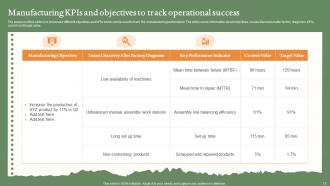
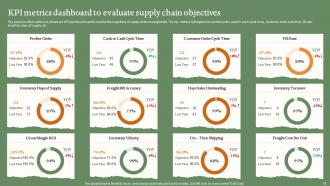
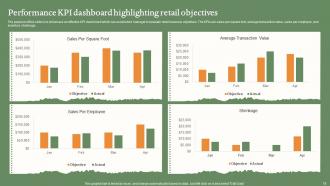
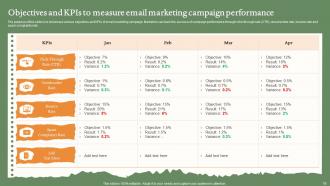






FAQs for Objectives And KPI Powerpoint
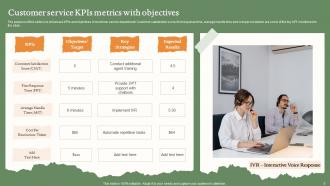
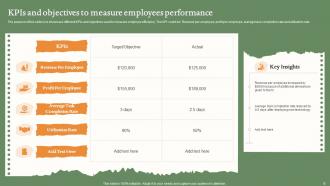
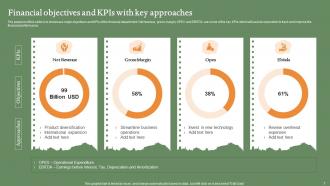
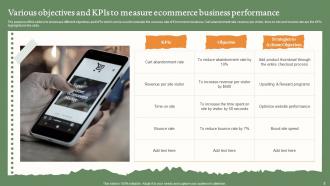
Objectives define strategic goals and desired outcomes organizations want to achieve, while KPIs are specific, measurable metrics that track progress toward those objectives. For example, a retail company's objective might be "improve customer satisfaction," with KPIs including Net Promoter Score, customer retention rates, and response times, ultimately enabling data-driven decision making and strategic alignment.
Organizations align KPIs with strategic goals by establishing clear hierarchical connections between high-level objectives and measurable outcomes, ensuring each metric directly supports broader business priorities. Through cascading frameworks, companies create department-specific indicators that roll up to enterprise metrics, while regular review cycles enable adjustments, ultimately delivering focused execution and measurable progress toward strategic objectives.
Stakeholder input ensures objectives and KPIs align with diverse organizational priorities, operational realities, and strategic expectations across departments. Through collaborative workshops, surveys, and feedback sessions, organizations develop more comprehensive metrics that reflect customer needs, employee capabilities, and leadership vision, ultimately delivering greater buy-in and more achievable performance targets.
Organizations should review KPIs quarterly for strategic alignment, with monthly monitoring for operational metrics and annual comprehensive evaluations for long-term objectives. This tiered approach enables businesses to respond to market changes, seasonal fluctuations, and evolving priorities, while maintaining strategic focus, with many companies finding that regular reviews enhance performance visibility and accelerate goal achievement.
Common KPI pitfalls include selecting vanity metrics over actionable indicators, setting too many KPIs that dilute focus, choosing measures without clear business alignment, and failing to establish realistic baselines. Organizations often overlook data quality issues, create KPIs that teams cannot influence, and neglect regular review cycles, ultimately undermining strategic decision-making and performance improvement efforts.
Technology enhances KPI tracking through automated data collection, real-time dashboards, predictive analytics, and integrated reporting systems that eliminate manual processes. These solutions enable organizations to monitor performance continuously, identify trends instantly, and make data-driven decisions faster, with many companies finding that automated tracking reduces reporting time by up to 75% while improving accuracy.
Best practices for communicating objectives and KPIs include establishing clear cascading frameworks, using visual dashboards, conducting regular alignment meetings, and providing contextual training on measurement methodologies. These approaches enhance team understanding by connecting individual contributions to organizational outcomes, enabling real-time progress tracking, and fostering accountability, with many organizations finding that transparent communication drives engagement and accelerates performance improvements.
Qualitative KPIs measure subjective factors like customer satisfaction, employee engagement, and brand perception through surveys, interviews, and feedback analysis, while quantitative KPIs track numerical data such as revenue, conversion rates, and operational metrics. These approaches complement each other strategically, with many organizations finding that combining both delivers comprehensive performance insights, enabling better decision-making and more accurate business assessments.
Regular KPI reviews, stakeholder feedback collection, market condition monitoring, and performance data analysis ensure KPIs remain relevant over time. Organizations should schedule quarterly assessments, align metrics with evolving business strategies, and incorporate emerging industry benchmarks, with many companies finding that adaptive KPI frameworks enhance decision-making accuracy and maintain competitive advantage.
Employee engagement significantly influences objective achievement by increasing productivity, reducing turnover, enhancing innovation, and improving customer satisfaction through motivated workforce performance. Engaged employees demonstrate higher commitment to organizational goals, contribute more creative solutions, and deliver better service quality, with many companies finding that highly engaged teams achieve objectives 23% faster while reducing operational costs and strengthening competitive advantage.
Organizations balance short-term and long-term objectives through KPIs by implementing cascading metrics that include quarterly performance indicators, annual strategic milestones, and multi-year outcome measures. This strategic combination enables companies to monitor immediate operational efficiency while tracking progress toward broader goals, with many finding that balanced scorecards deliver both quarterly results and sustained competitive advantage.
Metrics for assessing objective-setting effectiveness include goal completion rates, timeline adherence, resource utilization efficiency, stakeholder alignment scores, and cascading clarity measurements. These assessment tools enable organizations to streamline their strategic planning by identifying bottlenecks, enhancing communication pathways, and optimizing resource allocation, with many finding that systematic evaluation ultimately delivers improved performance outcomes and competitive advantage.
Visual presentation templates enhance the communication of objectives and KPIs by standardizing formats, improving data clarity, and ensuring consistent messaging across organizations. These templates streamline complex performance metrics through charts, dashboards, and infographics, enabling stakeholders to quickly grasp progress and trends, while ultimately delivering better decision-making and enhanced organizational alignment.
Industry-specific KPIs include patient readmission rates and bed turnover in healthcare, same-store sales growth and inventory turnover in retail, loan default rates and net interest margin in banking, and first-pass yield and overall equipment effectiveness in manufacturing. These targeted metrics enable organizations to measure what matters most in their sector, ultimately delivering competitive advantage through precise performance tracking, with many companies finding that sector-specific KPIs provide deeper insights than generic business metrics alone.
Continuous feedback loops enhance objective and KPI tracking by enabling real-time data collection, rapid course corrections, and dynamic goal adjustments based on performance insights. Through automated dashboards and regular review cycles, organizations streamline decision-making, minimize performance gaps, and accelerate strategic outcomes, with many finding that this iterative approach ultimately delivers improved accountability and competitive advantage.
-
I have just started downloading templates for my presentations and I must say this is a great design. It helped accelerate my presentation design process and made it more visually appealing.
-
A big thanks to SlideTeam! An incredible and diverse library of templates helped me with my business project presentation.