

On Site Search Engine Optimization Strategy For Organization Powerpoint Presentation Slides




Try Before you Buy Download Free Sample Product
 Impress Your
 Audience
 100%
100% Editable
 Save Hours
 of Time


To enhance your organizations online presence and visibility on the Google search engine, Search Engine Optimization SEO is a valuable tool. We offer you our customizable On-Site Search Engine Optimization Strategy for Organization template, designed by our team of professionals at SlideTeam. This presentation focuses on optimizing your current SEO process and developing a new strategy for improved results. It begins by highlighting the current scenario of your organization, emphasizing the need for a new SEO strategy and showcasing the existing SEO process. The template also includes an SEO roadmap to guide your organization towards its goals. After analyzing the current scenario, the presentation identifies and presents new SEO strategies that can help you achieve your desired objectives. These strategies encompass both on-site and off-site SEO techniques. Finally, the template emphasizes the importance of tracking metrics to measure the performance of the new SEO strategy. Metrics such as lead and sales generation, organic traffic, keyword rankings, bounce rate, and pages per session provide valuable insights into your SEO efforts. Do not miss the opportunity to access this powerful template and optimize your organizations online presence.
People who downloaded this PowerPoint presentation also viewed the following :
Content of this Powerpoint Presentation
Slide 1: This slide introduces On- Site Search Engine Optimization Strategy for Organization. State your company name and begin.
Slide 2: This slide states Agenda of the presentation.
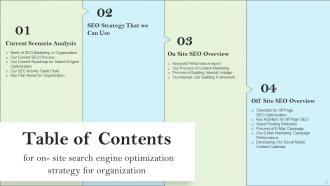
Slide 3: This slide presents Table of Content for the presentation.
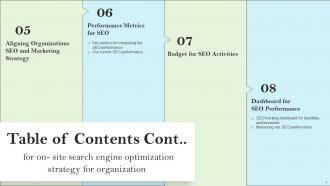
Slide 4: This slide presents Table of Content for the presentation.
Slide 5 : This slide highlights title for topics that are to be covered next in the template.
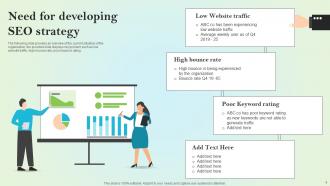
Slide 6: This slide shows Need for developing SEO strategy.
Slide 7: This slide presents current SEO Process of the organization.
Slide 8: This slide displays Our current roadmap for search engine optimization.
Slide 9: This slide represents Our SEO activity gantt chart.
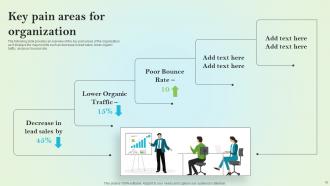
Slide 10: This slide showcases Key pain areas for organization.
Slide 11: This slide highlights title for topics that are to be covered next in the template.
Slide 12: This slide shows different types of current SEO strategy that is being used by the company.
Slide 13: This slide highlights title for topics that are to be covered next in the template.
Slide 14: This slide presents an overview of the On-Site SEO as a strategy.
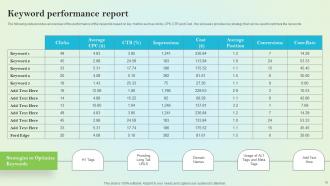
Slide 15: This slide displays performance of the keywords based on key metrics.
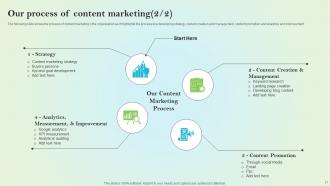
Slide 16: This slide represents process of content marketing of the organization.
Slide 17: This is another slide continuing process of content marketing of the organization.
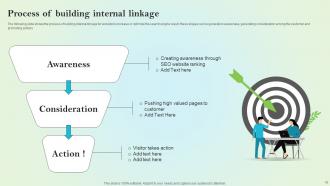
Slide 18: This slide showcases Process of building internal linkage.
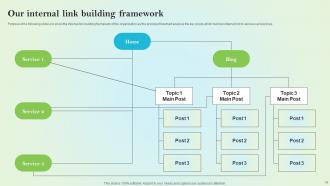
Slide 19: This slide shows Our internal link building framework.
Slide 20: This slide highlights title for topics that are to be covered next in the template.
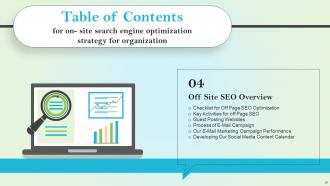
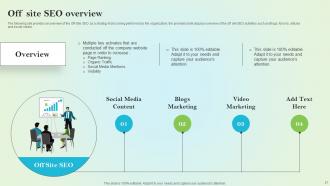
Slide 21: This slide presents an overview of the Off-Site SEO as a strategy.
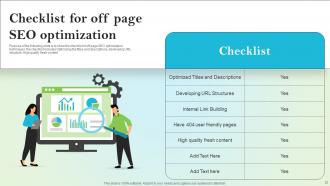
Slide 22: This slide displays Checklist for off page SEO optimization.
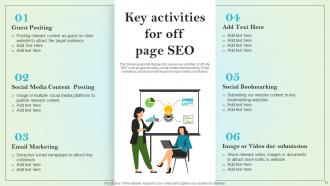
Slide 23: This slide represents various key activities of off site SEO.
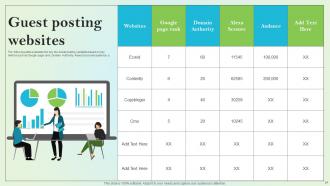
Slide 24: This slide showcases key the Guest posting variables based on key metrics.
Slide 25: This slide shows process of organizations E-mail marketing campaign.
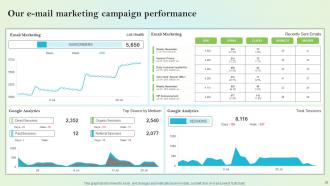
Slide 26: This slide presents Our e-mail marketing campaign performance.
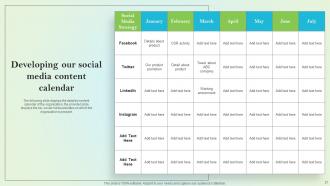
Slide 27: This slide displays Developing our social media content calendar.
Slide 28: This slide highlights title for topics that are to be covered next in the template.
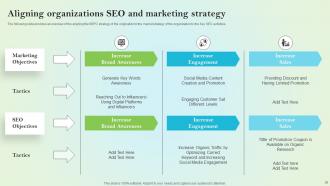
Slide 29: This slide represents Alignment of organizations SEO and marketing strategy.
Slide 30: This slide highlights title for topics that are to be covered next in the template.
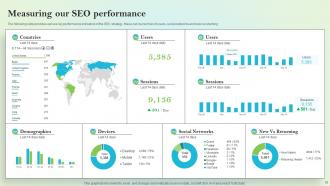
Slide 31: This slide showcases Key metrics for measuring the SEO performance.
Slide 32: This slide shows key metric performance of multiple quarters.
Slide 33: This slide highlights title for topics that are to be covered next in the template.
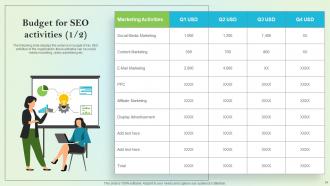
Slide 34: This slide presents variance in budget of key SEO activities of the organization.
Slide 35: This is another slide continuing variance in budget of key SEO activities of the organization.
Slide 36: This slide highlights title for topics that are to be covered next in the template.
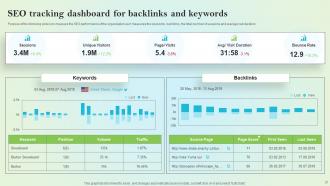
Slide 37: This slide displays SEO tracking dashboard for backlinks and keywords.
Slide 38: This slide represents various key performance indicators of the SEO strategy.
Slide 39: This slide contains all the icons used in this presentation.
Slide 40: This slide is titled as Additional Slides for moving forward.
Slide 41: This slide presents Roadmap with additional textboxes.
Slide 42: This slide provides 30 60 90 Days Plan with text boxes.
Slide 43: This is an Idea Generation slide to state a new idea or highlight information, specifications etc.
Slide 44: This slide shows Post It Notes. Post your important notes here.
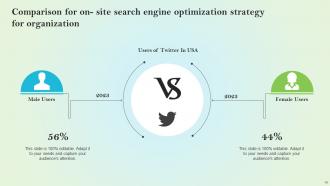
Slide 45: This is a Comparison slide to state comparison between commodities, entities etc.
Slide 46: This is a Thank You slide with address, contact numbers and email address.
On Site Search Engine Optimization Strategy For Organization Powerpoint Presentation Slides with all 51 slides:
Use our On Site Search Engine Optimization Strategy For Organization Powerpoint Presentation Slides to effectively help you save your valuable time. They are readymade to fit into any presentation structure.




















FAQs for On Site Search Engine Optimization Strategy For Organization
**INPUT**: What are the key components of an effective on-site SEO strategy? **OUTPUT**: Effective on-site SEO strategies include keyword optimization, technical site architecture, content quality, meta descriptions, internal linking, and mobile responsiveness. These components work together by enhancing search visibility, improving user experience, and streamlining site navigation, with many businesses finding that strategic implementation ultimately delivers higher rankings and increased organic traffic. [Word count: 50 words]
Optimizing title tags improves search engine visibility by incorporating relevant keywords, creating compelling descriptions that increase click-through rates, and clearly communicating page content to search algorithms. These strategic elements help search engines better understand and rank your content, while enticing users to click from search results, ultimately delivering higher organic traffic and improved search positioning.
Content quality serves as the foundation of on-site SEO strategy, influencing search rankings through relevance, user engagement, keyword optimization, and technical structure. High-quality content enhances user experience by reducing bounce rates, increasing dwell time, and encouraging social sharing, with search engines increasingly prioritizing valuable, comprehensive content that delivers genuine solutions and maintains competitive advantage.
Meta descriptions significantly impact on-site SEO by influencing click-through rates, user engagement, and search visibility, though they don't directly affect rankings. They should be crafted between 150-160 characters, include primary keywords naturally, provide compelling value propositions, and create urgency or curiosity, with e-commerce sites finding that product-focused descriptions and service businesses using benefit-driven language ultimately deliver higher organic traffic and improved user experiences.
Effective internal linking techniques include strategic anchor text optimization, topic clustering around pillar content, breadcrumb navigation implementation, contextual in-content linking, and footer/sidebar link hierarchies. These approaches enhance user experience by guiding visitors through relevant content pathways, while improving search engine crawlability and page authority distribution, ultimately delivering better organic rankings and increased engagement across your website.
Keyword research drives on-site optimization by identifying search terms your target audience uses, revealing content gaps, and uncovering competitive opportunities. Through strategic keyword analysis, businesses can align their content with user intent, prioritize high-impact optimizations, and enhance search visibility, with many organizations finding that data-driven keyword strategies significantly improve organic traffic and conversion rates.
Page load speed significantly impacts on-site SEO by influencing search engine rankings, bounce rates, and crawl efficiency, while directly affecting user experience through session duration and conversion rates. Fast-loading pages enhance search visibility and user satisfaction, with many e-commerce and service-based businesses finding that optimizing load times delivers improved organic traffic, higher engagement, and ultimately stronger competitive advantage in search results.
Mobile-friendliness is critical in on-site SEO strategy because search engines prioritize mobile-optimized sites in rankings, directly impacting visibility and traffic. With mobile users comprising the majority of web traffic, businesses across retail, healthcare, and financial services find that responsive design, fast loading speeds, and intuitive navigation significantly enhance user engagement and conversion rates, ultimately delivering competitive advantage in search results.
Header tags create hierarchical content structure that enables users to quickly scan and navigate information while helping search engines understand page organization and topic relevance. Through strategic keyword placement and logical content flow, websites achieve improved readability, longer engagement times, and enhanced search rankings, with many businesses finding that well-structured headers significantly boost both user satisfaction and organic visibility.
Image optimization strategies include using descriptive filenames, crafting keyword-rich alt text, implementing proper image compression, choosing appropriate file formats, and adding structured data markup. These techniques enhance search visibility by reducing page load times, improving accessibility for screen readers, and providing search engines with contextual information, with many e-commerce and publishing websites finding that optimized images significantly boost organic traffic and user engagement.
Schema markup improves on-site SEO performance by providing structured data that helps search engines understand content context, enabling rich snippets, enhanced SERP displays, and improved click-through rates. E-commerce sites, local businesses, and service providers leverage schema for product reviews, business hours, and FAQ sections, ultimately delivering better visibility and user engagement in search results.
SEO-friendly URLs should be short, descriptive, and include target keywords while using hyphens to separate words, avoiding special characters, and maintaining a logical hierarchy that reflects site structure. These URL optimization practices enhance search engine crawling, improve user experience through clear navigation, and boost click-through rates, with many e-commerce and content sites finding that clean URLs significantly improve organic search rankings.
User engagement metrics significantly impact on-site SEO rankings by signaling content quality and relevance to search engines through factors like bounce rate, time on page, click-through rates, and social shares. These metrics help search algorithms assess user satisfaction and content value, with many websites finding that enhanced engagement leads to improved search visibility, higher organic traffic, and ultimately better conversion rates and competitive advantage.
A clear site hierarchy significantly enhances on-site SEO by improving crawlability, distributing page authority effectively, and enabling users to navigate content seamlessly. This structured approach helps search engines understand content relationships and prioritize important pages, while e-commerce sites and content platforms find that logical hierarchies ultimately deliver better rankings and user experiences.
Content updates should be approached through regular performance audits, refreshing outdated information, expanding high-performing pages with additional value, and optimizing for new keyword opportunities identified through analytics. This strategic approach enables businesses to maintain search relevance, capture emerging search trends, and strengthen their competitive positioning, with many organizations finding that consistent content refinement significantly enhances organic visibility and user engagement.
-
I’ve been your client for a few years now. Couldn’t be more than happy after using your templates. Thank you!
-
Helpful product design for delivering presentation.