

Onboarding Journey To Enhance User Interaction Powerpoint Presentation Slides




Try Before you Buy Download Free Sample Product
 Impress Your
 Audience
 100%
100% Editable
 Save Hours
 of Time


The initial stage of the customer journey, known as customer onboarding, is a crucial aspect of the overall customer lifecycle as it can significantly influence customer retention. Grab our Onboarding Journey to Enhance the User Interaction template. It helps to determine whether customers continue to use a product service for an extended period or if they abandon it after a few months. Our Customer Onboarding deck is designed to attract potential customers and address the challenges associated with client onboarding, including its impact on the organization. It also provides an overview of the necessary steps in the user onboarding journey, along with the positive survey results obtained. Furthermore, our Onboarding Techniques PPT includes various stages of the onboarding journey, like creating a signup page, sending a welcome email, and the users initial login. Moreover, it highlights strategies to enhance the customer onboarding experience, such as adopting software, creating and tracking journey maps, and developing a customer persona. Finally, our Customer Persona module showcases the cost associated with each strategy adopted and its positive impact on the organization. Access our powerful template now to improve your customer onboarding journey and maximize customer retention.
People who downloaded this PowerPoint presentation also viewed the following :
Content of this Powerpoint Presentation
Slide 1: This slide introduces Onboarding Journey to Enhance User Interaction. Commence by stating Your Company Name.
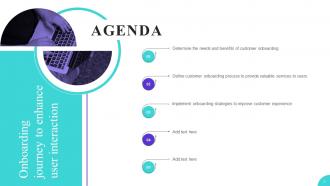
Slide 2: This slide depicts the Agenda of the presentation.
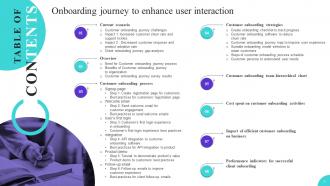
Slide 3: This slide incorporates the Table Of Contents.
Slide 4: This slide highlights the Title for the Topics to be covered further.
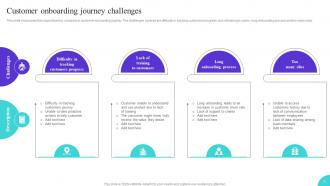
Slide 5: This slide showcases the issues faced by company in customer onboarding journey.
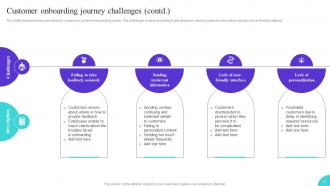
Slide 6: This slide continues the Customer onboarding journey challenges.
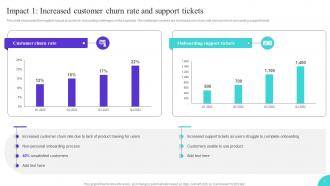
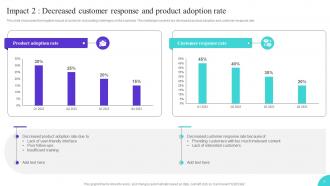
Slide 7: This slide exhibits the negative impact of customer onboarding challenges on the business.
Slide 8: This slide highlights the negative impact of customer onboarding challenges on the business.
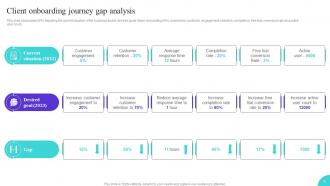
Slide 9: This slide reveals KPIs depicting the current situation of the business and its desired goals.
Slide 10: This slide portrays the Heading for the Contents to be discussed next.
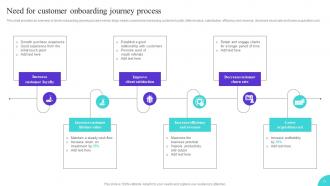
Slide 11: This slide exhibits the Need for customer onboarding journey process.
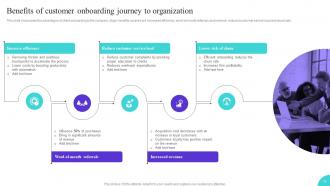
Slide 12: This slide portrays the Benefits of customer onboarding journey to organization.
Slide 13: This slide depicts the Customer onboarding journey survey results.
Slide 14: This slide mentions the Title for the Ideas to be covered further.
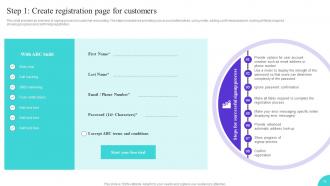
Slide 15: This slide provides an overview of signup process in customer onboarding.
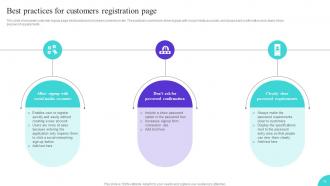
Slide 16: This slide presents the Best practices for customers registration page.
Slide 17: This slide indicates the Heading for the Ideas to be discussed in the following template.
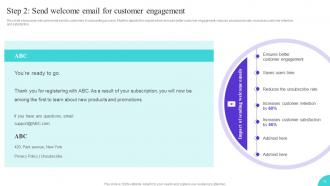
Slide 18: This slide showcases welcome email send to customers in onboarding process.
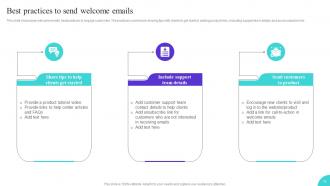
Slide 19: This slide displays the Best practices to send welcome emails.
Slide 20: This slide portrays the Title for the Contents to be covered in the upcoming template.
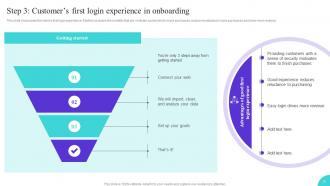
Slide 21: This slide elucidates the client’s first login experience.
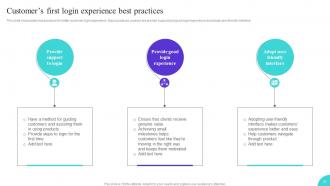
Slide 22: This slide states the Customer’s first login experience best practices.
Slide 23: This slide includes the Heading for the Topics to be discussed next.
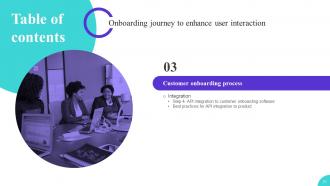
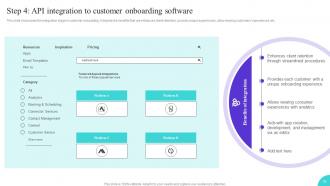
Slide 24: This slide showcases the integration stage in customer onboarding.
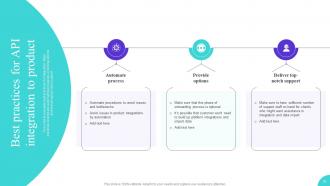
Slide 25: This slide talks about the Best practices for API integration to product.
Slide 26: This slide contains the Title for the Topics to be covered in the upcoming template.
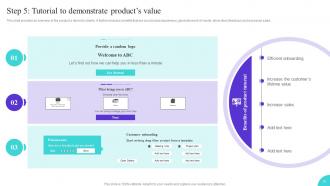
Slide 27: This slide provides an overview of the product’s demo for clients.
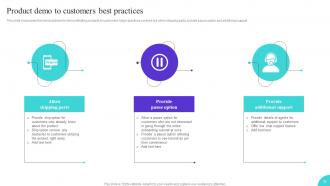
Slide 28: This slide describes the Product demo to customers best practices.
Slide 29: This slide mentions the Heading for the Contents to be discussed further.
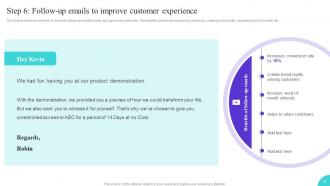
Slide 30: This slide provides an overview of customer follow-up emails to retain and gain more customers.
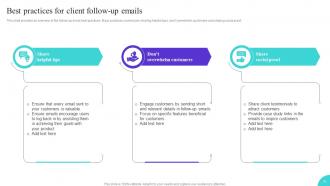
Slide 31: This slide reveals the Best practices for client follow-up emails.
Slide 32: This slide indicates the Title for the Ideas to covered next.
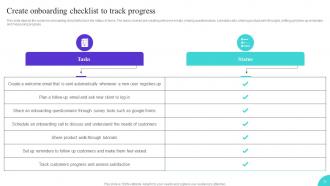
Slide 33: This slide deals with Create onboarding checklist to track progress.
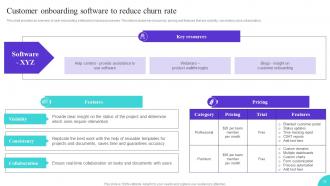
Slide 34: This slide depicts the Customer onboarding software to reduce churn rate.
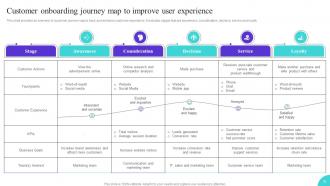
Slide 35: This slide illustrates the Customer onboarding journey map to improve user experience.
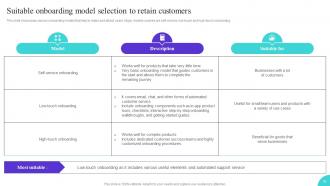
Slide 36: This slide talks about the Suitable onboarding model selection to retain customers.
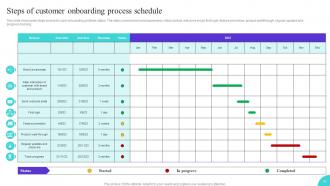
Slide 37: This slide states the Steps of customer onboarding process schedule.
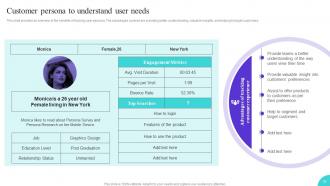
Slide 38: This slide exhibits the Customer persona to understand user needs.
Slide 39: This slide portrays the Heading for the Ideas to be discussed in the upcoming template.
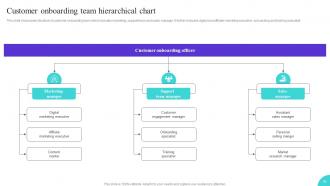
Slide 40: This slide showcases structure of customer onboarding team which includes marketing, support team and sales manager.
Slide 41: This slide indicates the Title for the Contents to be covered further.
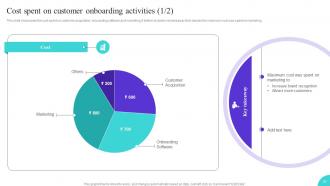
Slide 42: This slide reveals the Cost spent on customer onboarding activities.
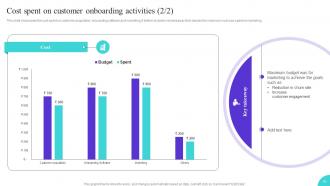
Slide 43: This slide continues the Cost spent on customer onboarding activities.
Slide 44: This slide displays the Heading for the Topics to be discussed next.
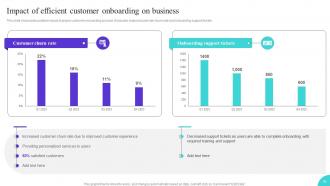
Slide 45: This slide states the Impact of efficient customer onboarding on business.
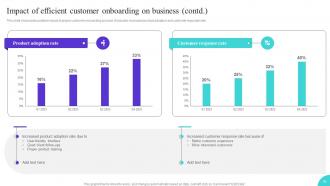
Slide 46: This slide continues the Impact of efficient customer onboarding on business.
Slide 47: This slide incorporates the Title for the Topics to be covered further.
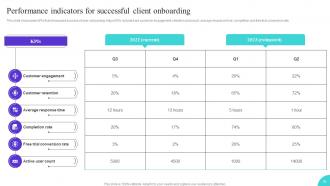
Slide 48: This slide exhibits the Performance indicators for successful client onboarding.
Slide 49: This is the Icons slide containing all the Icons used in the plan.
Slide 50: This slide is used for depicting some Additional information.
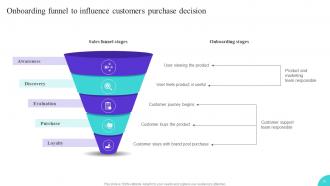
Slide 51: This slide illustrates the Onboarding funnel to influence customers purchase decision.
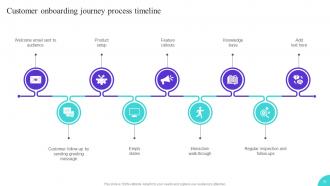
Slide 52: This slide represents the Customer onboarding journey process timeline.
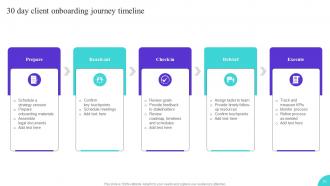
Slide 53: This slide displays the 30 day client onboarding journey timeline.
Slide 54: This is the About us slide. State your company-related information here.
Slide 55: This slide incorporates the comapny's mission, Vision, and Goal.
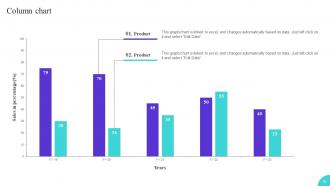
Slide 56: This slide reveals the Column chart.
Slide 57: This is the Venn diagram slide.
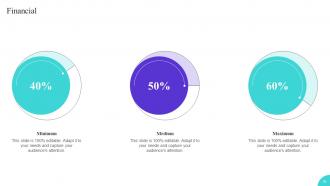
Slide 58: This slide elucidates information related to the Financial topic.
Slide 59: This slide contains the Post it notes for reminders and deadlines.
Slide 60: This is the Thank You slide for acknowledgement.
Onboarding Journey To Enhance User Interaction Powerpoint Presentation Slides with all 65 slides:
Use our Onboarding Journey To Enhance User Interaction Powerpoint Presentation Slides to effectively help you save your valuable time. They are readymade to fit into any presentation structure.








FAQs for Onboarding Journey To Enhance User Interaction
Honestly, start with the basics - get them set up with equipment and pair them with someone who actually knows what they're doing. Clear expectations are huge because nobody wants to spend weeks guessing what their job actually is. Yeah, there's gonna be paperwork (HR will hunt you down if you skip it), but don't let that overshadow the real stuff. Focus on team culture and showing them the ropes. I'd map out their first couple months so they have goals to hit. Regular check-ins help too - maybe weekly at first? The whole point is stopping that deer-in-headlights panic most new people get.
Dude, templates are a game changer for onboarding. You'll stop scrambling to make new slides every single time someone starts. Just build one solid deck with all the basics - culture stuff, processes, team intros. Takes way less time and honestly looks way more professional than whatever frankenstein presentation you'd throw together otherwise. When policies change, just update the template once instead of tracking down random versions floating around. New hires actually get a decent experience too, not some half-baked thing. I'd start simple with just a welcome template and add more later.
Honestly, interactive training is a game-changer for onboarding. Nobody wants to sit through hours of slides - I've been there and it's brutal. Get people doing simulations, role-playing, hands-on stuff that actually relates to their job. Way better than the old school approach. When new hires participate instead of just listening, they remember more and feel confident using what they learned. You'll want at least 60% of your modules to be interactive. My last company did this poorly and people were lost for weeks afterward.
Dude, remote onboarding is totally different - people's attention spans are basically nonexistent on video calls. I'd chop those presentations into 15-20 minute bits instead of doing marathon sessions. Throw in polls or breakout rooms every few slides, maybe some Q&A stuff. Trust me, I made the mistake of doing a 90-minute presentation once and could literally see people checking email the whole time. Record everything though, that's clutch so they can go back later. Oh, and send materials beforehand. Short sessions with lots of interaction - that's what actually works.
Honestly, just pick 3-4 key things or you'll go crazy with data. Time-to-productivity is huge - like how long before someone actually hits their targets. Then track retention at 90 days and one year, plus how satisfied managers are with new hires. Don't sleep on completion rates for onboarding tasks either. Those quick satisfaction surveys? Pure gold. I'd throw in engagement scores for the first few months too since unhappy people leave fast. Set up something simple you can check monthly with your team. Way easier to catch what's broken and fix it.
Oh totally - culture stuff matters way more than people think. Skip it and new hires will be lost for months, making weird decisions that don't fit how you actually operate. They'll also bail within a year, which sucks for everyone. Don't just do some boring presentation on day one either (we've all sat through those). Weave culture bits throughout the whole onboarding thing. Show them the real deal - how people collaborate, what matters here, the unwritten rules. It's honestly what makes the difference between someone who gets it and someone who's always struggling to fit in.
Dude, the worst part is always info overload - they just dump everything on people day one. Different departments do their own thing too, so new hires get mixed messages. Managers? Half of them think it's just paperwork instead of actually getting to know their people. Remote makes it even trickier since you can't just grab coffee or whatever. Oh, and spacing out the content helps tons - nobody retains anything when they're drowning. Make sure managers are around those first couple weeks, not just disappearing after orientation.
Dude, get an HRIS system if you don't have one already. Automates all that boring welcome email stuff and digital paperwork. Your new hires can knock out forms before day one, which is honestly so much better than watching them sit there with a stack of papers looking confused. Learning platforms deliver training modules without you having to babysit the whole process. Digital checklists keep things moving. The systems talk to each other too, so you're not typing the same info five times in different places. Makes such a difference - people actually start being productive instead of drowning in administrative BS their first week.
Set up feedback at different points - weekly surveys, casual manager chats, exit interviews if people bail early. Most companies mess this up by only asking at the end when nothing can be fixed anymore. Ask specific stuff: what's confusing, what's missing, what felt overwhelming. Skip the generic "how was your experience" questions - they're useless. Track time-to-productivity and retention rates too. But here's the thing that actually matters: act on what people tell you. Set up monthly reviews to implement changes based on what you're hearing. Otherwise you're just collecting feedback for no reason.
Yeah, so it really depends on your industry's priorities. Tech companies rush you straight into coding and system access - they want you shipping stuff ASAP. Healthcare and finance? Brace yourself for endless compliance training and certifications. Manufacturing won't let you near equipment until you've mastered every safety protocol. Retail throws you on the floor fast with product knowledge and sales training. The timing's everything too - some places want productivity immediately, others spend months building your foundation. Finance is probably the worst for dragging things out, honestly. Just match your approach to how risky mistakes are in your field.
Dude, good onboarding is *everything* - like 82% better retention and 70% higher engagement when you actually do it right. Those first few weeks? That's when people decide if they're staying or already planning their escape. I've watched so many solid hires just bounce because nobody bothered helping them figure things out early on. Get them connected to the team immediately. Make their role crystal clear from day one. Honestly, those first 90 days are make-or-break territory. Set up regular check-ins, pair them with someone decent, and don't just ghost them after week two.
Honestly, just take your basic template and swap out chunks based on who you're hiring. Sales people need the CRM walkthrough and territory stuff, but developers? They want system access and your coding rules. Makes sense, right? Senior hires don't need the whole "here's our company values" spiel - they've seen it all before. But they might need more technical depth than a junior person would. The trick is building it like blocks you can rearrange. Way easier than starting over every single time, and you won't miss important stuff either.
Definitely go heavy on visuals instead of cramming text everywhere - your brain actually processes images way faster anyway. White space is your friend here. One main idea per slide, and honestly? Less slides = better presentations 99% of the time. Stick with your brand colors but skip the fancy animations unless you want people getting motion sick lol. Drop in some polls or quick discussions every few slides so people don't zone out. Oh and test run it first with someone - I learned this the hard way when my "quick" presentation turned into a 45-minute snooze fest.
Honestly, try weaving stories into your onboarding instead of just rattling off bullet points. People actually retain narratives way better - like, share how Sarah from accounting landed that huge client, or walk them through a real project from chaos to success. Our brains are just wired for stories, you know? Each section could open with a quick 30-second example that shows what you're about to explain. Just don't make them novels. Oh, and definitely tie the stories to their specific role so it doesn't feel random.
Oh totally - having a good mentor is like having a workplace translator. They're the person you can bug with all those questions you're embarrassed to ask anyone else. Plus they'll decode the weird office culture stuff that nobody puts in the handbook, you know? Like how meetings actually work here or who to avoid by the coffee machine lol. A decent mentor will also catch you if you're drowning before your boss even notices. Just make sure they actually want to do it though - nothing worse than getting stuck with someone who's just going through the motions.
-
“I always have a wonderful experience with SlideTeam. It's my ""go to"" when I need a template.”
-
Easily Editable.