


Online Banking Powerpoint Ppt Template Bundles





Try Before you Buy Download Free Sample Product
 Impress Your
 Audience
 100%
100% Editable
 Save Hours
 of Time


Our Online Banking Powerpoint Ppt Template Bundles are topically designed to provide an attractive backdrop to any subject. Use them to look like a presentation pro.
People who downloaded this PowerPoint presentation also viewed the following :
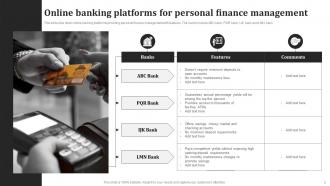
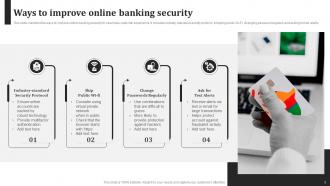
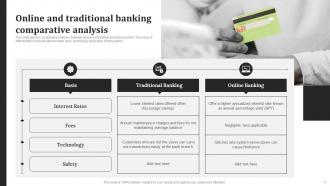
Online Banking Powerpoint Ppt Template Bundles with all 17 slides:
Use our Online Banking Powerpoint Ppt Template Bundles to effectively help you save your valuable time. They are readymade to fit into any presentation structure.








FAQs for Online Banking Powerpoint
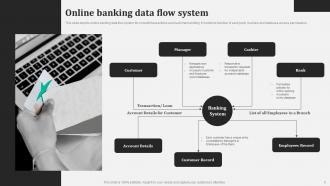
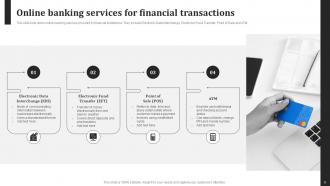
Online banking offers 24/7 accessibility, faster transaction processing, reduced operational costs, enhanced security features, and comprehensive digital account management. Through mobile apps and web platforms, customers enjoy instant fund transfers, real-time balance monitoring, and streamlined bill payments, while banks achieve significant cost savings and improved customer satisfaction rates.
Online banking enhances customer convenience by enabling 24/7 account access, instant transfers, mobile check deposits, bill payments, and real-time transaction monitoring from anywhere with internet connectivity. These digital services streamline financial management by eliminating branch visits, reducing wait times, and providing immediate account updates, with many customers finding that mobile banking apps deliver faster loan applications and seamless integration with budgeting tools.
Users should enable two-factor authentication, use strong unique passwords, avoid public Wi-Fi for banking, regularly monitor account statements, and keep banking apps updated. These practices enhance account security by preventing unauthorized access, detecting suspicious activity early, and maintaining encrypted connections, with many financial institutions finding that educated customers experience significantly fewer security incidents and greater confidence in digital banking services.
Banks ensure data privacy through multi-layered encryption, secure authentication protocols, regulatory compliance frameworks, and continuous monitoring systems. These technologies work by encrypting data transmission, implementing two-factor authentication, and maintaining strict access controls, with many financial institutions finding that combining advanced cybersecurity measures with regular audits ultimately delivers enhanced customer trust and competitive advantage.
Key trends shaping online banking's future include artificial intelligence for personalized services, blockchain for enhanced security, voice banking through smart assistants, open banking APIs, and biometric authentication methods. These technologies streamline customer experiences by enabling instant loan approvals, reducing fraud detection times, and delivering 24/7 automated support, with many financial institutions finding significant competitive advantages.
Mobile banking serves as the smartphone-optimized extension of online banking, enabling customers to access core banking services through dedicated apps with features like mobile check deposits, push notifications, and biometric authentication. This mobile-first approach streamlines customer interactions by delivering faster transaction processing, enhanced security protocols, and 24/7 accessibility, ultimately providing banks with broader market reach and improved customer satisfaction rates.
Fintech companies revolutionize online banking by introducing innovative payment solutions, AI-driven personalization, blockchain security, mobile-first interfaces, and automated financial management tools. These technologies streamline traditional banking operations through faster transaction processing, enhanced user experiences, and reduced operational costs, with many financial institutions finding that strategic fintech partnerships ultimately deliver competitive advantages and improved customer satisfaction.
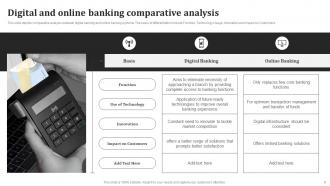
Online banks typically offer lower fees than traditional banks through reduced overhead costs, minimal ATM fees, lower account maintenance charges, and fewer transaction penalties. This streamlined approach enables digital-first institutions to pass savings directly to customers, with many online banks eliminating monthly maintenance fees entirely while providing competitive rates and enhanced operational efficiency.
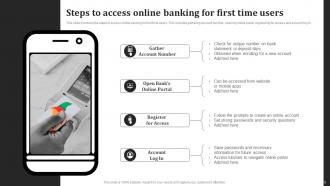
Common challenges include navigating unfamiliar interfaces, concerns about security and fraud protection, difficulty accessing customer support, managing multiple passwords and authentication steps, and adapting to digital-only processes. While these hurdles initially slow adoption, banks increasingly offer comprehensive tutorials, enhanced security features, and seamless mobile experiences, ultimately delivering greater convenience and 24/7 access for users.
Online banking platforms handle fraud detection through AI-powered monitoring systems, real-time transaction analysis, biometric authentication, behavioral pattern recognition, and multi-factor verification protocols. These technologies streamline security by identifying suspicious activities instantly, blocking unauthorized transactions automatically, and minimizing false positives, with many financial institutions finding that automated fraud prevention ultimately delivers faster customer service and significantly reduced operational costs.
Regulatory changes in online banking create both compliance challenges and innovation opportunities, requiring enhanced data protection, stricter authentication protocols, improved transparency measures, and robust cybersecurity frameworks. While these regulations increase operational costs and complexity, they ultimately strengthen customer trust, reduce fraud risks, and enable banks to deliver more secure digital services, with many financial institutions finding that compliance drives competitive advantage through enhanced customer confidence.
Customers can make informed online banking choices by comparing security features, fee structures, mobile app functionality, customer service accessibility, and available financial tools. Banks like Chase and Bank of America offer comprehensive digital platforms with robust fraud protection, while credit unions often provide lower fees, enabling customers to select options that align with their financial priorities and usage patterns.
Essential online banking features include mobile app functionality, real-time transaction monitoring, bill pay automation, budgeting tools, and robust security protocols like two-factor authentication. These capabilities streamline financial management by reducing manual processes, enhancing transaction visibility, and delivering seamless account access, with many users finding that comprehensive digital banking ultimately saves time while providing greater control over their finances.
The COVID-19 pandemic significantly accelerated online banking adoption, with many institutions reporting 40-60% increases in digital transactions as lockdowns and social distancing made branch visits challenging. This shift enhanced customer convenience, streamlined banking operations, and reduced operational costs, with banks finding that customers increasingly prefer digital-first experiences even post-pandemic.
Emerging technologies expected to reshape online banking include artificial intelligence for personalized services, blockchain for enhanced security, quantum computing for complex transactions, biometric authentication, and advanced APIs for seamless integrations. These innovations streamline operations by automating processes, reducing fraud, and improving customer experiences, with financial institutions increasingly finding that strategic technology adoption delivers competitive advantage and operational efficiency.
-
“You have the structure in place that are easy to explore new opportunities.I will be recommending your services to other people.”
-
SlideTeam makes creating presentations easy. Unlimited products, premium quality designs and affordable.