

Online Trade Management Powerpoint Presentation Slides





Try Before you Buy Download Free Sample Product
 Impress Your
 Audience
 100%
100% Editable
 Save Hours
 of Time


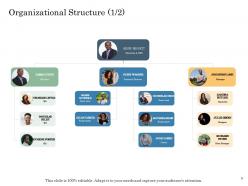
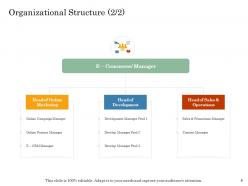
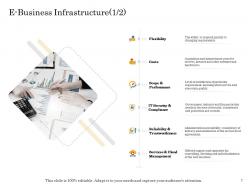
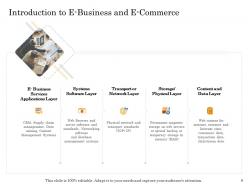
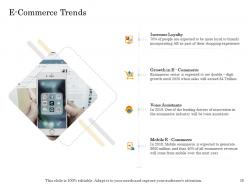
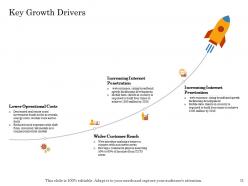
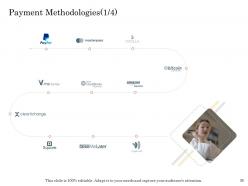
Pick these informative and attractive Online Trade Management PowerPoint Presentation Slides to grow in this highly competitive global market. You can utilize these site interface PPT layouts to mention the innovative features of an efficient infrastructure system like flexibility, IT security, compliance, reliability, and cloud management. To expand your firm and hit the right target audience and market, take the assistance of these e-commerce PPT slides. Mention the key growth drivers in online business like lower operational costs, increased internet penetration, and wider customer reach using this digital marketing PPT slideshow. Display the company's organizational structure in a well-structured format through these electronic marketing PPT themes. Build a plan of action for customer retention and brand development by taking the aid of this e-business PPT presentation. Clearly map out the payment methodologies that your company incorporates, offers, and accepts with these internet commerce PPT designs. Take advantage of the additional slides at the end of this business strategy PowerPoint deck to create a winning presentation.
People who downloaded this PowerPoint presentation also viewed the following :
Online Trade Management Powerpoint Presentation Slides with all 56 slides:
Use our Online Trade Management Powerpoint Presentation Slides to effectively help you save your valuable time. They are readymade to fit into any presentation structure.



















FAQs for Online Trade Management
Key components include real-time transaction monitoring, automated compliance checking, digital documentation management, integrated payment processing, and comprehensive reporting dashboards. These systems streamline operations by reducing manual processes, ensuring regulatory adherence, and providing complete transaction visibility, with many financial institutions and trading firms finding that effective platforms ultimately deliver faster settlement times, reduced operational costs, and enhanced competitive positioning.
Businesses ensure compliance through automated regulatory monitoring systems, digital documentation platforms, real-time tariff databases, integrated customs management tools, and AI-powered risk assessment solutions. These technologies streamline compliance by automatically updating regulation changes, maintaining audit trails, and flagging potential violations, with many international retailers and manufacturers finding that digital compliance systems reduce processing delays while minimizing costly regulatory penalties.
Essential technological tools for online trade management include automated trading platforms, real-time analytics dashboards, supply chain management software, digital payment gateways, and integrated inventory systems. These technologies streamline operations by reducing manual processes, enhancing transaction speed, and providing comprehensive visibility across global trade networks, with many organizations finding that strategic implementation delivers significantly improved operational efficiency and competitive advantage in increasingly complex international markets.
Data analytics enhances online trade management decision-making by providing real-time market insights, predictive trend analysis, and risk assessment capabilities. Through advanced algorithms and machine learning, businesses can optimize pricing strategies, identify emerging opportunities, and minimize supply chain disruptions, with many retail and manufacturing companies finding significantly improved profit margins and operational efficiency.
Supply chain visibility enables real-time tracking of goods, inventory levels, supplier performance, and potential disruptions across global trade networks. Through advanced analytics and IoT integration, businesses streamline operations, reduce costs, and enhance customer experiences, with many manufacturers and retailers finding that comprehensive visibility ultimately delivers competitive advantage in increasingly complex international markets.
Online trade management enhances customer satisfaction through real-time order tracking, automated status updates, streamlined communication channels, and self-service portals for account management. These digital capabilities enable faster response times, transparent transaction processes, and personalized customer experiences, with many retail and wholesale businesses finding that automated workflows reduce service delays while improving order accuracy and customer retention rates.
**INPUT**: What strategies can mitigate risks associated with online trade transactions? **OUTPUT**: Risk mitigation strategies include secure payment gateways, multi-factor authentication, encrypted data transmission, comprehensive verification protocols, and real-time fraud monitoring systems. These technologies streamline transaction security by automating threat detection, validating user identities, and protecting sensitive information, with many financial institutions finding that integrated approaches ultimately deliver reduced fraud losses and enhanced customer confidence. [Word count: 59 words]
Companies effectively manage digital trade inventory through real-time tracking systems, automated reorder points, demand forecasting analytics, cloud-based integration platforms, and supplier collaboration tools. These technologies streamline operations by minimizing stockouts, reducing carrying costs, and enhancing supply chain visibility, with retailers and manufacturers finding that automated systems deliver faster responses to market changes and improved customer satisfaction.
E-commerce revolutionizes traditional trade management by automating order processing, enabling real-time inventory tracking, streamlining payment systems, and facilitating direct supplier-customer connections. Through digital platforms, businesses enhance operational efficiency, reduce transaction costs, and accelerate delivery times, with many retailers finding that integrated e-commerce solutions ultimately deliver competitive advantage and improved customer experiences.
Cybersecurity is critical for online trade operations, protecting against fraud, data breaches, payment theft, supply chain attacks, and regulatory violations. Through advanced encryption, multi-factor authentication, and real-time monitoring, financial institutions and e-commerce platforms safeguard transactions, maintain customer trust, and ensure compliance, ultimately delivering operational resilience and competitive advantage in increasingly digital markets.
Best practices for negotiating online trade contracts include establishing clear payment terms, defining detailed product specifications, setting precise delivery schedules, incorporating dispute resolution mechanisms, and implementing comprehensive risk allocation clauses. These strategies enhance transaction security by minimizing ambiguity, protecting both parties' interests, and streamlining enforcement processes, with many international traders finding that structured digital negotiations ultimately deliver faster deal closure and stronger business relationships.
Businesses can leverage social media for online trade management by enhancing customer engagement, building brand visibility, facilitating direct sales, monitoring market trends, and streamlining customer service interactions. Through platforms like LinkedIn and Instagram, companies across retail, manufacturing, and services sectors accelerate lead generation, improve customer relationships, and drive revenue growth, ultimately delivering competitive advantage in increasingly digital marketplaces.
Small businesses face challenges including limited budgets for comprehensive platforms, lack of technical expertise for implementation, concerns about data security, integration difficulties with existing systems, and resistance to change from traditional processes. However, many small retailers and manufacturers find that starting with basic tools and gradually scaling delivers immediate efficiency gains, streamlined operations, and competitive advantages that justify the initial investment and learning curve.
Payment gateways significantly enhance online trade management efficiency by automating transaction processing, reducing manual payment handling, and enabling real-time settlement tracking. Through secure digital payment infrastructure, businesses streamline cash flow management, minimize processing delays, and deliver faster customer experiences, with many e-commerce platforms and B2B marketplaces finding that integrated gateways ultimately reduce operational costs while accelerating transaction cycles.
Essential skills for online trade management professionals include digital platform proficiency, data analytics, supply chain coordination, regulatory compliance knowledge, and cross-cultural communication abilities. These competencies enable seamless navigation of international marketplaces, risk assessment, and relationship building, with many organizations finding that professionals combining technical expertise with strategic thinking deliver enhanced operational efficiency and competitive advantage in increasingly complex global trade environments.
-
Designs have enough space to add content.
-
Illustrative design with editable content. Exceptional value for money. Highly pleased with the product.
-
Content of slide is easy to understand and edit.
-
Informative presentations that are easily editable.
-
Helpful product design for delivering presentation.