


Operating procedures and treat ppt powerpoint presentation layouts guide




Try Before you Buy Download Free Sample Product
 Impress Your
 Audience
 100%
100% Editable
 Save Hours
 of Time


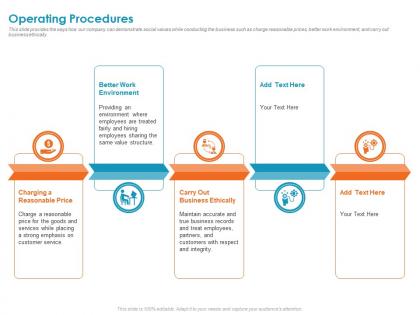
This slide provides the ways how our company can demonstrate social values while conducting the business such as charge reasonable prices, better work environment, and carry out business ethically.
People who downloaded this PowerPoint presentation also viewed the following :
Operating procedures and treat ppt powerpoint presentation layouts guide with all 2 slides:
Use our Operating Procedures And Treat Ppt Powerpoint Presentation Layouts Guide to effectively help you save your valuable time. They are readymade to fit into any presentation structure.
FAQs for Operating procedures and treat ppt powerpoint
You'll want clear step-by-step instructions first - that's the foundation. Define who does what, then build in checkpoints so you can measure progress. Always include troubleshooting because stuff breaks constantly. Detail level is tricky though. Too much and people tune out, too little and they're lost. Keep documentation somewhere everyone can find it and actually update the thing regularly (easier said than done, I know). Don't forget contact info for questions. Pro tip: test it with someone totally new to the process - they'll catch your blind spots instantly.
Honestly, just dump everything in one spot - SharePoint, Notion, whatever you guys use. Name stuff clearly so people can actually search for it. I'd organize by department or job role since that's how people think about it. Mobile access is huge too because let's be real, half your team will be looking this up on their phones during meetings. The biggest mistake is having procedures spread across emails and random drives - that's where stuff goes to die. Oh and maybe mention the location during team meetings occasionally? People have goldfish memory about where things live.
So basically, operating procedures are your safety net for managing risks and staying compliant. They standardize everything - routine stuff, crisis situations, whatever comes up. This prevents expensive screwups and keeps you aligned with regulations. During audits, they're gold because they prove to regulators you've got proper controls. Honestly, I've seen companies get burned for not having this documented. These procedures also help spot potential risks before they blow up in your face. Just don't let them collect dust - update them regularly and make sure people actually use them.
At minimum, do it yearly. But honestly? That's kinda lazy. Big changes - new tech, regulations, whatever - update immediately. Don't wait around. I've watched teams crash and burn because their procedures were ancient and nobody cared enough to fix them. If things change a lot, maybe quarterly reviews work better. Stable operations can get away with annual. Just don't be reactive about it - actually plan this stuff. Oh, and pick three procedures right now that you already know suck and fix those first.
Honestly, hands-on practice beats everything else. Walk them through it step-by-step while they're actually doing the work - don't just talk at them. Make some simple checklists or visual guides they can grab later (people forget way more than you'd think). Pair newbies with your solid team members for the first couple rounds. Oh, and definitely do follow-ups to catch what didn't stick. Practice scenarios are clutch too - let them screw up when it doesn't matter. Way better than finding out they're lost when it counts.
Pictures and diagrams are honestly game-changers for procedures. Way better than trying to figure out vague instructions like "rotate until aligned" - like, aligned with what exactly? You can actually see what each step should look like. Flowcharts help catch problems early too. New people especially love having visuals to reference. I always take quick phone pics when I'm doing something tricky at work. Sounds silly but those random photos have saved me so many headaches later. Your coworkers will definitely appreciate the effort if you add some to your procedures.
Oh man, the workflows thing is brutal - sales wants speed, engineering wants precision, and they're basically speaking different languages. Teams will fight you on changing their systems, and honestly? Sometimes they know what they're talking about. Getting all the software to play nice together is its own headache, plus you've got compliance stuff breathing down your neck. Don't even get me started on trying to get everyone in the same meeting. Here's what worked for me: pick one tiny process that bugs multiple teams, fix that first, then build from there. Way less painful.
Honestly, start with templates and workflow builders - they'll cut your procedure writing time in half. Skip the endless email chains (trust me on this one) and use collaboration platforms where everyone can jump in at once. Mobile apps are a game-changer too since people can actually find procedures without digging through filing cabinets or whatever. Digital tracking keeps everything updated automatically with reminders and dashboards. My advice? Pick one tool for your most annoying repetitive stuff first. You don't need to revolutionize everything at once - that's just overwhelming.
So here's what I'd track - completion times and error rates are your bread and butter metrics. Compliance percentages too. Also ask your team what they actually think about following these procedures, because honestly if everyone's complaining, that tells you something right there. Oh, and how long it takes to train new people is pretty telling about whether your steps make sense. I'd probably start with just 2-3 metrics that match what you're trying to fix. Track 'em for a month at least - you need time to see if there's actually a pattern happening.
Oh man, you're so right to think about this stuff upfront. Communication styles alone will trip you up - Germans want everything direct while other cultures find that rude as hell. Then you've got hierarchy expectations, how people handle risk, even basic things like deadlines meaning different things in different places. Honestly, don't just translate your procedures and call it done. Get your local teams involved from the start so they can tell you what'll actually work. You can stay flexible on most things, but obviously keep your safety and compliance stuff locked down no matter what.
Dude, this is actually super important. The people doing the work every day know where things break down - stuff that managers sitting in meetings would never think of. When employees help create the procedures, they're way more likely to actually follow them instead of finding workarounds. I've watched so many companies roll out these elaborate processes that just... don't work in real life because nobody asked the frontline people. Get your team involved early, show them drafts before you finalize anything. They'll spot problems you missed and feel like they own it. Way better than forcing some top-down system on everyone.
Honestly, treat your procedures more like guidelines than gospel. Focus on the end goal and major checkpoints instead of scripting every tiny step. I've watched companies completely freeze up because they wrote procedures like instruction manuals that took forever to update. Set up quarterly reviews, but also create a fast lane for urgent changes. Your frontline folks are gold here - they'll spot problems way before management does. Oh, and here's something to try right now: grab one procedure and think "what happens if our situation totally shifts?" That'll show you where you're being too rigid.
Honestly, the biggest mistake is writing War and Peace when you need a quick reference guide. People won't read it if it's too long. Get input from whoever's actually doing the work - otherwise you're just guessing at what they need. Skip the fancy terminology and explain why you're doing something, not just how. I always have someone else test-run procedures before rolling them out (saves embarrassment later). Oh, and build in regular updates because this stuff gets outdated fast. Pick your most critical processes first. You can always expand later once you see what works.
Focus on results instead of tracking every little thing people do. Like instead of "be online at 9," try "daily standup done by 10am in Slack." You'll need way more documentation since nobody can just walk over and ask questions - which honestly ends up being better once everyone gets the hang of it. Figure out clear rules for email vs chat vs video calls or you'll have chaos. Oh, and definitely test this stuff with your actual team first. What sounds smart in theory usually needs tweaking when real people start using it.
Honestly, good documentation is a game changer for productivity. Your team stops reinventing the wheel every time they need to do something. Results stay consistent, new people get up to speed faster, and you're not constantly fixing dumb mistakes. You know that one person everyone always bugs because they're the only one who knows how X works? Yeah, documentation fixes that problem. People can actually work on their own without bothering anyone. I'd start with whatever tasks you do over and over - those give you the biggest bang for your buck. Trust me on this one.
-
Great experience, I would definitely use your services further.
-
Awesome use of colors and designs in product templates.
-
Presentation Design is very nice, good work with the content as well.