

Operational infrastructure management powerpoint presentation slides




Try Before you Buy Download Free Sample Product
 Impress Your
 Audience
 100%
100% Editable
 Save Hours
 of Time


Operational Infrastructure Management PowerPoint Presentation Slides is a highly visual custom tool. This PPT theme is loaded with impactful data visualization tools to reflect your asset management plan. Using our PowerPoint slideshow you can cover all the aspects related to enterprise asset management with considerable ease. The comprehensive format and the concise design elements help users to consolidate huge volumes of data without utilizing much room. Take advantage of the engaging graphics of our PPT templates to elucidate the asset management process. The easy-to-follow layout of this workplace infrastructure PowerPoint presentation not only helps users but also the audience. The neat tabular format of our organizational infrastructure PPT slideshow facilitates asset assessment for infrastructure companies. Elaborate on risk assessment and types of deteriorating models through this infrastructure asset management PowerPoint theme. Utilize the KPI metrics and dashboard diagrams to compile key facts and stats. So, download this work infrastructure PPT deck to create an impressive presentation in no time. Our Operational Infrastructure Management Powerpoint Presentation Slides are explicit and effective. They combine clarity and concise expression.
People who downloaded this PowerPoint presentation also viewed the following :
Content of this Powerpoint Presentation
Slide 1: This slide introduces Operational Infrastructure Management. State Your Company name.
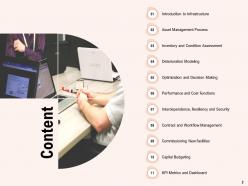
Slide 2: This slide displays Table of Content.
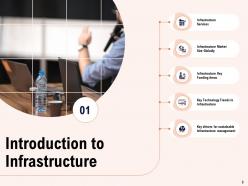
Slide 3: This slide shows Introduction to Infrastructure
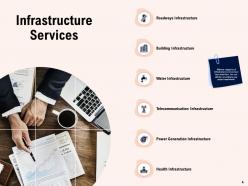
Slide 4: Different categories of Infrastructure services have been listed in this slide. You can edit this according to your project requirement.
Slide 5: This bar graph shows market size for consecutive years. You can edit this as per your requirement.
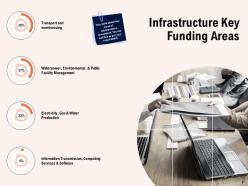
Slide 6: This slide shows key areas of infrastructure investment. You can edit this as per your requirement.
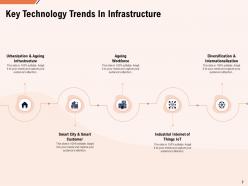
Slide 7: This slide presents Key Technology Trends in Infrastructure.
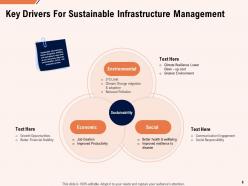
Slide 8: This slide shows Key Drivers for Sustainable Infrastructure Management Sustainable infrastructure means designing, building, and operating in ways that do not adversely effect the environmental, social, and economic system.
Slide 9: This slide depicts Asset Management Process.
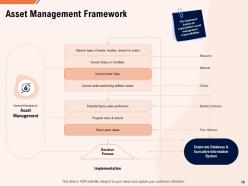
Slide 10: This framework depicts an organisation's asset management responsibilities.
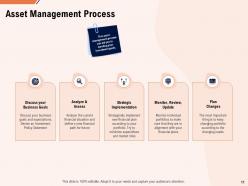
Slide 11: This slide shows Asset Management Process.
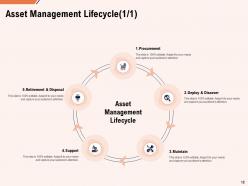
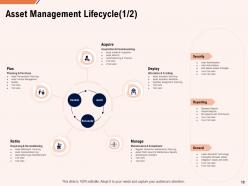
Slide 12: This slide presents Asset Management Lifecycle.
Slide 13: This slide shows Asset Management Lifecycle
Slide 14: This slide depicts Asset and Condition Assessment.
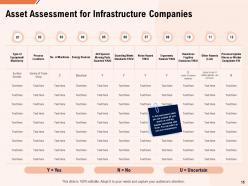
Slide 15: In this assessment table you can include all your assets as well any hazards associated with them. You can edit it as per your requirement.
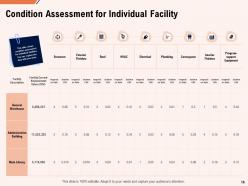
Slide 16: This slide shows condition assessment for individual facilities. You can replace the data with your own.
Slide 17: This slide depicts Deterioration Modelling.
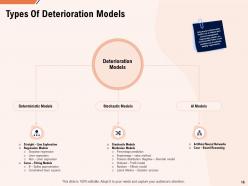
Slide 18: This slide depicts Types Of Deterioration Models ience's attention.
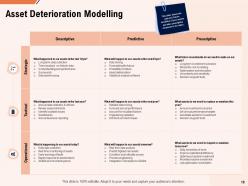
Slide 19: This slide shows the past and future condition of your assets and also prescriptive measures to be taken.
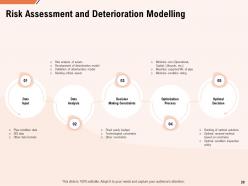
Slide 20: This slide showcases Risk Assessment and Deterioration Modelling
Slide 21: This slide depicts Optimization and Decision Making.
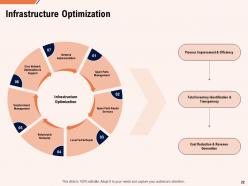
Slide 22: This slide shows Infrastructure Optimization.
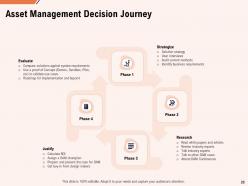
Slide 23: This slide shows Risk Assessment and Deterioration modelling.
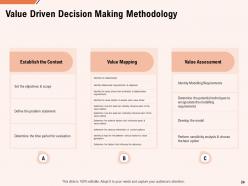
Slide 24: This slide presents Value Driven Decision Making Methodology.
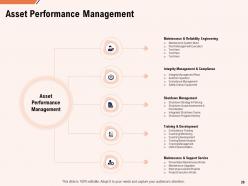
Slide 25: This slide shows Performance and Cost Functions
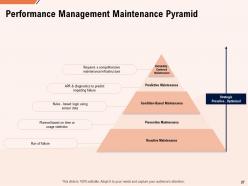
Slide 27: This slide depicts Performance Management Maintenance Pyramid.
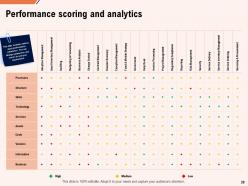
Slide 28: This slide includes various asset performance parameter. You can change parameters and scores to suit your requirement.
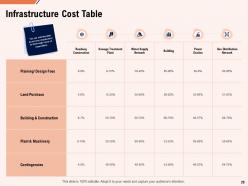
Slide 29: This slide displays Infrastructure Cost Table.
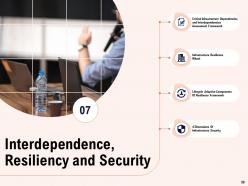
Slide 30: This slide shows Interdependence, Resiliency and Security
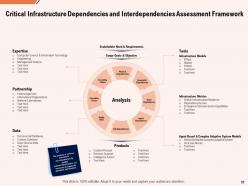
Slide 31: This slide shows Critical Infrastructure Dependencies and Interdependencies Assessment Framework
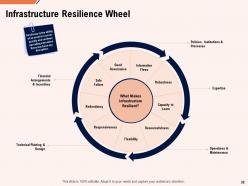
Slide 32: This slide displays Infrastructure Resilience Wheel.
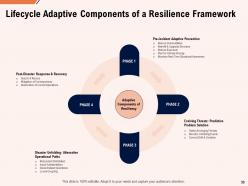
Slide 33: This slide showcases Adaptive Components of Resiliency
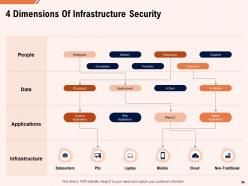
Slide 34: This slide showcases 4 Dimensions Of Infrastructure Security.
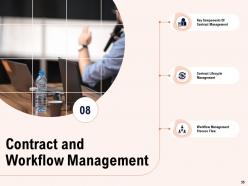
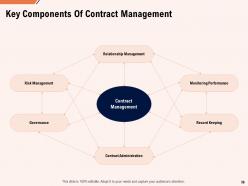
Slide 35: This slide displays Key Components Of Contract Management
Slide 36: This slide shows Key Components Of Contract Management.
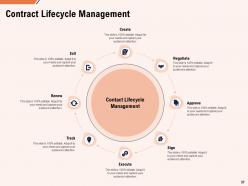
Slide 37: This slide shows Contract Lifecycle Management.
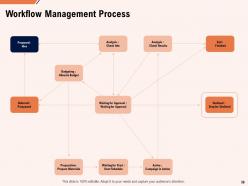
Slide 38: This slide displays Workflow Management Process
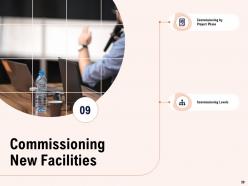
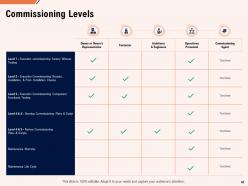
Slide 39: This slide shows Commissioning Levels
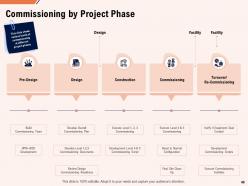
Slide 40: This slide shows various levels of commissioning at different project phases
Slide 41: This slide shows Commissioning Levels.
Slide 42: This slide shows Capital Budgeting.
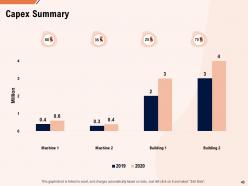
Slide 43: This slide shows Capex Summary
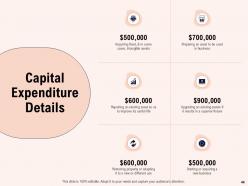
Slide 44: This slide shows Capital Expenditure Details
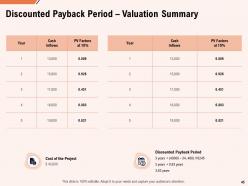
Slide 45: This slide shows Discounted Payback Period
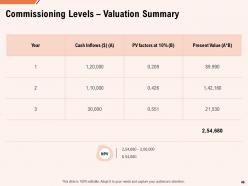
Slide 46: This slide shows Commissioning Levels – Valuation Summary.
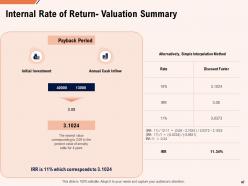
Slide 47: This slide displays Internal Rate of Return- Valuation Summary
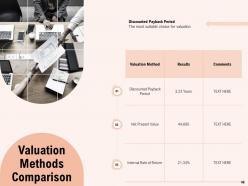
Slide 48: This slide shows Valuation Methods Comparison.
Slide 49: This slide shows KPI Metrics and Dashboard
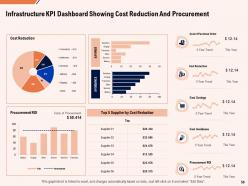
Slide 50: This slide represents Infrastructure KPI Dashboard Showing Cost Reduction And Procurement
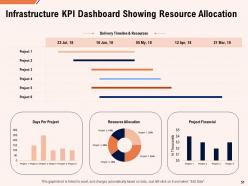
Slide 51: This slide showcases Infrastructure KPI Dashboard Showing Resource Allocation
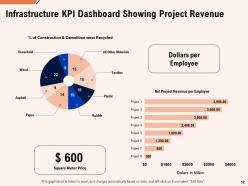
Slide 52: This slide presents Infrastructure KPI Dashboard Showing Project Revenue
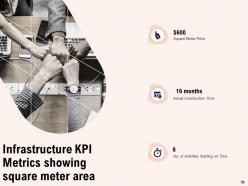
Slide 53: This slide displays Infrastructure KPI Metrics showing square meter area
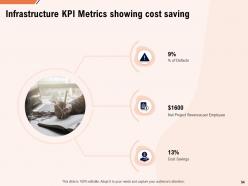
Slide 54: This slide shows Infrastructure KPI Metrics showing cost saving
Slide 55: This is Operational Infrastructure Management Icons Slide.
Slide 56: This slide is titled as Additional Slides for moving forward.
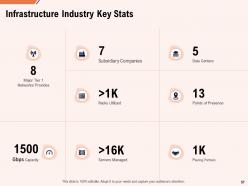
Slide 57: This slide displays Infrastructure Industry Key Stats.
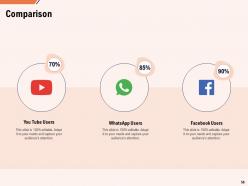
Slide 58: This slide shows Comparison.
Slide 59: Thi slide displays Our Mission, Vision and Goal.
Slide 60: This is idea generation slide.
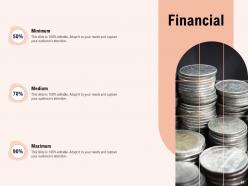
Slide 61: This is financial slide.
Slide 62: This slide is titled as Post it Notes.
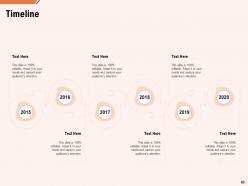
Slide 63: This slide displays Timeline process.
Slide 64: This is 30 60 90 Days Plan slide.
Slide 65: This is Thank You slide with Contact details.
Operational infrastructure management powerpoint presentation slides with all 65 slides:
Use our Operational Infrastructure Management Powerpoint Presentation Slides to effectively help you save your valuable time. They are readymade to fit into any presentation structure.





FAQs for Operational infrastructure management
Look, start with monitoring and alerting - that's your lifeline when everything breaks. Automated deployments are huge too, saves you from manual screwups. Configuration management keeps things consistent across environments. Oh, and document everything! I know it's boring but seriously, you'll hate yourself later if you don't. Disaster recovery planning can't wait either. Performance optimization should happen upfront so you're not always putting out fires. Security needs to be built in from day one, not added as an afterthought. Just audit what you've got now and tackle the worst gaps first.
Honestly, once you start tracking your infrastructure with real data, you'll never go back to guessing. You can actually see what's happening in real-time instead of relying on those ancient reports nobody trusts anyway. Patterns jump out at you - like when servers usually crash or which equipment's about to die. I'd just pick one critical system first and track its main metrics consistently. Don't try to boil the ocean right away. The cool part is you stop playing catch-up all the time. Instead you're planning ahead for capacity issues and maintenance before everything hits the fan.
Honestly, cloud computing is pretty much essential now. You get crazy flexibility - spin up servers in minutes, scale instantly instead of being stuck with whatever hardware you bought years ago. Only pay for what you use too. The big providers handle all that annoying maintenance stuff (seriously, who misses those middle-of-the-night server meltdowns?). What's really cool is infrastructure-as-code - you can version control your entire setup like regular code. My advice? Start with one service and migrate gradually. Don't do some massive lift-and-shift operation all at once - that's asking for trouble.
Honestly, it's all about finding that sweet spot between "this'll do" and going overboard. Figure out what downtime actually costs you first - like, real numbers. Most places do tiers where mission-critical stuff gets the fancy redundancy while other systems run cheaper. You don't need crazy uptime for everything! I'd focus the budget where outages would actually bite you. Good monitoring catches problems early, which saves you headaches later. Oh, and review costs regularly because your needs shift more than you'd think. The whole five-nines thing is mostly just marketing anyway.
Monitor everything from day one - seriously, outages will hit you at 2am on a holiday weekend, guaranteed. Document as you go, not later when you've forgotten why you made that weird config choice. Don't just slap band-aids on problems either, dig into what's actually breaking. Capacity planning sounds boring but skipping it is how you end up scrambling to scale during your biggest traffic spike. Oh, and audit what you've got now first - find those sketchy spots where you're crossing your fingers and hoping nothing breaks.
So automation takes care of all that boring stuff - server setup, app deployments, monitoring, scaling. You set up scripts that handle incidents and patch systems automatically. Some can even fix common problems on their own, which is pretty cool. Once it's working right, your team stops doing the same manual tasks over and over. Instead you get to work on actual strategy stuff. I'd start with something simple like automated backups (learned that one the hard way) or basic deployment pipelines. Then just keep adding more pieces as you go.
Hey, so cyber security is gonna mess with your infrastructure setup for sure. More monitoring tools, access controls, security updates - it all makes things more complicated. But honestly? The trade-off is worth it because you get way better visibility and way less downtime when hackers try their crap. Downside is everything takes longer now. Deployments slow down because of security reviews, access gets restricted, and don't even get me started on the costs. My advice? Build this stuff in from the beginning instead of trying to patch it on later - learned that one the hard way.
So scalability is just making sure your system can handle more users without everything going to hell. Like if your app suddenly gets popular, you don't want it crashing because you can't handle the traffic. Auto-scaling and load balancers are your friends here - they automatically spin up more resources when needed. Honestly, microservices help too but that's a whole other rabbit hole. The worst thing is getting woken up at 2 AM because your servers are dying. Figure out where your weak spots are now and make those parts flexible first.
Honestly, you've gotta bake compliance right into your infrastructure from the start. Can't just slap security controls on later - I've watched that disaster unfold way too many times. Figure out which regs actually hit you first (GDPR, HIPAA, whatever applies). Then work backwards from those requirements when you're designing your architecture and monitoring. The whole approach needs to flip - instead of building first then scrambling to meet compliance, map those obligations to specific controls early. Your change management processes should revolve around this stuff too. Sounds like a pain, but it'll save you massive headaches down the road.
Track your availability, response time, throughput, and resource usage - those are the big four. Availability is just uptime percentage. Response time shows how fast requests get handled. Throughput measures work processed. For resources, watch CPU, memory, disk, and network trends instead of obsessing over every little spike (trust me on this one). Don't forget error rates and recovery time when stuff breaks. Set up automated alerts so you're not glued to dashboards all day. Weekly trend reviews will catch problems before they blow up into 3am emergencies.
Start with auditing what you've got - data formats, APIs, all that stuff. Middleware is gonna save your butt here, acts like a translator between old and new without ripping everything apart. MuleSoft or Dell Boomi work great for bridging gaps. Whatever you do, don't go all-in at once. That's a recipe for disaster, trust me. Pick your most critical functions first and do it in phases. Always have backup plans ready because something's definitely gonna break during testing - it always does. Run a small pilot with just one system to start. Way less stressful.
So first thing - document everything about your recovery process and keep backups somewhere offsite. Test your disaster scenarios regularly because honestly, plans that never get tested are basically useless when shit hits the fan. Figure out your RTOs and RPOs for each system, map out how services depend on each other, and make sure everyone knows what they're supposed to do during an incident. Communication plans matter too since people lose their minds differently during outages. Run tabletop exercises every quarter and actually try restoring from those backups sometimes - you'd be surprised how often that doesn't work. Start with your most critical stuff first.
So IoT sensors basically give you eyes everywhere - server temps, network traffic, all that stuff. The data feeds into AI systems that can actually predict when things might break instead of waiting for everything to catch fire. Honestly, predictive maintenance is a game changer compared to those 3am emergency calls. Your routine tasks get automated, resource allocation becomes way smarter. Plus you can actually plan capacity based on real data instead of just guessing. My advice? Don't go crazy trying to do everything at once. Start with something simple like server monitoring and expand from there.
Honestly, stakeholders are like your GPS for infrastructure stuff - they tell you what actually matters and where to blow your budget. Business teams just want everything to stay up and running. Finance people obsess over costs. Then you've got compliance breathing down your neck about security rules. Getting everyone together early is clutch because they'll all have different ideas about what "good" looks like (spoiler: nobody agrees initially). Skip this step and you'll build something that works perfectly... for problems nobody actually has. Trust me, that conversation upfront saves you months of headaches later.
Look into Lean, Six Sigma, or Kaizen - they're solid for spotting bottlenecks and cutting waste in your infrastructure. Basically you set baseline metrics first, then use data to find the slow spots (like sluggish deployments or resources getting hammered). The cool part? It's not a one-and-done thing. Your team builds these feedback loops where you're constantly tweaking stuff based on what you're seeing. I'd start simple - maybe weekly check-ins on how incident response is going. Measure that impact, then branch out. Honestly beats the random fire-fighting approach most places do.
-
Content of slide is easy to understand and edit.