

Operational intelligence powerpoint presentation slides





Try Before you Buy Download Free Sample Product
 Impress Your
Audience
 100%
Editable
 Save Hours
of Time


Give an overview of business intelligence by utilizing these Operational Intelligence PowerPoint Presentation Slides. Our readily available presentation contains various templates explaining market overview, architecture framework, data design, and integration Display BI design, advanced final output results, KPI metrics, and dashboards through this content-ready PowerPoint slide deck. This commercial intelligence presentation aptly showcases how BI assists in developing business. Display valuable business insights with the help of our professionally designed corporate intelligence PPT slideshow. Depict other important information like industries that use BI and critical drivers with the help of our visually appealing artificial intelligence PPT slide deck. Take the assistance of industrial AI PPT layouts to demonstrate sophisticated subjects like information architecture and dimensional modeling easily. You can convey your BI design and implementation compactly with our handy business intelligence PowerPoint diagrams. Shed light on advanced analytics techniques and methods by utilizing our integrated business planning PPT theme. Download the artificial intelligence PowerPoint slideshow to represent your plan to expand business horizons.
People who downloaded this PowerPoint presentation also viewed the following :
Content of this Powerpoint Presentation
Slide 1: This slide introduces Operational Intelligence. State Your Company Name and begin.
Slide 2: This slide shows Content describing- Business Intelligence Market Overview, Architectural Framework, Data Design, etc.
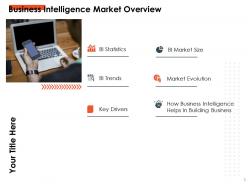
Slide 3: This slide presents Business Intelligence Market Overview describing- Market Evolution, BI Trends, Key Drivers, etc.
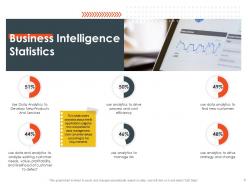
Slide 4: This slide displays Business Intelligence Statistics BI application usage by the companies for data management.
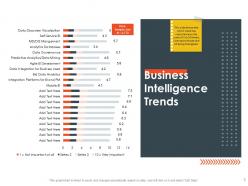
Slide 5: This slide represents Business Intelligence Trends describing importance on the scale of 1 to 10.
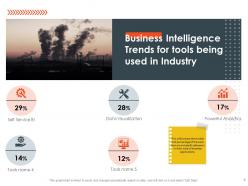
Slide 6: This slide showcases Business Intelligence Trends for tools being used in Industry.
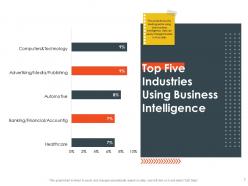
Slide 7: This slide shows Top Five Industries Using Business Intelligence with the help of bar graph.
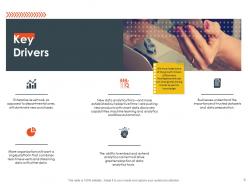
Slide 8: This slide shows Key Drivers describing some of the growth drivers of Business Intelligence.
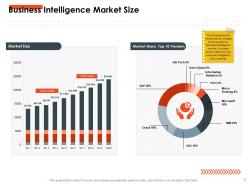
Slide 9: This slide presents Business Intelligence Market Size describing market size for 10 years & top vendors in Business Intelligence market.
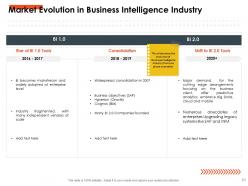
Slide 10: This slide displays Market Evolution in Business Intelligence Industry covering the evolution of Business Intelligence Industry from one phase to another.
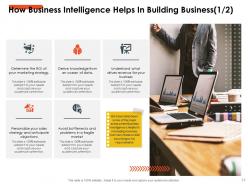
Slide 11: This slide represents How Business Intelligence Helps In Building Business.
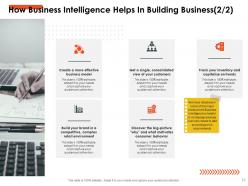
Slide 12: This is another slide showcasing How Business Intelligence Helps In Building Business.
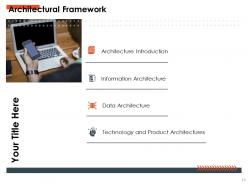
Slide 13: This slide shows Architectural Framework describing- Architecture Introduction, Technology and Product Architectures, Data Architecture, etc.
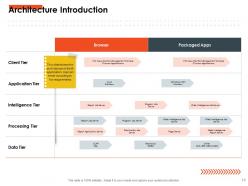
Slide 14: This slide presents Architecture Introduction describing- Packaged Apps, Client Tier, Intelligence Tier, etc.
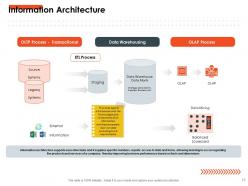
Slide 15: This slide displays Information Architecture describing- OLTP Process - Transactional, Data Warehousing, ETL Process, etc.
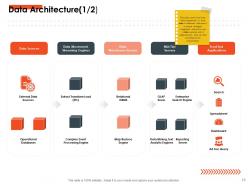
Slide 16: This slide represents Data Architecture describing- Data Movement, Streaming Engines, Data Warehouse Servers, etc.
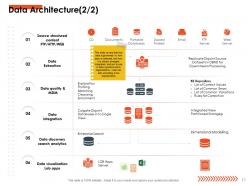
Slide 17: This slide showcases Data Architecture describing- Data Extraction, Data Quality & MDM, Data Integration, etc.
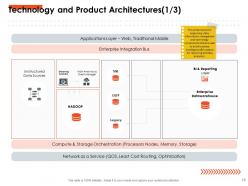
Slide 18: This slide shows Technology and Product Architectures covering the organizing data, information management and technology components.
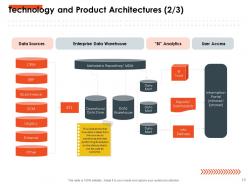
Slide 19: This slide presents Technology and Product Architectures describing- Data Sources, Enterprise Data Warehouse, Operational Data Store, etc.
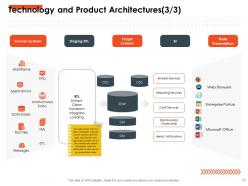
Slide 20: This slide displays Technology and Product Architectures describing- Sources Systems Staging / ETL, Target Systems, etc.
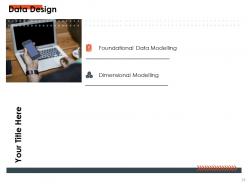
Slide 21: This slide represents Data Design describing- Foundational Data Modelling, Dimensional Modelling, etc.
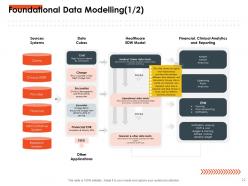
Slide 22: This slide showcases Foundational Data Modelling describing the logical inter-relationships and data flow between different data elements.
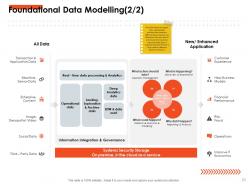
Slide 23: This slide shows Foundational Data Modelling describing- Systems Security Storage, Customer Experience, Financial Performance, etc.
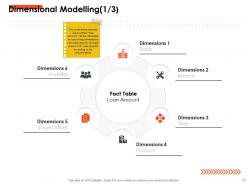
Slide 24: This slide presents Dimensional Modelling describing various dimensions like- State, Product, Branch, etc.
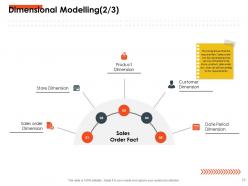
Slide 25: This is another slide displaying Dimensional Modelling describing- Product Dimension, Sales order Dimension, Date Period Dimension, etc.
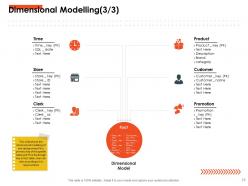
Slide 26: This slide shows Dimensional Modelling describing- Product, Customer, Promotion, Time, etc.
Slide 27: This slide presents Data Integration Design describing- Data Integration Model, Data Integration Processes, etc.
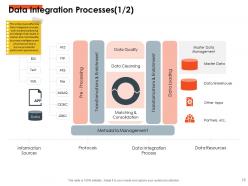
Slide 28: This slide displays Data Integration Processes describing- Master Data Management, Data Warehouse, Data Integration Process, etc.
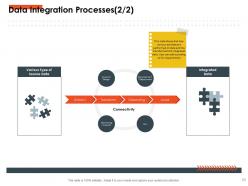
Slide 29: This is another slide showing Data Integration Processes describing- Extract, Transform, Cleansing, etc.
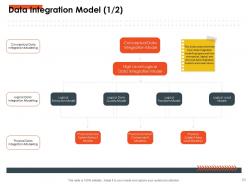
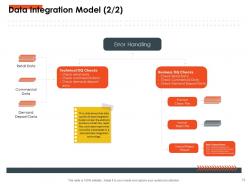
Slide 30: This slide shows Data Integration Model describing- Physical Source System Extract Models, Physical Common Components Models, Physical Subject Area load Models, etc.
Slide 31: This slide presents Data Integration Model describing- Retail Data, Commercial Data, Demand Deposit Data, etc.
Slide 32: This slide displays BI Design describing- Advanced Analytics, BI Design & Development, BI Applications, etc.
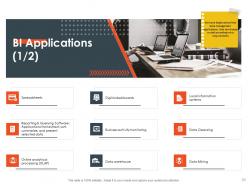
Slide 33: This slide represents BI Applications describing- Spreadsheets, Reporting & Querying Software, Digital dashboards, etc.
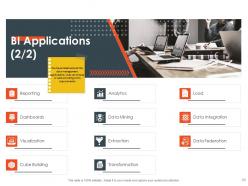
Slide 34: This is another slide showcasing BI Applications describing- Visualization, Analytics, Extraction, etc.
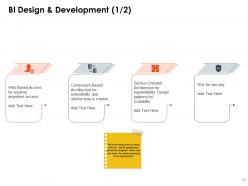
Slide 35: This slide shows BI Design & Development with related imagery and text.
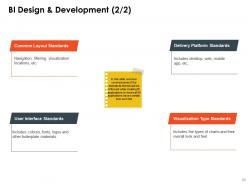
Slide 36: This slide presents BI Design & Development describing- User Interface Standards, Common Layout Standards, Visualization Type Standards, etc.
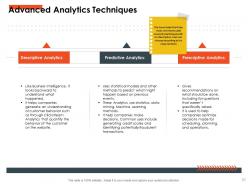
Slide 37: This slide displays Advanced Analytics Techniques describing- Prescriptive Analytics, Descriptive Analytics, Predictive Analytics, etc.
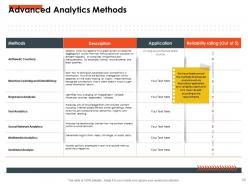
Slide 38: This slide represents Advanced Analytics Methods with its description application and reliability rate.
Slide 39: This slide showcases Advanced Analytics Final Output Results with related imagery.
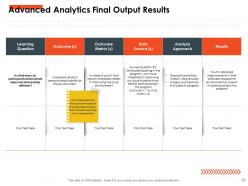
Slide 40: This slide shows Advanced Analytics Final Output Results.
Slide 41: This slide presents Business Intelligence KPIS & Dashboard with related icons.
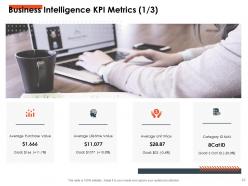
Slide 42: This slide displays Business Intelligence KPI Metrics describing- Average Unit Price, Average Purchase Value, Average Lifetime Value, etc.
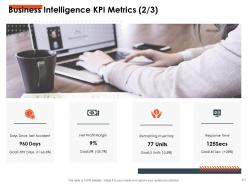
Slide 43: This slide represents Business Intelligence KPI Metrics describing- Days Since last Accident, Net Profit Margin, Remaining Inventory, etc.
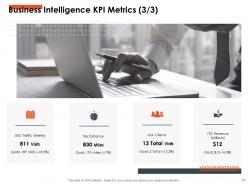
Slide 44: This is another slide showing Business Intelligence KPI Metrics describing- SEO Traffic Weekly, Trip Distance, USA Clients, etc.
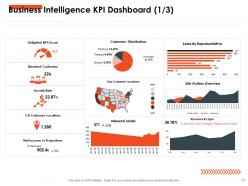
Slide 45: This slide presents Business Intelligence KPI Dashboard describing- Growth Rate, CA Customer Locations, Net Income vs Projections, etc.
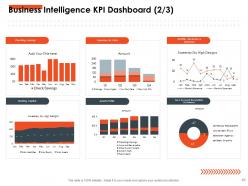
Slide 46: This slide displays Business Intelligence KPI Dashboard describing- Top 5 Accounts Receivables By Balance, Checkings Savings, Expenses By Class, etc.
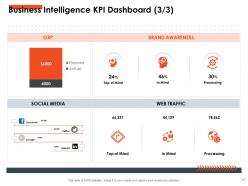
Slide 47: This slide shows Business Intelligence KPI Dashboard describing- Brand awareness, Social media, Web traffic, etc.
Slide 48: This slide displays Operational Intelligence Icons.
Slide 49: This slide is titled as Additional Slides for moving forward.
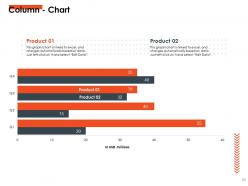
Slide 50: This slide shows Column - Chart with two products comparison.
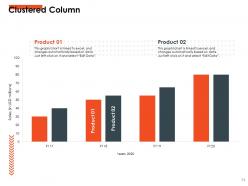
Slide 51: This slide presents Clustered Column chart with two products comparison.
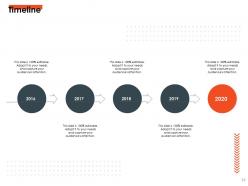
Slide 52: This is a Timeline slide. Show time intervals related data here.
Slide 53: This slide shows Post It Notes. Post your important notes here.
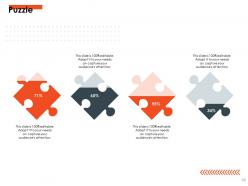
Slide 54: This is a Puzzle slide with additional text boxes.
Slide 55: This slide shows Magnifying Glass. Use it to highlight information.
Slide 56: This slide shows Venn diagram with additional text boxes.
Slide 57: This is an Idea Generation slide to state a new idea or highlight information, specifications, etc.
Slide 58: This is a Thank You slide with address, contact number and email address.
Operational intelligence powerpoint presentation slides with all 58 slides:
Use our Operational Intelligence Powerpoint Presentation Slides to effectively help you save your valuable time. They are readymade to fit into any presentation structure.


FAQs for Operational intelligence
Key components of operational intelligence include real-time data analytics, automated monitoring systems, predictive forecasting tools, performance dashboards, and integrated reporting platforms. These technologies streamline decision-making by delivering instant visibility into operations, identifying bottlenecks before they impact performance, and enabling proactive responses, with many organizations finding that this combination ultimately delivers faster problem resolution and significant competitive advantage.
Operational intelligence focuses on real-time data analysis and immediate decision-making, while business intelligence emphasizes historical data analysis and strategic planning over longer periods. Through continuous monitoring and automated alerts, operational intelligence enables organizations to respond instantly to equipment failures, supply chain disruptions, or customer service issues, ultimately delivering faster problem resolution and improved operational efficiency.
Real-time data serves as the foundation of operational intelligence by enabling immediate visibility into business processes, system performance, and operational metrics as they occur. Through continuous data streams, organizations can detect anomalies, optimize resource allocation, and make informed decisions instantly, with many companies finding that real-time insights significantly reduce response times and enhance competitive advantage.
Healthcare systems leverage operational intelligence for patient flow optimization, supply chain management, and resource allocation, while manufacturing uses it for predictive maintenance and quality control. Financial services, retail, logistics, and energy sectors increasingly find that these real-time insights streamline operations, reduce costs, and enhance decision-making capabilities, ultimately delivering competitive advantage through data-driven efficiency.
Operational intelligence improves decision-making by providing real-time data visibility, automated analytics, and predictive insights that enable faster, more informed responses. Through continuous monitoring and streamlined reporting, organizations in manufacturing, healthcare, and financial services can identify bottlenecks, optimize resource allocation, and anticipate issues, ultimately delivering enhanced operational efficiency and competitive advantage.
Essential technologies for operational intelligence include real-time data processing engines, machine learning algorithms, predictive analytics platforms, automated monitoring systems, and integrated dashboard solutions. These technologies streamline operations by enabling instant data analysis, proactive issue detection, and automated response mechanisms, with many organizations finding that this combination delivers significantly faster decision-making and enhanced operational efficiency.
Predictive analytics enhance operational intelligence by enabling proactive decision-making, identifying potential bottlenecks before they occur, and forecasting resource demands with greater accuracy. Through machine learning algorithms and historical data analysis, organizations streamline operations, minimize downtime, and optimize resource allocation, with many finding that predictive insights ultimately deliver faster response times and significant competitive advantages.
Operational intelligence enhances risk management by providing real-time data monitoring, predictive analytics, automated alert systems, and comprehensive visibility across business operations. Through continuous analysis of operational metrics, organizations can identify potential risks before they escalate, streamline compliance monitoring, and enable faster response times, ultimately delivering proactive risk mitigation and improved business resilience.
Common operational intelligence adoption challenges include data integration complexity, employee resistance to new workflows, high implementation costs, skill gaps in analytics, and ensuring real-time data accuracy. These obstacles often require strategic change management, comprehensive training programs, and phased rollouts, with many organizations finding that addressing cultural adoption alongside technical integration ultimately delivers smoother transitions and better user acceptance.
Operational intelligence contributes to efficiency and cost reduction by providing real-time data analytics, automated monitoring systems, predictive maintenance capabilities, and streamlined workflow optimization. Through continuous performance tracking, organizations like manufacturing plants and logistics companies minimize equipment downtime, reduce resource waste, and accelerate decision-making processes, ultimately delivering significant operational savings and competitive advantage.
Data visualization transforms complex operational data into intuitive charts, dashboards, and visual reports that enable faster decision-making and pattern recognition. Through interactive dashboards and real-time visual analytics, organizations streamline monitoring processes, enhance trend identification, and accelerate response times to operational issues, ultimately delivering improved efficiency and competitive advantage.
Organizations ensure data quality and accuracy through automated data validation, real-time monitoring systems, standardized data governance frameworks, and regular quality audits. These approaches streamline data integrity by establishing consistent collection protocols, implementing error detection algorithms, and maintaining centralized data management, with many financial institutions and healthcare organizations finding that robust data quality measures ultimately deliver more reliable insights and faster decision-making capabilities.
Companies should track metrics including real-time data processing speed, decision-making time reduction, operational cost savings, system uptime improvements, and predictive accuracy rates. These measurements enable organizations to quantify ROI through faster response times, enhanced efficiency, and reduced downtime, with many enterprises finding that comprehensive tracking ultimately delivers competitive advantage and measurable business transformation.
IoT data integration transforms operational intelligence strategies by providing real-time visibility, predictive maintenance capabilities, and automated decision-making across business operations. Through connected sensors and devices, organizations can monitor equipment performance, optimize supply chains, and enhance customer experiences, while reducing downtime and operational costs, ultimately delivering competitive advantage in an increasingly data-driven marketplace.
Emerging trends impacting operational intelligence include edge computing, advanced AI algorithms, quantum computing capabilities, real-time streaming analytics, and autonomous decision-making systems. These technologies streamline data processing, enhance predictive accuracy, and minimize response times, with manufacturing and financial services increasingly finding that automated intelligence delivers faster operational insights and significant competitive advantages.
-
Content of slide is easy to understand and edit.
-
Excellent work done on template design and graphics.
-
Informative design.
-
Great product with effective design. Helped a lot in our corporate presentations. Easy to edit and stunning visuals.