

Optimizing Banking Operations And Services Model Powerpoint Presentation Slides




Try Before you Buy Download Free Sample Product
 Impress Your
 Audience
 100%
100% Editable
 Save Hours
 of Time


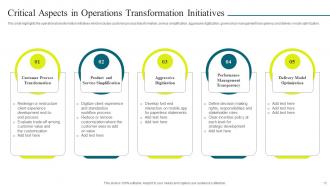
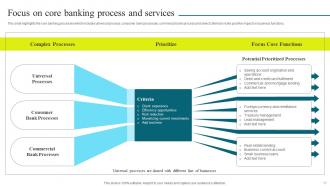
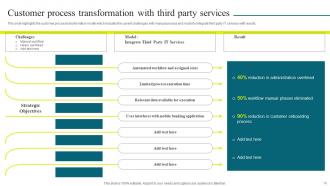
The banking operations model involves practices used by the bank to ensure that consumers transactions are completed accurately. Grab our insightfully designed template on Optimizing Banking Operations and Services Model. It covers the company overview, which includes bank branches and operations, and the classification of banking branches. The second section covers the banks major problems, including weak banking operational performance, decline in loan disbursal rate, and a change in customer preference toward e banking. Additionally, it covers the focus areas to scale retail branch banking and the benefits of smooth banking operations. Moreover, this PPT covers three major areas for transformation, which include aspects of operations transformation, focus on core banking process, and customer process transformation with third party services. Furthermore, this presentation focuses on the transformation of bank operations, services, and products with zero balance saving accounts, the lowest rate on loans, lockers service, inward and outward remittance services, internet banking service, online bill payment service, and internal check clearing process. At last, It includes the promotion strategies for banking services and projected growth in retail branch banking operations with estimated market share and ranking of bank products with banking dashboards. Get access now.
People who downloaded this PowerPoint presentation also viewed the following :
Content of this Powerpoint Presentation
Slide 1: This slide introduces Optimizing Banking Operations and Services Model. State your company name and begin.
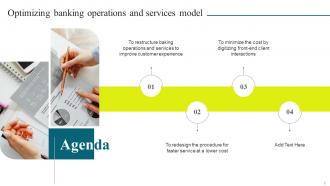
Slide 2: This slide states Agenda of the presentation.
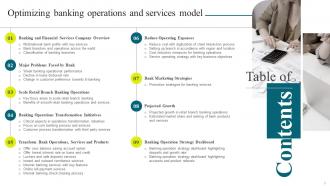
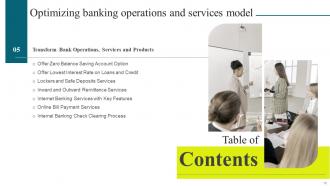
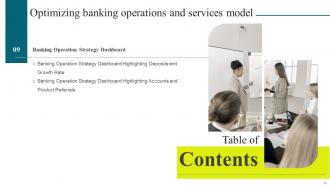
Slide 3: This slide presents Table of Content for the presentation.
Slide 4: This slide highlights title for topics that are to be covered next in the template.
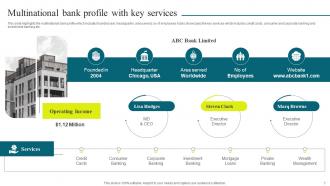
Slide 5: This slide shows Multinational Bank Profile with Key Services.
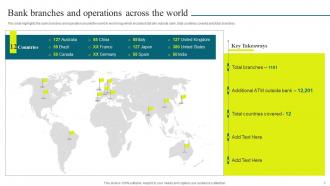
Slide 6: This slide presents Bank Branches and Operations Across the World.
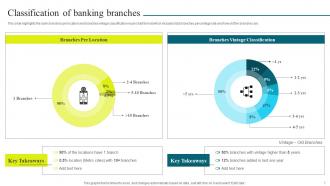
Slide 7: This slide displays Classification of Banking Branches.
Slide 8: This slide highlights title for topics that are to be covered next in the template.
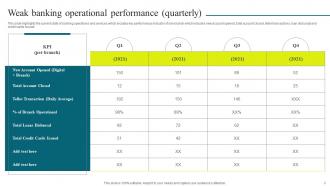
Slide 9: This slide represents Weak Banking Operational Performance (Quarterly).
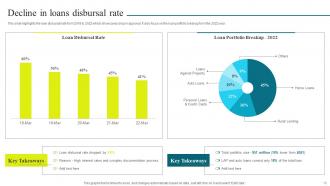
Slide 10: This slide showcases Decline in Loans Disbursal Rate.
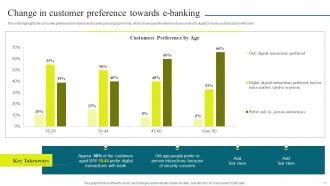
Slide 11: This slide shows Change in Customer Preference towards E-Banking.
Slide 12: This slide highlights title for topics that are to be covered next in the template.
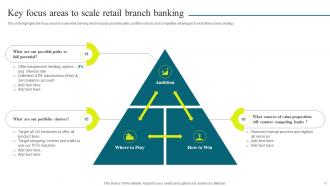
Slide 13: This slide presents Key Focus Areas to Scale Retail Branch Banking.
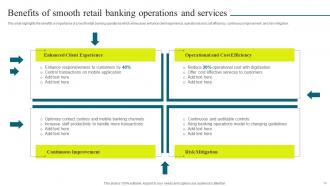
Slide 14: This slide displays Benefits of Smooth Retail Banking Operations and Services.
Slide 15: This slide highlights title for topics that are to be covered next in the template.
Slide 16: This slide represents Critical Aspects in Operations Transformation Initiatives.
Slide 17: This slide showcases Focus on Core Banking Process and Services.
Slide 18: This slide shows Customer Process Transformation with Third Party Services.
Slide 19: This slide highlights title for topics that are to be covered next in the template.
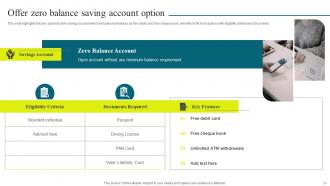
Slide 20: This slide presents Offer Zero Balance Saving Account Option.
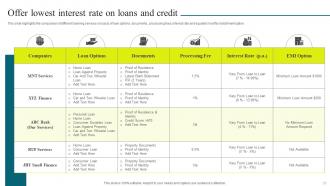
Slide 21: This slide displays Offer Lowest Interest Rate on Loans and Credit.
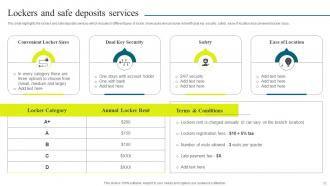
Slide 22: This slide represents Lockers and Safe Deposits Services.
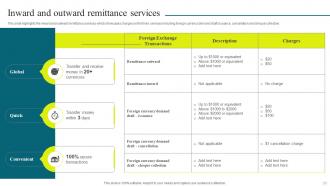
Slide 23: This slide showcases Inward and Outward Remittance Services.
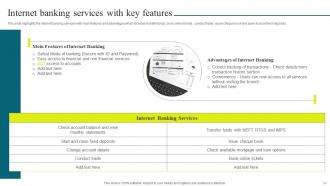
Slide 24: This slide shows Internet Banking Services with Key Features.
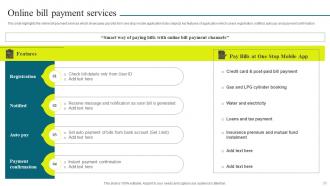
Slide 25: This slide highlights the online bill payment services.
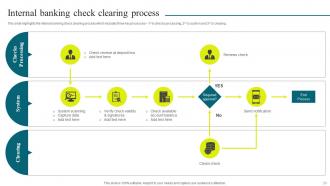
Slide 26: This slide presents Internal Banking Check Clearing Process.
Slide 27: This slide highlights title for topics that are to be covered next in the template.
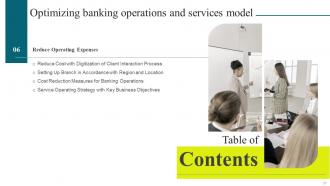
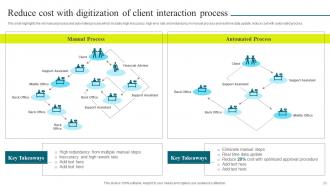
Slide 28: This slide displays Reduce Cost with Digitization of Client Interaction Process.
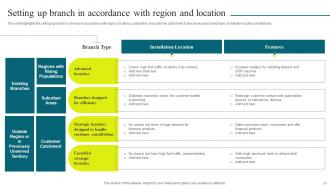
Slide 29: This slide represents Setting Up Branch in Accordance with Region and Location.
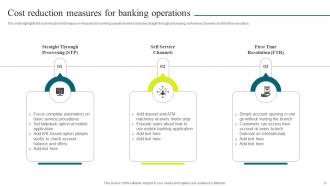
Slide 30: This slide showcases Cost Reduction Measures for Banking Operations.
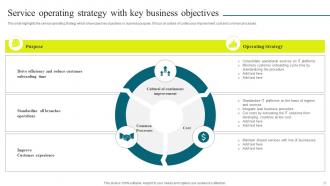
Slide 31: This slide shows Service Operating Strategy with Key Business Objectives.
Slide 32: This slide highlights title for topics that are to be covered next in the template.
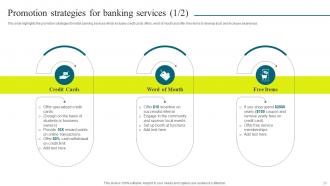
Slide 33: This slide presents Promotion Strategies for Banking Services.
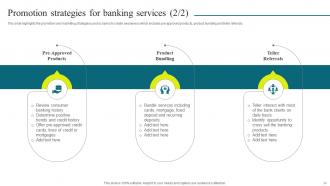
Slide 34: This is another slide continuing Promotion Strategies for Banking Services.
Slide 35: This slide highlights title for topics that are to be covered next in the template.
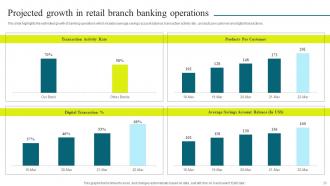
Slide 36: This slide displays Projected Growth in Retail Branch Banking Operations.
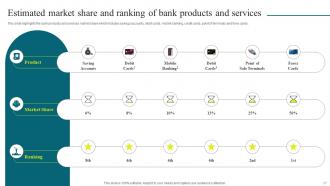
Slide 37: This slide represents Estimated Market Share and Ranking of Bank Products and Services.
Slide 38: This slide highlights title for topics that are to be covered next in the template.
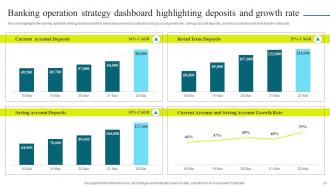
Slide 39: This slide showcases Banking Operation Strategy Dashboard Highlighting Deposits and Growth Rate.
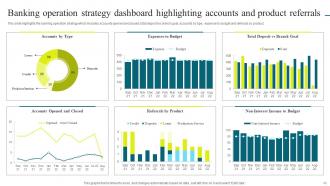
Slide 40: This slide shows Banking Operation Strategy Dashboard Highlighting Accounts and Product Referrals.
Slide 41: This slide contains all the icons used in this presentation.
Slide 42: This slide is titled as Additional Slides for moving forward.
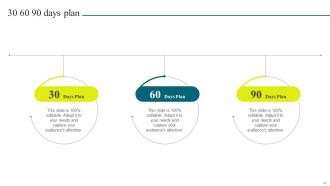
Slide 43: This slide provides 30 60 90 Days Plan with text boxes.
Slide 44: This slide shows Post It Notes. Post your important notes here.
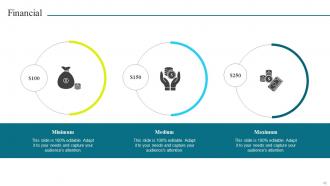
Slide 45: This is a Financial slide. Show your finance related stuff here.
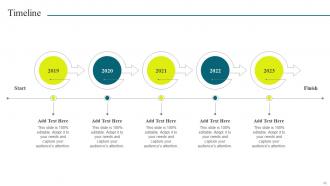
Slide 46: This is a Timeline slide. Show data related to time intervals here.
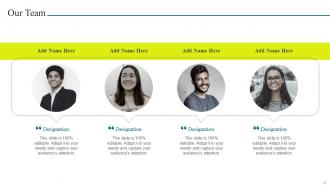
Slide 47: This is Our Team slide with names and designation.
Slide 48: This slide contains Puzzle with related icons and text.
Slide 49: This is an Idea Generation slide to state a new idea or highlight information, specifications etc.
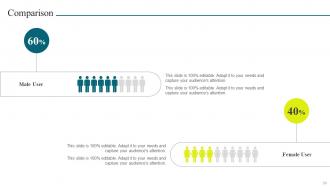
Slide 50: This is a Comparison slide to state comparison between commodities, entities etc.
Slide 51: This is a Thank You slide with address, contact numbers and email address.
Optimizing Banking Operations And Services Model Powerpoint Presentation Slides with all 56 slides:
Use our Optimizing Banking Operations And Services Model Powerpoint Presentation Slides to effectively help you save your valuable time. They are readymade to fit into any presentation structure.







FAQs for Optimizing Banking Operations And Services Model
Key performance indicators for banking operations optimization include operational efficiency ratios, cost-per-transaction metrics, customer satisfaction scores, processing time reductions, and regulatory compliance rates. These KPIs enable financial institutions to streamline workflows, minimize operational costs, and enhance customer experiences, with many banks finding that strategic measurement ultimately delivers competitive advantage and improved profitability.
Automation technologies streamline banking operations by implementing robotic process automation for routine tasks, AI-powered chatbots for customer service, automated loan processing systems, and intelligent document management platforms. These solutions enhance operational efficiency by reducing manual errors, accelerating transaction processing, and enabling 24/7 customer support, ultimately delivering faster services and significantly lower operational costs.
Data analytics plays a crucial role in identifying banking bottlenecks by analyzing transaction patterns, processing times, customer wait periods, and system performance metrics across operations. Through predictive modeling and real-time monitoring, banks streamline loan approvals, reduce processing delays, and enhance customer service delivery, with many financial institutions finding that analytics-driven insights ultimately deliver faster services and improved operational efficiency.
Banks ensure compliance while optimizing operations through automated regulatory reporting, real-time monitoring systems, integrated risk management platforms, and standardized compliance workflows. These technologies streamline regulatory processes by reducing manual errors, accelerating audit preparations, and maintaining continuous oversight, with many financial institutions finding that strategic compliance automation ultimately delivers both operational efficiency and regulatory confidence in an increasingly complex banking environment.
Banks can enhance customer experience through digital transformation initiatives, process automation, omnichannel integration, real-time data analytics, and streamlined service delivery workflows. These strategies enable faster loan approvals, reduced wait times, personalized financial recommendations, and seamless mobile banking experiences, with many financial institutions finding that operational efficiency improvements ultimately deliver higher customer satisfaction and competitive advantage.
Banks can balance cost reduction with quality service by implementing automation for routine processes, leveraging AI for personalized customer interactions, and adopting digital-first strategies while maintaining human touchpoints for complex needs. Through strategic technology investments, many financial institutions streamline operations, reduce processing costs, and enhance customer experiences simultaneously, ultimately delivering both operational efficiency and superior service quality in an increasingly competitive landscape.
Digital transformation revolutionizes traditional banking operations by automating manual processes, enabling real-time data analytics, and streamlining customer interactions through digital channels. Banks increasingly leverage AI-powered fraud detection, automated loan processing, and mobile-first services, ultimately reducing operational costs by 30-40% while delivering faster, more personalized customer experiences.
Integrating legacy systems presents both technical and operational challenges, including data compatibility issues, security vulnerabilities, regulatory compliance complexities, and significant infrastructure costs. While these systems often contain critical customer data and proven workflows, banks increasingly find that strategic modernization through APIs, cloud migration, and phased integration ultimately delivers enhanced efficiency and competitive advantage.
Employee training contributes to banking operations optimization by ensuring staff understand new technologies, streamlined processes, and enhanced customer service protocols. Through comprehensive training programs, bank employees can effectively utilize automated systems, implement digital workflows, and deliver improved customer experiences, while reducing processing errors and operational inefficiencies, ultimately enabling faster service delivery and competitive advantage.
Lean banking delivers reduced operational costs, faster transaction processing, enhanced customer experiences, minimized waste, and improved regulatory compliance through streamlined workflows. Financial institutions implementing lean methodologies typically achieve 20-30% efficiency gains, with many banks finding that standardized processes and continuous improvement cultures ultimately strengthen competitive positioning while delivering superior customer service.
Customer feedback influences banking process optimization by identifying pain points, revealing service gaps, and highlighting automation opportunities across digital and physical touchpoints. Through systematic feedback analysis, banks streamline loan approvals, enhance mobile banking interfaces, and improve branch workflows, ultimately delivering faster transaction processing and personalized customer experiences while reducing operational costs.
Risk management best practices in banking operations optimization include real-time monitoring systems, automated compliance checks, data-driven risk assessment models, comprehensive audit trails, and integrated regulatory reporting frameworks. These approaches streamline operations by minimizing manual oversight, enhancing fraud detection capabilities, and ensuring regulatory compliance, with many financial institutions finding that strategic risk integration ultimately delivers faster decision-making while maintaining robust security standards.
Banks can measure optimization ROI through key performance indicators like reduced processing times, lower operational costs, improved customer satisfaction scores, and increased transaction volumes per employee. By tracking metrics such as automated loan approval rates, branch efficiency improvements, and digital service adoption, financial institutions can quantify cost savings and revenue gains, ultimately demonstrating how streamlined operations deliver measurable competitive advantage.
Collaboration between departments streamlines banking operations by breaking down silos, enabling faster decision-making, and improving customer service delivery across all touchpoints. Through integrated workflows, banks enhance loan processing, reduce compliance risks, and deliver seamless customer experiences, with many financial institutions finding that cross-departmental coordination ultimately drives operational efficiency and competitive advantage.
AI and blockchain reshape banking operations by automating loan approvals, enhancing fraud detection, streamlining payment processing, and improving regulatory compliance through intelligent algorithms and distributed ledgers. These technologies enable banks to deliver faster customer services, reduce operational costs, and strengthen security protocols, with many financial institutions finding that strategic integration ultimately delivers competitive advantage in an increasingly digital banking landscape.
-
Great work on designing the presentation. I just loved it!
-
Crisp and neat slides. Makes it fun and easier to curate presentations.