


Order fulfillment process presentation ideas




Try Before you Buy Download Free Sample Product
 Impress Your
 Audience
 100%
100% Editable
 Save Hours
 of Time


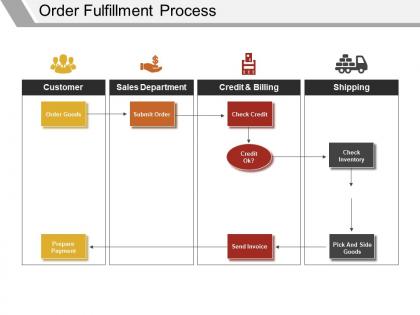
Employ this Order Fulfillment Process Presentation Ideas PPT template to elucidate the supply chain process of your organization. This order processing process layout comprises ordering of goods, billing, credit checking, shipping and preparing payment of customers’ orders. Make use of multi-channel order management software in this supply chain management PPT infographic to rapidly improve and automate your inventory control. Utilize ERP systems to maintain the superiority of your logistics process and implement the best strategy for the same in this inventory management PowerPoint visual. Encompass the three types of flows in the SCM process such as product flow, information flow, and financial flow in this product distribution process background image. Present the orders delivery, customer returns and customer service level with the assistance of this logistics management PPT diagram. Thus, download this logistics process shape and succeed in the effective control of your supply process to create a cordial relationship with your clients.
People who downloaded this PowerPoint presentation also viewed the following :
Order fulfillment process presentation ideas with all 5 slides:
Discourage half hearted attempts with our Order Fulfillment Process Presentation Ideas. Fill them with absolute determination.



FAQs for Order fulfillment
So basically you've got six main steps: getting the order, checking if you actually have the stuff in stock, picking it from the warehouse, packing (which honestly takes forever and causes most delays), shipping it out, then confirming delivery. Communication between each step is huge - you don't want orders getting lost in the shuffle. Automated updates are a game changer for keeping customers happy. Oh, and tracking is pretty much expected now, so make sure that's working smoothly. The whole thing breaks down if one stage doesn't talk to the next.
Honestly, automation is a game changer for fulfillment stuff. Warehouse management systems handle order routing and track your inventory automatically - no more guessing what you have in stock. Your team won't be running around like headless chickens because the software optimizes picking routes. Barcode scanners cut down on mistakes big time. The magic happens when you connect everything - your online store, inventory system, shipping software all talking to each other. Orders just flow through without anyone typing data manually. I'd start by figuring out what you're still doing by hand, then find software to fix those pain points.
Dude, inventory management is make-or-break for getting orders out fast. Your team wastes SO much time wandering around looking for stuff when the data's messy or wrong. Smart placement helps too - putting your bestsellers close to packing areas cuts down all that walking. Real-time tracking is a game changer, and you gotta stay on top of cycle counts or everything goes to hell. I've literally watched places turn a 10-minute order into a 2-hour nightmare because they couldn't find products. Trust me, clean inventory data will save your sanity.
Dude, inventory mess-ups are gonna be your biggest headache - plus picking mistakes and late shipments. Honestly feels like you're constantly putting out fires. Real-time inventory tracking saves your butt because you'll actually know what's there. Barcode scanning cuts way down on human screwups when picking orders. I'd also pad your shipping estimates a bit, trust me on that one. Set up alerts for low stock and have backup shipping ready to go. Way better to catch this stuff before customers start complaining - dealing with pissed off buyers is the worst.
Honestly, shipping can totally make or break your customer relationships. People want options - like standard, express, overnight - plus they want to know exactly where their stuff is. I've watched businesses tank because they only did slow shipping with no tracking info, which is just painful to see. Fast delivery? Yeah, customers will pay extra when they're in a rush. But throw in some free slower options too for when they're not stressed about timing. Oh, and keep them updated throughout - nobody likes wondering if their package fell into a black hole. Do this right and your satisfaction ratings will definitely improve.
Honestly, start with order accuracy - one screwed up package and customers lose it. Track your fulfillment speed too, plus shipping costs because wow those add up quick. Customer satisfaction scores are obvious but don't sleep on monitoring your pick/pack times and inventory turnover. Return rates will show you where things are breaking down. Cost per shipment is another big one to watch. Maybe throw together a basic dashboard that updates weekly? That way you can spot the disasters before they actually become disasters. Nothing fancy needed, just something that keeps you on top of the important stuff.
Dude, automation is a game changer for order fulfillment. It handles all the boring stuff - inventory updates, picking lists, shipping alerts - without anyone babysitting it. Way fewer mistakes too since computers don't get tired or distracted. Warehouse stuff gets the biggest boost: automated sorting, barcode scanning, real-time inventory. Your people can actually deal with customers instead of endless data entry, which honestly makes everyone happier. Orders go out faster and more accurate. I'd start with something simple like automated order routing first, then build from there once you see how much time it saves.
Dude, communication is literally everything in order fulfillment. When your warehouse, customer service, and shipping teams actually talk to each other, you catch problems before they blow up. Real-time order updates are a game changer - everyone knows what's happening instead of guessing. Without it? You'll have angry customers calling about orders shipped to Mars or whatever. I learned this the hard way at my last job. Set up clear handoffs between departments. Trust me, it's way better than playing detective when something goes wrong later.
Look, packaging is literally your last chance to not screw things up before customers get their stuff. Sturdy materials are a must - damaged products = angry people leaving bad reviews. But here's the thing, people actually film themselves unboxing now? So it's kinda become part of your brand whether you like it or not. Good packaging cuts down returns big time. Oh, and use the right sized boxes! Shipping costs add up fast. Your team should know bubble wrap for breakables, poly mailers for clothes - basic stuff but makes a huge difference.
Honestly, returns are way more important than most people think. They'll eat into your costs and mess with your inventory if you don't plan for them upfront. Quick turnaround on returns keeps customers happy - nobody wants to wait weeks for their refund, you know? I always tell people to build returns right into their fulfillment process instead of bolting it on later. Track why stuff comes back too. Maybe you'll spot patterns that help you ship better in the first place. It's basically part of demand forecasting now.
Dude, fulfillment is getting wild right now. Robots are basically taking over warehouse picking - it's kinda crazy to watch. Everyone's obsessed with same-day delivery now (thanks Amazon), so companies are building these tiny fulfillment centers everywhere. The sustainability push is real too - optimizing packaging, delivery routes, all that stuff. But here's what's really nuts: predictive analytics can literally guess what you'll buy before you do. I swear my phone reads my mind sometimes. Which of these trends might mess with your supply chain in the next year?
Barcode scanning is a total game-changer - get that first if you don't have it yet. Pick lists with visual confirmation help catch mistakes before stuff ships out. I always double-check expensive orders even though it's annoying, because dealing with returns later is such a pain. Train everyone on the verification steps properly. Batch picking similar items together cuts down on mix-ups too. Honestly, don't rely on one person being perfect - build in multiple checkpoints throughout the process. That's way more reliable than hoping someone doesn't screw up.
Honestly, the money savings alone make it worth looking into. 3PLs get way better shipping rates than you ever could because they're moving crazy volume. You won't need warehouse space or staff either - they handle all that messy logistics stuff. During the holidays when everyone's ordering like mad, they just scale up automatically while you'd be scrambling to find temp workers. Your customers get faster delivery too since most 3PLs have warehouses everywhere. The only downside is you lose some control, but whatever. Just compare what you're spending now on fulfillment versus what they'd charge you.
Dude, B2B fulfillment is honestly a nightmare compared to regular consumer stuff. You're juggling massive orders - like 500 units instead of one package to someone's house. The delivery windows are brutal too, because if you mess up their timeline, you could screw up their entire production schedule. Custom packaging requirements, bulk shipping logistics - it's a whole different beast. B2C is pretty straightforward - just get it there fast and keep customers happy. But B2B? It's all about maintaining those business relationships and hitting those rock-solid deadlines. Your warehouse partner better be able to handle both worlds, because the inventory planning alone will make your head spin. Trust me on this one.
Honestly, you need to look at your historical sales data first - that's your foundation. Seasonal trends and customer patterns will jump out at you. Machine learning tools are pretty solid for catching stuff you'd miss otherwise. But here's the thing - don't ignore your sales and marketing people. They know about upcoming campaigns and weird customer feedback that could totally throw off your numbers. I learned that one the hard way lol. Pull from multiple sources instead of betting everything on one method. Set up regular check-ins too so you can pivot when your forecasts inevitably go sideways.
-
It saves your time and decrease your efforts in half.
-
It saves your time and decrease your efforts in half.