

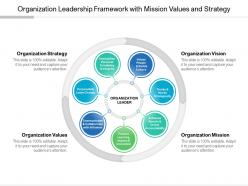
Organization leadership framework with mission values and strategy





Try Before you Buy Download Free Sample Product
 Impress Your
Audience
 100%
Editable
 Save Hours
of Time


Our Organization Leadership Framework With Mission Values And Strategy are truly out of this world. Even the MIB duo has been keeping tabs on our team.
People who downloaded this PowerPoint presentation also viewed the following :
Organization leadership framework with mission values and strategy with all 5 slides:
Our Organization Leadership Framework With Mission Values And Strategy team portray an attitude of elegance. Personify this quality by using them regularly.


FAQs for Organization leadership framework with mission
Good leaders? They communicate clearly - your team can't follow what they don't get. Making decisions with incomplete info is huge too (you'll never have everything anyway). Building trust matters - be real and actually do what you say. Don't hoard knowledge like some weird workplace dragon. Develop your people instead. Stay flexible when everything goes sideways, which it will. Oh, and pick one thing to work on this week. Maybe follow-through? That's where most people mess up honestly.
Honestly, start with making people feel safe to mess up - nobody's gonna think outside the box if they're terrified of getting fired. I made this mistake early on where my whole team clammed up because I was too quick to shut down "bad" ideas. Give them some dedicated creative time, even like 10% of their week works. During meetings, throw out open-ended questions and don't immediately kill the weird suggestions (this is harder than it sounds lol). Oh and here's something that actually moved the needle - when I started admitting I didn't know stuff, suddenly everyone felt way more comfortable exploring crazy ideas.
Honestly? Emotional intelligence makes or breaks leaders. I've watched super smart people crash and burn because they couldn't read their team or handle conflict without being weird about it. The best leaders I know can stay cool under pressure and actually get what makes each person tick. You gotta listen - like really listen - not just wait for your turn to talk. Pick up on those awkward vibes in meetings too. When you can connect with people instead of just barking orders, they'll actually want to work hard for you. Makes such a huge difference in keeping good people around.
Honestly, you'll need to overcommunicate like crazy - way more than feels natural. Do regular one-on-ones, not just team stuff. People really need that face time with you. I know we're all sick of Zoom, but video calls are still your best bet for building actual trust. Mix in some casual touchpoints too - virtual coffee, quick non-work check-ins, whatever works. The trick is being super predictable and available while still giving people autonomy. Oh, and definitely ask each person how they like to communicate first. Everyone's different with this remote thing.
Honestly, the key is staying curious and not getting stuck in analysis paralysis - I've watched so many good leaders freeze up there. Keep learning new stuff yourself, but also make space for your team to experiment. Don't slam people when they try something that doesn't work out. Your tech-savvy employees? Actually listen to them about what's coming next. Build a culture where folks feel safe suggesting changes or calling out workflows that are clearly outdated. Focus more on developing flexible thinking rather than mastering specific tech since that'll change anyway. Maybe start small - pick one area to pilot something new this quarter.
Honestly, I'd start with just backing off the micromanaging - people hate that stuff and it costs nothing to fix. Give them actual control over how they do their work. Recognition helps a ton too, like calling out good work in meetings or just explaining how what they're doing connects to the bigger picture. One-on-ones are clutch for catching problems before they blow up. Oh, and don't forget development stuff - training, new skills, whatever. Nobody wants to feel stuck doing the same thing forever. The autonomy thing though? That's where I'd begin since you'll probably see changes fast.
Honestly, mixed leadership teams just perform better - there's tons of research backing this up. You get way more creative solutions when people bring different experiences to the table. Makes sense, right? Homogeneous groups miss obvious stuff that diverse teams catch immediately. Plus your leadership actually reflects the customers you're trying to reach. I'd start by looking at who's currently in charge and figuring out what perspectives you're missing. Companies with diverse leadership consistently crush it on profits and growth compared to the old boys' club approach. It's not rocket science - different backgrounds mean fewer blind spots.
Honestly, your leadership style can totally make or break whether changes actually stick. Collaborative leaders who communicate openly? People actually want to help instead of just pretending to care. Sure, being autocratic might seem faster at first, but you'll deal with so much pushback later - trust me on that one. Transformational leaders usually crush it because they get people excited about the vision. Oh, and here's the thing - always explain WHY you're changing stuff. Let your team help figure out the how. Makes all the difference.
Honestly, you've got to make it personal for each person on your team. What does winning actually look like for them? Ditch the corporate speak - nobody cares about "synergy" or whatever. Instead, tell real stories about how this vision shows up in the messy, day-to-day stuff they're already dealing with. I'd also flip it around and ask what gets them excited about where you're headed. Then just keep bringing it up everywhere - meetings, quick coffee chats, random conversations. The repetition thing works, but it can't feel forced. Make sense?
Honestly, the worst part is everyone expecting you to have answers when you're just as confused as they are. Communication falls apart fast. You're making tons of decisions with zero info while trying to keep people calm - and your own stress is through the roof. Teams start losing motivation when everything feels like it's falling apart, which makes sense but doesn't help. My advice? Be upfront about not knowing everything yet. Keep talking to people constantly, even if it's just to say "still figuring it out." Don't fake having all the solutions right away - people can tell anyway.
Honestly, mentorship programs are game-changers for developing leaders. You pair up your best people with experienced folks who can share real insights and help with career moves. Fresh perspectives? The mentors actually learn tons too, which is pretty cool. It builds these natural succession pipelines while transferring knowledge across the org. Your high-potential people get personalized feedback and access to networks they'd never reach otherwise. Plus faster skill development and way better retention. Oh, and more confident leaders coming up through the ranks. Just match your strongest leaders who love teaching with people ready to grow.
Think of ethics as bumper lanes at a bowling alley, not walls blocking your shot. Build them into your planning right from the start instead of scrambling later. Yeah, decisions might take a bit longer upfront, but you'll sleep better knowing you're not setting yourself up for a PR nightmare down the road. Get your team involved early - they're usually pretty good at finding workarounds that don't make you feel gross about yourself. First, figure out what you absolutely won't compromise on. Then get creative about hitting your numbers without crossing those lines. Trust me, it's way easier than cleaning up messes later.
Honestly, start with employee engagement and retention rates - those tell you everything. People don't stick around bad managers, period. 360 feedback is solid too since you get the real scoop from all angles. I'd also look at team performance stuff like hitting goals and productivity numbers because that's where the rubber meets the road. Oh, and check if your leaders are actually developing other people - good ones always do. Don't go crazy measuring everything though. Pick like 2-3 things that actually matter to your company and focus there first.
Honestly, power dynamics totally dictate how you get stuff done as a leader. Got formal authority? You can be way more direct with decisions and strategy. Leading without much positional power though? That's when you need to focus on influence and building relationships to get buy-in. I'd start by figuring out where the real influence sits in your org - and trust me, it's not always what the org chart shows. Sometimes the person who actually calls the shots is totally unexpected. Once you map that out, you can adjust your approach. Coalition-building becomes huge when you don't have the title to back you up.
Honestly, it's all about making your team feel safe to speak up. Ask for their input before you make decisions - and actually listen, don't just pretend to care. Those weekly one-on-ones? Total game changer for building trust. Most managers bail on them when work gets crazy, but that's literally when you need them most. Be real about the stuff you're struggling with. Nobody expects you to have all the answers anyway. Your team will actually respect the honesty and jump in to help solve problems alongside you.
No Reviews