

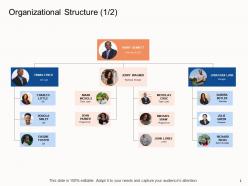
Organizational structure chairman e business strategy ppt powerpoint presentation infographics





Try Before you Buy Download Free Sample Product
 Impress Your
Audience
 100%
Editable
 Save Hours
of Time


Our Organizational Structure Chairman E Business Strategy Ppt Powerpoint Presentation Infographics are topically designed to provide an attractive backdrop to any subject. Use them to look like a presentation pro.
People who downloaded this PowerPoint presentation also viewed the following :
Organizational structure chairman e business strategy ppt powerpoint presentation infographics with all 2 slides:
Use our Organizational Structure Chairman E Business Strategy Ppt Powerpoint Presentation Infographics to effectively help you save your valuable time. They are readymade to fit into any presentation structure.

FAQs for Organizational structure chairman e business strategy ppt
Flat organizational structures feature fewer management layers, broader spans of control, decentralized decision-making, and direct communication channels, while hierarchical structures emphasize multiple management levels, clear chain of command, centralized authority, and formal reporting relationships. Companies like tech startups often leverage flat structures for agility and innovation, while large corporations in manufacturing or finance typically adopt hierarchical models for operational control and accountability, with each delivering distinct advantages depending on organizational size and strategic objectives.
Organizational structure significantly impacts employee morale and productivity by influencing communication flow, decision-making speed, and role clarity throughout the organization. Clear hierarchies and well-defined reporting relationships enhance job satisfaction and operational efficiency, while flatter structures often promote innovation and employee engagement, with many companies finding that strategic structural alignment ultimately delivers improved performance and competitive advantage.
Organizational structure significantly influences agility through decision-making speed, communication flow, resource allocation flexibility, and cross-functional collaboration capabilities. Flatter structures enable faster responses to market shifts, while decentralized organizations streamline adaptation processes, with many companies finding that matrix structures and agile teams deliver enhanced competitive advantage and operational efficiency.
Matrix organizational structures deliver enhanced project flexibility, improved resource allocation, accelerated decision-making, and cross-functional collaboration by combining functional expertise with project-focused teams. This approach enables organizations to leverage specialized skills across multiple projects simultaneously, while fostering knowledge sharing and innovation, ultimately delivering faster project completion and competitive advantage in dynamic business environments.
Communication flows vary significantly across organizational structures, with hierarchical models emphasizing vertical reporting chains, flat structures enabling direct peer-to-peer interactions, and matrix organizations requiring multidirectional coordination. In practice, companies like tech startups leverage horizontal flows for rapid innovation, while traditional manufacturers rely on structured vertical channels, with many organizations finding that hybrid approaches streamline decision-making and enhance operational efficiency.
Organizational culture significantly influences structure by determining communication patterns, decision-making processes, hierarchy levels, and collaboration approaches. Companies with innovative cultures often adopt flatter structures and cross-functional teams, while traditional cultures maintain hierarchical frameworks, with many organizations finding that aligning structure with cultural values enhances employee engagement and operational effectiveness.
Startups benefit from unconventional organizational structures by increasing agility, accelerating decision-making, and fostering innovation through flatter hierarchies and cross-functional teams. These flexible approaches enable rapid adaptation to market changes, enhance employee engagement, and streamline communication, with many technology and creative startups finding that network or holacratic structures deliver faster product development and competitive advantage.
Common challenges include resistance to change, communication breakdowns, role confusion, loss of clear hierarchy, and difficulty redistributing authority effectively. Organizations often struggle with employee adaptation, maintaining operational continuity during transitions, and ensuring middle management buy-in, while sectors like manufacturing and financial services find that gradual implementation minimizes disruption and enhances long-term organizational agility.
Organizational structure significantly affects decision-making by determining authority levels, communication flows, and approval processes throughout the company. Hierarchical structures may slow decisions through multiple layers, while flatter organizations enable faster responses, with many companies finding that decentralized approaches enhance agility and employee empowerment, ultimately delivering competitive advantage in rapidly changing markets.
Technology influences organizational design through automation, data analytics, cloud computing, collaboration platforms, and artificial intelligence, enabling flatter hierarchies, remote work capabilities, and faster decision-making processes. These digital tools streamline communication across departments, reduce operational bottlenecks, and enhance resource allocation, with many organizations finding that strategic technology integration ultimately delivers improved efficiency and competitive advantage.
Organizations can assess structural effectiveness through performance metrics analysis, employee feedback surveys, communication flow evaluation, decision-making speed assessments, and cost-efficiency reviews. These evaluation methods enable companies to identify bottlenecks, redundancies, and alignment gaps, with many finding that regular structural audits ultimately deliver improved productivity, faster responses to market changes, and enhanced competitive positioning.
Remote work fundamentally reshapes organizational structures by flattening hierarchies, decentralizing decision-making, and emphasizing outcome-based performance over traditional supervision models. This transformation enables companies to access global talent pools, reduce operational costs, and enhance employee flexibility, while many organizations find that effective remote structures ultimately deliver improved productivity and competitive advantage through streamlined communication channels.
A divisional structure supports product diversification by creating autonomous units focused on specific products, markets, or geographic regions, enabling specialized expertise, dedicated resources, and tailored strategies for each division. This organizational approach streamlines decision-making, enhances market responsiveness, and allows enterprises to pursue multiple growth opportunities simultaneously, with many large corporations finding that divisional structures deliver greater operational flexibility and competitive advantage across diverse business portfolios.
Organizations should follow best practices including clear communication planning, stakeholder engagement, phased implementation timelines, employee training programs, and continuous feedback mechanisms during restructuring. Through strategic change management, companies streamline operations, minimize disruption, and maintain productivity, with many finding that transparent communication and employee involvement ultimately deliver smoother transitions and stronger organizational alignment.
Leaders ensure alignment between organizational structure and strategic goals by regularly reviewing reporting relationships, decision-making processes, and resource allocation mechanisms to eliminate structural barriers. Through strategic restructuring, clear accountability frameworks, and cross-functional collaboration models, organizations streamline operations, accelerate goal achievement, and enhance competitive positioning, with many companies finding that aligned structures deliver faster execution and improved market responsiveness.
-
Innovative and attractive designs.
-
Topic best represented with attractive design.