

OTT Content Calendar Based On User Profiles Launching OTT Streaming App And Leveraging Video




Try Before you Buy Download Free Sample Product
 Impress Your
Audience
 100%
Editable
 Save Hours
of Time


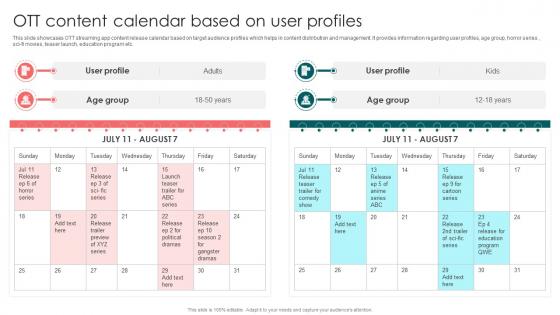
This slide showcases OTT streaming app content release calendar based on target audience profiles which helps in content distribution and management. It provides information regarding user profiles, age group, horror series , sci-fi movies, teaser launch, education program etc.
People who downloaded this PowerPoint presentation also viewed the following :
OTT Content Calendar Based On User Profiles Launching OTT Streaming App And Leveraging Video with all 9 slides:
Use our OTT Content Calendar Based On User Profiles Launching OTT Streaming App And Leveraging Video to effectively help you save your valuable time. They are readymade to fit into any presentation structure.









FAQs for OTT Content Calendar Based On User Profiles Launching OTT Streaming App
Essential OTT content calendar components include content scheduling, audience segmentation, seasonal programming, promotional windows, and performance tracking metrics. These strategic elements streamline content distribution by coordinating release timing, optimizing viewer engagement, and maximizing subscription retention, with many streaming platforms finding that systematic calendar planning delivers higher completion rates and ultimately reduces customer churn while enhancing competitive positioning.
An OTT content calendar improves audience engagement and retention by strategically scheduling releases, maintaining consistent viewer touchpoints, and creating anticipation through planned promotional campaigns. This structured approach enables streaming platforms to optimize viewing patterns, reduce churn rates, and maximize subscriber lifetime value, with many services finding that coordinated content drops significantly enhance audience loyalty and platform stickiness.
**INPUT**: What tools or software are best suited for creating and managing an OTT content calendar? **OUTPUT**: Effective OTT content calendar tools include Asana, Trello, Monday.com, CoSchedule, and specialized media planning platforms like StoryFit or Content Pilot. These solutions streamline scheduling, enhance team collaboration, and automate workflow management, with many streaming organizations finding that integrated platforms deliver better content coordination, faster production timelines, and ultimately stronger audience engagement across multiple channels. **Word count: 58 words**
Aligning OTT content calendars with cultural and seasonal events involves strategic programming around holidays, festivals, sports seasons, and cultural moments through targeted releases, themed collections, and promotional campaigns. Streaming platforms like Netflix and Hulu leverage data analytics to schedule content drops during peak viewing periods, while creating seasonal hubs and culturally relevant programming that maximizes audience engagement and subscription retention.
**OUTPUT**: Diversifying OTT content calendars involves balancing genres, demographics, release timing, content formats, and regional preferences across programming blocks. Successful platforms like Netflix and Hulu strategically rotate between drama, comedy, documentaries, and international content while staggering premieres, ensuring consistent subscriber engagement and broader market appeal across diverse audience segments. **Word count: 52 words**
OTT content calendars should be updated weekly for tactical adjustments and monthly for strategic reviews, with quarterly comprehensive overhauls to align with audience trends and platform algorithm changes. With streaming platforms increasingly prioritizing fresh, timely content, many successful OTT providers find that frequent updates enable better audience engagement, improved content performance tracking, and competitive advantage in rapidly evolving digital entertainment landscapes.
Key metrics include viewer engagement rates, content completion rates, subscriber acquisition and retention, watch time duration, and content performance across different time slots. These analytics enable OTT platforms to optimize scheduling strategies, identify high-performing content types, and enhance audience targeting, with many streaming services finding that data-driven calendar adjustments significantly improve viewer satisfaction and subscription growth.
Viewer data insights inform content planning by revealing audience preferences, optimal release timing, engagement patterns, and demographic trends that guide strategic scheduling decisions. Through analytics from streaming platforms, content creators can identify peak viewing hours, seasonal content demands, and audience retention rates, ultimately enabling more targeted programming that maximizes viewership and competitive positioning.
Original content serves as the cornerstone of OTT content calendars, driving subscriber acquisition, retention, and brand differentiation through exclusive programming that competitors cannot replicate. These strategic productions enable platforms to control release timing, create appointment viewing events, and build devoted audiences around unique storylines, with streaming services like Netflix and Disney+ finding that original series and films generate significantly higher engagement rates and reduce churn compared to licensed content alone.
Licensing deals and partnerships significantly influence OTT scheduling by determining content availability windows, exclusive release dates, and regional distribution timelines. These agreements create strategic scheduling opportunities, with platforms like Netflix and Disney+ coordinating partner content launches, seasonal licensing periods, and exclusive premiere windows to maximize subscriber engagement while meeting contractual obligations and competitive positioning.
Common pitfalls include overloading schedules without considering production capacity, ignoring seasonal viewing patterns, failing to balance content genres, neglecting competitor release timing, and underestimating post-production requirements. These oversights often result in content conflicts, audience fatigue, and missed market opportunities, with many streaming platforms finding that strategic spacing and diverse programming ultimately delivers higher engagement and subscriber retention.
Audience feedback can be integrated through social media analytics, viewer surveys, engagement metrics analysis, content performance reviews, and direct user comments across platforms. By systematically collecting and analyzing this data, OTT platforms can identify trending preferences, optimize content scheduling, and adjust programming strategies, ultimately delivering more targeted content that enhances viewer satisfaction and retention rates.
**INPUT**: What are the best practices for balancing newly released and evergreen content in the calendar? **OUTPUT**: Best practices include maintaining a 70-30 ratio of evergreen to new content, strategic seasonal placement, audience segmentation analysis, performance-based rotation schedules, and cross-platform content repurposing. This balanced approach enables streaming platforms to maximize viewer retention, optimize production costs, and maintain consistent engagement levels, with many services finding that evergreen content drives long-term subscriber value while new releases generate acquisition spikes.
Promotional activities integrate seamlessly with regular content by strategically spacing campaigns around major releases, utilizing content gaps for targeted marketing pushes, and creating synergistic promotional arcs that build audience anticipation. Streaming platforms like Netflix and Disney+ coordinate these schedules through unified content calendars, enabling cross-promotional opportunities while maintaining consistent viewer engagement and maximizing both organic and paid marketing impact.
Global reach significantly impacts OTT content scheduling by requiring staggered releases across time zones, localized content timing for regional holidays and cultural events, and coordinated marketing campaigns that respect different viewing habits. Platforms must balance simultaneous worldwide launches with region-specific programming, often scheduling premium content during peak local viewing hours while considering cultural sensitivities, ultimately delivering personalized experiences that maximize engagement across diverse international markets.
-
I really liked their customized design services. I got my desired template made by their expert team. Thank You!
-
Excellent design and quick turnaround.