

Overview And Types Of Packaging Technology In Food Industry Strategic Food Packaging




Try Before you Buy Download Free Sample Product
 Impress Your
 Audience
 100%
100% Editable
 Save Hours
 of Time


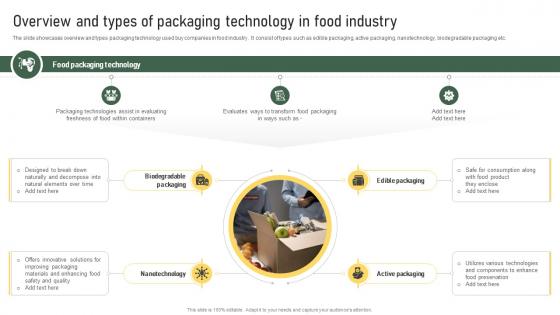
The slide showcases overview and types packaging technology used buy companies in food industry. It consist of types such as edible packaging, active packaging, nanotechnology, biodegradable packaging etc.
People who downloaded this PowerPoint presentation also viewed the following :
Overview And Types Of Packaging Technology In Food Industry Strategic Food Packaging with all 9 slides:
Use our Overview And Types Of Packaging Technology In Food Industry Strategic Food Packaging to effectively help you save your valuable time. They are readymade to fit into any presentation structure.









FAQs for Overview And Types Of Packaging Technology In Food Industry
Recent advancements in biodegradable packaging include plant-based polymers, seaweed-derived films, mushroom mycelium materials, edible coatings, and compostable barrier technologies. These innovations streamline sustainability goals by reducing waste disposal costs, enhancing brand reputation, and meeting regulatory requirements, with food manufacturers, retail chains, and e-commerce companies finding significant competitive advantages in increasingly eco-conscious markets.
Smart packaging solutions enhance supply chain efficiency by integrating RFID tags, IoT sensors, temperature monitors, GPS tracking, and blockchain verification into product containers. These technologies streamline logistics by providing real-time visibility, reducing manual auditing, and enabling predictive maintenance, with many retailers and pharmaceutical companies finding that automated tracking ultimately delivers faster deliveries and significantly lower operational costs.
Packaging significantly influences both environmental impact and brand perception through material choices, recyclability features, waste reduction strategies, and transparent sustainability messaging. Companies using biodegradable materials, minimal designs, and clear recycling instructions find that consumers increasingly associate thoughtful packaging with quality and corporate responsibility, ultimately driving purchase decisions and brand loyalty in competitive markets.
Packaging innovation reduces food industry waste through biodegradable materials, smart sensors that monitor freshness, extended shelf-life technologies, portion-controlled designs, and recyclable alternatives. These advances streamline supply chains by minimizing spoilage, enhancing product protection, and improving consumer convenience, with many food manufacturers finding that strategic packaging ultimately delivers significant cost reductions and environmental benefits.
Flexible packaging materials include films, pouches, bags, and wraps that conform to product shapes, while rigid packaging encompasses bottles, cans, boxes, and containers that maintain fixed forms. Flexible options deliver cost efficiency, reduced storage space, and lighter shipping weights, whereas rigid materials provide superior product protection and premium brand positioning, with many consumer goods companies finding that strategic combinations of both approaches optimize supply chain efficiency and customer appeal.
Augmented reality can be integrated into packaging through QR codes, NFC tags, visual recognition markers, interactive labels, and smart packaging sensors. These technologies enhance customer engagement by delivering product information, usage tutorials, brand storytelling, and personalized experiences, with many retail and consumer goods companies finding that AR-enabled packaging significantly increases brand loyalty and purchase decisions.
Regulatory requirements drive packaging technology innovation by mandating specific safety standards, environmental compliance measures, and traceability systems across industries. These regulations push manufacturers to develop advanced materials, smart labeling solutions, and sustainable alternatives, with pharmaceutical, food, and consumer goods sectors finding that regulatory-driven innovations ultimately deliver enhanced product safety, reduced environmental impact, and stronger consumer trust.
E-commerce significantly transforms packaging design by prioritizing durability, unboxing experiences, and sustainable materials over traditional retail aesthetics. Online retailers increasingly adopt protective cushioning, branded packaging, and eco-friendly alternatives like biodegradable plastics and recycled cardboard, with many companies finding that strategic packaging enhances customer satisfaction while reducing return rates and shipping costs.
Nanotechnology enhances packaging durability through nanocomposites, barrier coatings, antimicrobial nanoparticles, and smart sensors that strengthen materials while reducing weight. These innovations enable food manufacturers, pharmaceutical companies, and electronics producers to extend shelf life, prevent contamination, and minimize waste, ultimately delivering superior product protection and significant cost savings.
Plastic packaging offers durability and lightweight shipping advantages but presents recycling challenges and environmental persistence, while paper packaging provides biodegradability and renewable sourcing yet requires significant water and energy production resources. Many organizations increasingly adopt strategic combinations of both materials, optimizing packaging choices by product type and distribution needs, ultimately delivering cost-effective solutions while enhancing sustainability credentials.
Packaging technology improves food safety and shelf life through advanced barrier materials, antimicrobial coatings, modified atmosphere packaging, smart sensors, and vacuum sealing systems. These innovations enable food manufacturers to prevent contamination, monitor freshness in real-time, and extend product longevity, with grocery retailers and food processors finding significantly reduced waste and enhanced consumer trust.
Consumer environmental consciousness, regulatory compliance requirements, corporate sustainability commitments, supply chain transparency demands, and circular economy initiatives are driving sustainable packaging adoption. These trends enable organizations to reduce environmental impact, meet regulatory standards, and enhance brand reputation, with many retailers, food manufacturers, and e-commerce companies finding that sustainable packaging delivers competitive advantage while reducing long-term operational costs.
Companies leverage packaging to enhance brand identity through distinctive visual design, strategic material choices, innovative structural formats, consistent color schemes, and memorable unboxing experiences. These elements work together to create emotional connections with consumers, differentiate products on crowded shelves, and reinforce brand values, with many retail brands finding that strategic packaging investments deliver increased customer loyalty and premium pricing opportunities.
**INPUT**: What technologies are being used to improve transparency and traceability in packaging? **OUTPUT**: Technologies improving packaging transparency and traceability include blockchain systems, QR codes, RFID tags, IoT sensors, and smart labels with embedded data. These solutions enable real-time tracking throughout supply chains, automated inventory management, and enhanced consumer engagement, with food manufacturers and pharmaceutical companies finding that comprehensive traceability ultimately delivers regulatory compliance and competitive advantage. [Word count: 58 words]
Consumer behavior influences packaging design strategies by driving preferences for sustainability, convenience, and visual appeal, with brands increasingly analyzing purchase patterns, demographic trends, and environmental concerns. Through market research and behavioral data, companies like Unilever and Nestlé redesign packaging to enhance shelf appeal, improve functionality, and meet eco-conscious demands, ultimately delivering stronger brand loyalty and competitive market positioning.
-
Excellent template with unique design.
-
I am glad to have come across Slideteam. I was searching for some unique presentations and templates for my business. There are a lot of alternatives available here.