

Overview of blockchain technology and architecture powerpoint presentation slides




Try Before you Buy Download Free Sample Product
 Impress Your
 Audience
 100%
100% Editable
 Save Hours
 of Time


Our Overview Of Blockchain Technology And Architecture Powerpoint Presentation Slides are topically designed to provide an attractive backdrop to any subject. Use them to look like a presentation pro.
People who downloaded this PowerPoint presentation also viewed the following :
Content of this Powerpoint Presentation
Slide 1: This title slide introduces the OVERVIEW OF BLOCKCHAIN TECHNOLOGY AND ARCHITECTURE. Add the name of your company here.
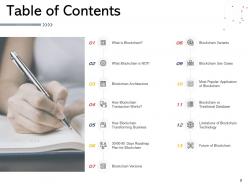
Slide 2: This slide contains the Table of Contents. It includes - What is Blockchain? What Blockchain is NOT! Blockchain Architecture, etc.
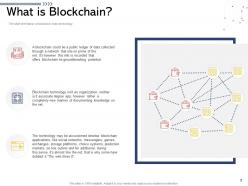
Slide 3: This slide presents What is Blockchain?
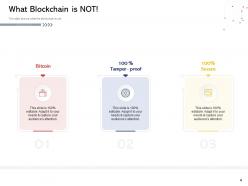
Slide 4: This slide presents What Blockchain is NOT!
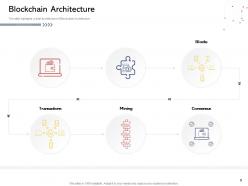
Slide 5: This slide presents the Blockchain Architecture.
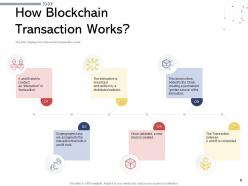
Slide 6: This slide presents How Blockchain Transaction Works?
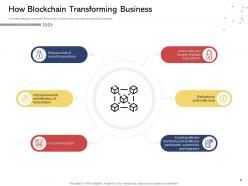
Slide 7: This slide presents How Blockchain Transforming Business.
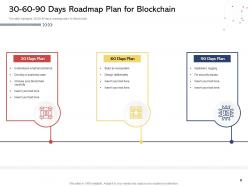
Slide 8: This slide presents 30-60-90 Days Roadmap Plan for Blockchain.
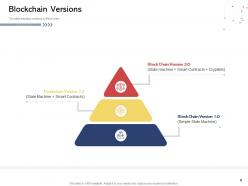
Slide 9: This slide presents the Blockchain Versions such 1.0, 2.0, and 3.0.
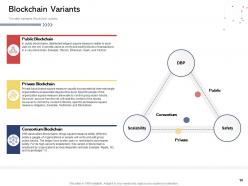
Slide 10: This slide presents the Blockchain Variants. It includes Public, Private, and Consortium Blockchain.
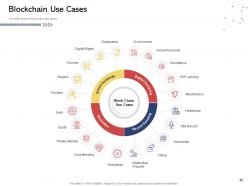
Slide 11: This slide presents Blockchain Use Cases.
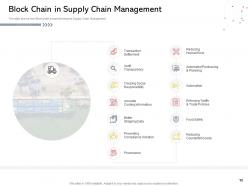
Slide 12: This slide presents Block Chain in Supply Chain Management.
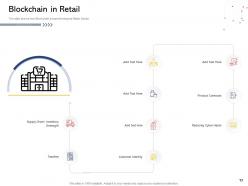
Slide 13: This slide presents Blockchain in Retail.
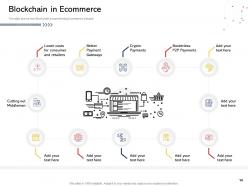
Slide 14: This slide presents Blockchain in Ecommerce.
Slide 15: This slide presents Blockchain in Healthcare.
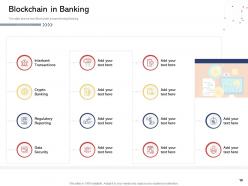
Slide 16: This slide presents Blockchain in Banking.
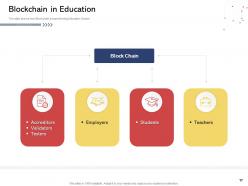
Slide 17: This slide presents Blockchain in Education.
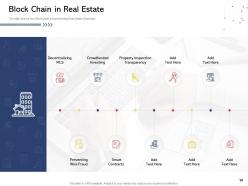
Slide 18: This slide presents Block Chain in Real Estate.
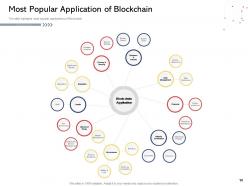
Slide 19: This slide presents the Most Popular Application of Blockchain.
Slide 20: This slide presents Blockchain vs Traditional Database.
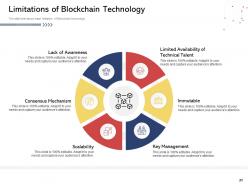
Slide 21: This slide presents the Limitations of Blockchain Technology.
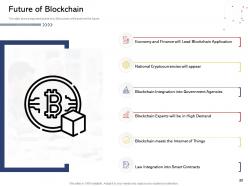
Slide 22: This slide presents the Future of Blockchain.
Slide 23: This is the Icon Slide for Overview of Blockchain Technology and Architecture.
Slide 24: This slide introduces the Additional Slides.
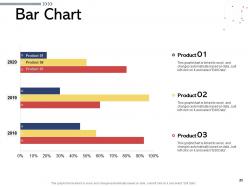
Slide 25: This slide shows a Bar Chart that compares 3 products’ data over a timeline of years.
Slide 26: This slide provides the Mission for the entire company. This includes the vision, the mission, and the goal.
Slide 27: This slide contains the information about the company aka the ‘About Us’ section. This includes the Value Clients, the Target Audience, and Preferred by Many.
Slide 28: This slide is the Idea Generation slide. It is used to brainstorm ideas for a project.
Slide 29: This slide presents Our Goal.
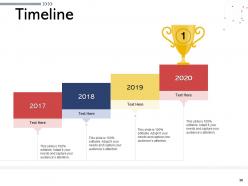
Slide 30: This slide is a Timeline template to showcase the progress of the steps of a project with time.
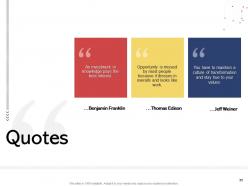
Slide 31: This is the Quotes slide.
Slide 32: This is a Thank You slide where details such as the address, contact number, email address are added.
Overview of blockchain technology and architecture powerpoint presentation slides with all 32 slides:
Use our Overview Of Blockchain Technology And Architecture Powerpoint Presentation Slides to effectively help you save your valuable time. They are readymade to fit into any presentation structure.





FAQs for Overview of blockchain technology and architecture
Blockchain technology's fundamental principles include decentralization, transparency, immutability, consensus mechanisms, and cryptographic security. These principles work together by distributing data across networks, creating tamper-proof records, and enabling trustless transactions, with many financial institutions and supply chain organizations finding that blockchain ultimately delivers enhanced security, reduced costs, and streamlined operations.
Blockchain ensures data integrity and security through cryptographic hashing, distributed consensus mechanisms, and immutable record-keeping across decentralized networks. Each transaction becomes permanently linked and verified by multiple nodes, while cryptographic signatures prevent tampering, with financial institutions and healthcare organizations finding that this architecture delivers enhanced transparency, reduced fraud risk, and streamlined audit processes.
Public blockchains offer complete transparency and decentralization with open participation, private blockchains provide controlled access within single organizations, and consortium blockchains enable shared governance among select partners. These approaches deliver varying levels of security, scalability, and control, with financial institutions increasingly leveraging consortium models for trade finance while healthcare organizations favor private implementations for patient data management.
Smart contracts function as self-executing digital agreements with terms directly written into code, automatically executing when predetermined conditions are met without intermediaries. These programmable contracts streamline processes across industries like insurance, real estate, and supply chain management by reducing costs, eliminating delays, and ensuring transparent, tamper-proof transactions that enhance operational efficiency.
The most popular consensus mechanisms include Proof of Work, Proof of Stake, Delegated Proof of Stake, Proof of Authority, and Practical Byzantine Fault Tolerance. These mechanisms streamline network security, transaction validation, and decentralization by enabling distributed agreement, reducing energy consumption, and enhancing scalability, with many financial institutions and supply chain organizations finding that strategic consensus selection ultimately delivers faster processing and operational efficiency.
Blockchain technology revolutionizes supply chain management by providing immutable transaction records, real-time transparency, and automated smart contracts that eliminate intermediaries. Through distributed ledgers, companies in manufacturing, pharmaceuticals, and food production can track products from origin to consumer, reduce fraud, and streamline compliance processes, ultimately delivering faster dispute resolution and enhanced customer trust.
Blockchain revolutionizes financial services by enabling secure, transparent transactions, reducing fraud, streamlining cross-border payments, and eliminating intermediaries through smart contracts. Banks and financial institutions increasingly leverage this technology for trade finance, digital identity verification, and regulatory compliance, ultimately delivering faster transaction processing, lower operational costs, and enhanced customer trust.
**INPUT**: What are the environmental concerns associated with blockchain mining? **OUTPUT**: Blockchain mining environmental concerns include excessive energy consumption, carbon emissions from fossil fuel-powered mining operations, electronic waste from outdated hardware, and significant water usage for cooling systems. While proof-of-work networks like Bitcoin consume substantial electricity, many organizations are transitioning to energy-efficient alternatives like proof-of-stake consensus mechanisms, renewable energy sources, and carbon offset programs, ultimately delivering more sustainable blockchain operations.
Blockchain enhances voting transparency by creating immutable, publicly verifiable records, enabling real-time vote tracking, and eliminating central points of failure through decentralized validation. Through cryptographic security and distributed ledgers, electoral organizations can deliver auditable results, reduce fraud concerns, and build voter confidence, with pilot programs in Estonia and West Virginia demonstrating significantly improved electoral integrity and public trust.
Businesses face implementation challenges including high development costs, regulatory uncertainty, scalability limitations, integration complexity with existing systems, and talent scarcity. While these hurdles present significant considerations, many organizations in financial services, supply chain, and healthcare find that strategic blockchain adoption ultimately delivers enhanced transparency, reduced operational costs, and competitive advantage.
Tokenization enables blockchain networks to represent real-world assets digitally, facilitating fractional ownership, enhanced liquidity, and programmable transactions through smart contracts. This technology streamlines asset management across real estate, securities, and commodities markets, with financial institutions increasingly finding that tokenized assets deliver reduced settlement times, lower transaction costs, and broader investor accessibility.
Blockchain technology has evolved from Bitcoin's simple transaction ledger to encompass smart contracts, decentralized finance, supply chain tracking, and enterprise solutions across healthcare, banking, and manufacturing sectors. This evolution enables organizations to streamline operations, enhance transparency, and reduce intermediary costs, with many financial institutions and corporations finding that blockchain delivers significant operational efficiency and competitive advantage.
Legal and regulatory issues surrounding blockchain adoption include data privacy compliance, cross-border transaction regulations, smart contract enforceability, cryptocurrency taxation, and anti-money laundering requirements. These challenges present both compliance hurdles and opportunities for innovation, with many financial institutions and healthcare organizations finding that proactive regulatory engagement ultimately delivers competitive advantage and enhanced customer trust.
Blockchain improves identity verification by creating tamper-proof digital identities, eliminating intermediaries, and enabling real-time authentication across multiple platforms. Through decentralized verification systems, banks streamline KYC processes, healthcare organizations secure patient records, and government agencies reduce fraud, ultimately delivering faster services, lower compliance costs, and enhanced security for increasingly digital customer interactions.
**INPUT**: What industries are most likely to be disrupted by blockchain technology? **OUTPUT**: Industries most likely to experience blockchain disruption include financial services, healthcare, supply chain management, real estate, and digital identity verification. These sectors benefit from blockchain's enhanced transparency, security, and decentralized processes, with banks streamlining cross-border payments, hospitals securing patient records, and retailers tracking product authenticity, ultimately delivering operational efficiency and competitive advantage. [Word count: 58 words]
-
Much better than the original! Thanks for the quick turnaround.
-
Illustrative design with editable content. Exceptional value for money. Highly pleased with the product.
-
Amazing product with appealing content and design.
-
Easily Editable.
-
Wonderful templates design to use in business meetings.
-
Designs have enough space to add content.