

Partner relationship management
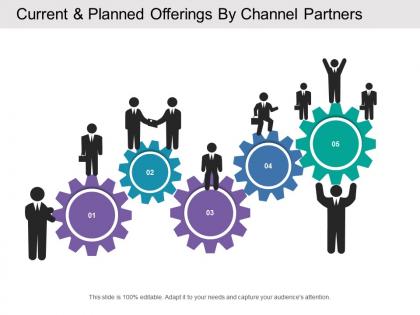




Try Before you Buy Download Free Sample Product
 Impress Your
 Audience
 100%
100% Editable
 Save Hours
 of Time


Build up their appetite with our Partner Relationship Management. Assure them of a generous helping.
People who downloaded this PowerPoint presentation also viewed the following :
Partner relationship management with all 5 slides:
Transform the difficult into the elementary. Our Partner Relationship Management will do the conversion.



FAQs for
Key elements include partner selection criteria, clear communication protocols, performance metrics, mutual goal alignment, and ongoing relationship management processes. These strategic components enhance collaboration by establishing transparent expectations, streamlining joint operations, and ensuring accountability, with many organizations finding that structured partner frameworks ultimately deliver improved market reach and operational efficiency.
Technology enhances partner management through automated onboarding systems, real-time performance dashboards, integrated communication platforms, centralized document management, and AI-driven analytics for relationship optimization. These solutions streamline collaboration by enabling instant data sharing, automated reporting, and predictive insights, with many organizations finding that digital partner portals reduce administrative overhead while improving transparency and strategic alignment.
Organizations should track revenue contribution, lead quality and conversion rates, customer satisfaction scores, time-to-market metrics, and compliance adherence rates to evaluate partner performance effectively. These metrics enable businesses to identify top-performing partnerships, optimize resource allocation, and enhance strategic alignment, with many companies finding that regular performance reviews ultimately drive stronger collaboration and competitive advantage.
Cultural differences impact partner relationships by creating communication barriers, varying business practices, and different expectations around decision-making timelines and relationship building. However, these challenges present opportunities for enhanced innovation and market reach, with many global organizations finding that culturally diverse partnerships deliver broader perspectives, access to new customer segments, and competitive advantages in increasingly international markets.
Mutual benefit serves as the foundation for successful partnerships by ensuring each party receives proportional value, shared resources, and aligned strategic outcomes. This reciprocal approach enables organizations across industries like technology, healthcare, and retail to achieve sustainable growth, enhanced market reach, and competitive advantages that neither could accomplish independently, ultimately delivering long-term partnership stability.
Common pitfalls in partner management include unclear expectations, poor communication channels, inadequate performance tracking, misaligned goals, and insufficient onboarding processes. These challenges can be avoided by establishing comprehensive partnership agreements, implementing regular check-ins and feedback loops, creating shared metrics and KPIs, and investing in structured partner enablement programs, ultimately delivering stronger collaboration and measurable business outcomes.
Organizations ensure partner alignment through clear communication of strategic objectives, regular performance reviews, and shared KPIs that measure mutual success. Establishing joint governance structures, collaborative planning sessions, and transparent reporting mechanisms enables companies to maintain strategic focus while adapting to market changes, ultimately delivering enhanced operational efficiency and stronger competitive positioning for all parties involved.
**INPUT**: What best practices can be implemented for onboarding new partners? **OUTPUT**: Partner onboarding best practices include structured orientation programs, clear documentation of expectations and processes, dedicated relationship managers, comprehensive training modules, and regular check-in schedules. These approaches streamline integration by establishing communication protocols, defining mutual objectives, and providing ongoing support, with many organizations finding that systematic onboarding ultimately delivers stronger partnerships and faster time-to-value. [Word count: 58 words]
**INPUT**: How can conflict resolution mechanisms be established in partner management? **OUTPUT**: Conflict resolution mechanisms in partner management include structured escalation processes, regular communication protocols, clear dispute resolution frameworks, joint governance committees, and predefined mediation procedures. These approaches streamline relationship management by establishing transparent channels, setting mutual expectations, and providing systematic problem-solving pathways, with many organizations finding that proactive conflict management ultimately delivers stronger partnerships and sustained competitive advantage. **Word count: 58 words**
**INPUT**: What tools and software are most effective for partner relationship management? **OUTPUT**: Effective partner relationship management tools include CRM platforms, partner portals, communication systems, performance analytics software, and contract management solutions. These technologies streamline partner onboarding, automate commission tracking, and enhance collaboration through centralized dashboards, with many organizations finding that integrated platforms deliver improved partner engagement, faster deal cycles, and ultimately stronger strategic partnerships across multiple channels. [Word count: 58 words]
Partner management varies significantly across industries, with financial services emphasizing regulatory compliance and risk mitigation, healthcare focusing on patient data security and outcome tracking, and retail prioritizing supply chain efficiency and customer experience integration. These industry-specific requirements influence partnership structures, communication protocols, and performance metrics, with organizations increasingly finding that tailored approaches deliver stronger collaborative outcomes and competitive advantage.
Organizations can incentivize and retain partners through competitive commission structures, co-marketing support, exclusive territory rights, training programs, and performance-based rewards. These strategies enhance partner loyalty by delivering increased revenue opportunities, brand visibility, and market expansion capabilities, with many companies finding that strategic partner incentives ultimately drive mutual growth and stronger long-term relationships.
Feedback loops can be integrated through regular performance reviews, automated data collection systems, partner surveys, and collaborative goal-setting sessions. These mechanisms enable organizations to identify bottlenecks, optimize resource allocation, and enhance partner satisfaction, with many companies finding that structured feedback processes ultimately deliver stronger partnerships, improved operational efficiency, and sustained competitive advantage.
Ethical considerations in partnership management include transparency in communications, fair resource allocation, data privacy protection, conflict of interest disclosure, and equitable benefit sharing. These principles enhance trust and sustainability by ensuring mutual respect, clear accountability standards, and aligned values, with many organizations finding that ethical partnerships ultimately deliver stronger long-term relationships and competitive advantage.
Organizations leverage data analytics to optimize partner management by tracking performance metrics, identifying collaboration patterns, analyzing revenue contributions, and predicting partnership outcomes through predictive modeling. These insights enable businesses to streamline partner onboarding, enhance resource allocation, and improve communication workflows, with many companies finding that data-driven partner strategies deliver stronger relationships and increased competitive advantage.
No Reviews