


PAY PER CLICK Marketing Strategies For Generating Quality Leads MKT CD




Try Before you Buy Download Free Sample Product
 Impress Your
 Audience
 100%
100% Editable
 Save Hours
 of Time


Pay-Per-Click advertising is essential for small businesses that want to promote their products or services to huge masses. The deck Pay Per Click Marketing Strategies for Generating Quality Leads first provides an introduction to PPC marketing along with features, trends, best practices, etc. which can be referred to by multiple business organizations to craft and prioritize their advertising efforts. It focuses on various PPC advertising platforms. It caters to slides about the pros and cons, and bidding strategies of Google Ads, Meta Ads, Instagram Ads, Microsoft Ads, and Pinterest Ads. It covers the steps to run a Pay-Per-Click campaign. The deck covers slides about setting campaign strategy, building a PPC campaign with keyword research, performing A and B tests for boosting conversion rates and optimizing outputs. The deck will cover slides about managing PPC campaigns with different software solutions and their pricing. It caters to slides about the cost analysis, impact assessment of promotional campaigns, and dashboards related to tracking improvements in PPC marketing performance. Download this deck now.
People who downloaded this PowerPoint presentation also viewed the following :
Content of this Powerpoint Presentation
Slide 1: This slide displays the title PAY PER CLICK Marketing Strategies for Generating Quality Leads.
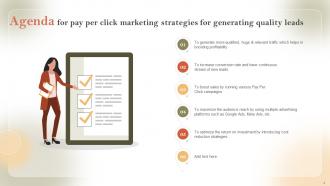
Slide 2: This slide displays the title Agenda for pay per click marketing strategies for generating quality leads.
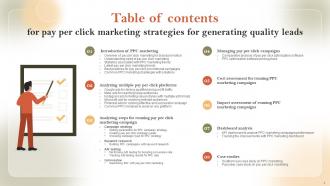
Slide 3: This slide exhibit table of content.
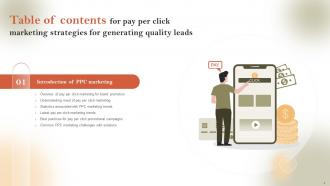
Slide 4: This slide discuss the table of content that is to be discussed further.
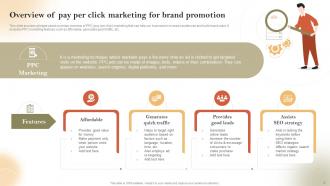
Slide 5: This slide provides glimpse about summary overview of PPC (pay per click) marketing that can help our business to increase audiences and build brand value.
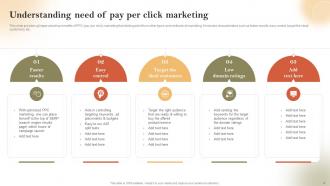
Slide 6: This slide provides glimpse about top benefits of PPC (pay per click) marketing that distinguish it from other types and methods of marketing.
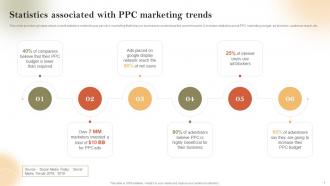
Slide 7: This slide provides glimpse about current statistics related to pay per click marketing that help our business to understand the current market.
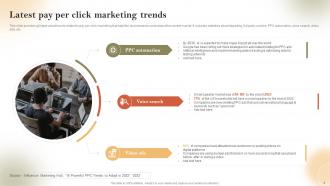
Slide 8: This slide provides glimpse about trends related to pay per click marketing that help the businesses to understand the current market.
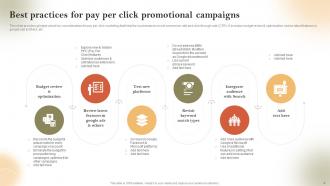
Slide 9: This slide provides glimpse about key considerations for pay per click marketing that help the businesses to boost conversion rate and click through rate (CTR).
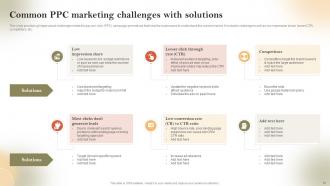
Slide 10: This slide provides glimpse about challenges related to pay per click (PPC) campaign promotions that help the businesses to understand the current market.
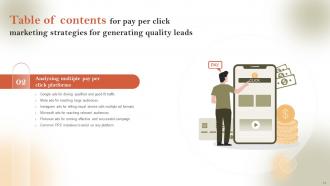
Slide 11: This slide discuss table of content that are to be discuss further.
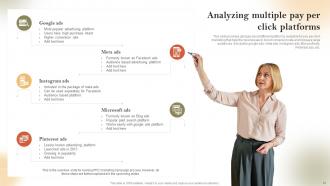
Slide 12: This slide provides glimpse about different platforms available that help the businesses to boost conversion rate and increase large audiences.
Slide 13: This slide discuss table of content that are to be discuss further.
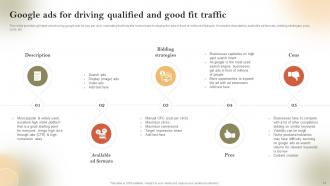
Slide 14: This slide provides glimpse about using google ads for pay per click marketing that help the businesses to display the ads in front of millions of people.
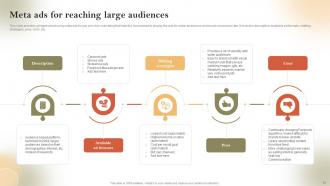
Slide 15: This slide provides glimpse about using meta ads for pay per click marketing that help the businesses to display the ads for wider audiences and boost conversion rate.
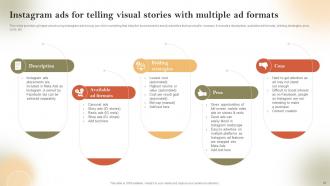
Slide 16: This slide provides a glimpse about using Instagram ads for pay-per-click marketing that help businesses to easily advertise their product to masses.
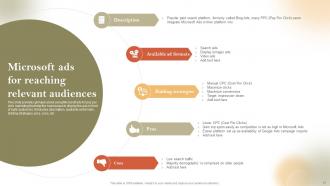
Slide 17: This slide provides glimpse about using Microsoft ads for pay per click marketing that help the businesses to display the ads in front of right audiences.
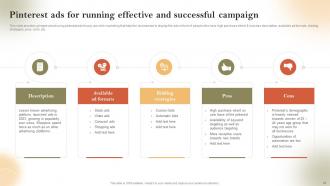
Slide 18: This slide provides glimpse about using pinterest ads for pay per click marketing that help the businesses to display the ads in front of people.
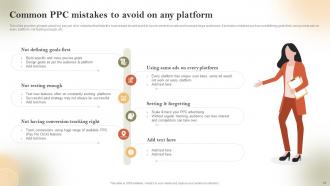
Slide 19: This slide provides glimpse about key pay per click mistakes that help the businesses should avoid to boost conversion rate and increase large audiences.
Slide 20: This slide discuss table of content that are to be discuss further.
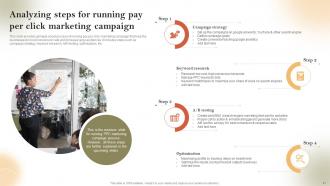
Slide 21: This slide provides glimpse about process of running pay per click marketing campaign that help the businesses to boost conversion rate and increase large audiences.
Slide 22: This slide discuss table of content that are to be discuss further.
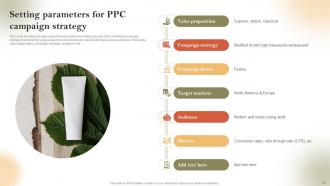
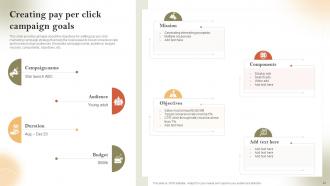
Slide 23: This slide provides glimpse about the parameters for marketing campaign strategy that help businesses to boost conversion rate and increase large audiences.
Slide 24: This slide provides glimpse about the objectives marketing campaign strategy that help the businesses to boost conversion rate and increase large audiences.
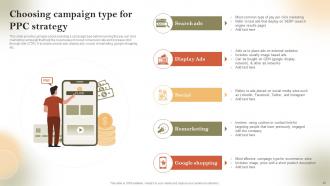
Slide 25: This slide provides glimpse about selecting a campaign type that help to boost conversion rate and increase click through rate (CTR).
Slide 26: This slide discuss table of content that are to be discuss further.
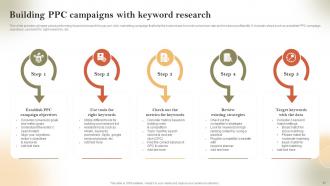
Slide 27: This slide provides glimpse about performing keyword research that help the businesses to boost conversion rate and increase profitability.
Slide 28: This slide discuss table of content that are to be discuss further.
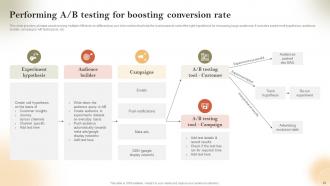
Slide 29: This slide provides glimpse about running multiple A/B tests on different pay per click metrics that help the businesses to select the right hypothesis.
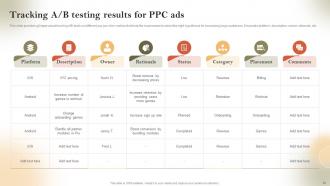
Slide 30: This slide provides glimpse about tracking A/B tests on different pay per click metrics that help the businesses to select the right hypothesis for increasing large audiences.
Slide 31: This slide discuss table of content that are to be discuss further.
Slide 32: This slide provides glimpse about optimizing the pay per click (PPC) marketing campaign that help the businesses to boost conversion rates and increase large audiences.
Slide 33: This slide discuss table of content that are to be discuss further.
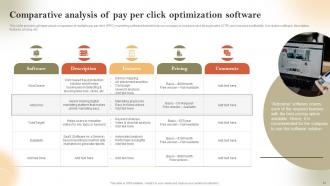
Slide 34: This slide provides about comparison of multiple pay-per-click marketing software that will help company to increase click through rates and increase profitability.
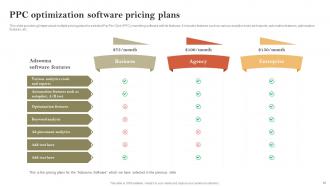
Slide 35: This slide provides glimpse about multiple pricing plans for selected Pay Per Click (PPC) marketing software with its features.
Slide 36: This slide discuss table of content that are to be discuss further.
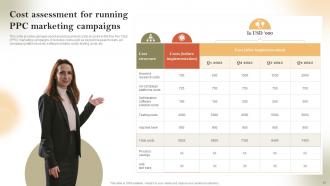
Slide 37: This slide provides glimpse about analyzing annual costs incurred in the Pay Per Click (PPC) marketing campaigns.
Slide 38: This slide discuss table of content that are to be discuss further.
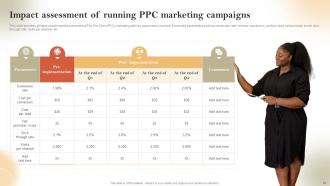
Slide 39: This slide provides glimpse about impact assessment of Pay Per Click (PPC) marketing with key parameters involved.
Slide 40: This slide discuss table of content that are to be discuss further.
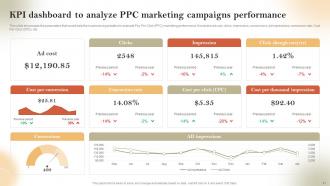
Slide 41: This slide showcases the parameters that would help the business organization to evaluate Pay Per Click (PPC) marketing performance.
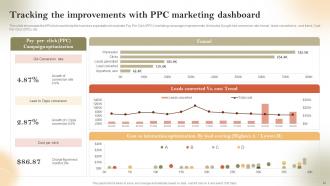
Slide 42: This slide showcases the KPIs that would help the business organization to evaluate Pay Per Click (PPC) marketing campaigns improvements.
Slide 43: This slide discuss table of content that are to be discuss further.
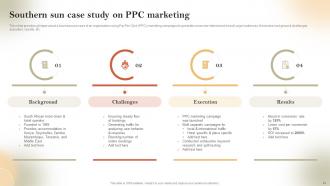
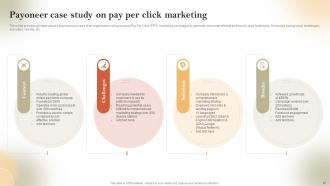
Slide 44: This slide provides glimpse about business use case of an organization using Pay Per Click marketing campaigns to generate consumer interest and boost Large Audiences.
Slide 45: This slide provides glimpse about business using unusual Pay Per Click marketing campaigns to generate consumer interest and boost Audiences.
Slide 46: This is the icons slide.
Slide 47: This slide presents title for additional slides.
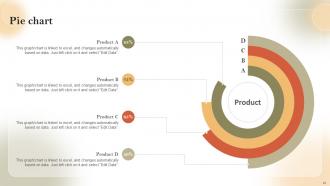
Slide 48: This slide showcase Pie chart Product.
Slide 49: This slide presents your company's vision, mission and goals.
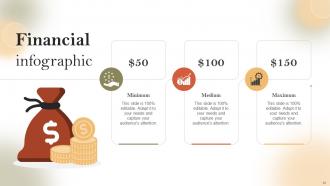
Slide 50: This slide showcase Financial infographic.
Slide 51: This slide depicts posts for past experiences of clients.
Slide 52: This slide display Venn diagram.
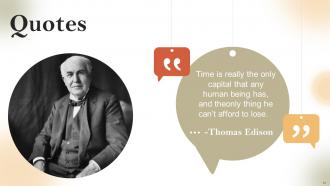
Slide 53: This slide showcase the title Quotes.
Slide 54: This slide shows puzzle for displaying elements of company.
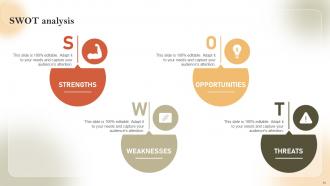
Slide 55: This slide display SWOT analysis.
Slide 56: This slide showcase the title Target.
Slide 57: This slide display Location.
Slide 58: This slide exhibit Timeline.
Slide 59: This slide exhibits ideas generated.
Slide 60: This slide shows roadmap of company.
Slide 61: This is thank you slide & contains contact details of company like office address, phone no., etc.
PAY PER CLICK Marketing Strategies For Generating Quality Leads MKT CD with all 66 slides:
Use our PAY PER CLICK Marketing Strategies For Generating Quality Leads MKT CD to effectively help you save your valuable time. They are readymade to fit into any presentation structure.










FAQs for PAY PER CLICK Marketing Strategies For Generating Quality
Key components of a successful PPC campaign include keyword research, compelling ad copy, optimized landing pages, strategic bid management, and comprehensive performance tracking. These elements work together by targeting qualified prospects, delivering relevant messaging, and maximizing conversion rates, with many businesses finding that strategic PPC management delivers significantly lower acquisition costs and measurable ROI growth.
Businesses should choose based on marketing objectives, with search ads targeting high-intent users actively seeking products through keyword-driven campaigns, while display ads build brand awareness through visual content across websites. Financial services often use search ads for loan inquiries, while retail brands leverage display advertising for product showcases, with many organizations finding that combining both approaches delivers comprehensive market coverage and maximized conversion opportunities.
Keyword research forms the foundation of successful PPC campaigns by identifying high-converting search terms, analyzing competitor strategies, and understanding user intent patterns. This strategic research enables advertisers to optimize bid strategies, create targeted ad copy, and allocate budgets effectively, with many e-commerce and service businesses finding significantly improved click-through rates and reduced acquisition costs.
A/B testing improves PPC effectiveness by systematically comparing ad variations to identify top-performing elements like headlines, descriptions, calls-to-action, and landing pages. Through controlled experiments, marketers can optimize click-through rates, conversion rates, and cost-per-acquisition, with many campaigns finding that continuous testing delivers significantly higher ROI and enhanced audience engagement.
Essential PPC metrics include click-through rates, cost-per-click, conversion rates, quality scores, and return on ad spend (ROAS). These metrics enable marketers to optimize budget allocation, refine targeting strategies, and enhance campaign performance, with many businesses finding that tracking these indicators delivers improved ROI and competitive advantage in digital marketing.
Ad extensions enhance PPC performance by increasing ad visibility, providing additional clickable elements, and improving Quality Score through higher expected click-through rates. These extensions enable advertisers to showcase phone numbers, locations, product details, and promotional offers directly within ads, ultimately delivering more qualified traffic, reduced cost-per-click, and improved conversion rates across campaigns.
Effective CPC reduction strategies include keyword optimization through long-tail targeting, ad quality score improvements, strategic bidding adjustments, negative keyword implementation, and landing page optimization. These approaches streamline campaign efficiency by eliminating irrelevant traffic, enhancing ad relevance scores, and improving conversion rates, with many businesses finding that strategic combination of these tactics delivers significantly lower acquisition costs while maintaining quality leads.
User behavior and intent inform PPC ad targeting through search query analysis, website interaction tracking, demographic patterns, conversion path mapping, and behavioral segmentation. These insights enable marketers to create highly targeted campaigns by identifying peak engagement times, preferred content types, and purchase triggers, ultimately delivering more relevant ads, higher click-through rates, and improved conversion rates across campaigns.
Common PPC pitfalls include neglecting negative keywords, failing to optimize ad copy regularly, ignoring mobile responsiveness, poor landing page alignment, and inadequate bid management strategies. These oversights significantly impact campaign performance by reducing click-through rates, increasing costs per conversion, and diminishing ROI, with many advertisers finding that systematic monitoring and continuous optimization ultimately deliver better targeting precision and competitive advantage.
Retargeting enhances PPC outcomes by re-engaging previous website visitors, increasing conversion rates, and maximizing ad spend efficiency through targeted messaging. By serving personalized ads to users who already demonstrated interest, businesses across retail, e-commerce, and financial services achieve higher click-through rates, improved brand recall, and ultimately deliver significantly better ROI than traditional broad-audience campaigns.
Quality Score significantly impacts Google Ads performance by determining ad rankings, click costs, and campaign effectiveness through relevance assessments of keywords, ads, and landing pages. Strategic improvements include enhancing ad copy relevance, optimizing landing page experiences, refining keyword targeting, and improving click-through rates, with many advertisers finding that higher Quality Scores ultimately deliver lower costs and better positioning.
Seasonal trends significantly impact PPC marketing strategies by requiring adjusted bidding, modified ad scheduling, and strategic budget reallocation to capitalize on peak demand periods. Retailers increase campaigns during holiday seasons, travel companies boost summer bookings, and financial services target tax season, with many organizations finding that aligning campaigns with seasonal patterns delivers higher conversion rates and competitive advantage.
Landing page optimization plays a crucial role in PPC success by improving conversion rates, reducing bounce rates, and maximizing return on ad spend through relevant content alignment. A well-optimized landing page ensures seamless user experience from ad click to conversion, with many businesses finding that strategic page design, compelling headlines, and clear call-to-actions significantly enhance campaign performance and lower acquisition costs.
Businesses can leverage local PPC advertising through geo-targeted campaigns, location-based keywords, community-specific ad copy, local extension features, and neighborhood-focused landing pages. These strategies enable retailers, restaurants, and service providers to connect with nearby customers more effectively, driving foot traffic and building community relationships while reducing advertising costs and increasing conversion rates through hyper-relevant local messaging.
Automation in PPC management delivers enhanced efficiency through automated bidding, keyword optimization, ad scheduling, budget allocation, and performance monitoring. These technologies streamline campaign management by reducing manual tasks, minimizing human error, and enabling real-time adjustments, with many advertisers finding that automation ultimately improves ROI while freeing resources for strategic planning.
-
Superb! The innovative and inspiring template designs provide an edge to the presentation.
-
I loved the hassle-free signup process. A few minutes and, I had this giant collection of beautiful designs.