

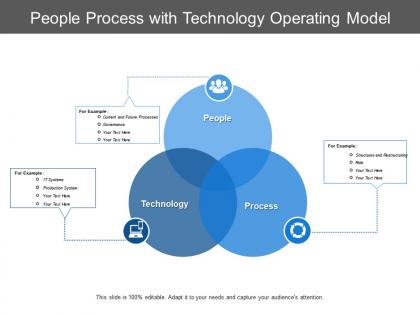
People process with technology operating model




Try Before you Buy Download Free Sample Product
 Impress Your
 Audience
 100%
100% Editable
 Save Hours
 of Time


Ensure your coverage includes every important input with our People Process With Technology Operating Model. Be able to give a composite account.
People who downloaded this PowerPoint presentation also viewed the following :
People process with technology operating model with all 5 slides:
Build an atmosphere that encourages acceptance with our People Process With Technology Operating Model. It has a discerning impact.



FAQs for People process with
Key components include cloud infrastructure, data analytics platforms, automation technologies, cybersecurity frameworks, and change management processes. These elements work together by modernizing operations, enhancing decision-making capabilities, and streamlining workflows, with many organizations finding that this strategic combination delivers improved customer experiences, operational efficiency, and competitive advantage in increasingly digital markets.
Organizations can measure digital transformation ROI through key performance indicators like operational efficiency gains, cost reduction percentages, customer satisfaction scores, revenue growth metrics, and time-to-market improvements. Through comprehensive analytics dashboards, companies track productivity increases, reduced manual processes, and enhanced customer experiences, with many enterprises finding that strategic measurement frameworks ultimately deliver measurable competitive advantages and sustainable growth.
Leadership drives digital transformation by establishing clear vision, securing necessary resources, fostering cultural change, and championing technology adoption across all organizational levels. Effective leaders in sectors like retail and healthcare facilitate cross-functional collaboration, minimize resistance to change, and ensure strategic alignment, with many organizations finding that strong executive commitment ultimately delivers faster implementation timelines and sustainable competitive advantage.
Legacy systems significantly slow digital transformation by creating integration challenges, security vulnerabilities, data silos, and maintenance overhead that drain resources from innovation initiatives. While complete replacement can be costly, organizations increasingly adopt hybrid approaches like API integration, cloud migration, and phased modernization, with many financial services and healthcare institutions finding that strategic upgrades ultimately deliver enhanced operational efficiency and competitive advantage.
Cloud computing, artificial intelligence, automation platforms, data analytics, and cybersecurity solutions are driving digital transformation acceleration in 2023. These technologies streamline operations by enhancing scalability, reducing costs, and improving decision-making capabilities, with many organizations finding that strategic integration of these tools delivers competitive advantage and measurable operational efficiency across industries.
Businesses can ensure employee buy-in during digital transformation through transparent communication, comprehensive training programs, involving staff in decision-making processes, and demonstrating clear benefits. By creating change champions across departments, providing ongoing support, and celebrating early wins, organizations build confidence and momentum, with many finding that engaged employees become powerful advocates for transformation success.
Organizations face challenges including resistance to change, legacy system integration, skills gaps, budget constraints, and data security concerns during digital transformation. These obstacles can be overcome by securing leadership buy-in, developing comprehensive training programs, adopting phased implementation approaches, and partnering with technology consultants, with many companies finding that clear communication and employee engagement ultimately deliver smoother transitions and sustained competitive advantage.
Data analytics enhances decision-making during digital transformation by providing real-time insights, predictive modeling, performance tracking, customer behavior analysis, and operational intelligence. These capabilities enable organizations to identify transformation opportunities, measure implementation success, and optimize resource allocation, with many companies finding that data-driven decisions accelerate their digital initiatives while minimizing risks.
Customer experience drives digital transformation strategy by identifying pain points, guiding technology investments, and measuring transformation success across all touchpoints. Through omnichannel platforms, personalized interfaces, and automated service delivery, organizations streamline interactions, reduce response times, and enhance satisfaction, with many retail and financial services companies finding that CX-focused transformations ultimately deliver competitive differentiation and increased customer loyalty.
Privacy and security considerations during digital transformation include data encryption, access controls, compliance frameworks, vulnerability assessments, and incident response protocols. These measures protect against cyber threats by implementing multi-layered defenses, regular security audits, and employee training programs, with many organizations finding that proactive security strategies ultimately enhance customer trust while enabling seamless digital operations.
Cultural shifts drive digital transformation success by fostering employee adaptability, encouraging cross-departmental collaboration, and building organizational resilience to technological change. These cultural changes enable companies to streamline implementation processes, enhance user adoption rates, and accelerate innovation cycles, with many organizations finding that engaged, change-ready teams ultimately deliver faster project timelines and sustainable competitive advantages.
Partnerships and collaborations provide essential expertise, technology access, and implementation support that accelerate digital transformation initiatives while reducing costs and risks. Through strategic alliances with technology vendors, consulting firms, and industry specialists, companies streamline complex migrations, enhance capabilities, and deliver faster customer experiences, ultimately gaining competitive advantages in increasingly digital markets.
Small businesses can leverage digital transformation by adopting cloud-based solutions, automation tools, data analytics platforms, and customer relationship management systems to streamline operations and enhance customer experiences. These technologies enable smaller organizations to operate more efficiently, reduce overhead costs, and deliver personalized services that rival larger competitors, with many finding that strategic digital investments level the competitive playing field significantly.
Successful digital transformation case studies include Walmart's supply chain automation, JP Morgan Chase's AI-powered fraud detection, Maersk's IoT shipping optimization, Starbucks' mobile-first customer experience, and General Electric's predictive maintenance systems. These implementations streamline operations, enhance customer experiences, and reduce costs, with many organizations finding that strategic technology integration delivers competitive advantages, operational efficiency, and significantly improved business outcomes across traditional industry boundaries.
Agility enables organizations to rapidly adapt their digital strategies, pivot technologies, and respond to market shifts through iterative development, flexible infrastructure, and continuous feedback loops. Companies with agile digital transformation approaches can quickly launch new services, adjust customer experiences, and scale operations, ultimately delivering competitive advantages in volatile markets where speed and adaptability determine success.
-
Appreciate the research and its presentable format.
-
Easily Understandable slides.