

Performance Analysis In Energy Sector Powerpoint Presentation Slides





Try Before you Buy Download Free Sample Product
 Impress Your
Audience
 100%
Editable
 Save Hours
of Time


Download our content-ready Performance Analysis In Energy Sector PowerPoint Presentation Slides to accomplish business objectives related to this topic. This performance metrics PowerPoint slideshow deck includes different slides like energy conservation projects tracking, annual energy savings, past performance, industry average, best in class, best practices, technical audits and assessments, automation alerts, performance data & metrics, benchmarking and utility bill analysis, building automation system (BAS), energy information systems (EIS), building automation system metrics and so on that will help you give guidance for energy savings. Utilize this assessing performance in the energy sector PPT slideshow and guarantee superb outcomes. Best of all, this energy sector performance appraisal PPT slideshow is completely editable and you can change color, content, icons, and text according to your necessity. Quickly download our performance analysis in the energy sector PowerPoint Presentation slideshow and leave an imprint on the onlookers. Cement good feelings with our Performance Analysis In Energy Sector Powerpoint Presentation Slides. Ensure they continue to exist for ages.
People who downloaded this PowerPoint presentation also viewed the following :
Content of this Powerpoint Presentation
Slide 1: This slide introduces Performance Analysis in Energy Sector. State Your Company Name and begin.
Slide 2: This slide shows Content of the presentation.
Slide 3: This slide shows Gather and Track Data with related imagery and additional text boxes to show data.
Slide 4: This is another slide showing Gather and Track Data.
Slide 5: This slide displays Energy Conservation Projects Tracking in tabular form.
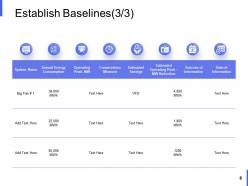
Slide 6: This slide presents Establish Baselines in tabular form. You can add or change data as per requirements.
Slide 7: This is another slide on Establish Baselines.
Slide 8: This is another slide on Establish Baselines.
Slide 9: This slide showcases Benchmarking describing annual energy savings in tabular and graphical forms.
Slide 10: This slide shows Benchmarking describing- Past Performance, Industry Average, Best in Class, Best Practices.
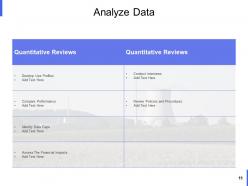
Slide 11: This slide presents Analyze Data with related imagery and text.
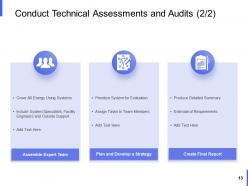
Slide 12: This slide displays Conduct Technical Assessment and Audits in tabular form.
Slide 13: This is another slide to Conduct Technical Assessments and Audits.
Slide 14: This slide represents Energy Performance Tracing describing- Automation Alerts, Performance Data & Metrics, Basic Tools.
Slide 15: This slide showcases Energy Tracking Tools describing- Benchmarking and Utility Bill Analysis, Building Automation System (BAS), Energy Information Systems (EIS), Building Automation System Metrics, Advanced EIS, Fault Detection and Diagnostic Tools (FDD).
Slide 16: This slide shows Energy Assessment Performance Approaches in tabular form with categories as Approach, key features, major benefits and libations.
Slide 17: This slide presents Energy Performance Assessment Dashboard showing data in graphical form.
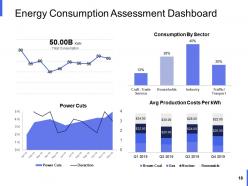
Slide 18: This slide displays Energy Consumption Assessment Dashboard.
Slide 19: This slide showcases Performance Analysis In Energy Sector Icons.
Slide 20: This slide is titled as Additional Slides for moving forward.
Slide 21: This is Our Mission slide with related imagery and additional text boxes to show information.
Slide 22: This is Our Mission slide with related imagery and text.
Slide 23: This is Our Team slide with names and designation.
Slide 24: This slide is titled as Post It. Post your important notes here.
Slide 25: This is About Us slide to show company specifications etc.
Slide 26: This is Our Target slide. State your targets here.
Slide 27: This is a Financial slide. Show your finance related stuff here.
Slide 28: This is an optional Financial slide.
Slide 29: This is a Timeline slide to show information related with time period.
Slide 30: This is a Location slide with maps to show data related with different locations.
Slide 31: This is a Quotes slide to convey message, beliefs etc.
Slide 32: This is a Thank you slide with address, contact numbers and email address.
Performance Analysis In Energy Sector Powerpoint Presentation Slides with all 32 slides:
Download our content-ready Performance Analysis In Energy Sector PowerPoint Presentation Slides to accomplish business objectives related to this topic. This performance metrics PowerPoint slideshow deck includes different slides like energy conservation projects tracking, annual energy savings, past performance, industry average, best in class, best practices, technical audits and assessments, automation alerts, performance data & metrics, benchmarking and utility bill analysis, building automation system (BAS), energy information systems (EIS), building automation system metrics and so on that will help you give guidance for energy savings. Utilize this assessing performance in the energy sector PPT slideshow and guarantee superb outcomes. Best of all, this energy sector performance appraisal PPT slideshow is completely editable and you can change color, content, icons, and text according to your necessity. Quickly download our performance analysis in the energy sector PowerPoint Presentation slideshow and leave an imprint on the onlookers. Enunciate your conclusions with our Performance Analysis In Energy Sector Powerpoint Presentation Slides. Drive home the importance of abiding by them.













FAQs for Performance Analysis In Energy Sector
Key performance indicators in the energy sector include operational efficiency ratios, capacity utilization rates, energy conversion efficiency, asset utilization metrics, and environmental compliance scores. These KPIs enable energy companies to streamline operations, minimize waste, and enhance profitability, with many utilities and renewable energy providers finding that comprehensive performance tracking ultimately delivers competitive advantage and sustainable growth.
Renewable energy adoption transforms traditional energy companies' performance analysis by requiring new metrics for portfolio diversification, carbon footprint reduction, and regulatory compliance alongside traditional profitability measures. These companies increasingly integrate sustainability KPIs, renewable asset valuations, and transition cost assessments into their frameworks, with many finding that balanced energy portfolios deliver enhanced investor confidence and competitive positioning.
Data analytics enhances operational performance in energy sectors by optimizing production schedules, predicting equipment failures, and streamlining resource allocation across facilities. Through advanced monitoring systems, energy companies achieve reduced downtime, lower maintenance costs, and improved safety compliance, while utilities increasingly leverage predictive analytics for grid optimization, ultimately delivering more reliable services and competitive operational efficiency.
Performance benchmarking among competing energy firms requires establishing industry-wide standards, utilizing third-party data providers, and creating anonymous comparison frameworks that protect proprietary information. Through standardized metrics like operational efficiency ratios and safety indicators, companies can benchmark performance while maintaining competitive confidentiality, ultimately driving sector-wide improvements and operational excellence.
**INPUT**: What methodologies are commonly used for calculating the cost of energy production in different energy sources? **OUTPUT**: Common methodologies include Levelized Cost of Energy (LCOE), Net Present Value (NPV), Internal Rate of Return (IRR), payback period analysis, and capacity factor assessments. These approaches enable utilities and energy companies to compare renewable, fossil fuel, and nuclear options by incorporating capital costs, operational expenses, and fuel pricing, ultimately delivering strategic insights for investment decisions and competitive positioning in an increasingly diverse energy landscape.
Regulatory frameworks significantly shape energy performance metrics by establishing compliance standards, emission targets, safety protocols, and operational transparency requirements. These regulations drive utilities and energy companies to prioritize efficiency ratios, environmental impact measurements, and reliability indicators, ultimately delivering improved grid stability and sustainable operations while enabling competitive positioning in an increasingly regulated marketplace.
Measuring environmental performance in energy companies involves challenges including data complexity across multiple operations, standardized metrics inconsistency, regulatory compliance variations, and long-term impact assessment difficulties. These measurement complexities require strategic combinations of real-time monitoring technologies, comprehensive reporting frameworks, and third-party verification processes, with many organizations finding that integrated sustainability platforms ultimately deliver enhanced transparency and competitive advantage in increasingly regulated markets.
Consumer behavior data enhances energy services performance analysis by revealing usage patterns, peak demand periods, conservation opportunities, and service preferences across different customer segments. Through advanced analytics, energy providers streamline grid management, optimize resource allocation, and develop targeted efficiency programs, with many utilities finding that behavioral insights ultimately deliver reduced operational costs and improved customer satisfaction.
Investment in technology and innovation significantly enhances energy organizations' performance by streamlining operations, reducing costs, and accelerating decision-making processes. Through advanced analytics, automation systems, and predictive maintenance tools, companies achieve improved operational efficiency, minimized downtime, and enhanced safety protocols, with many finding that strategic technology adoption delivers substantial competitive advantages in an increasingly dynamic market.
Strategies include diversifying supply sources, implementing predictive maintenance systems, establishing strategic reserves, enhancing grid interconnectivity, and deploying real-time monitoring technologies. These approaches streamline operations by minimizing disruptions, accelerating response times, and optimizing resource allocation, with many energy companies finding that integrated resilience planning ultimately delivers competitive advantage and enhanced operational efficiency.
Geopolitical factors significantly influence energy performance metrics through supply chain disruptions, price volatility, regulatory changes, and market access restrictions. Events like sanctions, trade disputes, or regional conflicts create uncertainty that affects revenue forecasting, operational efficiency, and investment returns, with many energy companies increasingly incorporating geopolitical risk assessments into their strategic planning and performance evaluation frameworks.
Performance assessment is crucial for the low-carbon transition as it measures emissions reduction progress, tracks renewable energy adoption rates, evaluates cost-effectiveness of green investments, and ensures regulatory compliance across energy sectors. These comprehensive evaluations enable organizations to optimize resource allocation, identify operational inefficiencies, and demonstrate measurable sustainability outcomes, with many energy companies finding that systematic performance monitoring accelerates their decarbonization timelines while maintaining competitive market positioning.
Energy companies leverage performance analysis to enhance stakeholder engagement by demonstrating operational transparency, environmental progress, and financial accountability through comprehensive data visualization and reporting. Through interactive dashboards and regulatory compliance metrics, organizations like utilities and renewable energy firms can showcase emission reductions, efficiency improvements, and community impact outcomes, ultimately building trust while positioning themselves competitively in increasingly sustainability-focused markets.
Employee performance assessment significantly enhances energy sector efficiency by identifying skill gaps, optimizing resource allocation, and aligning individual goals with operational targets. Through systematic evaluation processes, energy companies streamline workforce productivity, reduce safety incidents, and accelerate project completion rates, with many organizations finding that structured assessments ultimately deliver improved asset utilization and competitive advantage.
Energy firms can balance profit margins with sustainable performance goals through strategic investments in renewable technologies, operational efficiency improvements, and diversified energy portfolios that reduce long-term costs. Many utilities and oil companies find that sustainability initiatives, including carbon capture, smart grid technologies, and renewable energy integration, ultimately deliver competitive advantages while meeting regulatory requirements and investor expectations in an increasingly environmentally-conscious market.
No Reviews