

Performance and accountability report powerpoint presentation slides





Try Before you Buy Download Free Sample Product
 Impress Your
 Audience
 100%
100% Editable
 Save Hours
 of Time


Introducing Performance And Accountability Report PowerPoint Presentation Slides. The presentation gives an overview of the organization by highlighting the organization’s vision, mission, and goals. It presents the organizational structure, critical events over the year, key awards and recognitions, and financial highlights. The slides also present data such as net sales, number of employees, the budget for R&D, mergers, and acquisitions. The slide also displays the geographical locations of the company. Showcase detailed performance analysis by depicting critical performance indicators summary and major strategic goals. Take advantage of this performance dashboard PowerPoint template to present the goals and objectives of the organization that the company. Highlight the challenges that the company faced in implementing the multiple strategies. Showcase per product revenue of the organization by taking the assistance of this performance report PPT slide deck.
People who downloaded this PowerPoint presentation also viewed the following :
Content of this Powerpoint Presentation
Slide 1: This title slide introduces the Performance and Accountability Report. Add the name of your company here.
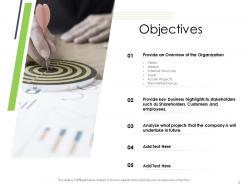
Slide 2: This slide presents the Objectives.
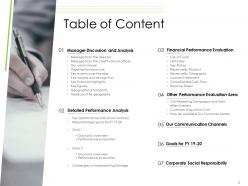
Slide 3: This slide presents the Table of Content. It includes - Manager Discussion and Analysis, Other Performance Evaluation Area, Financial Performance Evaluation, etc.
Slide 4: This is a table of content slide showing the Manager Discussion and Analysis.
Slide 5: This slide presents the Message from the Director.
Slide 6: This slide presents the Message from the Chief Financial Officer.
Slide 7: This slide presents Our Vision & Mission.
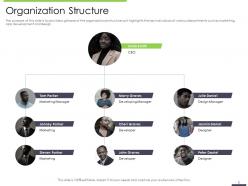
Slide 8: This slide presents the Organization Structure.
Slide 9: This slide presents the Key Events Over the Year.
Slide 10: This slide presents the Key Awards and Recognition.
Slide 11: This slide presents the Key Financial Highlights.
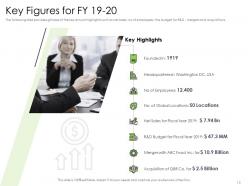
Slide 12: This slide presents the Key Highlights.
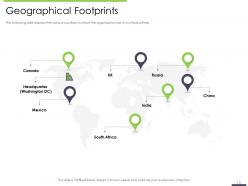
Slide 13: This slide presents the Geographical Footprints.
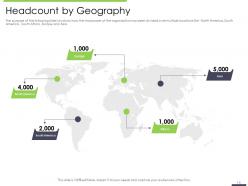
Slide 14: This slide presents the Headcount by Geography.
Slide 15: This is a table of content slide showing the Detailed Performance Analysis.
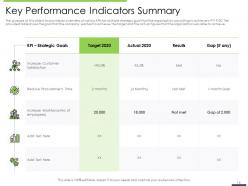
Slide 16: This slide presents the Key Performance Indicators Summary.
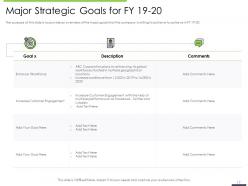
Slide 17: This slide presents the Major Strategic Goals for FY 19-20.
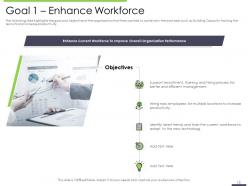
Slide 18: This slide presents the Goal 1 – Enhance Workforce.
Slide 19: This slide presents the Goal 1 – Performance Evaluation.
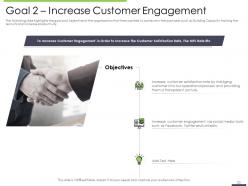
Slide 20: This slide presents the Goal 2 – Increase Customer Engagement.
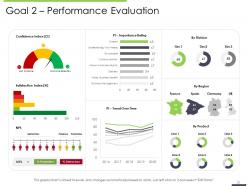
Slide 21: This slide presents the Goal 2 – Performance Evaluation.
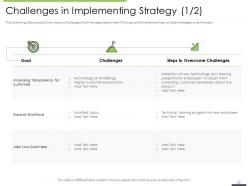
Slide 22: This slide presents the Challenges in Implementing Strategy (1/2). It explains the various challenges that the organization went through while implementing multiple strategies over the year.
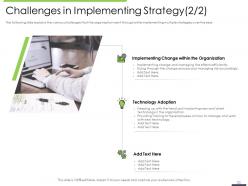
Slide 23: This slide presents the Challenges in Implementing Strategy (2/2). It explains the various challenges that the organization went through while implementing multiple strategies over the year.
Slide 24: This is a table of content slide showing the Financial Performance Evaluation.
Slide 25: This slide presents the Use of Funds for FY 19-20.
Slide 26: This slide presents the Net Sales FY 19-20.
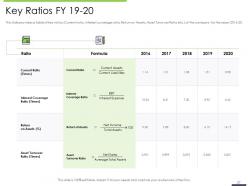
Slide 27: This slide presents the Key Ratios FY 19-20.
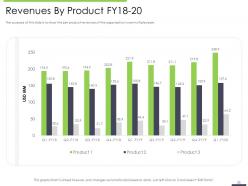
Slide 28: This slide presents the Revenues By Product FY18-20.
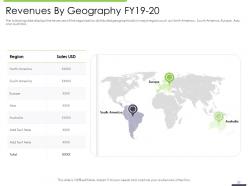
Slide 29: This slide presents the Revenues by Geography FY19-20.
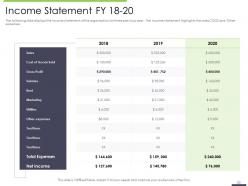
Slide 30: This slide presents the Income Statement FY 18-20.
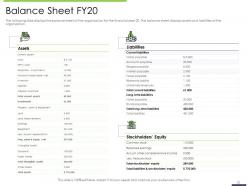
Slide 31: This slide presents the Balance Sheet FY20.
Slide 32: This is a table of content slide showing Other Performance Evaluation Area.
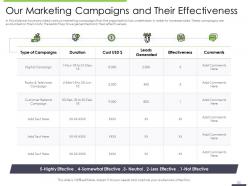
Slide 33: This slide presents the Our Marketing Campaigns and Their Effectiveness.
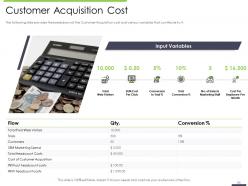
Slide 34: This slide presents the Customer Acquisition Cost. The following slide provides the breakdown of the Customer Acquisition cost and various variables that contribute to it.
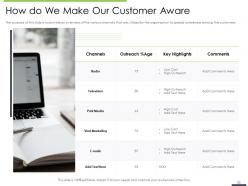
Slide 35: This slide presents How do We Make Our Customer Aware.
Slide 36: This is a table of content slide showing Corporate Social Responsibility.
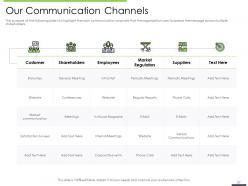
Slide 37: This slide presents the Our Communication Channels.
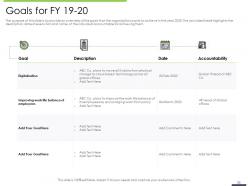
Slide 38: This slide presents the Goals for FY 19-20.
Slide 39: This slide presents the Corporate Social Responsibility.
Slide 40: This is the Performance Accountability Report Icons Slide.
Slide 41: This slide presents the Additional Slides.
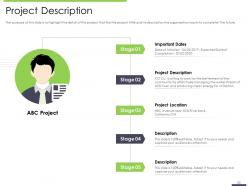
Slide 42: This slide presents the Project Description.
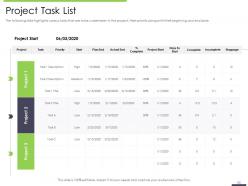
Slide 43: This slide presents the Project Task List.
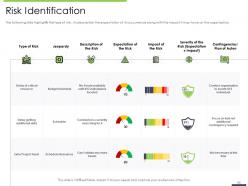
Slide 44: This slide presents the Risk Identification.
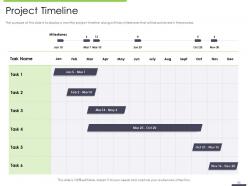
Slide 45: This slide presents the Project Timeline.
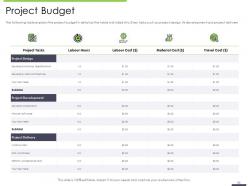
Slide 46: This slide presents the Project Budget.
Slide 47: This slide contains the information about the company aka the ‘About Us’ section. This includes the Value Clients, the Target Audience, and Preferred by Many.
Slide 48: This is a Thank You slide where details such as the address, contact number, email address are added.
Performance and accountability report powerpoint presentation slides with all 48 slides:
Use our Performance And Accountability Report Powerpoint Presentation Slides to effectively help you save your valuable time. They are readymade to fit into any presentation structure.



















FAQs for Performance and accountability report
Key components of a Performance Accountability Report include performance metrics and KPIs, progress against established goals, resource utilization analysis, variance explanations, and strategic recommendations for improvement. These elements work together by providing comprehensive visibility into organizational effectiveness, enabling data-driven decision making, and facilitating strategic adjustments, with many organizations finding that structured accountability reporting ultimately delivers enhanced operational transparency and competitive advantage.
Organizations can effectively measure performance through key performance indicators (KPIs), regular reporting cycles, balanced scorecards, benchmarking against industry standards, and transparent tracking systems. These measurement frameworks enable leaders to identify operational gaps, streamline resource allocation, and enhance decision-making processes, with many finding that consistent performance monitoring ultimately delivers improved accountability and competitive advantage.
Data visualization transforms Performance Accountability Reports by converting complex metrics into accessible charts, graphs, dashboards, and infographics that stakeholders can quickly interpret and act upon. These visual elements streamline decision-making by highlighting key trends, performance gaps, and achievements, with many organizations finding that well-designed visualizations significantly enhance transparency and drive more informed strategic discussions.
Organizations tailor performance accountability reports by segmenting content based on stakeholder priorities, using customized metrics and presentation formats, and adjusting communication frequency and detail levels. Through strategic reporting frameworks, boards receive governance-focused summaries, investors get financial performance data, and operational teams access detailed implementation metrics, ultimately enhancing stakeholder engagement and organizational transparency.
Performance accountability reports should include clear performance metrics, objective data analysis, stakeholder-specific insights, actionable recommendations, and transparent reporting of both achievements and shortfalls. These best practices enhance organizational credibility by establishing measurable benchmarks, facilitating informed decision-making, and demonstrating commitment to continuous improvement, with many institutions finding that structured accountability frameworks ultimately deliver enhanced stakeholder trust and operational excellence.
Performance metrics align with organizational goals through strategic mapping, cascading objectives from executive to departmental levels, and establishing clear KPIs that directly measure progress toward specific outcomes. Organizations achieve this alignment by connecting individual performance indicators to broader strategic priorities, regularly reviewing metric relevance against evolving goals, and ensuring measurement systems track both leading and lagging indicators, ultimately delivering improved accountability and organizational focus.
Organizations face challenges including data silos across departments, inconsistent metrics and measurement standards, outdated technology systems, and limited analytical expertise. These obstacles often result in incomplete reporting, delayed insights, and difficulty tracking progress, with many companies finding that investing in integrated data platforms and staff training ultimately delivers more accurate performance accountability and faster decision-making capabilities.
Technology enhances Performance Accountability Report reliability through automated data collection, real-time monitoring systems, advanced analytics platforms, and integrated dashboard solutions that minimize human error. These systems streamline data validation, ensure consistency across reporting periods, and enable continuous tracking, with organizations in healthcare and financial services finding significantly improved accuracy and stakeholder confidence.
Performance Accountability Reports should be published quarterly for maximum impact, balancing comprehensive data collection with timely stakeholder communication and actionable insights. This frequency enables organizations to track progress effectively, respond to emerging trends, and maintain consistent transparency with stakeholders, while providing sufficient time for meaningful analysis and strategic adjustments that drive operational improvements.
Common pitfalls include unclear metrics, outdated data, lack of context for results, overwhelming stakeholders with excessive detail, and failing to connect performance to strategic objectives. Many organizations find that reports lacking visual clarity, missing baseline comparisons, or inadequately addressing performance gaps ultimately undermine accountability efforts, while streamlined reports with actionable insights enhance stakeholder engagement and organizational improvement.
Feedback from previous reports influences future strategies by identifying performance gaps, highlighting successful initiatives, and revealing resource allocation inefficiencies. Organizations use these insights to refine goal-setting processes, adjust operational approaches, and strengthen accountability mechanisms, with many companies finding that systematic feedback integration enhances strategic planning effectiveness and delivers measurable performance improvements.
Transparency in Performance Accountability Reporting builds stakeholder trust, ensures regulatory compliance, and enables informed decision-making by providing clear visibility into organizational performance, resource allocation, and outcome achievements. It enhances credibility with investors, regulatory bodies, and community members while facilitating strategic improvements, with many organizations finding that transparent reporting ultimately delivers stronger stakeholder relationships and competitive advantage.
Cultural factors significantly influence performance data interpretation through varying communication styles, hierarchical structures, risk tolerance levels, and success metrics across regions. Organizations operating globally find that Western cultures often emphasize individual achievements and direct feedback, while Asian markets may prioritize collective outcomes and face-saving approaches, ultimately requiring culturally-adapted reporting frameworks for accurate performance assessment.
Effective Performance Accountability Reports include hospital systems tracking patient outcomes and cost reduction, school districts monitoring graduation rates and resource allocation, and manufacturing companies measuring production efficiency and safety metrics. These reports streamline decision-making by providing clear performance indicators, identifying improvement opportunities, and demonstrating strategic progress, with many organizations finding that transparent accountability enhances stakeholder confidence and operational excellence.
Organizations ensure their reports foster accountability and improvement by establishing clear performance metrics, transparent reporting processes, regular review cycles, and direct linkage between outcomes and strategic goals. Through consistent data sharing, constructive feedback mechanisms, and action-oriented follow-up plans, companies create environments where accountability drives continuous improvement, with many finding that transparent reporting ultimately enhances team performance and organizational effectiveness.
-
Awesome use of colors and designs in product templates.
-
Best Representation of topics, really appreciable.
-
Very unique and reliable designs.